The Life Aquatic or the Life Astronautic?

Most of us can’t relate to the question in this post’s title. We don’t have to choose either one. We live on land, on Earth.

Still, someday, people may live for long periods—their whole lives—either underwater or in space. Which would you choose?

Underwater History—1960s

The chronology of underwater habitat history began, and blossomed, in the 1960s. Some of the more notable habitats of that era include Man-in-the-Sea I and II, Conshelf I, II, and III, SEALAB I and II, Glaucus, Hydrolab, BAH I, Tektite I, Helgoland, and Chernomor. These housed between 1 and 10 occupants for missions ranging from hours to a few weeks. Professional divers manned the early ones, but starting with Tektite, scientists participated.

SEALAB I

Underwater History—1970s

Some of the 1960s projects continued into the next decade, including Hydrolab, Helgoland, and Chernomor. Few new habitats began in the 1970s, and these included Seatopia, Tektite II, and La Chalupa. These furthered the concept of undersea living to some degree. Tektite II hosted the first all-female mission. La Chalupa could accommodate 50 aquanauts at a time.
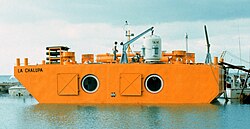
La Chalupa

Underwater History—1980s

Three more habitats began operating in the late 1980s, namely Aquarius, MarineLab Undersea Classroom, and Jules’ Undersea Lodge. That latter one had been converted from the La Chalupa habitat and can be booked for brief stays like a hotel. All three of these remain operational today.
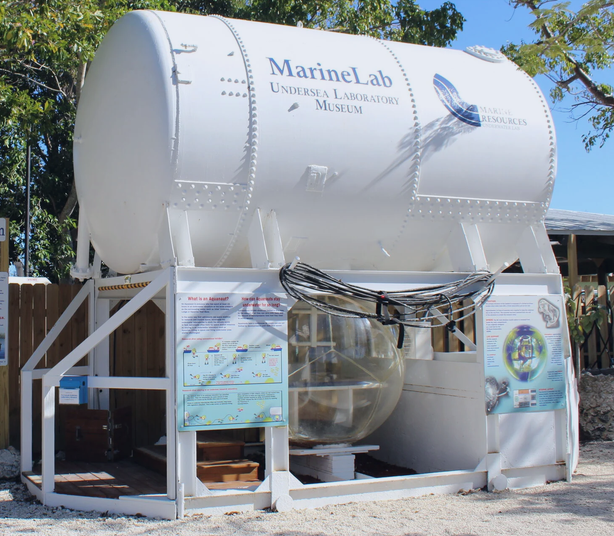
MarineLab Undersea Classroom

Underwater History—1990s

To my knowledge, only one habitat started in this decade, the Scott Carpenter Space Analog Station.
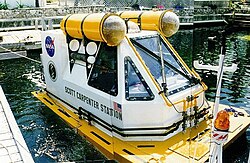
Scott Carpenter Space Analog Station

Underwater History—2000s

The company DEEP started the habitat Vanguard this year. This CNN story about it inspired my blogpost.
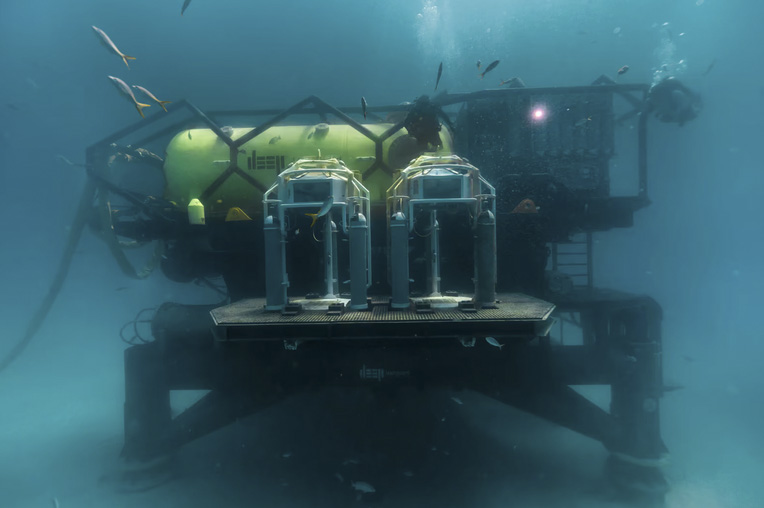
DEEP Vanguard

Comparison to Space Habitats

With all these undersea habitats over all those decades, with most located a few miles from shore, with resupply and rescue so much easier, you’d think we’d have many more man-hours of experience living underwater compared to space. Right?

Not even close.
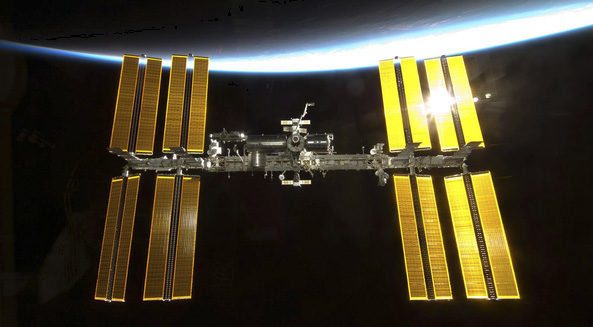
International Space Station

Space habitats started later, in the 1970s. Since Salyut-1 in 1971, there have been only 8, with 2 still operational. But in man-hours of operation, space habitats far exceed their underwater counterparts. At most, aquanauts stay for days or weeks. Astronauts remain for months, and one stayed over a year.

Why Water Homes Fell Behind

Was the pressure of competition too much for the underwater habitats? No, but pressure played a part. Engineers designed almost all such habitats for “saturation diving” or “ambient pressure operation.” That means the air pressure inside the habitat matched that of the ocean outside. This allowed aquanauts to don scuba gear, exit the moon pool, and work outside for hours each day.

Though saturation diving eases outside work, it limits the occupants’ time in the habitat. After four weeks, the aquanaut must decompress back to atmospheric pressure to avoid adverse physiological and psychological effects. Further research into chemical supplements might result in extensions to that 28-day limit.

One-Atmosphere Alternatives

You’re wondering if engineers could design underwater habitats with normal surface air pressure inside, so people could live there longer, not limited by the saturation diving limit. Sure. Designers would have to make the hull thicker, but it would resemble, in concept, a submarine resting on the bottom.

Two existing habitats—the Jules’ Undersea Lodge and Aquarius, and the upcoming DEEP Sentinel offer part-ambient and part 1-atmosphere options.

Imagine

Both oceans and outer space represent hostile environments, unsuited to long-term human living. But people have made fledgling attempts in both areas. One day, some will choose to live underwater, and others will opt to live in space. To read a fictional take on living at sea, with some cities underwater, read The Seastead Chronicles by—

Poseidon’s Scribe
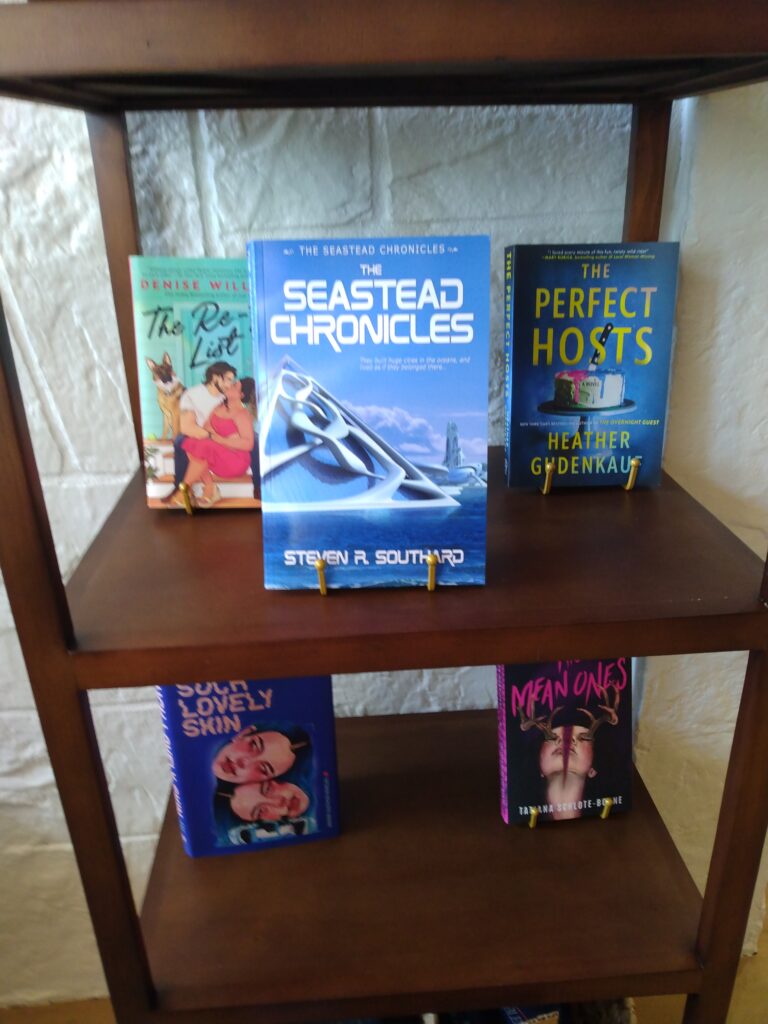
I Met My Book There

It thrills authors to see, for the first time, their book on display in a bookstore. I experienced that delight this past weekend.

On Sunday, I visited a place called “I’ll Meet You There.” It’s at 62 16th Avenue SW, Cedar Rapids, Iowa 52404. Aside from books, they also offer pastries and coffee. Remember to buy in order of importance—books first, then food and drink.

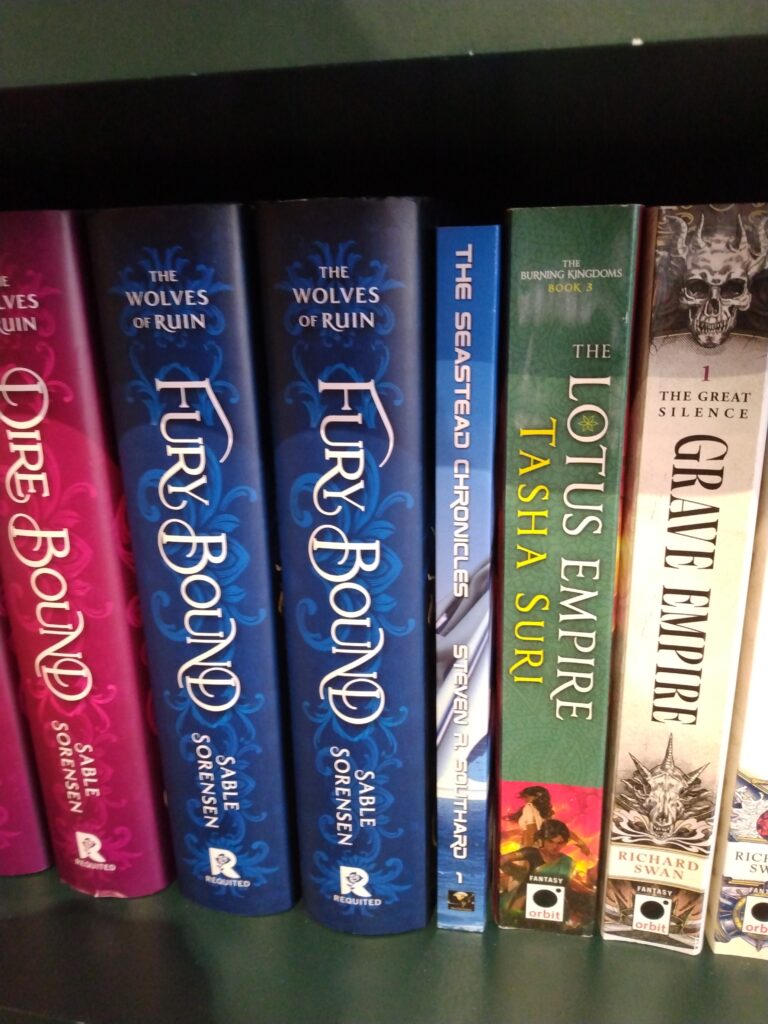
Four copies of The Seastead Chronicles were available in the store that day, three of them on the Local Authors shelf and one in the science fiction section. Thanks to my visit, customers who purchase one of them get a rare collector item. I signed each one.

I’m grateful to Mackensie Voigt for obtaining and offering my books and to Beth, the cashier, for locating them for me.

Though I won’t meet you at I’ll Meet You There, if you go there soon, you can meet a book by—

Poseidon’s Scribe

Why I Love My Mourning Dove

Sometimes Nature teaches us lessons. I learned one from a mourning dove.

Backstory and Surprise

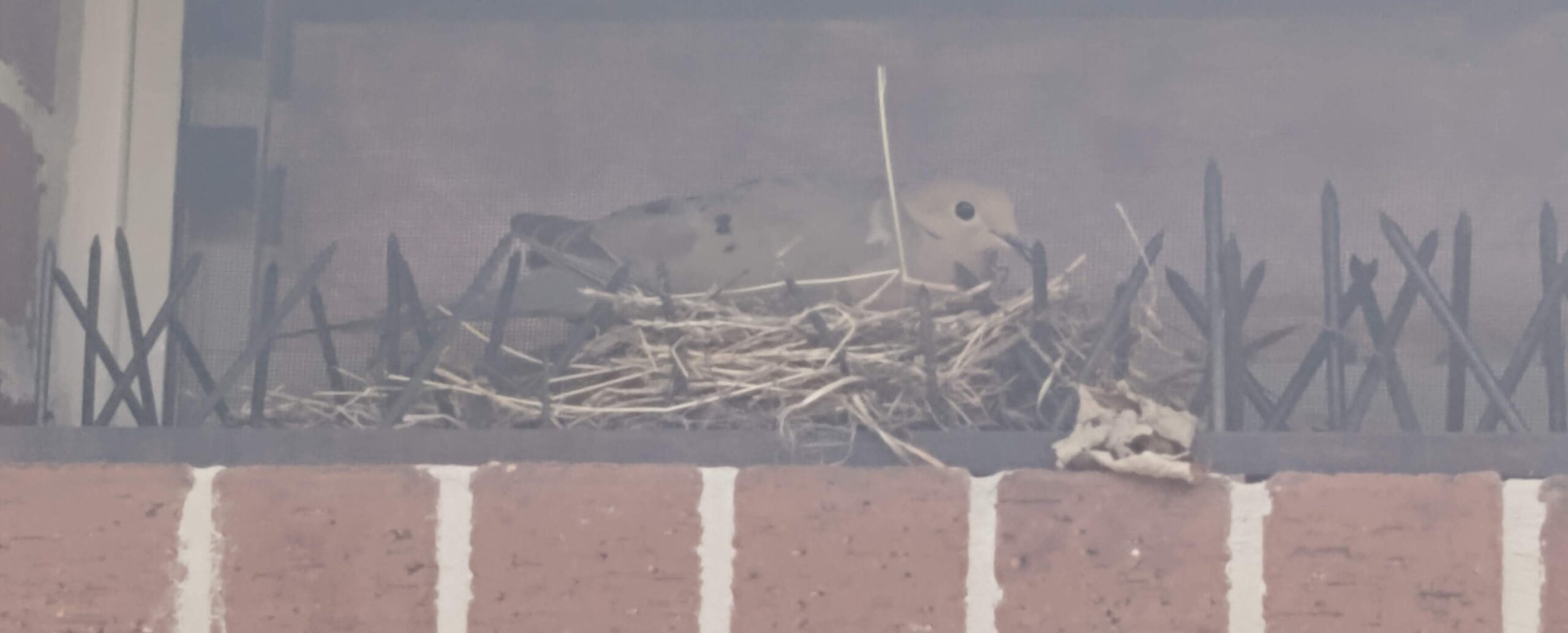
Last year, birds nested on the brick ledge outside our bathroom window. This year, to discourage a repeat of that behavior, I pounded dozens of nails through a board and placed it, with nail points up, on the ledge. A few days ago, after returning from a trip, I spied a bird’s nest resting amid the nails. I climbed a step-ladder and chased the bird away. In the nest lay a single egg. Had the egg not been there, I’d have removed the nest and pounded more—and longer—nails in the board. Instead, soft-hearted me allowed the nest, egg, and bird to stay.

Classification and Assessment

Not being a bird-watcher, I’m guessing, by appearance, this one is a mourning dove. I started calling her Momma Mourning Dove. I’ve since learned both expecting dove parents take turns minding their nests. Half the time, I suppose, Pappa sits there.

I wondered what kind of pea-brained idiots would pass up a pleasant and traditional home in any of the plentiful trees in our area, and instead build their nest on a ledge full of nails. That can’t be comfortable.

Realization and Apology

Then it hit me. I know the sort of idiots who do that. I’ve written a book about people who do something similar. The book is The Seastead Chronicles. In it, my characters abandon the safe and long-established location for housing—the land—to live on the danger-filled oceans. They do this for various reasons—economic, political, religious, etc. But they don’t act from stupidity. So, doves, I get you now. Sorry I called you idiotic and pea-brained.

(However, when you’re done with that nest, I still plan to remove it and put more nails in the board.) 

As I write, a dove sits there, as one has for many days, incubating and turning that egg, unbothered by nails. Unaware, too, I imagine, how its behavior inspires—

Poseidon’s Scribe

A New Holiday—Virtues & Sins Day

That’s right. Virtues & Sins Day. One of the five major holidays of the Oceanism religion. Haven’t heard of Oceanism? That’s the new religion that caught on in the world of my book, The Seastead Chronicles. Today also marks one year since the book got published.

All the priests in the Oceanism hierarchy call it Virtues & Sins Day, but everyday Oceanists call it Shalls & Shants Day—better alliteration. For Oceanists, the holiday presents an opportunity to reflect on how they’re living their life. Are they living in accord with the five virtues of Oceanism and are they avoiding its five sins?  

The Seastead Chronicles

Stories in the book span the near-future construction of the first permanent seasteads through a century spent colonizing the seas and creating a new, oceanic culture. A part of that culture includes the rise and spread of Oceanism.

What’s a “seastead?” Like a homestead, it means a home in a new and previously unclaimed area. Unlike a homestead, the area of a seastead lies in an ocean or sea.

Though I mention Oceanism in a few of its stories, nobody would call The Seastead Chronicles a religious book. Its stories include adventure, mystery, love, war, music, mankind’s relationship with nature, and other themes. I’ve written stories about people struggling to survive and thrive in homes at sea. The environment they set out to change, changed them.

You may purchase the ebook and/or paperback versions of The Seastead Chronicles on Amazon here and here, at Barnes & Noble, at Books2Read, at Rakuten Kobo, at Abe Books, and at Thriftbooks.

This wish for a happy Virtues & Sins Day comes to you from—

Poseidon’s Scribe

I’m All Aglow About my New Globes

Did you know you can order a custom globe—one with your own map printed on a spherical surface? You can. I did.

Your Own Little World

If you’ve ever enjoyed sketching your own planet with continents, islands, mountain ranges, oceans, seas, bays, and rivers, you can hire a service to convert your map into a globe.

Or if you’ve loved novels with world maps, such as J.R.R. Tolkien’s The Hobbit, George R.R. Martin’s A Song of Ice and Fire, Brandon Sanderson’s The Way of Kings, Ursula K. LeGuin’s Earthsea, Leigh Bardugo’s Grishaverse series, or H.P. Lovecraft’s Dream Cycle series, you could have any of those made into globe form.

Perhaps you accomplished a trip around the world—by ship or plane. Or you relished the idea of tracing someone else’s circumnavigation—say, Magellan’s or Phileas Fogg’s—on a globe. Put away the Sharpie. Get a globe to order.

The three inch and seven inch globes

Seasteading World

For my book, The Seastead Chronicles, I drew a map of our world’s oceans, with all international waters carved up into countries. (I call those countries aquastates.) My stories span a future history of many decades from humble beginnings to a world full of aquastates. As the concept of seasteading spread, I assumed countries would form based on seabed resources (mineral nodules, petroleum deposits, etc.), and bottom features (hydrothermal vents, deep trenches, etc.).

In time, competition for resources would result in conflicts over borders—diplomacy, and even war. Each aquastate would take on specific characteristics based on who settled there, the country’s main economic income, and its type of government. Over a period of decades, perhaps, they’d reach a point of relative stability, and that’s what I depicted on my map.

Globe-building Experience

I wondered If somebody could construct a globe based on my map—a globe worthy of displaying at science fiction conventions and other book-selling events. I hoped the model of my seastead world would attract potential readers.

After searching for custom globe companies, I settled on SnapSpheres. They proved easy to work with and answered all my questions. They seemed just as enthused about my weird idea as I was.

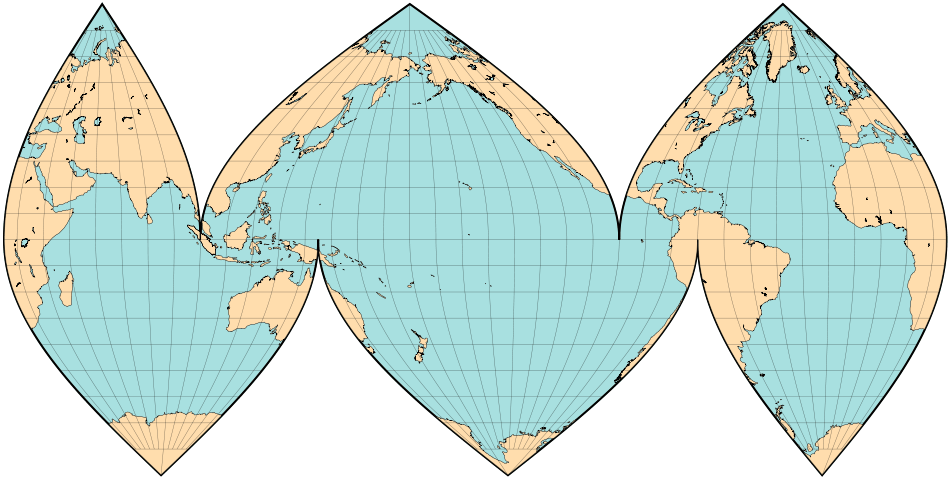
For my map, I used a rare projection that looked like an orange cut into unequal slices and flattened. However, with mine, the slices cut through continents to emphasize the oceans. Cartographers call it an Interrupted Goode Homolosine Oceanic View projection. I sent that map to SnapSpheres and the rarity of it didn’t bother them at all.

Goode Homolosine Oceanic View projection – before adding aquastates

Matt, at SnapSpheres, sent me pictorial depictions of what the finished globe would look like. I loved it. After I approved the design and paid the invoice, the product arrived in short order.

Resulting Globes

I received two globes, one three inches in diameter and one seven inches. The small one is all pentagons, and the larger one includes pentagons and hexagons. The pieces attach with magnets and snap into place. Assembly and disassembly are easy, and I can store all the pieces of both globes in small boxes for convenient transport.

When I put a puck light inside the larger globe, it shows through the translucent pieces in an attractive way. I bought a stand that rotates the larger globe for a more enticing display.

The larger globe shows off the aquastates better, but some book-selling events limit my table space. For those, I’ll put out the smaller globe.

They say writers live in their own little worlds. That’s true, now, for—

Poseidon’s Scribe

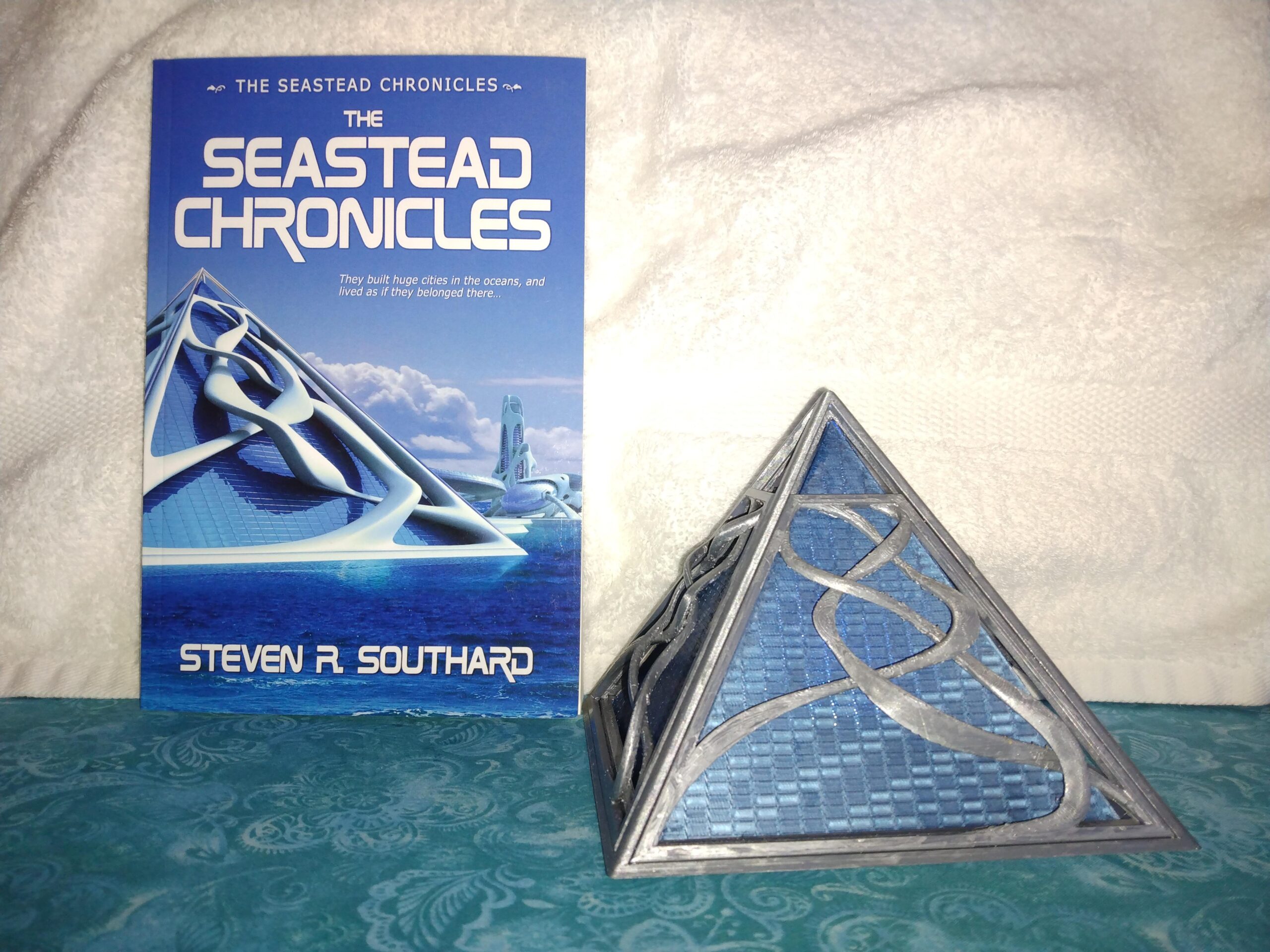
Bringing My Seastead Pyramid into the 3rd Dimension

When I appear at conventions or other events, I like to display 3D printed models depicting vehicles or other objects from my stories. These help, I hope, attract potential readers’ eyes.

I’m pleased to announce the addition of a new item to my collection.

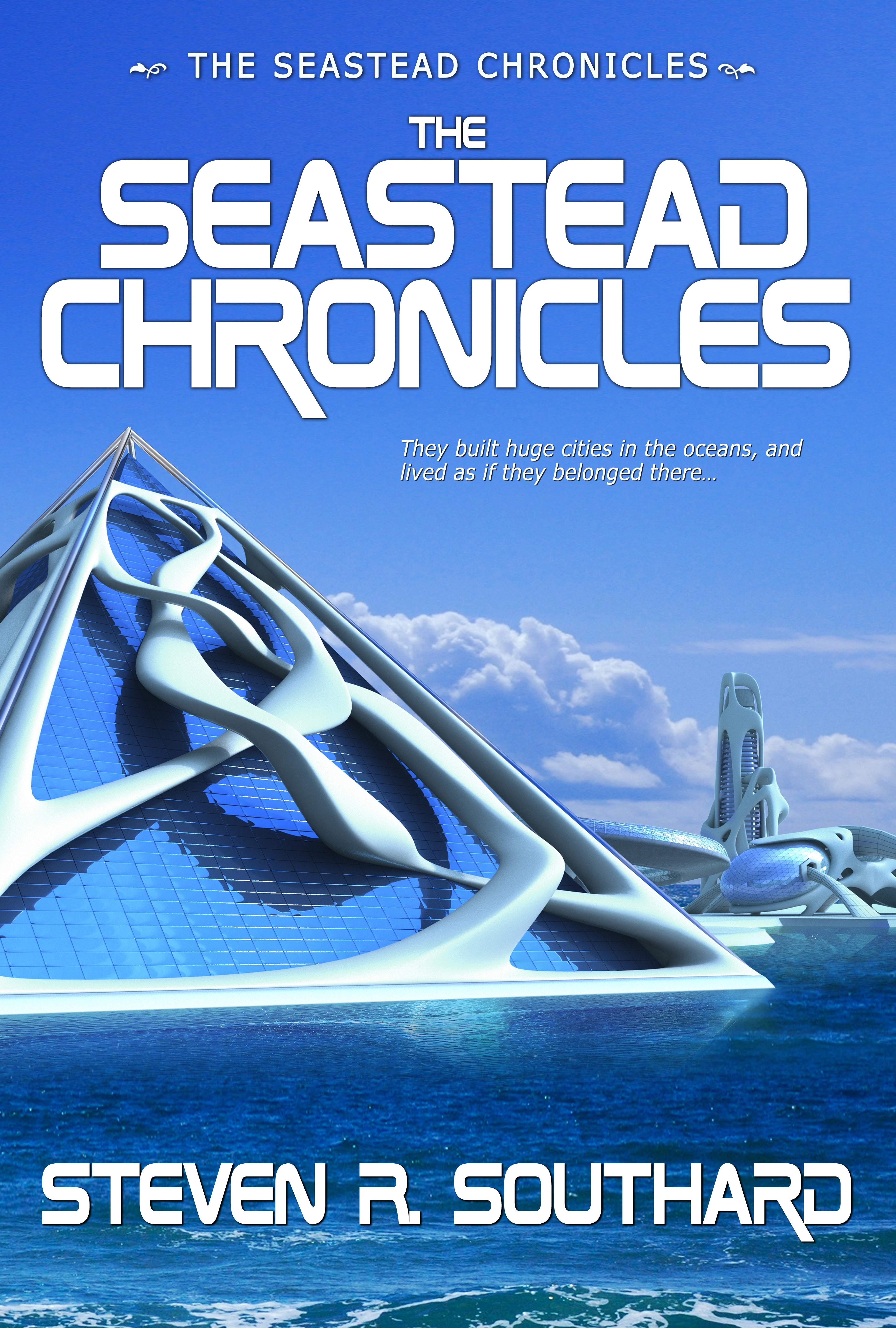
Behold the pyramidal seastead from the cover of The Seastead Chronicles! My publisher, Pole to Pole Publishing, used a cover image designed by an artist known as 3000ad.

I engaged the services of a 3D-printing designer named Duane Corpe to create a 3D version of that pyramid. Not only did he produce a wonderful model, but he made it big enough that I can put a puck light inside and make the pyramid glow.

The odd shapes on the outside of the pyramid proved a difficult challenge. Much of 3D printing design involves combining existing shapes first developed by others. For the sinuous, over- and under-lapping features you see on the pyramid’s outer surface, no previous models existed. I don’t know how Duane did it, but he created a fantastic display piece!

In previous blogposts, I’ve shown off the other models in my collection. See this submarine, this Martian tripod fighting machine, this replica of Plato’s Ring of Gyges, this Ottoman spacecraft, this clockwork lion, and this airship.

Almost forgot. When you’re done gawking at the 3D pyramid, consider buying and reading the book The Seastead Chronicles, written by—

Poseidon’s Scribe

February 22, 2026Permalink

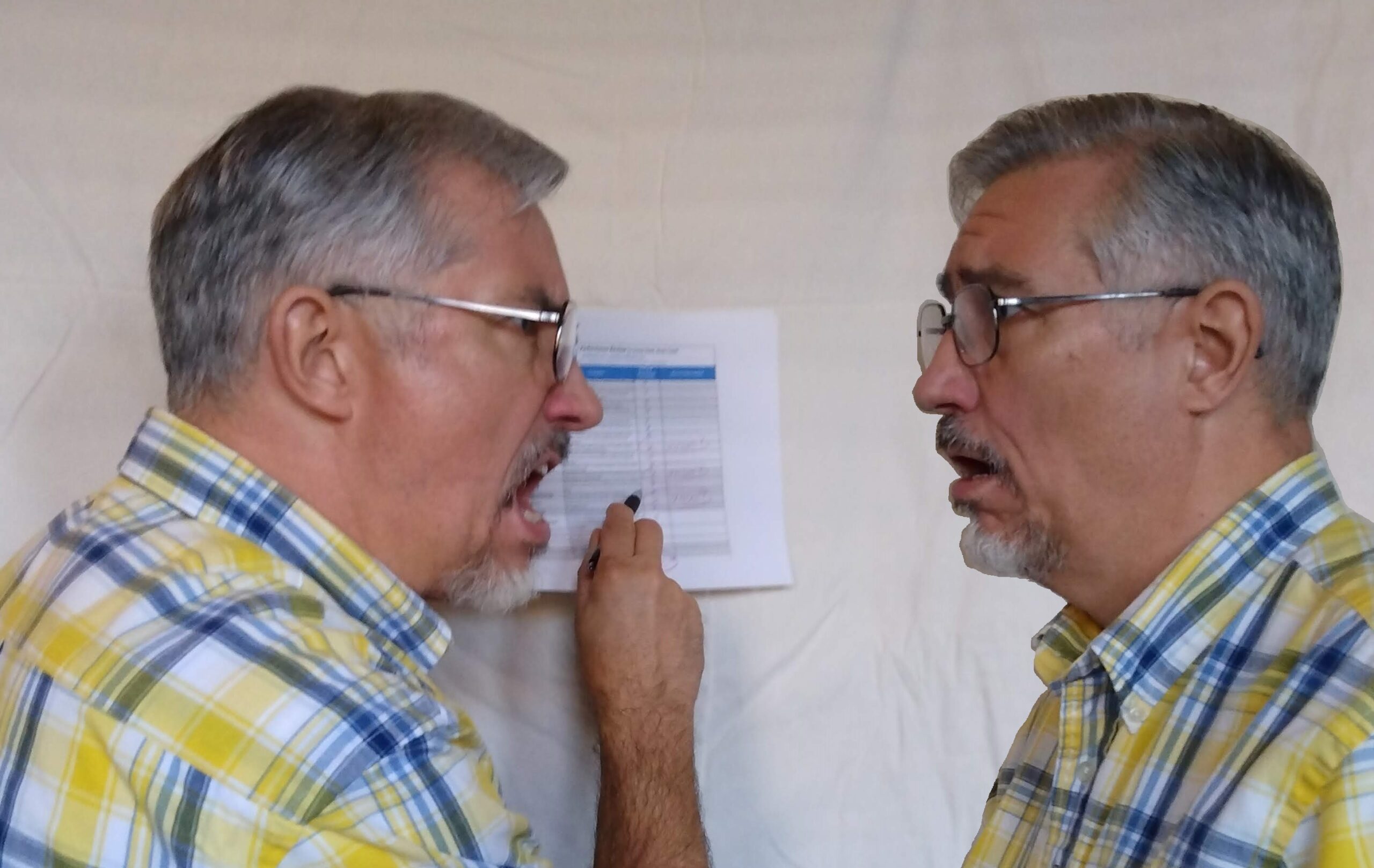
Time for the Dreaded Annual Performance Review

My boss gets on my nerves. In fact, he shares my nerves. He’s me.

The Scoreboard

How did I perform as a writer in 2025? To find out, I used The Writer’s Performance Review scorecard by book coach Jennie Nash.

To use this scorecard, you rank each attribute from one to five. One = below expectations. Two = partially meets expectations. Three = meets expectations. Four = exceeds expectations. Five = far exceeds expectations.

You’re comparing actual performance during the year to expected performance. If you performed as expected, you’d give yourself a three. If you scored three in all twenty attributes, you’d get 60.

My 2025 Performance and Plan for Improving in 2026

I did a little better this year than last, earning 70 out of 100. However, I earned a 1 in one category and a 2 in two others.

That dismal 1 rating applied to “goal orientation” (just like last year)—a tough area for me. I don’t like counting words written or hours spent, so instead I’ll set goals for chapters written and chapters edited.

I earned ratings of 2 in “organization and planning” and “strategic thinking.” I’d gotten 2s in these areas last year as well. For organization and planning, I’ll measure my progress toward meeting the chapter goals I’ve set. For strategic thinking, I’ll see if I can connect with readers with a newsletter I plan to start in 2026.

Writing Accomplishments in 2025

This year, I:

  • got my first short story collection, The Seastead Chronicles, published;
  • got my short story, “Its Tender Metal Hand” published in the anthology Spring into Scifi 2025;
  • got Extraordinary Visions: Stories Inspired by Jules Verne published in audiobook format;
  • wrote and published 53 blogposts (so far);
  • got interviewed on a podcast;
  • held four appearances and signings at bookstores;
  • did a signing at a scifi convention;
  • got my short story, “Infinity in Your Hand” accepted for publication in Tamarind Literary Magazine;
  • got my short story, “The Ballad of Joan Henry” accepted for publication in Fiction on the Web, where it’s slated to appear on February 2, 2026;
  • wrote seven poems for personal enjoyment;
  • made good progress on a final draft of novel number one (working title: The Hydronaut);
  • completed a second draft of novel number two (working title: Pressurized); and
  • completed a second draft of a humor travel book (working title: 48-State Odyssey).

Most employers and employees keep annual performance reviews private. My employer insists I display mine to the world as a service to other writers. May all of us who create written universes have a prolific and successful 2026. That’s the New Year’s wish of—

Poseidon’s Scribe

December 14, 2025Permalink

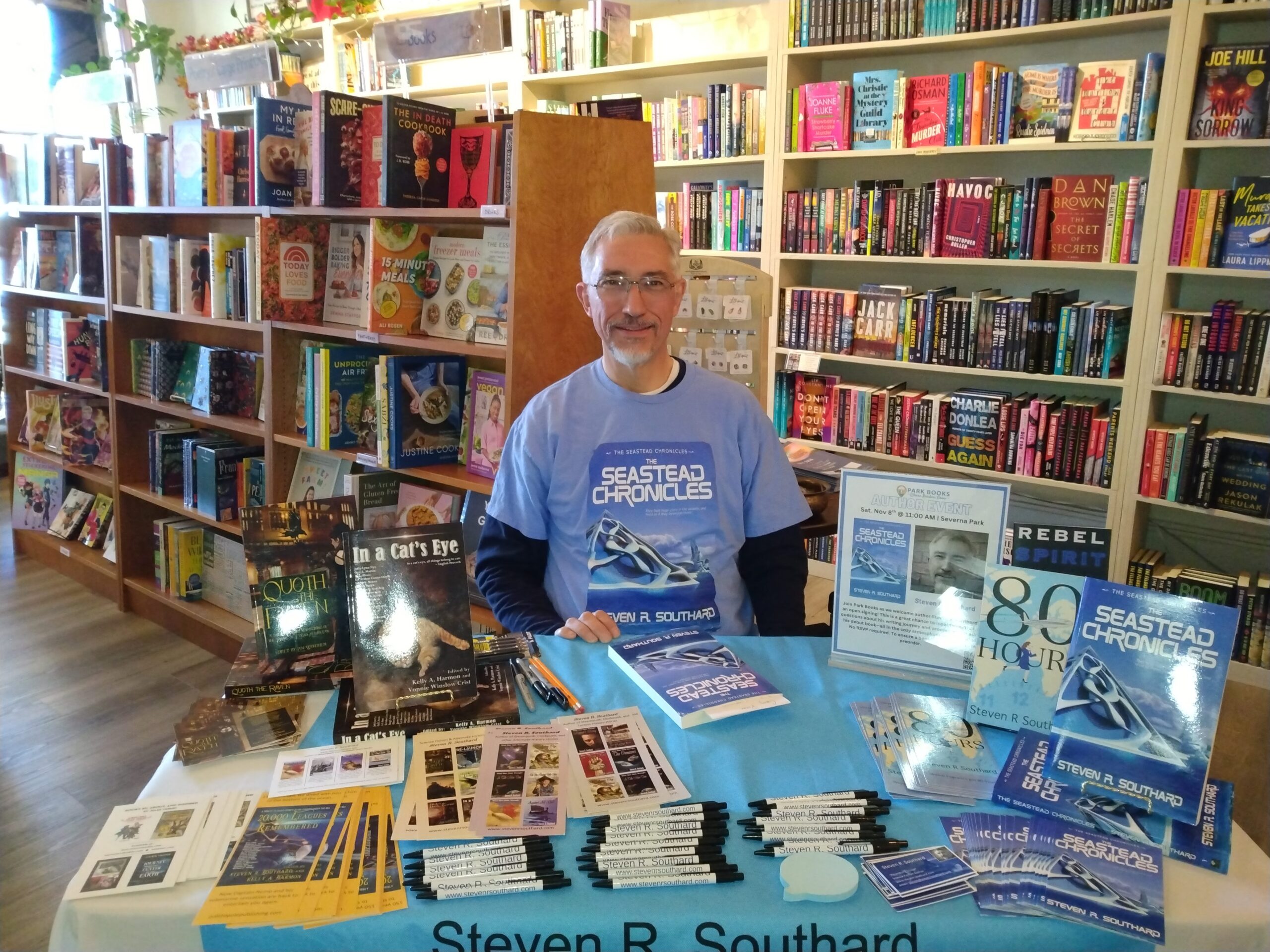
Signing Event at Park Books

For those who attended my book signing at Park Books in Severna Park, Maryland last Saturday, I offer a profound thank you. Also, I express unbounded gratitude for the assistance of the bookstore staff in scheduling, setting up, and checking on me during the event.

As a beginning author, most of my previous book signing events consisted of watching people, trying to lure them over to my table, getting disappointed while they turned and walked away, and then waiting and watching again.

Not this one. I signed and talked with people the whole two hours. At some points, a short line formed. Yes, people lined up to have me sign books!

Some circumstances worked in my favor. My college had a reunion that weekend and I invited classmates to the signing. I also know other friends, as well as neighbors and relatives in the area, and I invited them. Thanks to all of you for supporting me.

My featured book, The Seastead Chronicles, sold well, but I offered several other titles too.

Again, thanks to Park Books and to the many people who visited that day to get books signed by—

Poseidon’s Scribe

November 13, 2025Permalink

You’ll Never Sell Books in a Bakery, They Said

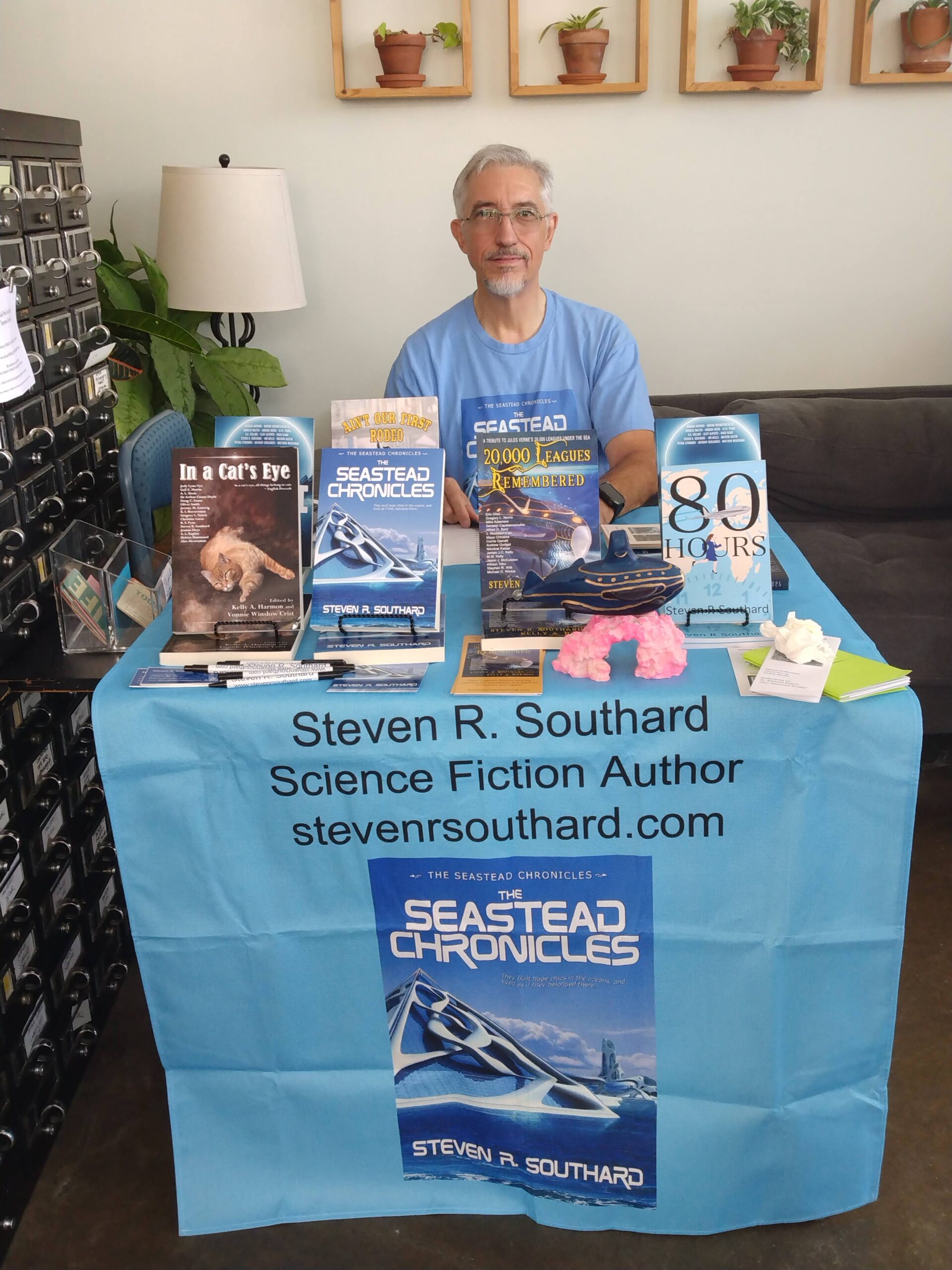
Thank you to Challyn Hartogh and her staff at Leaves Bakery and Tea Shop in Fort Worth, Texas. My book signing event there last Sunday went well.

The author at Leaves Bakery and Tea Shop

Located in an eclectic neighborhood of old buildings redone as trendy shops, Leaves Bakery and Tea Shop emphasizes muffins and tea, but caters to authors as well. After all, once you buy your scone and hot drink, you feel the urge to read a book, right?

And, yes, we all get the clever pun—leaves…books and tea. Nice.

Paired with Galen Steele, an up-and-coming poet, I set up my table and greeted everyone that came in. Accepting my prior invitation, some friends dropped by and chatted with me.

My new book, The Seastead Chronicles, received a prime spot near the center of my table, but I brought others to sell also.

As you can see by visiting the Appearances tab on this website, I’ll return to Leaves Bakery and Tea Shop later this month to conduct a Writers Workshop. I’ve titled it “Writing Drunk – Imbibing Passion for More Creative Binging.” If you’re in the area that day, please stop by.

Thanks to my appearance last Sunday, we now know the answer to how an author stays and Leaves at the same time! Thanks again to the staff there, from—

Poseidon’s Scribe

September 14, 2025Permalink

Did You See Me at Half Price Books?

Thank you to Michaela Huff and the rest of the staff at the Half Price Books store near Ridgmar Mall in Fort Worth, Texas. I enjoyed a wonderful book signing event there on Saturday.

Staff member Jesse set up my table and chair in a commanding position just inside the front door. Incoming customers couldn’t help seeing me there. I focused on my new book, The Seastead Chronicles, but also offered several others, too.

I enjoyed talking to all the patrons who came in and stopped to chat. Friends I’d invited also arrived and kept me company.

If you missed that signing and wish to attend one, please click the Appearances tab on my site for a list of future events.

Again, a big thank-you to the staff at Half Price Books for the delightful book signing event last Saturday. They’ve earned the sincere gratitude of—

Poseidon’s Scribe