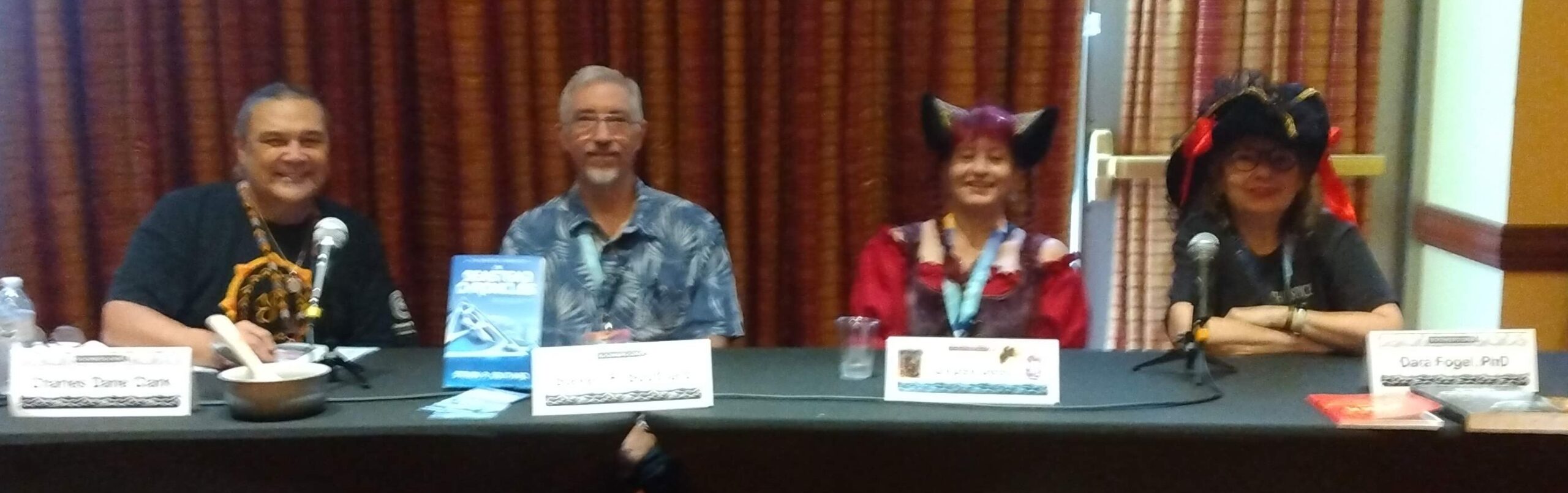
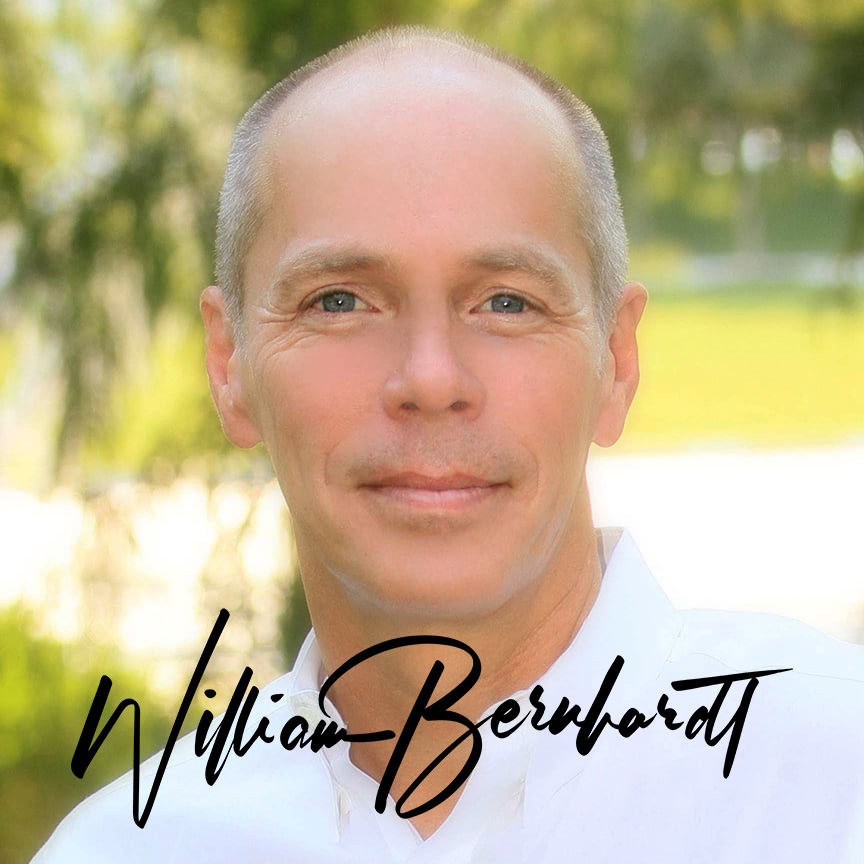
At Soonercon last month, I met many authors. One of them, William Bernhardt, has led a jam-packed life. I’d find it easier to list the things he hasn’t done. Reading his bio makes me want to get off the couch and swim the Atlantic just to say I’ve done something he hasn’t. (Note to self—check if he’s done that, too.) I’m guessing he has to update his bio every week just to keep it current. Here’s this week’s version:
Bio
William Bernhardt is the #1 bestselling author of over sixty books, including the nonfiction book The Superman Wars and the Daniel Pike legal thriller series (The Last Chance Lawyer). His previous works include the historical novels The Florentine Poet and Nemesis, The Final Case of Eliot Ness, three books of poetry, children’s and young adult books, and several books on fiction writing. In addition, Bernhardt hosts an annual writers conference (WriterCon), an annual writing cruise, small-group writing retreats, a magazine, plus a free e-newsletter and podcast. He is also the president of Bernhardt Books.
Bernhardt has received the Southern Writers Guild’s Gold Medal Award, the Royden B. Davis Distinguished Author Award (University of Pennsylvania) and the H. Louise Cobb Distinguished Author Award (Oklahoma State), which is given “in recognition of an outstanding body of work that has profoundly influenced the way in which we understand ourselves and American society at large.” He has been nominated for the Oklahoma Book Award over twenty times in four different categories and has won the award three times. In 2019, he received the Arrell Gibson Lifetime Achievement Award.
In addition to his novels and poetry, Bernhardt has written plays, a musical (book and score), humor, children stories, biography, and crossword puzzles for The New York Times. He is also a Jeopardy! champion (2013). He has edited two anthologies (Legal Briefs and Natural Suspect) as fundraisers for The Nature Conservancy and the Children’s Legal Defense Fund. In his spare time, he has enjoyed surfing, digging for dinosaurs, trekking through the Himalayas, paragliding, scuba diving, kayaking, caving, zip-lining over the canopy of the Costa Rican rain forest, and jumping out of an airplane at 10,000 feet.
OSU has called Bernhardt “Oklahoma’s Renaissance Man.” When Bernhardt delivered the keynote address at the San Francisco Writers Conference, chairman Michael Larsen noted that in addition to penning novels, Bernhardt can “write a sonnet, play a sonata, plant a garden, try a lawsuit, teach a class, cook a gourmet meal, beat you at Scrabble, and work the New York Times crossword in under five minutes.”
Interview
Poseidon’s Scribe: How did you get started writing? What prompted you?
William Bernhardt: I knew I wanted to be a writer when I was seven, or so my mother says, and since she’s my mother (age 97), I think we have to take her word for it. Once I realized people were writing those books I loved, I knew that’s what I wanted to do. The problem was, being a kid in a small town in Oklahoma with no writers, figuring out how to accomplish that!
P.S.: Who are some of your influences? What are a few of your favorite books?
W.B.: Superman comics, for starters. Comics led to science fiction, like The Martian Chronicles and Slaughterhouse-Five. Comics also led to Shakespeare and ancient lit classics—many of which are basically superhero stories.
P.S.: When I add up all the things you claim to have done, I conclude you are either 200 years old, more than one person, or never sleep. Which is it? If none of those, how to you manage your time?
W.B.: Ha! I hope I get 200 years, but that may be a stretch. I do prefer to stay busy. Keeps me out of trouble. I get up early in the morning and work through the day, first writing, then dealing with other matters. I think I was born with a fortunate gene. Where some people might think, Wouldn’t that be nice?, I always think, How can I make that happen?
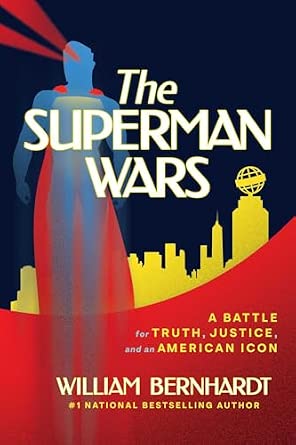
P.S.: Your recent book, The Superman Wars (love the cover, by the way), isn’t fiction, but provides a cautionary account of the intellectual property rights to the Superman character. What is the major point of the book and what should writers learn from it?
W.B.: (I love the cover too. I told them I wanted a book anyone could hold without embarrassment, no Zap! Zowie! Pow! or any of that. I thought they did a terrific job.)
This is a cautionary tale I hope all creatives will read. The vultures are still out there, more than happy to take advantage of writers and artists and internet content creators. We still have corporate sharks, plus vanity presses and AI scams and many other threats to the ability of artists to benefit from their work. Protect yourself! Connect with other writers (even if you aren’t the most social person in the world). Get the knowledge you need to succeed. And never sign anything without getting an expert opinion!
P.S.: You’ve been described as Oklahoma’s Renaissance Man, and as a polymath (or a practitioner of Crichtonism, a word I just learned today, named for James Crichton [1560-1582]). Why such varied interests, when most people are satisfied with expertise in one area?
W.B.: Look, we get one life and it isn’t that long. Probably as a result of voracious reading, I have a lot of interests, so I never get bored. And I don’t want to spend my entire life doing the same thing over and over. I practiced law for ten years. That was enough. I wrote a lot of thrillers. But after several of those, I thought it was time for new challenges. As I started researching this book, I realized there was so much more to it than most people, even in the comics world, realize.
P.S.: Do your varied non-writing interests (gardening, cooking, games and puzzles, surfing, hiking, scuba diving, kayaking, caving) interfere with your writing, or supplement it in some way? Do these activities find their way into your novels?
W.B.: The truth is, you can only write so many hours a day. Usually by mid-afternoon, it’s time to do something else. Like prep for WriterCon, the writers conference I co-host, or Bernhardt Books, my small publishing company. I don’t know if that works its way into my books—but my love of comics has over and over again. And we do take vacations. In May I spent a week roaming around New Mexico with my daughter Alice, hiking and rock climbing (nothing dangerous) and exploring caves. I consider myself fortunate to have built a life that allows me to do so many things I enjoy.
P.S.: What is WriterCon, and why did you start it?
W.B.: WriterCon is my annual writers conference, every Labor Day weekend in OKC (September 4-7 this year) and 2026 is our 20th anniversary! We have over 60 speakers, writers, agents, publishers, and others in the industry offering writing tips, publishing advice, marketing angles—whatever people need. We have contests and lots of chances for consultations with pros. I may be biased, but I think it has become one of the leading conferences in the country. Every year I see attendees get agents or publishing deals, which makes me very happy. I started this as a way of giving back. I remember what it was like being a punk kid in a small Oklahoma who wanted to be a writer—but with no clue how to make that happen. I hope WriterCon is making it a little easier for the next generation.
P.S.: What are the easiest, and the most difficult, aspects of writing for you?
W.B.: Writing is hard, and nothing is ever going to make it easier (including AI), so I just accept it. My first drafts are always terrible (or so I think), but I will revise and revise until it starts looking like something. I don’t think there is an easy part, but I enjoyed all the research I did for The Superman Wars, even though it ultimately took more than twice as long as I anticipated. I ultimately traveled to eight different states, combed through twelve archived library collections, interviewed more than fifty people and read hundreds of books, periodicals, and unpublished manuscripts. I was able to interview the members of Jerry Siegel’s family, his daughter Laura and her sons Michael and James, who have been reluctant to talk in the past. I even visited Jerry’s childhood home!
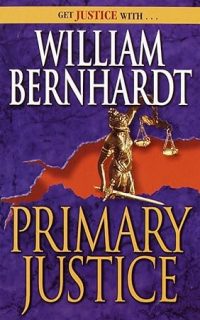
P.S.: Tell us about Ben Kincaid, the main character of your nineteen-novel series beginning with Primary Justice. What is he like, and what sets him apart from other lawyer protagonists?
W.B.: He’s Clark Kent with a briefcase. He’s smart, persistent, and wants to help—but he’s also socially awkward, insecure, and needs a partner to fill his vacancies. Christina is his Lois Lane. I’ve started a 20th book in the series but set it aside when I became obsessed with the Jerry Siegel story.
P.S.: You appeared on the TV show Jeopardy! and performed well. Tell us about that experience.
W.B.: That was a blast! I’ve been watching Jeopardy, usually with my mother, since I was four. When they started doing online tests around 2010 I took it and got a callback, then went to New Orleans for an audition, then was asked onto the show. I learned how important speed and buzzer control are. Everyone there was smart, but some people, including me, struggled with the buzzer. During our rehearsal, I didn’t get a single chance to answer a question. The producer actually came up to me and whispered, Bill are you trying to ring in? Yes, of course I am! but I wasn’t as quick as I wished (I was the oldest person in the green room by almost 20 years, not that I consider that an excuse). Anyway, once the questions got tougher, I managed to get in enough correct responses to become a Jeopardy champion.
P.S.: What is your current work in progress? Would you mind telling us a little about it?
W.B.: My next book will be The Batman Wars, and I’ll bet you can guess the subject. Bill Finger and Jerry Robinson and…that other guy. You know, the one who took all the credit. This is a story that is much less well known, and perhaps even more heartbreaking, than the Siegel story.
Poseidon’s Scribe: What advice can you offer aspiring authors?
William Bernhardt: Keep writing! Learn as much as you can, but the most important thing is to write. Listen to the WriterCon podcast (it’s free). Put in your 10,000 hours. The more you do the better you’ll get. Then come to WriterCon, learn what you need to know about the business, pitch an agent or publisher. It will happen eventually, if you keep writing and don’t quit!
Poseidon’s Scribe: Thank you, William. Great advice from the man who’s done (nearly) everything.
Web Presence
As befits a guy who’s been everywhere, you can find William Bernhardt everywhere online. That includes his website, Facebook, Instagram, Amazon, LinkedIn, TikTok, YouTube, and Threads. You can buy The Superman Wars here, learn about, and sign up for, WriterCon here, and subscribe to William’s newsletter here.