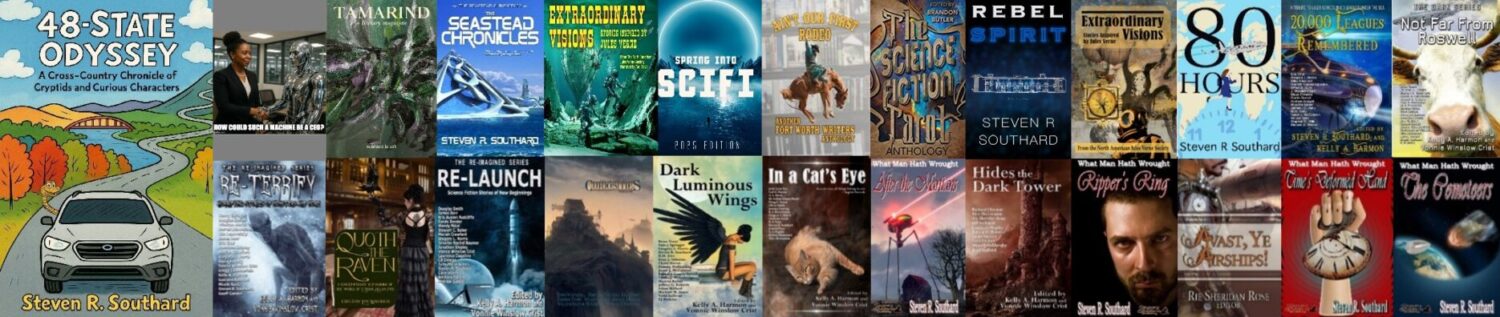
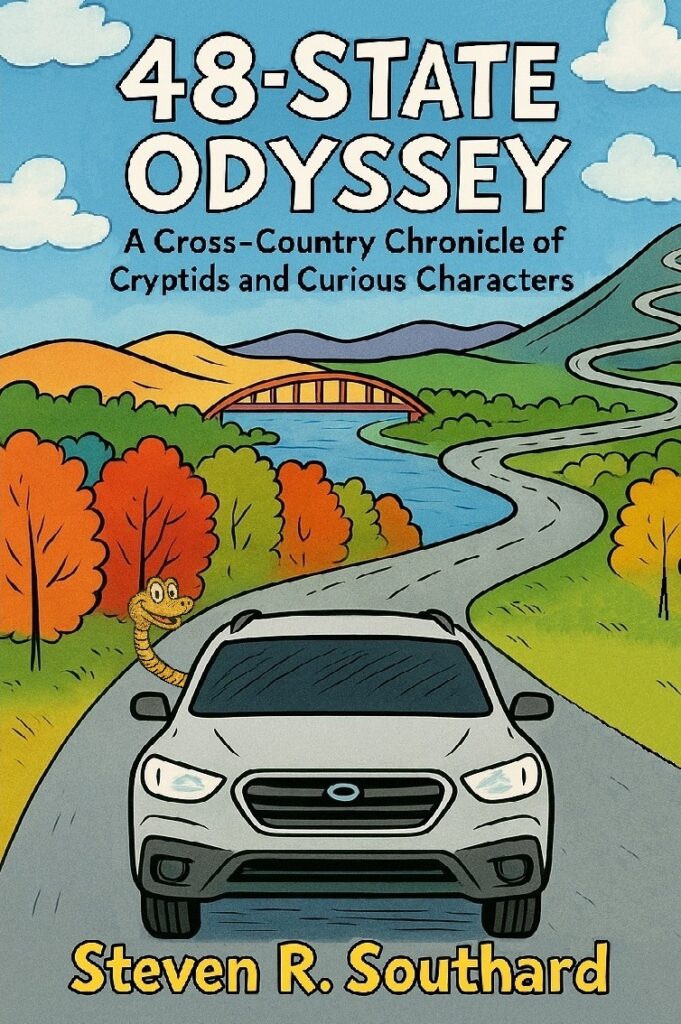
My wife and I made a road trip touching the forty-eight contiguous states, and you can read the true story of that journey.
Well, most of it’s true. A good deal of it. Some of it.
I’m a fiction writer, so you’ve got to expect some exaggeration. Did we really encounter Bigfoot, Paul Bunyan, aliens, and various monsters and cryptids? Did we really receive a magical pet rattlesnake from Pecos Bill? Read the book and make your own judgment.
You’ll find it packed with fun illustrations. It also includes facts about each state that you got along fine without knowing. Written in a whimsical style, the book should suit readers of all ages.
If you’ve ever dreamed of driving through the country and touching forty-eight of the fifty states, I can recommend a good road atlas. If you’d rather just read about someone else’s adventure without driving anywhere, 48-State Odyssey might appeal to you. Or you could inflict it on someone else as a gift.
Where to Get it
For the time being, you can purchase 48-State Odyssey in ebook and paperback formats, but only at Lulu.com. I expect it to become available at other book distributors by mid-December. I’ll announce those availabilities here on this website.
Swerving Outside the Lane
Reading this, you’re thinking, “Hey, Poseidon’s Scribe, you couldn’t have written this book. You write science fiction, and some horror, much of it with a maritime setting. Who really wrote 48-State Odyssey?”
I did. I really did. True, it’s not in my usual genres. Sometimes a writer has to try something different. I’ll get back to my Seastead Chronicles series, I promise.
While you’re waiting for that, read 48-State Odyssey, a crazy, humorous travel book really written by—
Decades ago, when I first started writing fiction, I wrote some secret history stories involving the development of submarines. During my research, I came across an obscure and incomplete reference to someone in China inventing a working submarine around 200 BC.
The reference lacked specifics, leaving me free to make up my own details. Since inventors tend to adapt what’s been done before, I thought a Chinese mechanic of that time might take a common horse-drawn wagon, enclose it and waterproof it. Then he’d eliminate the need for a horse by means of gears and shafts so he could propel it himself from inside.
I hoped to do for submarines what Ray Bradbury did for aerial vehicles in his story “The Flying Machine.” In Bradbury’s story, a Chinese tinkerer invents a kite-like flying machine, but his emperor fears dire consequences of this development.
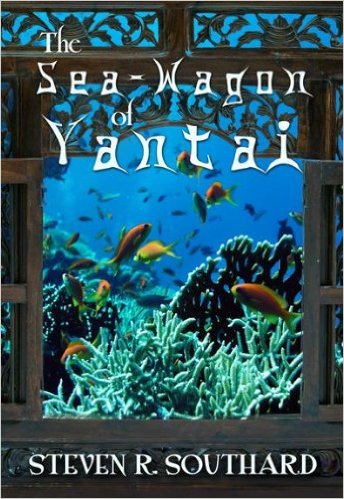
Here’s the description of my story: In 206 B.C., warring dynasties clash within China. A young warrior, Lau, receives orders to verify the legend of a magical wagon that can cross rivers unseen. He encounters Ning, the wagon-maker in the seaside village of Yantai. Ning has constructed a wagon that can submerge, travel along the bottom of the Bay of Bohai, and surface in safety—the world’s first practical submarine. Ning enjoys the peace and beauty of his undersea excursions and will not allow the military to seize his wagon or learn its secrets. Lau must bring the valuable weapon back to his superior. In the hands of these two men rests the future of the submarine, as an instrument of war or exploration.
Eternal Press published “The Sea-Wagon of Yantai,” but the book has since gone out of print.
A Connection?
Did someone read my story and ponder about the military potential of a wheeled vehicle traveling on the bottom of a deep lake or river? I hope not.
The article gave the impression that the Chinese underwater tank was in the concept stage and that a working prototype might be years away. Plenty of time for competitor nations to develop their own version.
Sheesh. I hope the entire future of armored vehicles hasn’t been set on a new course by lil ol’—
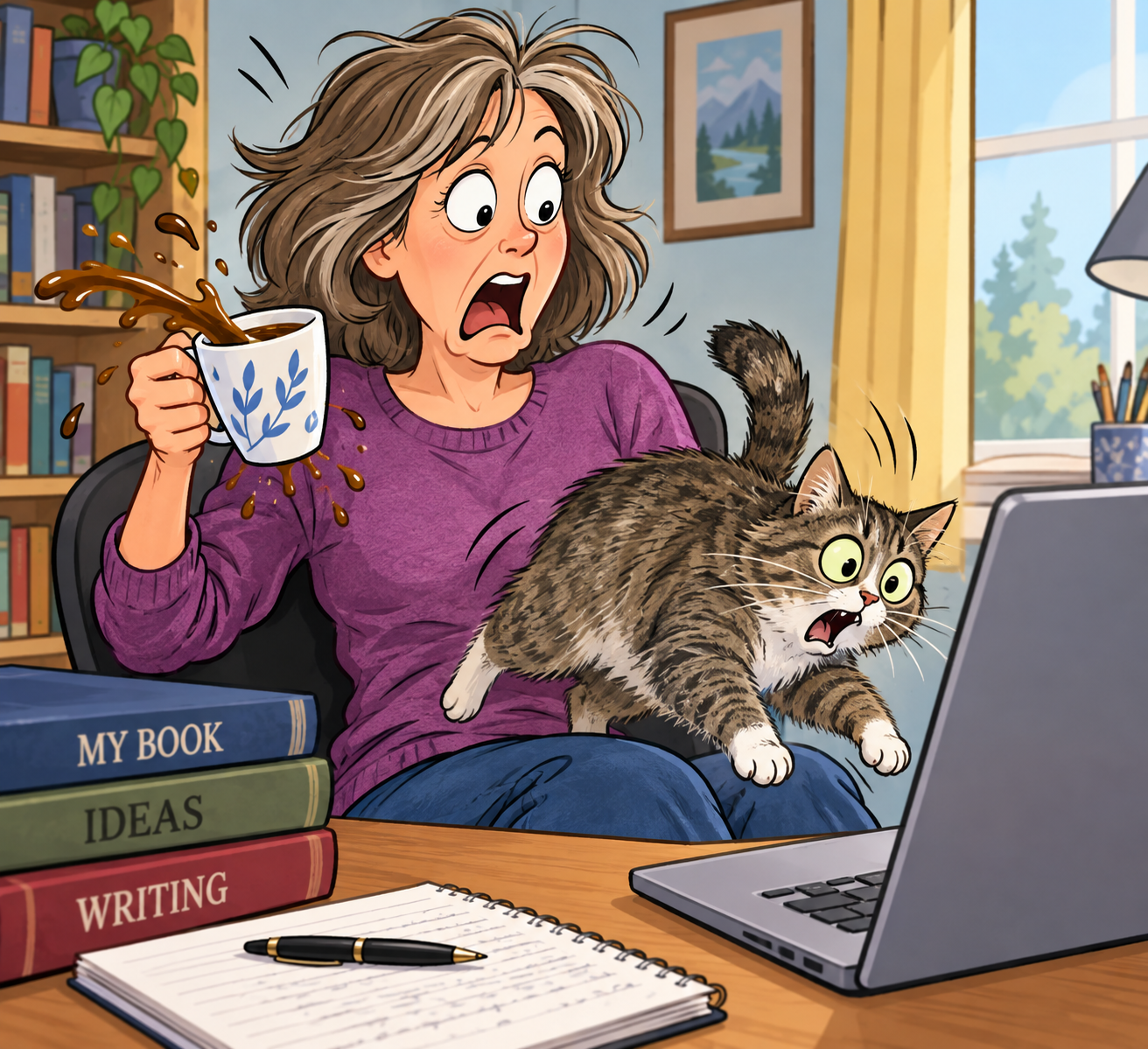
One day, your most loyal fan-reader contacts you. “Your latest book, The Great American Novel,” she says, “isn’t up to your standards. Frankly, it’s terrible. You really let me down this time.”
You’re puzzled. You didn’t write The Great American Novel. But, checking your Amazon author page, you discover it there, with your name on it. What the heck?
Image created using ChatGPT
Perhaps you’ve traveled to an alternate universe—one where the alternate you is more prolific, but less talented.
More likely, you’re the victim of a Parasite Author.
The Parasite Problem
Using Artificial Intelligence (AI), an unscrupulous person can generate a novel manuscript, written in your style, in minutes. An AI image generator will provide him a book cover similar to your other novels. He can publish this book on Amazon, with your name as the author, and even get it posted on your Amazon author page. Any earnings from that book go, of course, to him, not to you.
Like a parasite in nature, he attaches to a host for his own benefit.
Recently, author Noelle W. Ihli discovered another version of her novel, The Last to Drown, listed on her Amazon author page. It featured a similar cover and a price $5,00 more than her own novel.
Author Vanessa O’Loughlin writes crime stories under the pen name Sam Blake. So does one of those parasite authors.
The example I used to begin this blogpost may have sounded hypothetical, but it happened to author Tamra Westberry. A reader contacted her, disappointed by her novel, Project Erebus. Tamra hadn’t written Project Erebus, but saw it listed, under her name, on her Amazon author page.
My Proposed Partial Fix
Knowing top executives at Amazon read my blogposts, I offer them a simple—though partial—solution. Amazon already knows how to pay authors the revenue for their books. Consider implementing this policy change—revenue from all books listed on an Amazon author page go to the author listed on that page. That removes the financial incentives for parasites to attach to those pages.
It wouldn’t stop parasites from offering copycat books on Amazon—a search for an author’s name would still display the parasitic books as well. But the Amazon author page would provide readers with accurate information.
Amazon could suggest potential book buyers check the author page first, before purchasing, to know for sure.
How about it? Would that work? I’d love for Amazon executives or others with knowledge of the industry, to contact—
Most of us can’t relate to the question in this post’s title. We don’t have to choose either one. We live on land, on Earth.
Still, someday, people may live for long periods—their whole lives—either underwater or in space. Which would you choose?
Underwater History—1960s
The chronology of underwater habitat history began, and blossomed, in the 1960s. Some of the more notable habitats of that era include Man-in-the-Sea I and II, Conshelf I, II, and III, SEALAB I and II, Glaucus, Hydrolab, BAH I, Tektite I, Helgoland, and Chernomor. These housed between 1 and 10 occupants for missions ranging from hours to a few weeks. Professional divers manned the early ones, but starting with Tektite, scientists participated.
SEALAB I
Underwater History—1970s
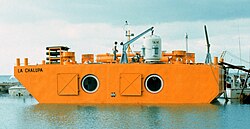
Some of the 1960s projects continued into the next decade, including Hydrolab, Helgoland, and Chernomor. Few new habitats began in the 1970s, and these included Seatopia, Tektite II, and La Chalupa. These furthered the concept of undersea living to some degree. Tektite II hosted the first all-female mission. La Chalupa could accommodate 50 aquanauts at a time.
La Chalupa
Underwater History—1980s
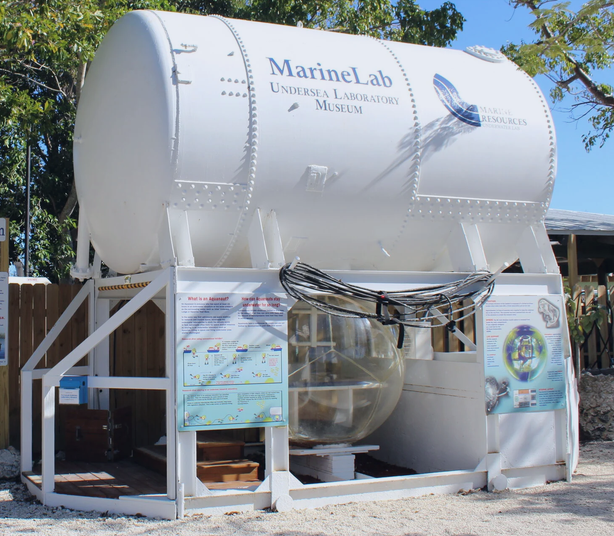
Three more habitats began operating in the late 1980s, namely Aquarius, MarineLab Undersea Classroom, and Jules’ Undersea Lodge. That latter one had been converted from the La Chalupa habitat and can be booked for brief stays like a hotel. All three of these remain operational today.
MarineLab Undersea Classroom
Underwater History—1990s
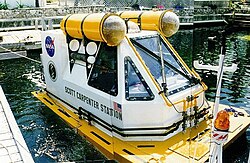
To my knowledge, only one habitat started in this decade, the Scott Carpenter Space Analog Station.
Scott Carpenter Space Analog Station
Underwater History—2000s
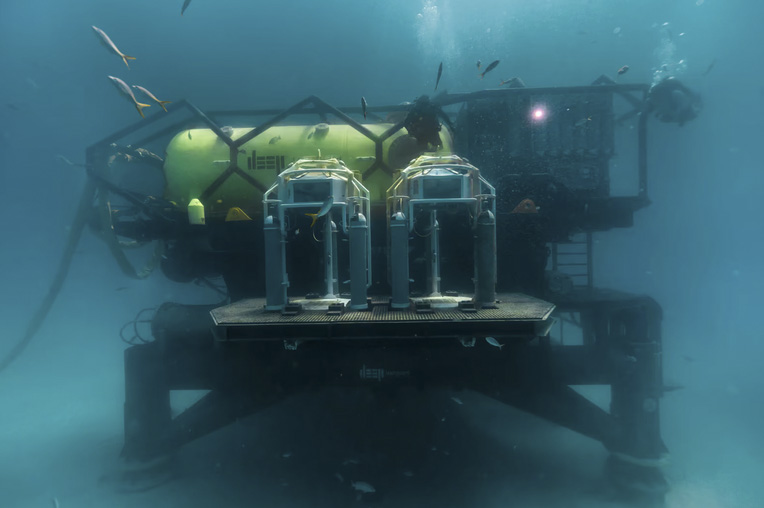
The company DEEP started the habitat Vanguard this year. This CNN story about it inspired my blogpost.
DEEP Vanguard
Comparison to Space Habitats
With all these undersea habitats over all those decades, with most located a few miles from shore, with resupply and rescue so much easier, you’d think we’d have many more man-hours of experience living underwater compared to space. Right?
Not even close.
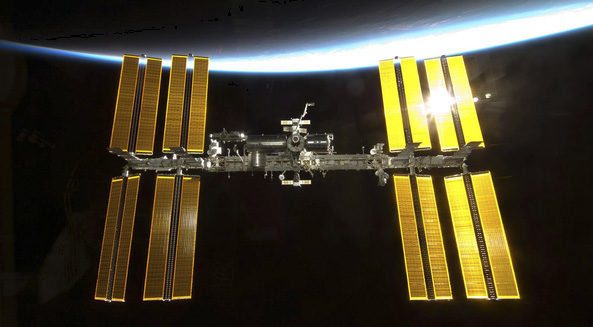
International Space Station
Space habitats started later, in the 1970s. Since Salyut-1 in 1971, there have been only 8, with 2 still operational. But in man-hours of operation, space habitats far exceed their underwater counterparts. At most, aquanauts stay for days or weeks. Astronauts remain for months, and one stayed over a year.
Why Water Homes Fell Behind
Was the pressure of competition too much for the underwater habitats? No, but pressure played a part. Engineers designed almost all such habitats for “saturation diving” or “ambient pressure operation.” That means the air pressure inside the habitat matched that of the ocean outside. This allowed aquanauts to don scuba gear, exit the moon pool, and work outside for hours each day.
Though saturation diving eases outside work, it limits the occupants’ time in the habitat. After four weeks, the aquanaut must decompress back to atmospheric pressure to avoid adverse physiological and psychological effects. Further research into chemical supplements might result in extensions to that 28-day limit.
One-Atmosphere Alternatives
You’re wondering if engineers could design underwater habitats with normal surface air pressure inside, so people could live there longer, not limited by the saturation diving limit. Sure. Designers would have to make the hull thicker, but it would resemble, in concept, a submarine resting on the bottom.
Two existing habitats—the Jules’ Undersea Lodge and Aquarius, and the upcoming DEEP Sentinel offer part-ambient and part 1-atmosphere options.
Imagine
Both oceans and outer space represent hostile environments, unsuited to long-term human living. But people have made fledgling attempts in both areas. One day, some will choose to live underwater, and others will opt to live in space. To read a fictional take on living at sea, with some cities underwater, read The Seastead Chronicles by—
What a weekend! I enjoy attending science fiction conventions, and love it when I’m invited to speak. During the past few days I went to P-Con, both a pun on the word pecan and a scifi/fantasy convention in Dallas.
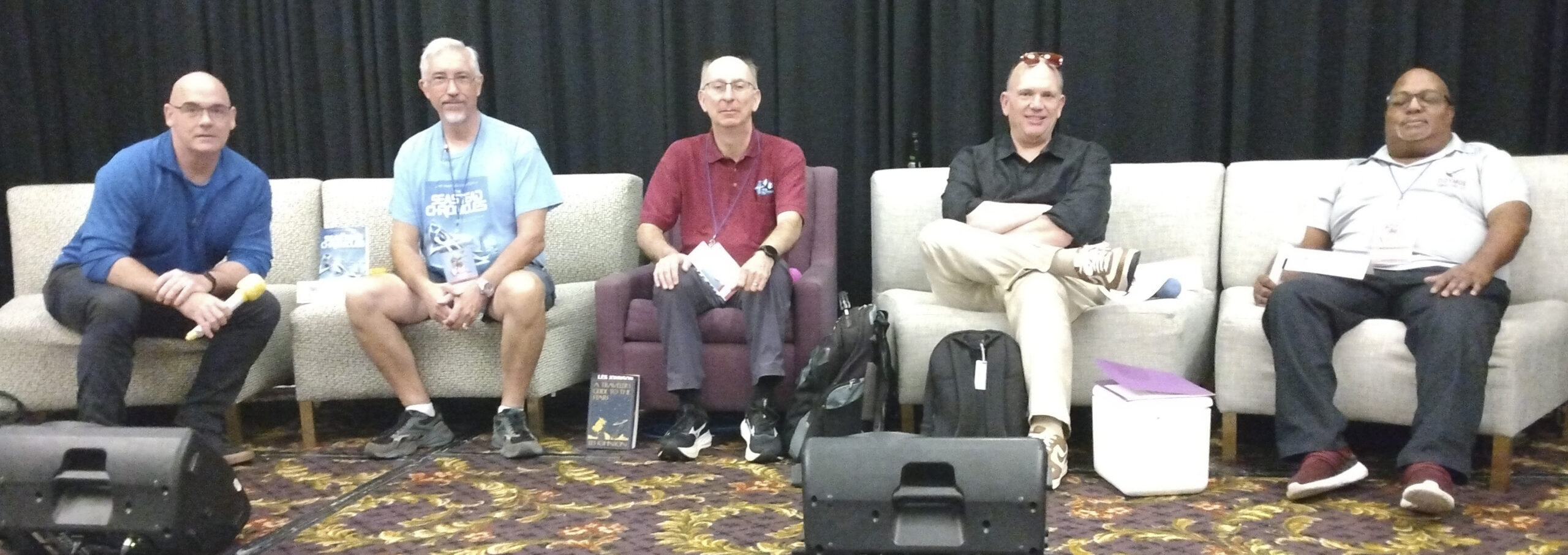
Stephen Patrick, me, Les Johnson, Brian C. Thompson, and Ken Ruffin
Author Alley
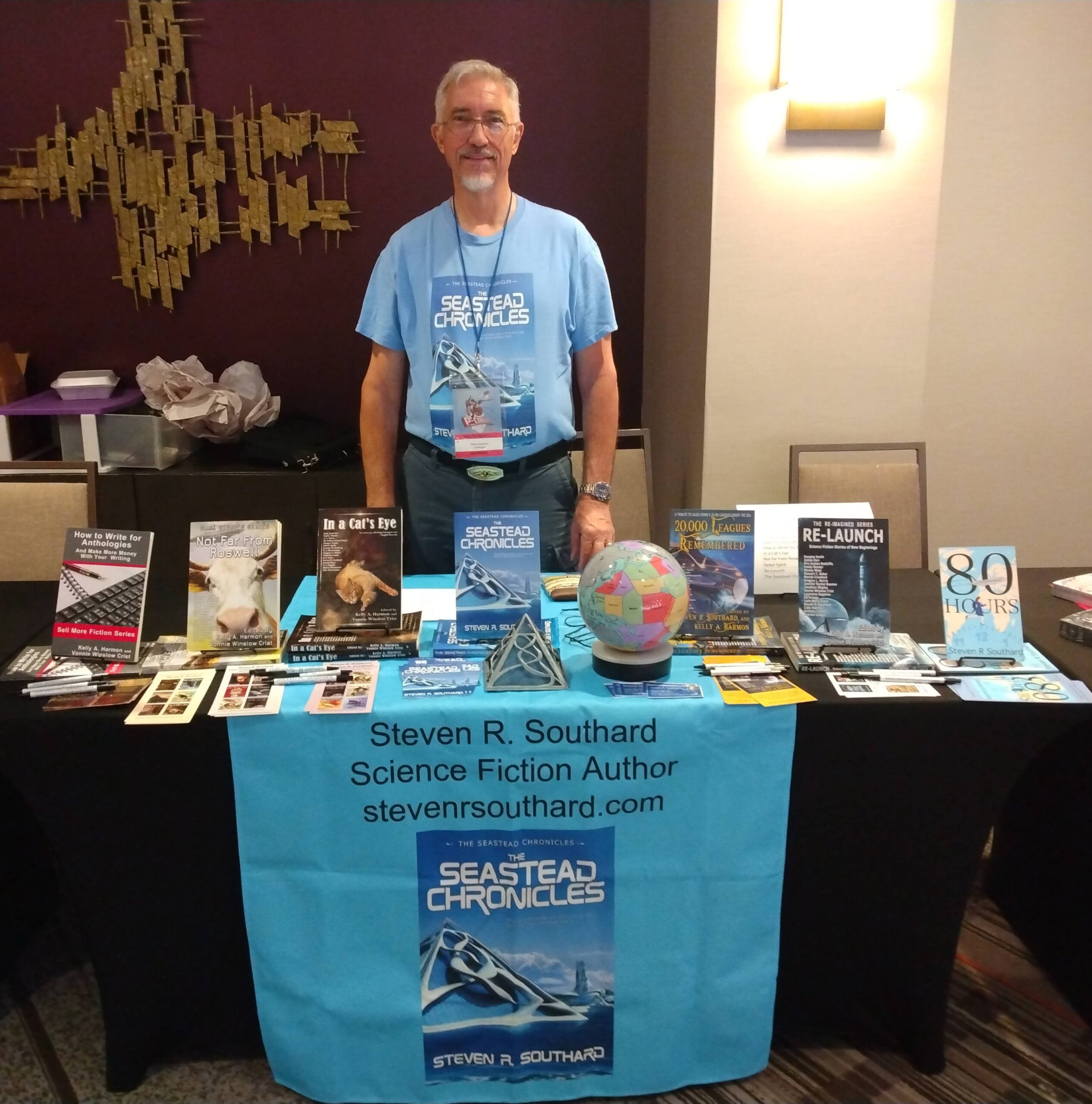
Con organizers allotted me two hours for a book signing. They call it “author alley” since they banished us to an alley behind the building. Not really. We occupied a row of tables. I got a spot between Stephen Patrick and RJ Hanson.
Author Reading
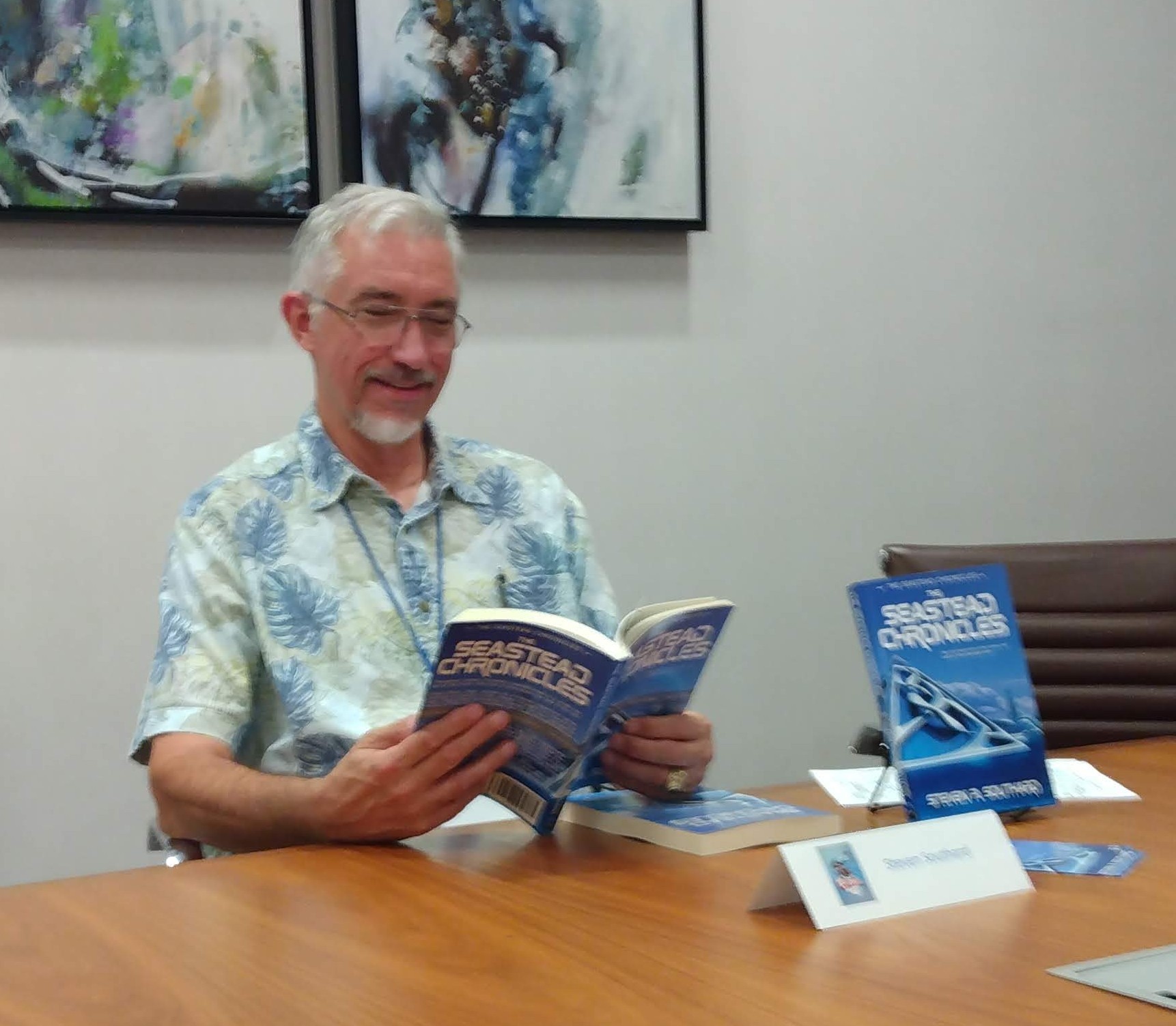
On Saturday, author Jim Curtis and I read to a small group of attentive fans. Jim read from a story he’s having published soon, and I read my story “A Green Isle in the Sea” from The Seastead Chronicles.
After the Quest
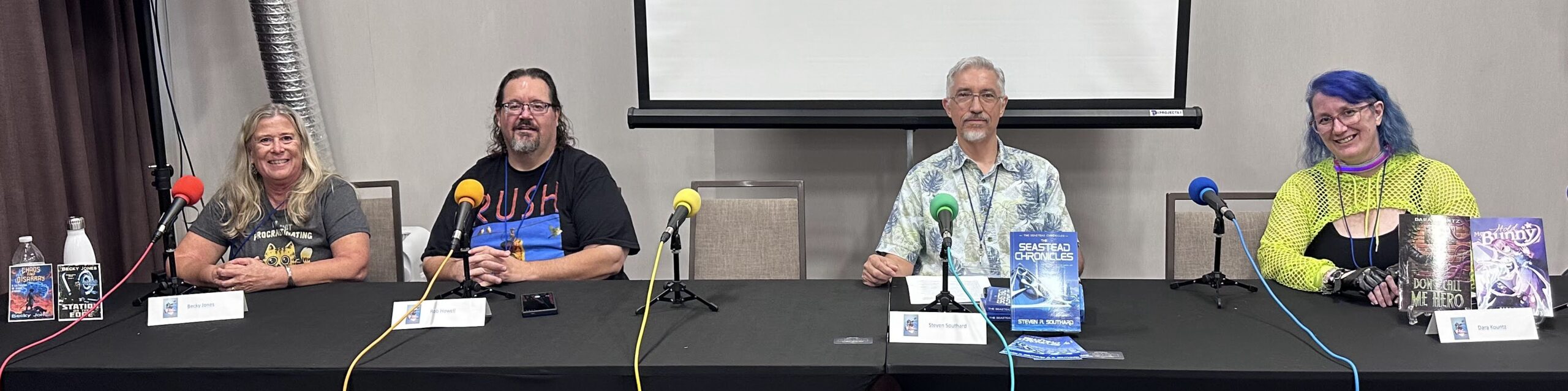
Author Dara Kountz moderated a panel called “After the Quest: What Happens When the Adventuring is Over.” Author Becky Jones, author Rob Howell, and I rounded out the panel. We discussed the phenomenon of heroes settling down after their adventures, sometimes to be called to another battle, sometimes to mentor a younger hero, and sometimes to grapple with the adventure of post-traumatic stress disorder.
Becky Jones, Rob Howell, me, and Dara Kountz
Hard Science
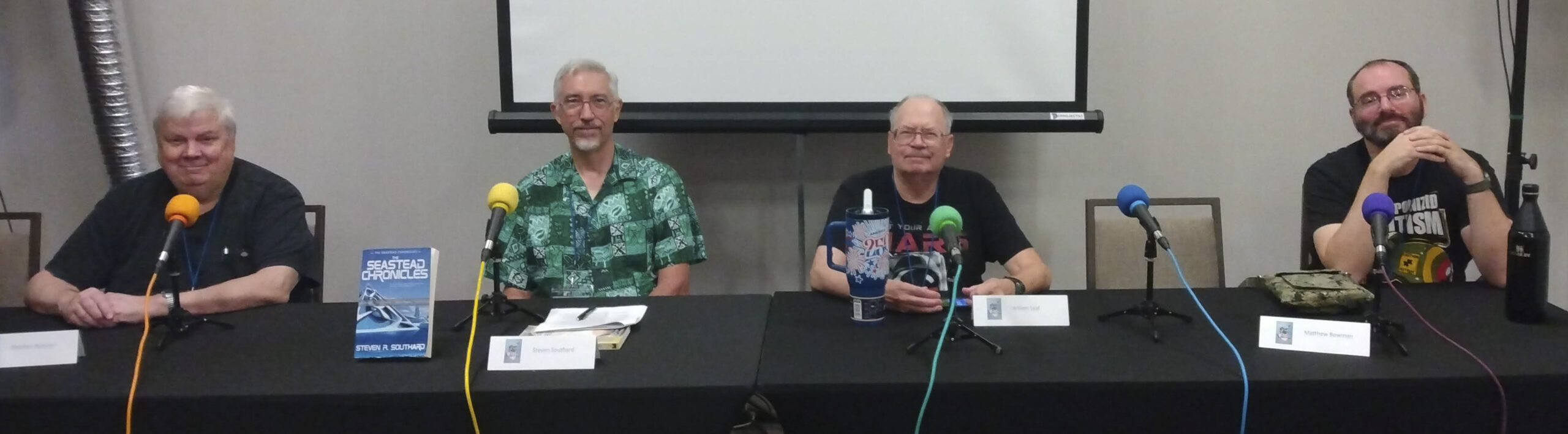
On Sunday, historian Matthew Bowman moderated a panel called “Hard Science without a Science Degree.” William Leaf, author Stephen Rolston, and I filled out the panel. We discussed the dilemma faced by someone yearning to write “hard” science fiction, but who lacks a science or engineering degree and fears getting the facts or terminology wrong.
Stephen Rolston, me, William Leaf, and Matthew Bowman
History
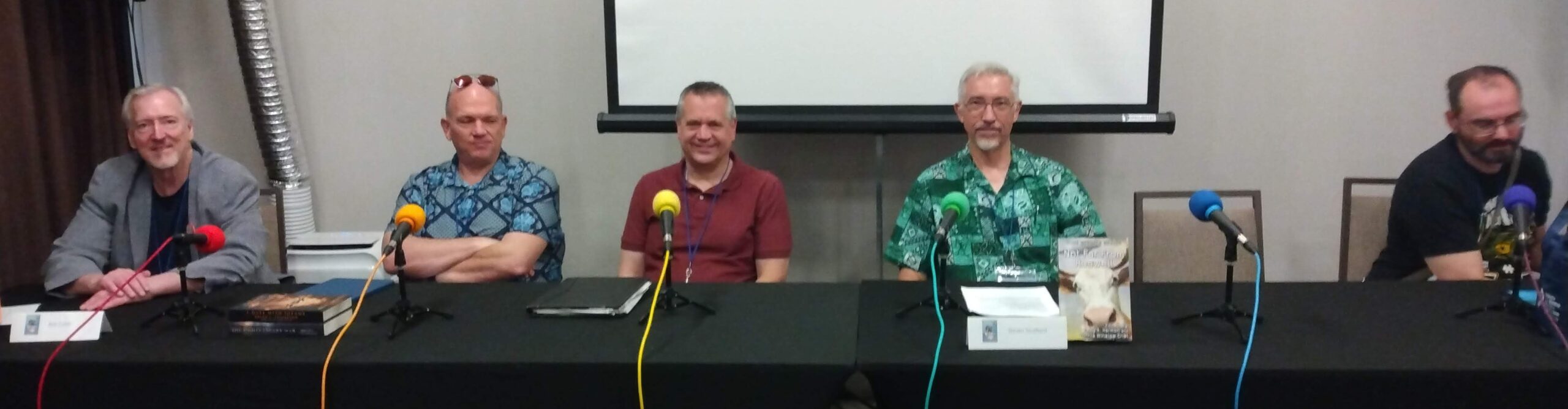
The last panel of the con explored “How History Informs Science Fiction and Fantasy.” We weren’t sure who was supposed to moderate, but author Rick Cutler stepped up to do it, and a panel consisting of historian and author Matthew Bowman, author Brian Thompson, author David Rike, and me. The discussion ranged over immense stretches of history, geography, technology, and scifi/fantasy literature.
Rick Cutler, Brian C. Thompson, David Rike, me, and Matthew Bowman
P-Con-clusion
Though I’d never attended a P-Con before, I think I came out of my shell and didn’t come across as too nutty. In a nutshell, I had a cracking good time. That’s probably more than enough puns for—
P-Con is a science fiction and fantasy convention in Dallas, Texas. Don’t confuse the name with the nuts known as pecans. I believe this convention involves a different type of nut.
It takes place next weekend, September 25-27 at the Crowne Plaza Dallas Market Center-Love Field by IHG. The address is 7050 N. Stemmons Freeway Dallas, Texas 75247.
I’ll be there. It’ll mark my first time at this con.
Schedule
Not only will I attend, I’ll do some talking. Here’s my schedule:
Panel/Event
Date/Time
Future of Tech – Sci-Fi becomes fact
Friday 1 pm
Author Reading
Saturday 4 pm
After the Quest: What Happens When the Adventuring is Over?
Saturday 5 pm
Hard Science without a Science Degree
Sunday 12 pm
How History Informs Science Fiction and Fantasy
Sunday 3 pm
Order vs. Chaos
Most scifi cons strive for a modicum of organization. P-Con, by contrast, seems to thrive on chaos. They embrace it.
I’ll see how it goes. If you attend, we can both find out together. It promises to be a fun event, despite the presence of—
A Substack article by author Ines Johnson sparked the idea for this blogpost. In that article, she mentioned scientific studies of the subject, and summarized them like this:
If not too loud, ambient noise can help your creativity.
To help you focus, choose instrumental music, not lyrical (singing) music.
Couple your writing habit with a particular background sound.
Consider binaural beats and subliminal sound. Binaural refers to playing one tone in your right ear and a different one in your left.
Author Ines Johnson prefers to write to the sound of other people talking in hushed tones—murmuring. Back when she was a single mom, it comforted her to hear her kids playing in an agreeable manner. Silence meant trouble. These days, Ms. Johnson sometimes uses an app that simulates the low-volume babble of a coffee shop, and other times uses subliminal audio tracks.
My Preference
I’d prefer not to have a preference at all. I wish to write wherever I am, wherever I find time, no matter the background noise. This includes writing in a doctor’s or dentist’s office, riding as a passenger in a car, etc. Sometimes I write outside with the background sounds of nature. Other times, I write inside, in silence or with the faint sounds of a TV in another room.
Experimentation
Ms. Johnson advises writers to experiment to find the background sound most conducive to their creativity. I understand the value of that approach and agree it would help the majority of writers.
Further, I think writers may find one type of background noise works best for the frantic, free-flow of first drafts, while another type works for the detailed, precise concentration of the editing phase.
Non-Experimentation
However, I don’t think that’s for me. Suppose, after completing the experiment, I discovered, say, jazz music worked best. I won’t always be in a place where I can listen to jazz. In a sub-optimal noise environment, I’d be worried my writing would suffer, that it would turn out worse than it could be.
After years of taking the noises life gives me, I think my brain prefers the chaos of variety, of random unpredictability.
Quiet noise, music, or silence—they’re all okay for—
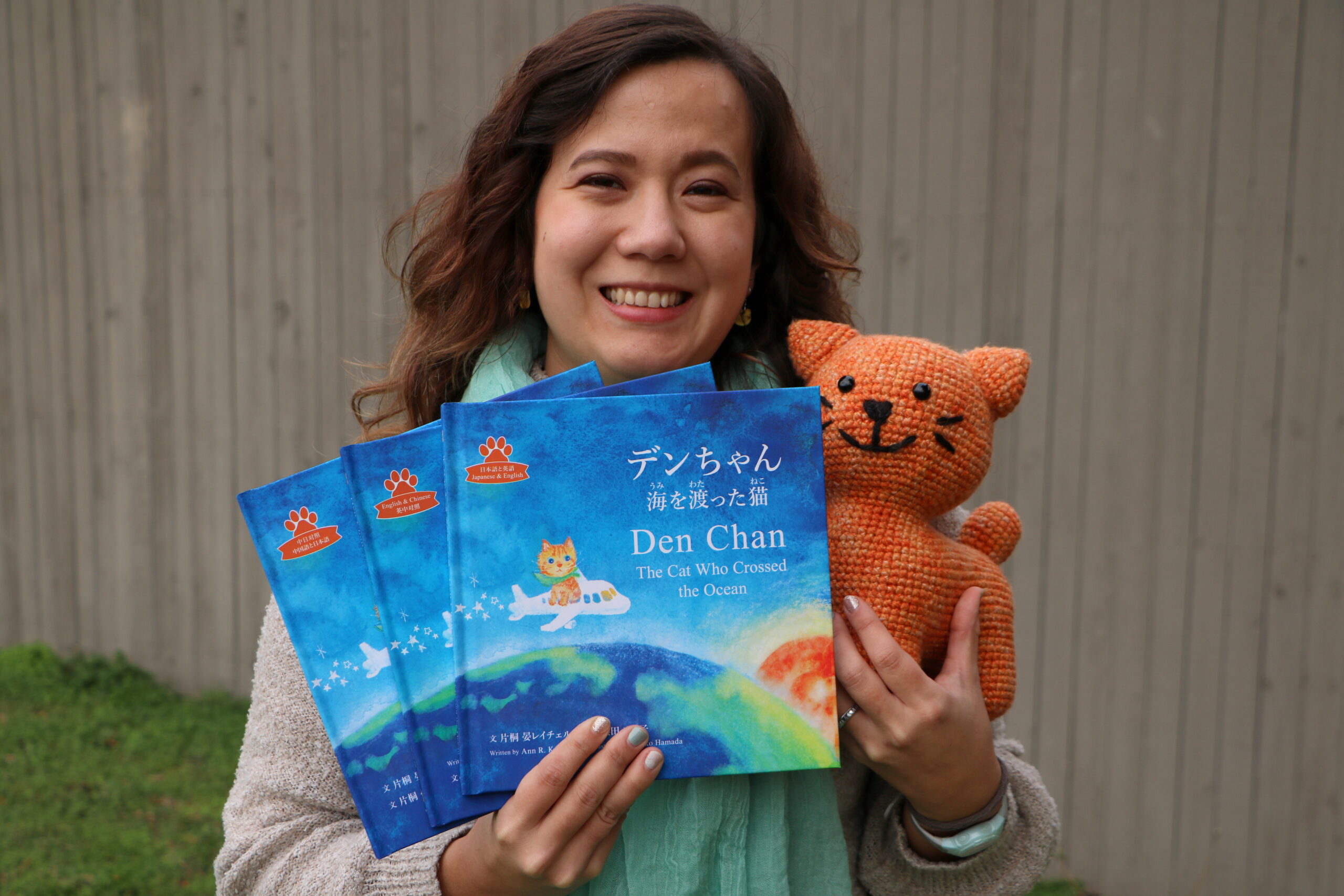
Just before they closed, Leaves Book and Tea Shop held one last Afternoon with Authors event. That’s where I met Ann Katagiri. Just as Leaves combines books with food, so does Ann. Not only is she an author, but she’s soon to start her own cafe. Not only is her book a fun read, but it might inspire you to learn a new language, or two. As you’ll find out from the interview, Ann has specific dreams, and pursues them with determination and passion.
Bio
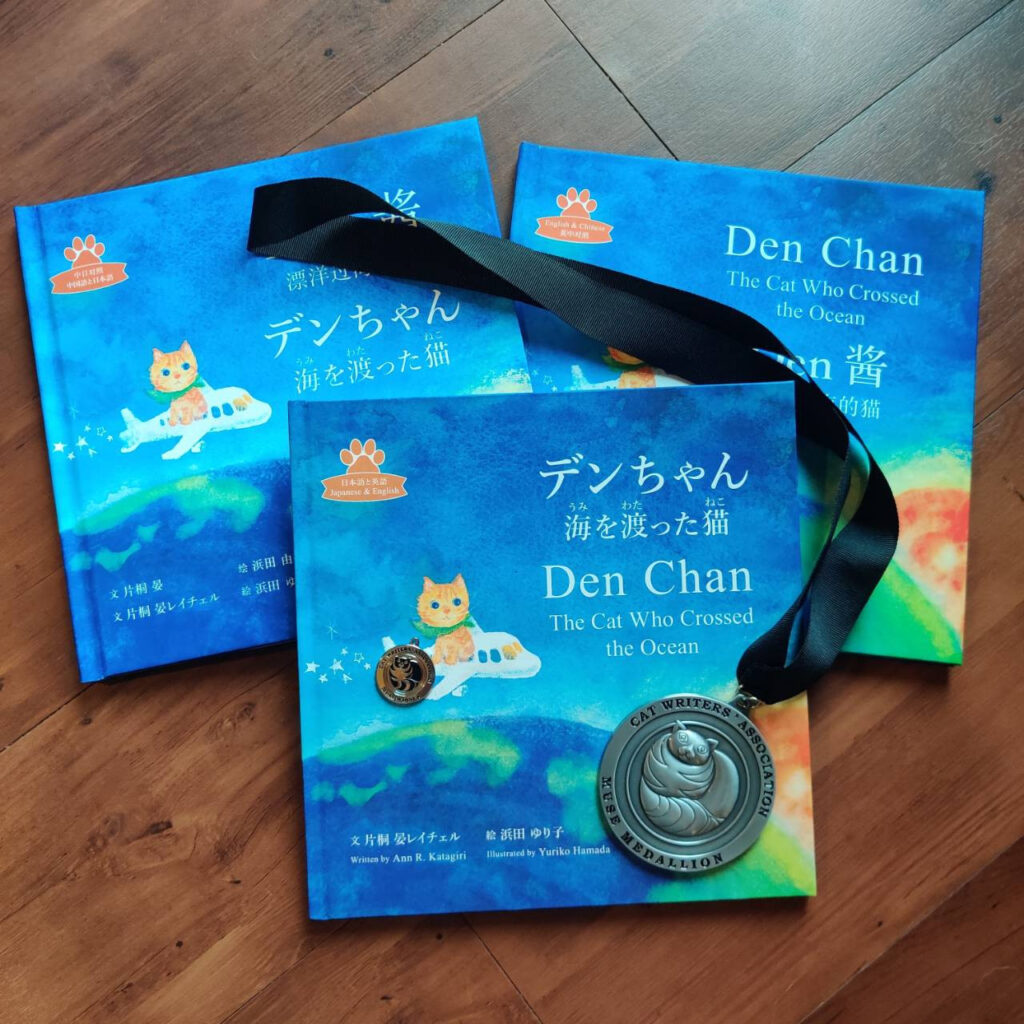
Ann Katagiri is a polyglot author who speaks English, Japanese, and Mandarin Chinese. Her three debut bilingual books, all titled Den Chan: The Cat Who Crossed the Ocean, were independently published in December 2023. Based on a true story, the books follow the adventures of an orange tabby cat who travels from Japan to Texas. The children’s books are written in bilingual pairs of Japanese & English, English & Mandarin Chinese, and Mandarin Chinese & Japanese. Proudly printed and bound in the Dallas-Fort Worth area, each book purchase supports five small businesses. The books are written in hope of inspiring language learning in everyone, regardless of age. She often does vendor events around the DFW area, selling her three books, t-shirts, and lots of different hand-made kitty merch. All of her items that she doesn’t craft are sourced from other creatives, supporting local small businesses 100%. Her next venture is one true to her heart, Den Chan Cafe, coming in September 2026.
Interview
Poseidon’s Scribe: How did you get started writing? What prompted you?
Ann Katagiri: Writing has always been important in my family, especially growing up with a father who is an academic and published author as well as a mother who is an English teacher. For me, writing started off as a place to put words to my feelings, morphed into four years of travel blogs, then my current trilingual blog, A Halfie’s Rambles, started in 2019.
P.S.: Who are some of your influences? What are a few of your favorite books?
A.K: My life has been influenced by so many people and things that it is a little hard to name specifics. Living a life growing up in both Japan and Texas, as well as living and working in China for over 3 years has shaped me in profound ways. One of my life-long dreams of traveling to 30 countries before I turned 30 definitely gave me a whole new perspective on how to view the world and its wonderful people.
My all-time favorite book is one from Japan, The 14 Forest Mice series!
A.K: Growing up in the outskirts of Tokyo, my siblings and I met Den Chan as a tiny orange ball of fur. We adopted him shortly before we moved to Texas to start high school and he was a treasured part of our family for years to come. My books capture the story of us moving and how that came about, written from Den Chan’s perspective, but embodying my family’s true story.
P.S.: You published Den Chan in three versions, each with two languages. Translation can often be tricky, with culture-specific idioms and connotations for various words. Did you encounter translation difficulties with the three versions of this book? If so, how did you resolve them?
A.K: It was definitely a little frustrating at times, since I had many language experts helping me who only spoke two of the three languages. Whenever I edited one language, I made sure that the other two reflected that same change. However, the books are not so-called “direct translations” but specifically translated to reveal each language’s hidden nuances and meanings to make the most sense. I also wanted the books to be helpful to anyone trying to learn any of the three languages.
P.S.: You call your blog “A Halfie’s Rambles.” What is a halfie, and what are you rambling about?
A.K: I absolutely love this question! I call myself a halfie because in Japanese, “hafu” is a nickname for anyone who is of mixed blood, typically of two races. Halfie is more slang, but I wanted to proudly show that I straddle two different cultures and am proud to be fully both Japanese as well as Texan. I love to especially ramble about any topic I’m passionate about, travel, recipes, cultures, and languages!
P.S.: In the “Who’s the Rambling For?” section of your blog, you mentioned the term “Third Culture Kid.” What does that mean, and how would you say your life blends two cultures to form a third?
A.K: Even though “Third Culture Kid” typically refers to kids who grew up in a third country that neither of their parents are from, I always felt like I belonged in this group because the culture my siblings and I created definitely became a “third” culture for us. When we talk to each other, it is typically a mix of both Japanese and English (honestly, whichever comes to mind first) and the food we make is usually a fun mix of both countries (think, Salisbury steak with rice and pickles instead of with mashed potatoes and green beans).
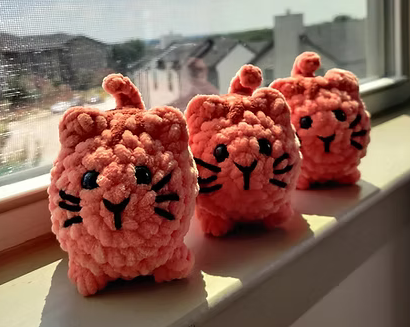
P.S.: You make and sell little plush stuffed animal versions of the orange cat, Den Chan, to supplement the book. What other non-writing hobbies or interests do you have? Do they complement your writing or are they a relief from writing?
A.K: I love visiting science museums and local coffee shops when I have free time or am traveling. For me, blog post drafts typically are inspired by something that happens throughout my life, so even if they don’t turn into a book, they definitely become part of my blog drafts that then get chosen to be published as part of my free monthly post in three languages!
P.S.: I’ve read that you attended culinary school, and taught others how to cook. Please tell us about that experience. Also, does your cooking expertise impact your writing in any way?
A.K: Attending culinary school had been a dream of mine since I was 15, but despite being accepted to the CIA in NY, I didn’t have the money to pay for tuition at 17. After living and working in Beijing for a few years and having the chance to teach kids baking and cooking classes, I realized that attending culinary school was a dream I simply couldn’t give up. In 2021, I successfully graduated from a Japanese and French culinary school in Japan, happily falling in love with making chocolates and baking breads. My cooking expertise is sometimes shared through recipes on my blog that I write in a simplified way so that readers can follow along easily.
Ann Katagiri and a Giant Panda
P.S.: In one blogpost, you casually mention hugging a giant panda. Did that really happen? If so, what was it like? They are bears—large, dangerous, wild animals—right?
A.K: YES and it was absolutely magical as well as the most expensive few minutes of my life. Due to conservation efforts to not let tourists hug baby pandas anymore, the one option I had to make this dream of mine come true was to visit the Chengdu Research Base of Giant Panda Breeding in China. You can make a donation in order to spend a few minutes sitting and taking pictures with a Giant Panda who is distracted eating bamboo! They also have a program where you can become “Panda Keepers” for the day and help out at the research base, which I would highly recommend!
P.S.: You’re one of the few authors I’ve interviewed who started her own publishing company. Why did you do that, and how is that decision working out?
A.K: I branched out on my own because there wasn’t a publishing house out there who would publish my books in the three languages I speak: English, Japanese, and Mandarin Chinese. I also have a passion for supporting local small business and not big monopolies, so rather than giving up on this dream of mine, I incorporated A Halfie’s Rambles to make it come true. This decision is something I will stand by for as long as I’m alive because it means the world to me to have the honor of printing and binding my three books with the help of 3 small businesses in DFW. Every Den Chan book purchase proudly supports them as well as myself and my illustrator.
P.S.: What is your current work in progress? Would you mind telling us a little about it?
A.K: I am actually currently working very hard to open Den Chan Cafe, which will be based on my three bilingual books, created for language and cat lovers. It will be fueled by the same passion to support local small businesses, this time, expanding with new artists. All sourcing will be done from local farms as well as a coffee roaster who sources direct from coffee farms in El Salvador. I do have a sequel I am writing that will cover Den Chan’s life in Texas, but it will come out after the cafe is up and running!
Poseidon’s Scribe: What advice can you offer aspiring authors?
Ann Katagiri: Know exactly what you want and how much you’re willing to work for it, that way, it won’t matter what others say. Creating your own publishing company isn’t everyone’s cup of tea, but I always like saying, “there’s always a way for what you believe in”. If you are going to be amazing, I hope you have the courage to stand out from the crowd.
You know about Michelle frommy blogpost interview of her. An author of fantasy, urban fantasy, and paranormal romance, she had no problem interviewing this science fiction author. She made me feel at ease during the podcast, an interview format I’ve had only limited experience with.
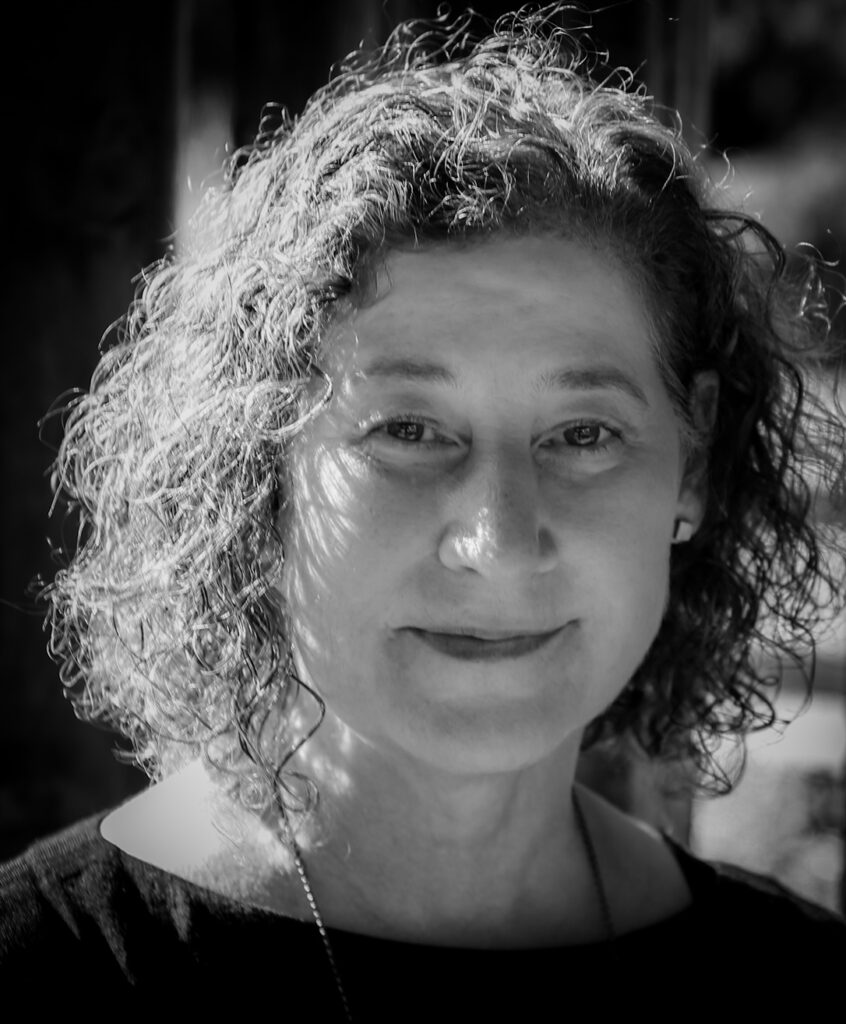
At a writing panel event a few months ago, I met Susan Ayres. Some poets concentrate on one theme or subject, returning to it often. Not Susan. She’ll write a poem about anything and doesn’t limit herself. Also, her poems sometimes go beyond words, to include pictorial images, a medium called Visual Poetry. Unlike many poets, Susan also practiced law. If lawyer and poet sound incompatible to you, read on to see how Susan Ayres fits both into her life.
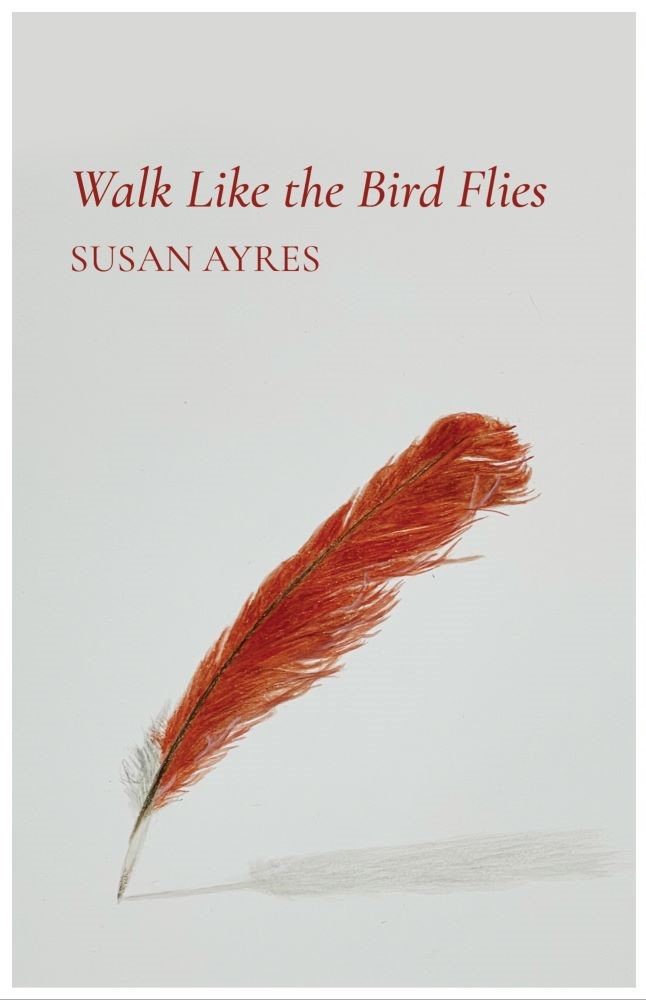
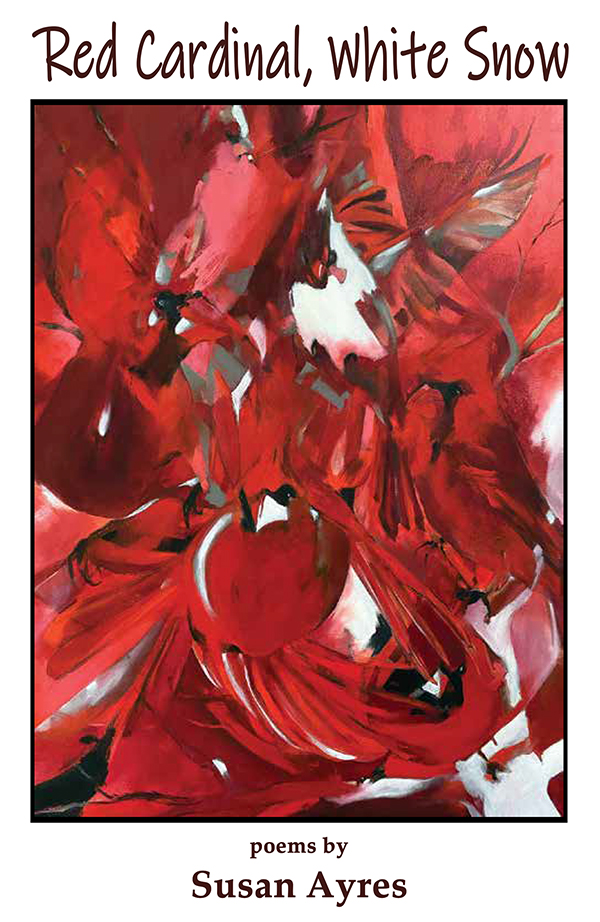
Susan Ayres is a poet, lawyer, and translator from the Spanish. Her work has been nominated for a Pushcart Prize, and has appeared in a variety of literary and scholarly journals. She has studied Spanish in Cuernavaca, Mexico, practiced karate for nine years with her son, and now spends time in Texas writing, collaging, teaching, and practicing tai chi. Her chapbooks are Walk Like the Bird Flies (Finishing Line, 2023) and Red Cardinal, White Snow (Main Street Rag, 2024). Visit www.psusanayres.com.
Interview
Poseidon’s Scribe: How did you get started writing? What prompted you?
Susan Ayres: My uncle, who was an artist, would pay me a nickel when I was a child to write a story. It was his way of keeping me entertained when we went out to dinner as a family, and he saw that I was bored. He’d say, “See the people at that table over there? Make up a story about them.”
P.S.: Who are some of your influences? What are a few of your favorite poems?
S.A.:There are so many poets I love, including Whitman, Dickinson, Stevens, Hopkins, and more recent poets like Adrienne Rich, Denise Levertov, WS Merwin, Sharon Olds, Ada Limón, Martín Espada, William Stafford, Ross Gay.
Some of my favorite poems are “Pied Beauty” by Hopkins, “A Noiseless Patient Spider” by Whitman, “For the Anniversary of My Death” by Merwin. I have a stack of poems on notecards that I like to take with me on walks to memorize (and re-memorize).
P.S.: You’ve translated several poems, notably some by Elsa Cross and some by David Anuar. How does translating poetry compare with translating prose? What is it about these two poets in particular that made you want to translate their poems into English?
S.A.:The famous literary translator, Edith Grossman, points out in her book Why Translation Matters that prose is easier to translate than poetry—she says, “most of the time it was possible to complete a page of prose in about the same time it took to revise and rework a line of poetry.” I have found poetry much more difficult to translate than prose because every word in a poem matters.
Elsa Cross is a wonderful poet and person—her poetry is complex and metaphysical. David Anuar is also a wonderful poet and person. His poetry is more personal and playful than Elsa’s. Both are award-winning poets. Elsa has been around longer and has many collections of poetry. Over the years, I have gotten to know both poets, and I especially enjoy and appreciate their willingness to provide feedback in the translation process. Recently, David and I worked together to translate poems by the late Mexican poet Ursus Sartoris.
Luz, Map of Matrimony
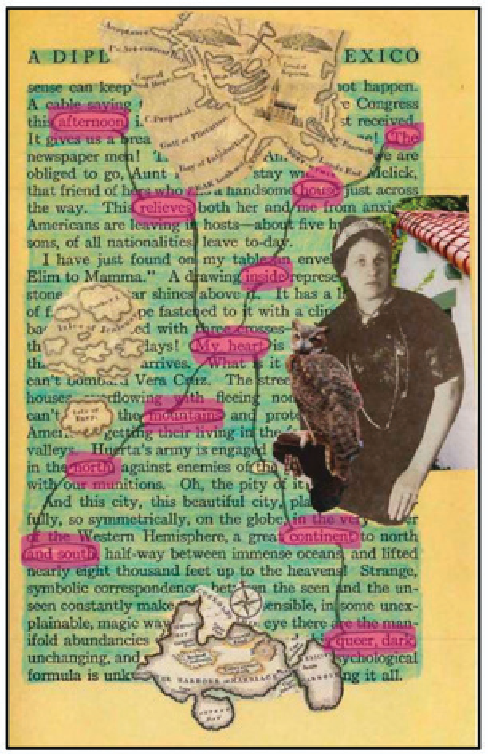
P.S.: Some of your poems, like “Luz, Map of Matrimony” and “Worlds Apart” are examples of visual poetry. What are visual poems and how do you create yours?
S.A.:Visual poetry is also categorized as hybrid literature or graphic art; it may take many forms, such as erasure, collage. For my visual poems in my project on the wives of Pancho Villa, I have used a page of a memoir of the Mexican Revolution by Edith O’Shaughnessy (A Diplomat’s Wife in Mexico), and have done both erasure and collage. I work the old-fashioned way—analogue, not digital—with paper and a glue stick.
P.S.: You’re both a poet and a lawyer. In addition, you used to teach law. Some may think of poetry and the law as opposites, with poets playing with fun-sounding words and expressing feelings about the human condition, while lawyers deal with dry texts and the dull legal minutiae of societal wrongs. Do you see the two endeavors as opposites, or do you see large overlaps in their Venn diagram circles?
S.A.:There is so much overlap between law and literature—it is a unique category of law, as a matter of fact. There are courses and workshops and journals devoted to the overlap between law and the humanities. My favorite course to teach was Law and Literature.
P.S.: Has your experience as a lawyer and teacher influenced your poetry? If so, how?
S.A.:I believe so. It is impossible to write outside of our experience. But it is also hard for me to see myself from the outside and describe how law has influenced my poetry.
P.S.: Tell us about your chapbook, Walk Like the Bird Flies.
S.A.:Walk Like the Bird Flies was my first chapbook (Finishing Line Press 2023). It is a collection of poems set in different parts of the world, and contains prose poems, lyric poems, and one documentary poem at the end of the collection, “Trouvelot’s Crater,” which is about the French scientist and artist, Étienne Trouvelot, who unintentionally released the gypsy moth (now called spongy moth) into the United States from France.
In 2024, Mainstreet Rag published my second chapbook, Red Cardinal, White Snow, which is a book about family secrets surrounding mental illness.
P.S.: Reading a sample of poems linked on your website shows a vast spectrum of topics and formats. What, if anything, ties your poetry together? Are there common themes or poetic structures to which you return more often?
S.A.:Thank you for this observation and question. Sometimes I work on a particular project, such as the wives of Pancho Villa, but nothing is really off-limits for my poetry, and I never know what might inspire me. That is one of the most amazing aspects of poetry. I might be inspired to write a poem about my husband or children, or about something I saw on my morning walk or on a vacation. Sometimes I write a poem that is based on a dream. The possibilities are endless.
P.S.: Describe your poetic process. Do you write a draft in one sitting? How many drafts does one of your poems require? Do you have several poems working at any particular time, or do you finish one before beginning another?
S.A.:I usually write first drafts by hand in my journal, and then type them into a word document for revision. Revision is a huge part of my work. I have learned the hard way to save revisions as separate documents—because sometimes a change is one for the worse, and I have go back to a previous version. I do work on several poems at once. Sometimes it seems very chaotic and disorganized—I remind myself to be comfortable with uncertainty, and I have lots of different colored folders.
P.S.: What is your current work in progress? Would you mind telling us a little about it?
S.A.:Thank you for asking this question. I am compiling a manuscript on the wives of Pancho Villa that contains poems and visual poetry. This project is different from others because it is based in history and is narrative poetry, as opposed to being more personal and lyric poetry. It is also a feminist project because history has little to say about the wives; my poems attempt to give voice to these forgotten women.
Poseidon’s Scribe: What advice can you offer beginning poets?
Susan Ayres: Some of the best advice I received was to read widely. I would also say don’t be discouraged by rejection. Keep writing, and if you are sending out your poems for publication, try to embrace rejection because it is inevitable. Also, try to find a community of poets—either a local poetry society or a group that meets online, because it is inspiring to be with other writers, and it is helpful to have readers who might offer critiques or encouragement.