In a significant way, Tom Swift guided me toward a career in engineering, and also toward the genre of fiction I write. I wonder if authors of young adult (YA) fiction understand the seeds they plant in young minds.
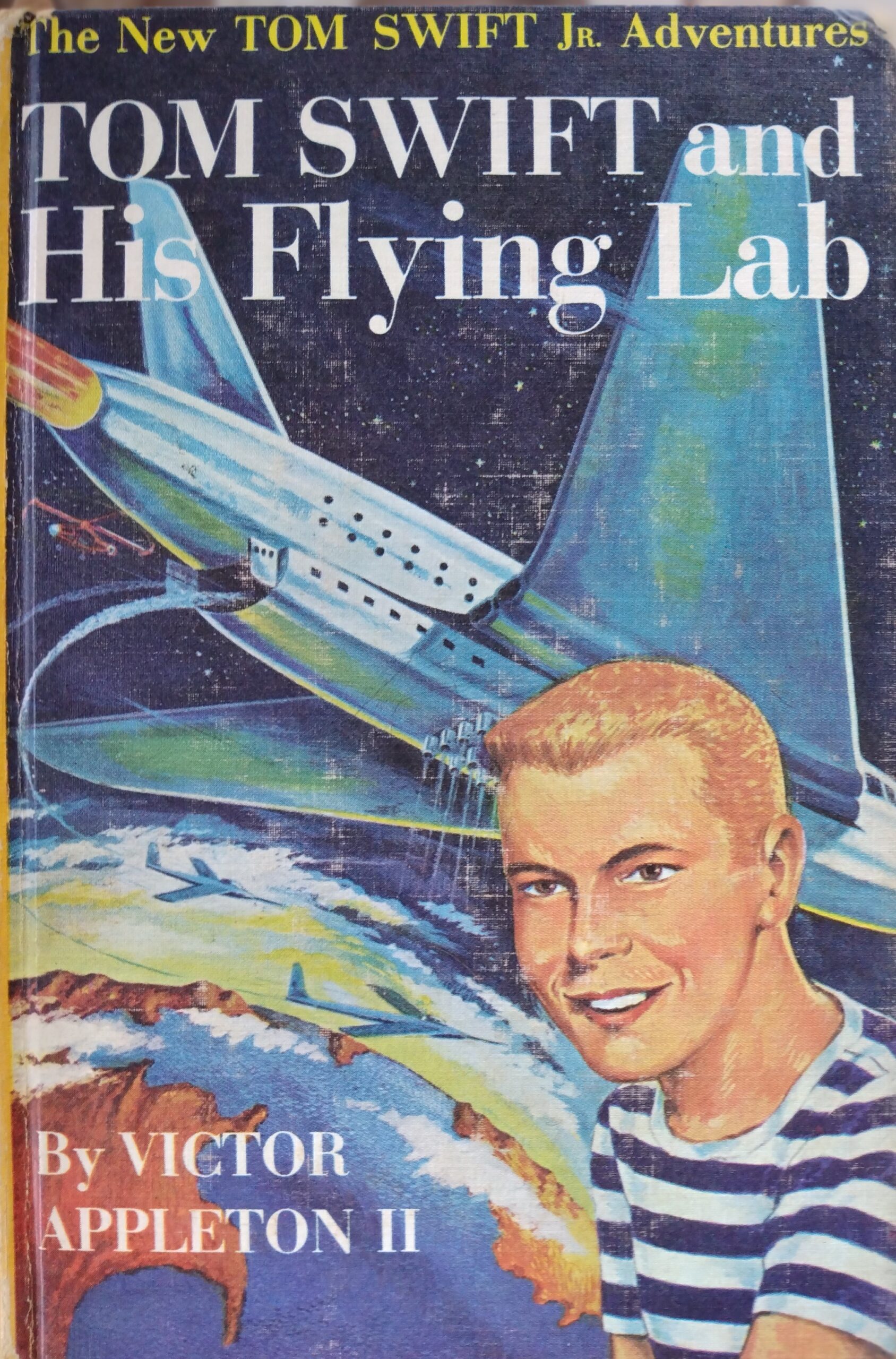
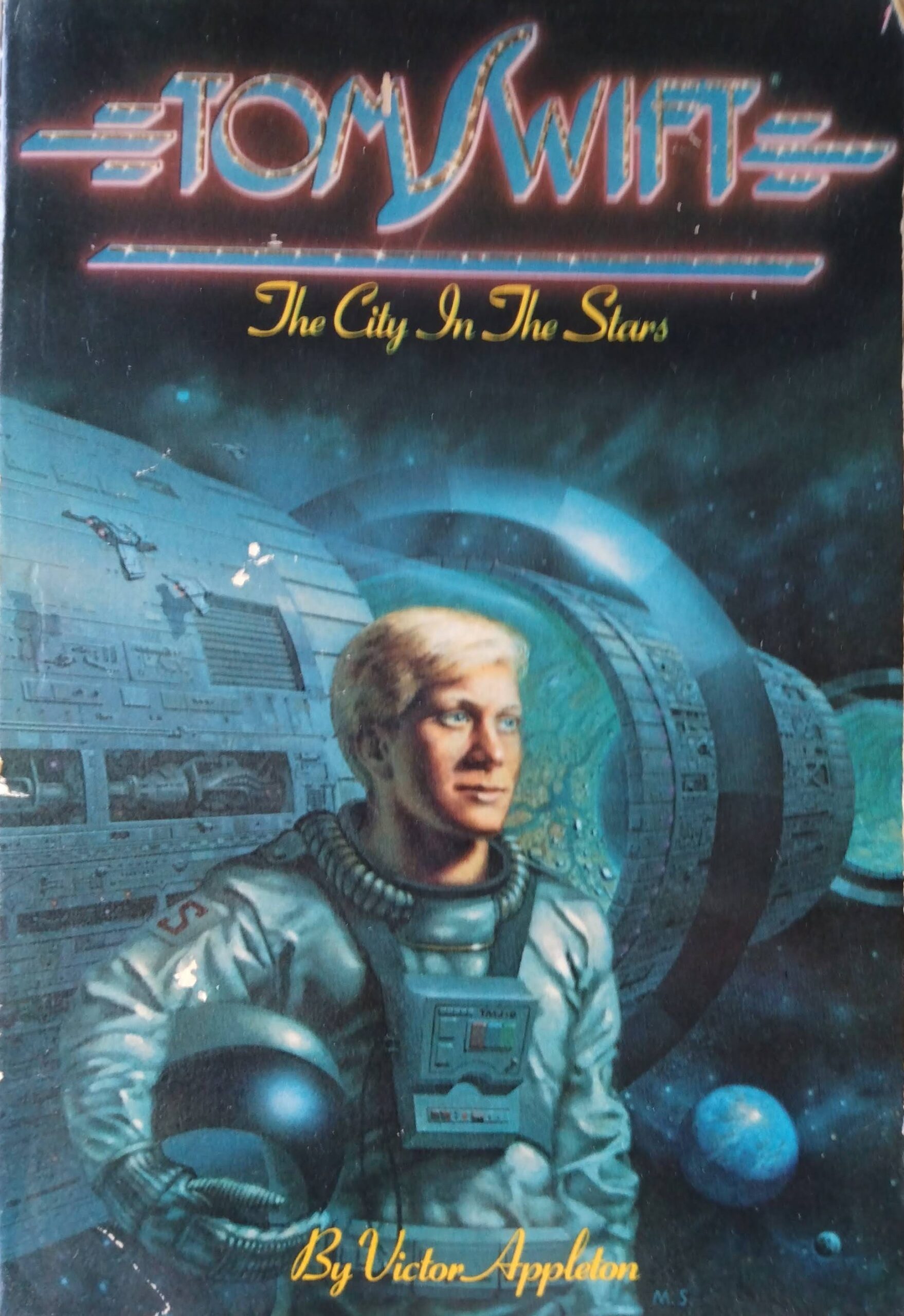
First book in the Tom Swift Jr. (second) series 1954-1971
Tom Swift and Me
As a young boy growing up in the 1960s, I enjoyed reading the Tom Swift Jr. series, attributed to Victor Appleton II (a pseudonym for several contributing authors), and published by Grosset & Dunlap during the years 1954 to 1971. One of my aunts gave me the first book in the series, Tom Swift and His Flying Lab, as a gift. After that, my collection grew to include most of the thirty-three books in the series.
I loved reading about Tom Swift’s inventions and adventures. He built a nuclear airplane, a submarine, a spaceship, a robot, and earth-blasting machine, and many, many more. Each book fired my imagination. In my mind, I traveled along with Tom and his sidekick, Bud Barclay, in their amazing vehicles.
Tom Swift, I believe, influenced my later choice to major in engineering (specifically, Naval Architecture) at college. After serving in the military, I spent a career as an engineer and program manager at an engineering organization. However, I didn’t end up building my own nuclear airplane, submarine, spaceship, etc.
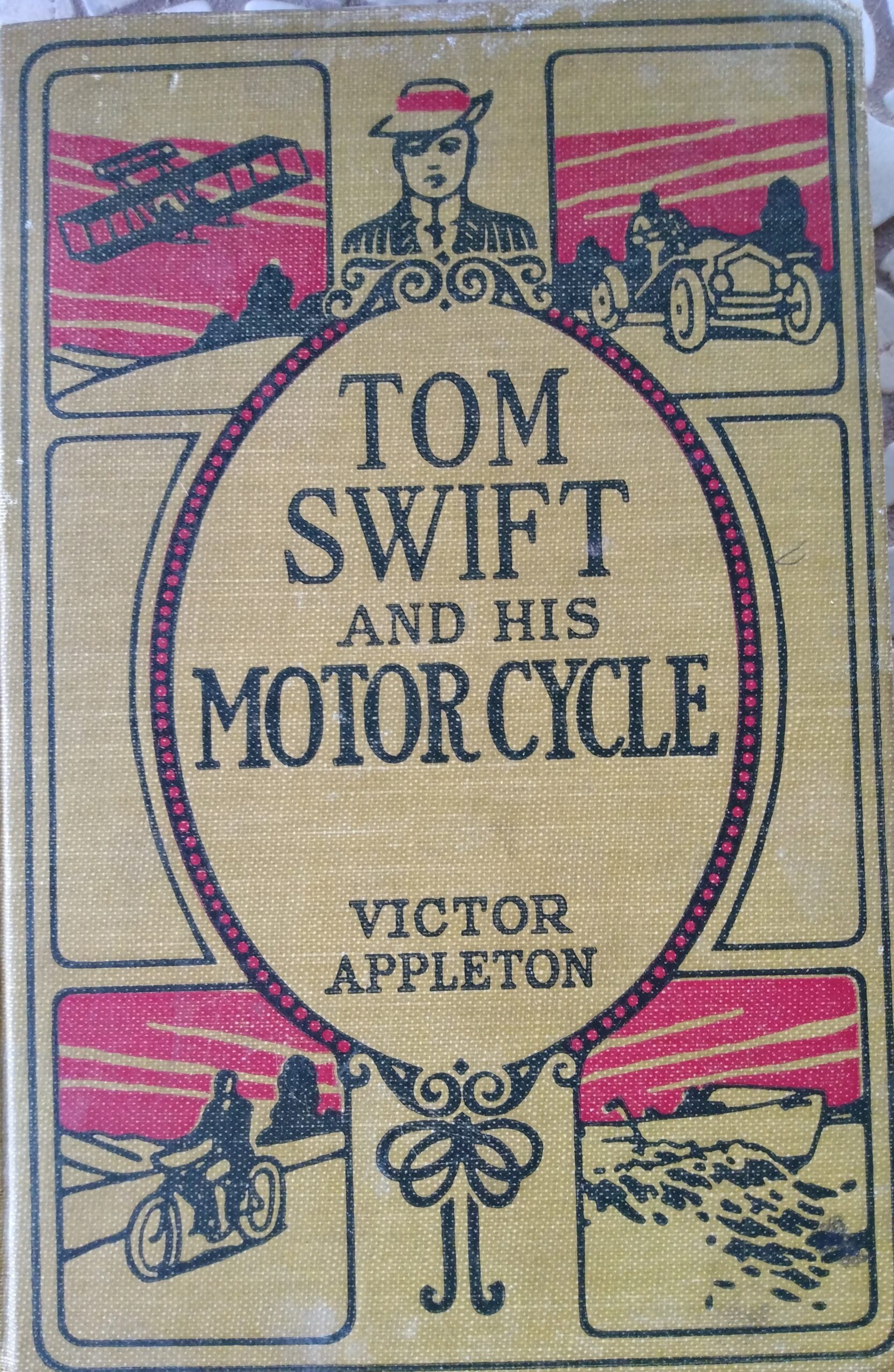
First book in the Tom Swift Sr. (first) series 1910-1941
The Senior Tom Swift
The 1960s-era Tom Swift series I loved followed an earlier series, published from 1910 to 1941. That first series of forty books showcased the father of Tom Swift, Jr. and his inventions and adventures. I’ve collected a few of them, but their racism makes them difficult to read now.
Tom Swift vs. Harry Potter
Not meaning to disparage the Harry Potter series, but I’d rank it a step below Tom Swift. You can’t become a wizard in real life, but you can become a scientist, inventor, or engineer. Yes, I understand Harry Potter inspires qualities besides magic, such real-life attributes as friendship, hard work, cleverness, and a willingness to confront and overcome evil. All of those virtues will serve Harry Potter fans well in their later working lives.
I also know, if I point out how unrealistic a magic academy is, you’ll counter with how unbelievable it is for an eighteen-year-old to be inventing the gadgets Tom Swift does. You’ll tell me how Tomasite plastic and Swiftonium nuclear material and “repelatrons” violate just as many laws of physics as Harry Potter’s magical conjuring does.
Still, Tom Swift inspires kids toward real lines of work, but Harry Potter doesn’t.
Tom Swift Reborn
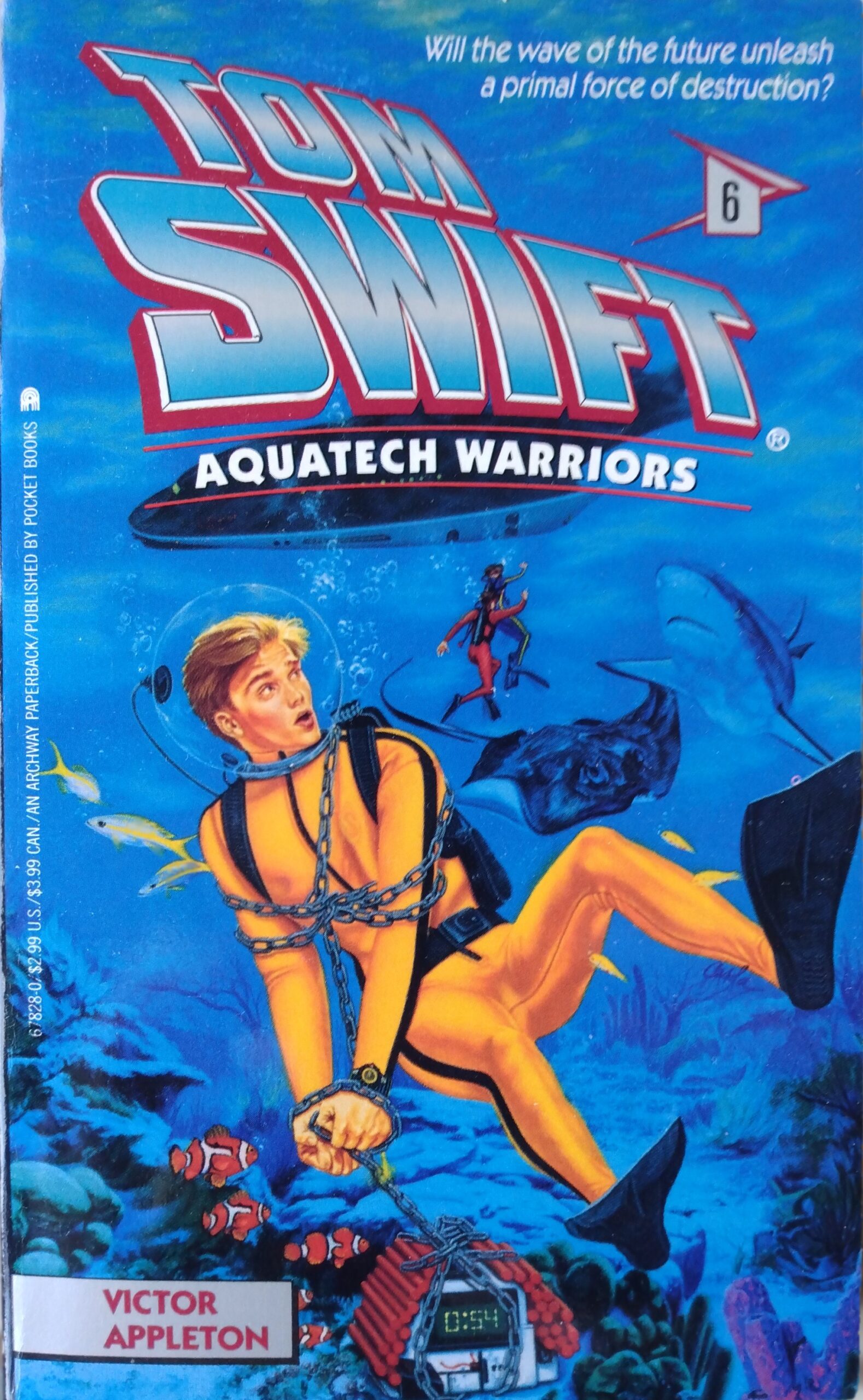
Sixth book in the fourth series 1991-1993
First book in the third series 1981-1984
Modern authors have updated Tom Swift for today’s young readers. I know of five such series:
1981-1984, Tom Swift III series, 11 books
1991-1993, Tom Swift IV series, 13 books
2006-2007, Tom Swift, Young Inventor series, 6 books
2019-2022, Tom Swift, Inventors’ Academy series, 8 books
2018-2023, Tom Swift Lives! series, by Scott Dickerson, 50 books
I hope one or more of these series gains in popularity and serves to steer many children toward science and engineering.
Past attempts to bring Tom Swift to the screen in movies or TV series have all failed. Perhaps with good screenwriting, realistic computer graphics to depict the inventions, and a strong focus on the target audience, a Tom Swift show could succeed.
Two to three decades ago, when society lamented how few women graduated in male-dominated fields, I considered writing a series of YA books about a female version of Tom Swift. I never wrote that, but now, women hold their own in most fields. You go, girls!
Perhaps someone could write YA novels featuring twins—a boy and a girl—working together on amazing inventions, and experiencing perilous adventures.
I offer that idea for free—go crazy with it. The world would have to wait a long time for those books to get written by—
Even the most bumbling, unskilled person on the planet excels at making excuses for not doing things. We’re all experts at that. For people who wish to write, some of our excuses involve the relentless ticking of time.
Fiction writer and poet Lorraine Horsley wrote a great post on this topic. Read hers first, and then click back here for my take. Here are her three lies about time that we tell ourselves:
1. I don’t have time.
Your clock matches mine. I checked. Same number of hours in a day, etc. Each second and minute lasts the same for all of us, since, here on Earth, none of us travels at a significant fraction of the speed of light.
In other words, those who do make time to write have no more time than you. Other, non-writing tasks crowd their days too. Life interferes with their writing dreams too. They’re just as busy as you are.
How do they find time to write? They don’t start with an excuse about a lack of time. They turn it around to a positive—“I want to write, so I’ll make time.” They establish a habit of daily writing.
2. I’ll need several hours a day.
Again, you’re making an excuse, a reason for taking no action. If you tell yourself this one, you’ll never get started. What if you could only spare ten minutes a day for writing? At first, you wouldn’t produce much output as your brain adjusts to this new task. You’ll be tempted to give up.
If you persevere, you’ll see improvement in a few days. You’ve formed a habit and you’re seeing some output. On a few glorious occasions, you’ll achieve flow.
Here’s a chronological paradox for you—a severe time constraint can improve your writing. As an example, Ray Bradbury started out poor and couldn’t afford his own typewriter. But he knew he could find rental typewriters in the basement of the library at the University of California at Los Angeles. Ten cents bought a half hour of typing. Time is money, indeed. He typed his classic novel Fahrenheit 451 there, with the typewriter’s clock ticking.
3. I’ll make time when…
…when I graduate…when my kids are in school…when my kids move out…when I retire. Sure.
You’ve heard the one about writing a novel being a one day event? As in, “One day, I’ll write a novel.” Except you keep putting that day off, because you don’t have time now, but you think you will in the future.
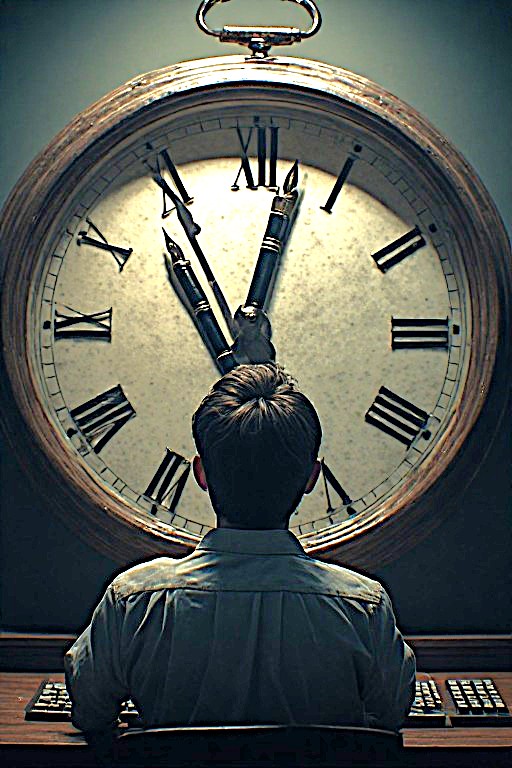
Consider turning this excuse around and telling yourself, “I’ll never have more time than I do right now.” In the grand scheme, that’s true for all of us. We pay attention to little clocks, but we all have a personal, invisible Big Clock destined to stop someday. Reckoning by the Big Clock, you’ve got more time now than you will later.
Enough Excuses
To sum up, you do have time to write, you don’t need huge chunks of time to write, and you’ll never find more time to write than now. So get writing. As the comic character Snuffy Smith often said, “Time’s a’wastin’.” Not just for you. It’s also a’wastin’ for—
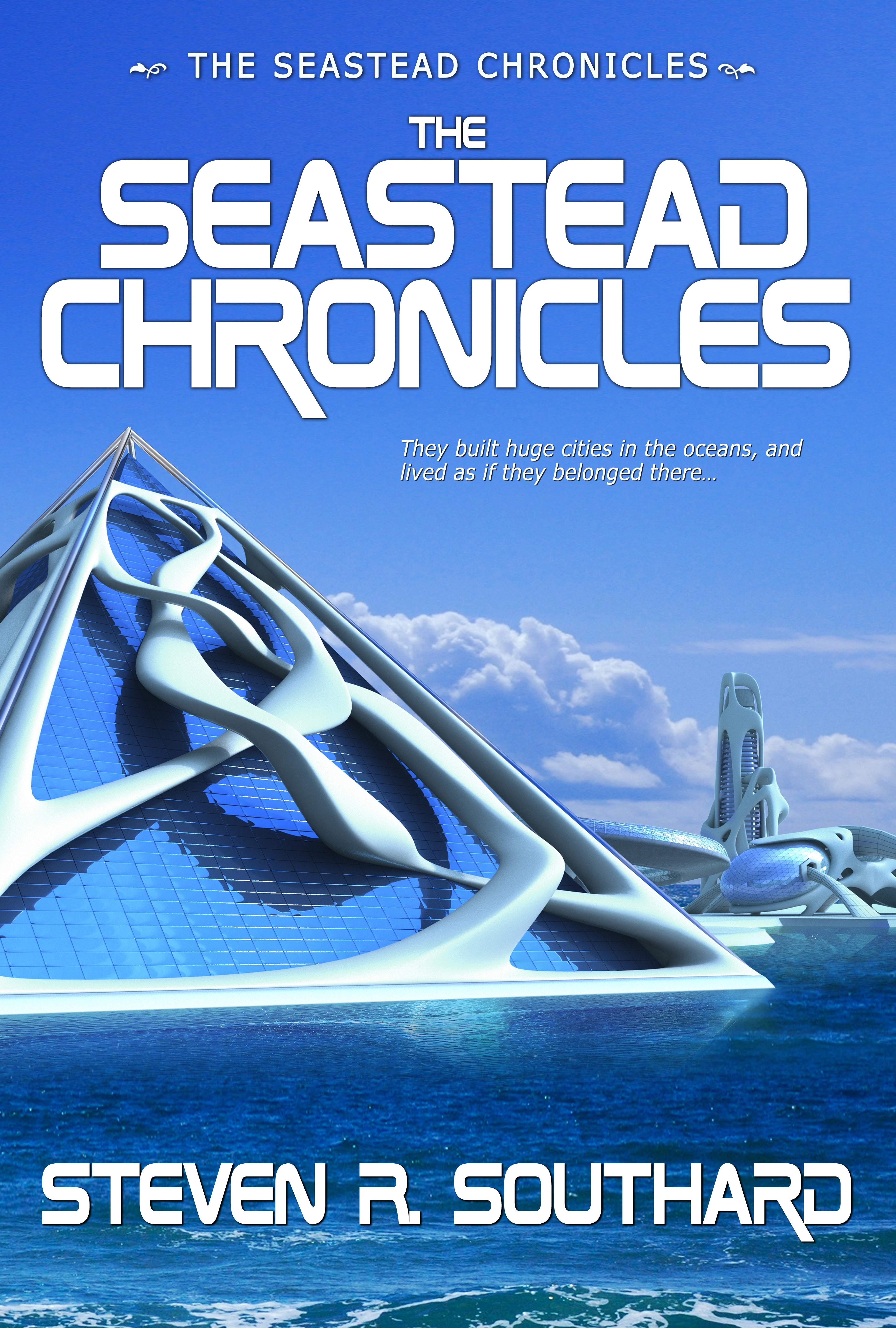
That’s right. Virtues & Sins Day. One of the five major holidays of the Oceanism religion. Haven’t heard of Oceanism? That’s the new religion that caught on in the world of my book, The Seastead Chronicles. Today also marks one year since the book got published.
All the priests in the Oceanism hierarchy call it Virtues & Sins Day, but everyday Oceanists call it Shalls & Shants Day—better alliteration. For Oceanists, the holiday presents an opportunity to reflect on how they’re living their life. Are they living in accord with the five virtues of Oceanism and are they avoiding its five sins?
The Seastead Chronicles
Stories in the book span the near-future construction of the first permanent seasteads through a century spent colonizing the seas and creating a new, oceanic culture. A part of that culture includes the rise and spread of Oceanism.
What’s a “seastead?” Like a homestead, it means a home in a new and previously unclaimed area. Unlike a homestead, the area of a seastead lies in an ocean or sea.
Though I mention Oceanism in a few of its stories, nobody would call The Seastead Chronicles a religious book. Its stories include adventure, mystery, love, war, music, mankind’s relationship with nature, and other themes. I’ve written stories about people struggling to survive and thrive in homes at sea. The environment they set out to change, changed them.
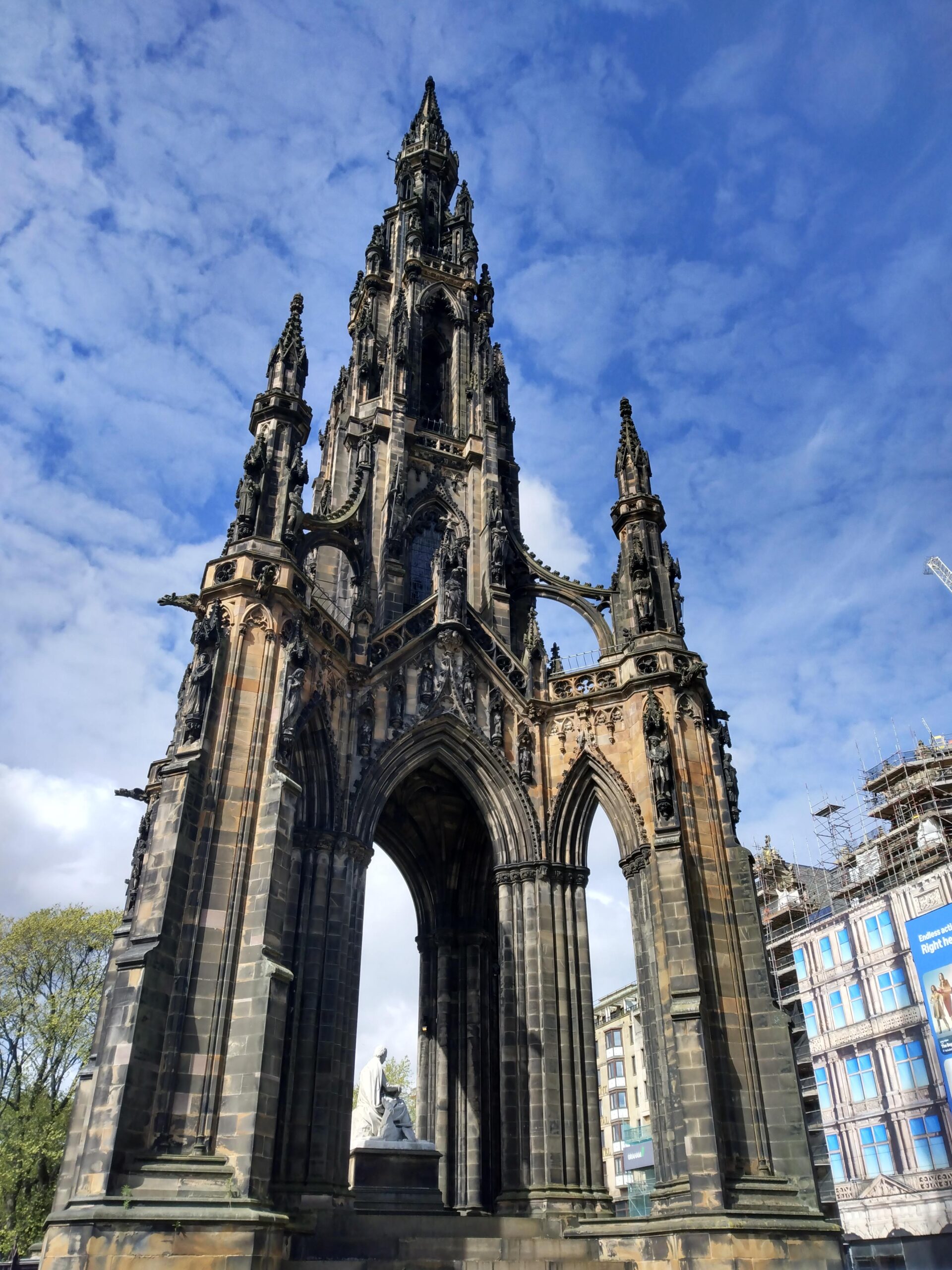
On a recent trip to Scotland, I saw a monument glorifying the writer Sir Walter Scott. That got me thinking about, and researching, monuments to writers in general. In this post, I’ll examine the ones I found most interesting.
By “interesting,” I mean something other than a statue or bust on a pedestal. Those who commission, design, and build monuments to authors honor them in a wonderful way, so I don’t mean to disparage the statue-on-a-pedestal design. Most author monuments fall into that category, though, so I’m posting about the less common types.
I’ve put my list in order of monument completion date, earliest to latest.
photo taken by Poseidon’s Scribe
Scott Monument
Finished in 1846 in Edinburgh, Scotland, this giant monument stands 200 feet tall—second tallest of all monuments to authors (for the tallest, see José Martí below). Spiral staircases allow access up to platforms with commanding views views of the city. George Meikle Kemp designed the monument and John Steell designed the statue of Scott (along with his dog) between the pillars. The monument includes depictions of sixty-four characters from Scott’s novels.
The Scottish people take great pride in Sir Walter Scott (1771-1832), both for his poetry, including “The Lady of the Lake” and for his historical, romantic novels, including Waverley and Ivanhoe.
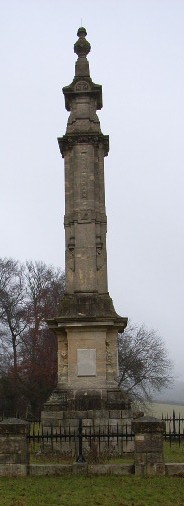
In Buckinghamshire, England stands this fifty-foot monument to writer Isaac D’Israeli. The top may look like a statue, but it’s an urn. Raised panels with inscriptions and a profile portrait of the author decorate the pedestal. Designed by Edward Buckton Lamb, the monument had been commissioned in secret by D’Israeli’s daughter-in-law Mary Anne Disraeli as a surprise for her husband, Benjamin Disraeli, then Chancellor of the Exchequer. Later he became Prime Minister.
Isaac D’Israeli (1766-1848) wrote romantic novels and essays, but is most famous for Calamities of Authors and Curiosities of Literature.
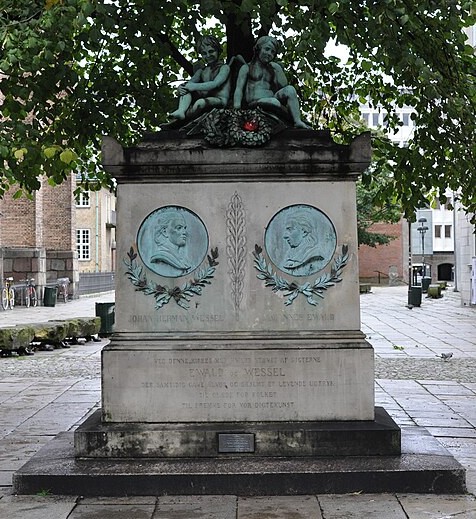
Johannes Ewald and Johan Hermann Wessel Memorial
The only monument on my list honoring two writers, it stands ten feet tall. Located in Copenhagen, Denmark and completed in 1879, it features two nude, winged boys, one with lyre and the other with pan flute. The pedestal contains portraits of the poets and inscriptions honoring their works. Otto Evens designed the memorial.
Born in Copenhagen, Johannes Ewald (1743-1781) wrote plays, psalms, and poetry. He’s most famous for his dramatic work Balders Død (Balder’s Death) and his poem Rungsteds Lyksaligheder (The Happiness of Rungsted).
Though born in Norway, Johan Hermann Wessel (1742-1785) studied, lived, and died in Copenhagen. A poet and playwright, he employed parody and wit in his writings. Among his most significant writings are Kierlighed uden Strømper (Love without Stockings), and Smeden og Bageren (The Smith and the Baker).
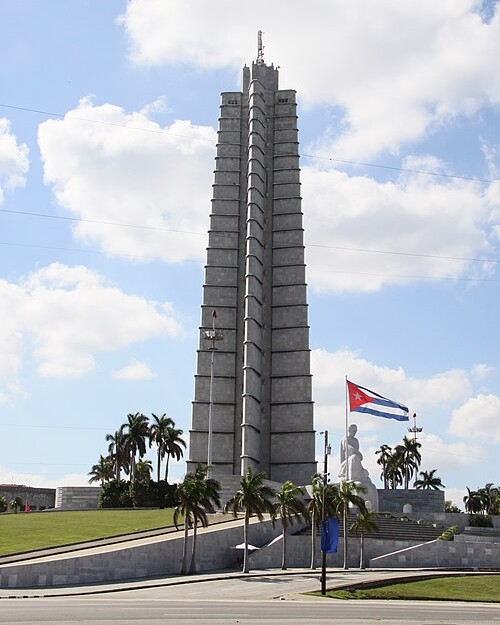
At 358 feet in height, this monument dwarfs all other writer memorials. Completed in 1958 and located in Havana, Cuba, it takes the form of a tall tower with a star-shaped cross section. Nearby stands a statue of the author. Jean Labatut designed it, under the guidance of architect Raoul Otero de Galarraga. Unlike the Scott Monument’s stairs, the Martí Memorial includes an elevator at the center of the star shape. Visitors can ascend to the observation deck, where, from Havana’s highest spot, they can enjoy a panoramic view of the city.
The size of the monument suggests the adoration Cubans feel for their national hero. Through his writings, José Julián Martí Pérez (1853-1895) pushed for the liberation of Cuba from Spain and has been given the appellation “Apostle of Cuban Independence.” His roles included publisher, professor, translator, journalist, essayist, philosopher, and poet. His most famous writings include the children’s book La edad de oro (The Golden Age), the poem collection Versos sencillos (Simple Verses), and his essay Our America.
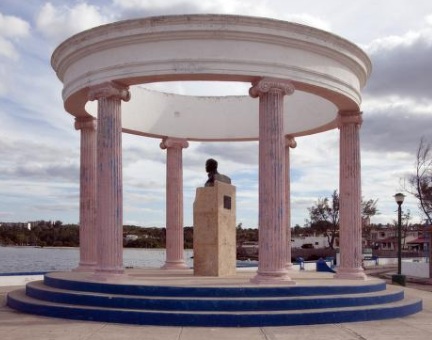
Cuba hosts another writer memorial of note. This one stands in the fishing village of Cojimar, near the bar where Ernest Hemingway often drank. Designed by the Cuban architect José Luis Sert, it features six Ionic-style columns supporting a stone ring. Inside stands a bust of the author sculpted by Fernando Boada Martín. For the bust’s material, he melted down propellers, anchors, and chains supplied by local residents. Completed in 1962, the memorial’s simple, yet profound, design reflects the character of Hemingway’s prose.
Though American, Ernest Miller Hemingway (1899-1961) spent a lot of time in Cuba and wrote many novels there, including The Old Man and the Sea, for which the residents of Cojimar most celebrate him. He also wrote For Whom the Bell Tolls, A Farewell to Arms, and The Sun Also Rises.
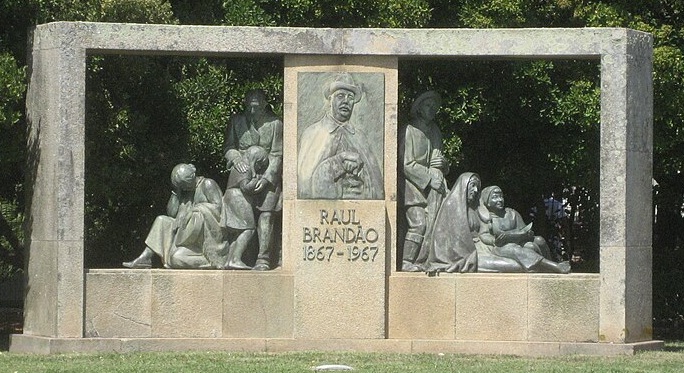
Located in Porto, Portugal, this monument takes the form of a hollow, granite rectangle enclosing two scenes featuring several statues. Separating the scenes is a relief image of the author with his name. Architect Rogério de Azevedo and sculptor Henrique Moreira completed the monument in 1967 to mark one hundred years since the author’s birth.
A Portuguese journalist, writer, and army officer, Raul Germano Brandão (1867-1930) wrote several books, often featuring sailors and the ocean, including Impressões e Paisagens (Impressions and Landscapes) and Os Pobres (The Poor).
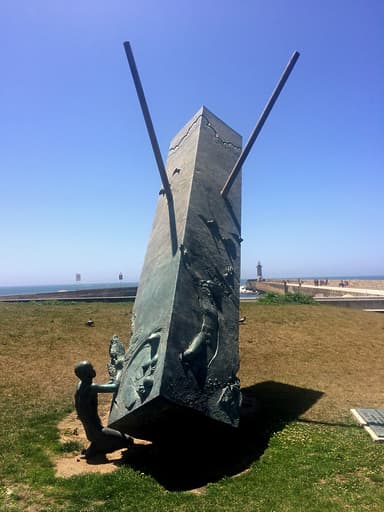
The Dream of Humanity Monument to Ferreira de Castro
Also in Porto, Portugal stands this abstract monument. Called O Sonho da Humanidade, Portuguese for “The Dream of Humanity,” and designed by José Rodrigues, it got completed in 1988. I found no information about why it looks the way it does, or how its appearance symbolizes the author’s writings.
A Portuguese journalist and writer and journalist, José Maria Ferreira de Castro (1898-1974) helped father the genre of Portuguese social-realist fiction. Among several other works, he authored A Selva (The Jungle) and A Volta ao Mundo (Around the World).
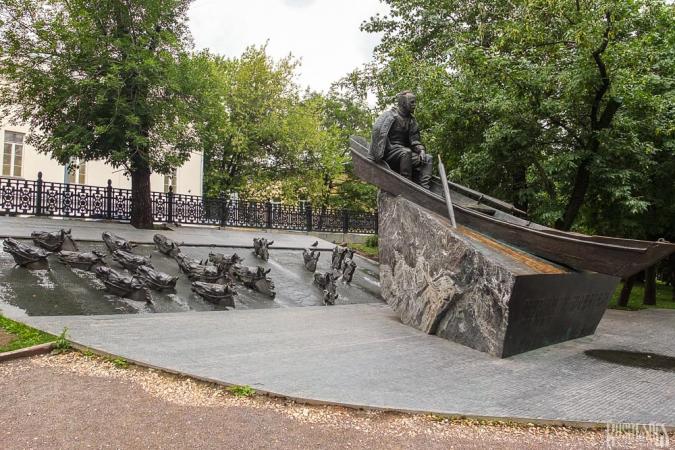
The year 2007 saw the completion of this monument in Moscow. Sculptor Alexander Rukavishnikov depicted author Mikhail Sholokhov rowing a boat. Behind the boat, over a dozen horses swim with just their heads showing. Real water flows down the sloped surface to show the horses swimming, making this the only kinetic sculpture on my list.
Earning the 1965 Nobel Prize in Literature, author Mikhail Aleksandrovich Sholokhov (1905-1984) wrote novels about the Don Cossacks. And Quiet Flows the Don reigns as his most popular novel. As an additional honor beyond the monument, an asteroid is named for him—2448 Sholokhov.
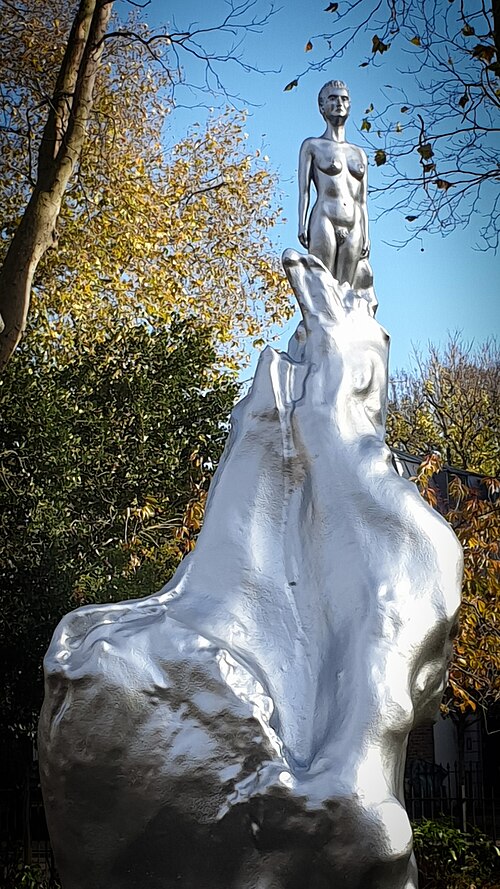
I started my list in the United Kingdom, and I’ll finish it there as well. In this London monument, a nude female figure emerges from a swirling, curving mass of chaos. Designed by artist Maggi Hambling and completed in 2020, the monument honors the author Mary Wollstonecraft. At its base appears a quote from the writer: “I do not wish women to have power over men but over themselves.” Though meant as a tribute to one woman, the depicted female represents all women, thus showing how Wollstonecraft lifted womankind from nameless, shapeless anonymity.
An early advocate for women’s rights, Mary Wollstonecraft (1759-1797) wrote a children’s book, a conduct book, a history of the French Revolution, a travel narrative, and several treatises and novels. Her most famous treatise remains A Vindication of the Rights of Woman. She’s become a hero, a founding philosopher, of the modern feminist movement. She died soon after the birth of her second daughter, Mary Wollstonecraft Shelley, author of Frankenstein.
The Real Monuments
Consider this irony. Monuments of stone and steel, while quite a tribute, will erode and crumble in time. But the words of these authors, written on mere paper and now with even more fleeting electrons, will endure much longer than the monuments. As the Romans said, Vita brevis, ars longa, meaning “Life is short, art is long.” In that sense, these authors created their own long-lasting monuments.
Do you know of other interesting author-honoring monuments I should have included? Send a comment to—
As a writer, you can’t afford to bore readers. Modern technology has dwindled their attention spans to a few seconds before they hit Delete. I’ll give you some techniques for writing stories that capture and sustain attention.
We live in a fast-paced age. Busier than ever, your readers get blasted every day with an information fire-hose, spewing mostly useless noise. What doesn’t attract attention gets deleted or remains unclicked.
The book you’re writing will vie for reader eyeball time against many competitors—other author’s books, TV shows, movies, Facebook, X, Instagram, Tiktok, etc. Readers abhor boredom. They’ve no time to read dull prose. If the story’s first paragraph doesn’t trigger a dopamine hit, readers won’t continue.
Anti-Boredom Techniques
I drew inspiration for today’s topic from this post by Sabyasachi Roy. I’ll list his techniques, put into my words.
Learn from other’s successes. Consider techniques proven to work. Sabyasachi Roy suggests you analyze what it is about certain Facebook or X posts, or Netflix series, that grab attention and tell a story too irresistible to ignore.
Seize interest from the start. Your opening sentence and paragraph must compel the reader to read on. Spend time crafting and re-writing this hook, since it serves multiple purposes.
Use the high-low-high-low technique. As the story goes, alternate high-tension moments with low-tension moments.
Understand high-tension moments. High-tension needn’t mean a fist fight, a car crash, or an explosion. It means putting your protagonist under high emotional strain. Use short sentences and short paragraphs here to hasten the pace.
Use low-tension moments to let characters and readers catch a breath. Don’t put them to sleep, though. Pack these moments with meaning—thoughts and emotions that suggest the themes of your story. Allow the characters time to react to what just happened, and to wonder—or dread—what will happen next.
Add surprises and twists. Disrupt the reader’s notions of where the story is going.
Start with high stakes for the character. Then raise them. What bad thing will occur if the character fails? Lost love? Poverty? Diminished social status? Death? If possible, make the consequences more dire as the story proceeds.
Leave your character hanging from a metaphorical (or actual) cliff at each chapter’s end. Cliffhangers deny readers the chance to end their reading session there.
Kill darlings. When re-writing, cut all unnecessary words, sentences, paragraphs, scenes, and chapters. Delete or condense the parts that bore you, since they’ll also bore readers.
Your Book
I hear you. You’re telling me your book doesn’t belong in the thriller genre. It’s a slow-paced, thoughtful book, a deeply philosophical tome meant to be savored, not sped through on the way to something else.
Even so, you don’t want to bore readers. Some of the above techniques may still apply to your book. It still needs to pass the “So What?” Test.
As Lincoln said, “You can bore all of the people some of the time…” Wait. That wasn’t Lincoln. That was—