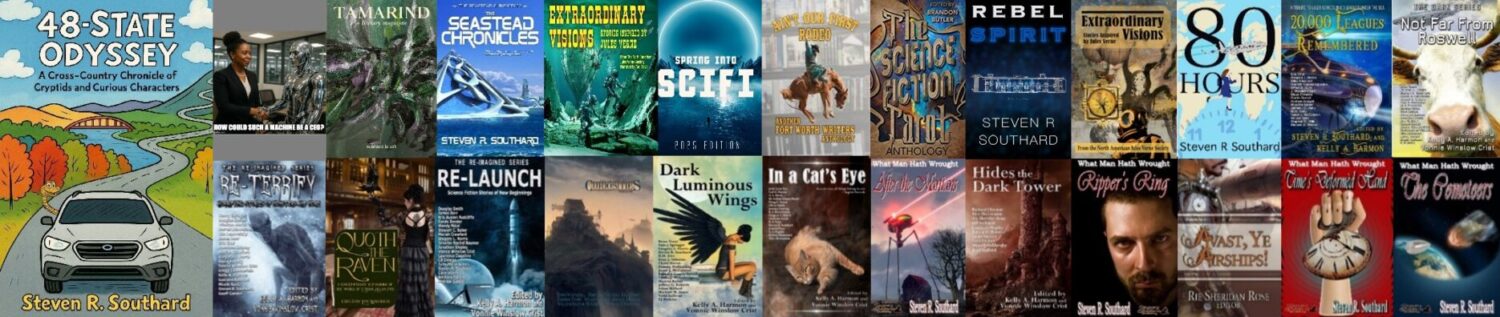
My wife and I made a road trip touching the forty-eight contiguous states, and you can read the true story of that journey.
Well, most of it’s true. A good deal of it. Some of it.
I’m a fiction writer, so you’ve got to expect some exaggeration. Did we really encounter Bigfoot, Paul Bunyan, aliens, and various monsters and cryptids? Did we really receive a magical pet rattlesnake from Pecos Bill? Read the book and make your own judgment.
You’ll find it packed with fun illustrations. It also includes facts about each state that you got along fine without knowing. Written in a whimsical style, the book should suit readers of all ages.
If you’ve ever dreamed of driving through the country and touching forty-eight of the fifty states, I can recommend a good road atlas. If you’d rather just read about someone else’s adventure without driving anywhere, 48-State Odyssey might appeal to you. Or you could inflict it on someone else as a gift.
Where to Get it
For the time being, you can purchase 48-State Odyssey in ebook and paperback formats, but only at Lulu.com. I expect it to become available at other book distributors by mid-December. I’ll announce those availabilities here on this website.
Swerving Outside the Lane
Reading this, you’re thinking, “Hey, Poseidon’s Scribe, you couldn’t have written this book. You write science fiction, and some horror, much of it with a maritime setting. Who really wrote 48-State Odyssey?”
I did. I really did. True, it’s not in my usual genres. Sometimes a writer has to try something different. I’ll get back to my Seastead Chronicles series, I promise.
While you’re waiting for that, read 48-State Odyssey, a crazy, humorous travel book really written by—
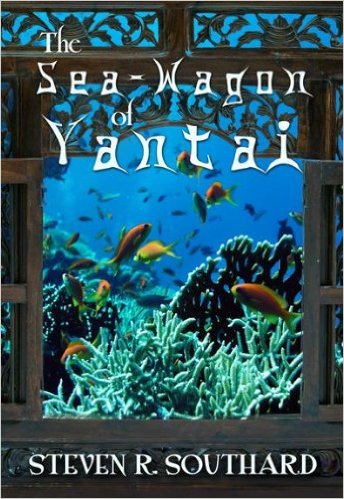
Decades ago, when I first started writing fiction, I wrote some secret history stories involving the development of submarines. During my research, I came across an obscure and incomplete reference to someone in China inventing a working submarine around 200 BC.
The reference lacked specifics, leaving me free to make up my own details. Since inventors tend to adapt what’s been done before, I thought a Chinese mechanic of that time might take a common horse-drawn wagon, enclose it and waterproof it. Then he’d eliminate the need for a horse by means of gears and shafts so he could propel it himself from inside.
I hoped to do for submarines what Ray Bradbury did for aerial vehicles in his story “The Flying Machine.” In Bradbury’s story, a Chinese tinkerer invents a kite-like flying machine, but his emperor fears dire consequences of this development.
Here’s the description of my story: In 206 B.C., warring dynasties clash within China. A young warrior, Lau, receives orders to verify the legend of a magical wagon that can cross rivers unseen. He encounters Ning, the wagon-maker in the seaside village of Yantai. Ning has constructed a wagon that can submerge, travel along the bottom of the Bay of Bohai, and surface in safety—the world’s first practical submarine. Ning enjoys the peace and beauty of his undersea excursions and will not allow the military to seize his wagon or learn its secrets. Lau must bring the valuable weapon back to his superior. In the hands of these two men rests the future of the submarine, as an instrument of war or exploration.
Eternal Press published “The Sea-Wagon of Yantai,” but the book has since gone out of print.
A Connection?
Did someone read my story and ponder about the military potential of a wheeled vehicle traveling on the bottom of a deep lake or river? I hope not.
The article gave the impression that the Chinese underwater tank was in the concept stage and that a working prototype might be years away. Plenty of time for competitor nations to develop their own version.
Sheesh. I hope the entire future of armored vehicles hasn’t been set on a new course by lil ol’—
One day, your most loyal fan-reader contacts you. “Your latest book, The Great American Novel,” she says, “isn’t up to your standards. Frankly, it’s terrible. You really let me down this time.”
You’re puzzled. You didn’t write The Great American Novel. But, checking your Amazon author page, you discover it there, with your name on it. What the heck?
Image created using ChatGPT
Perhaps you’ve traveled to an alternate universe—one where the alternate you is more prolific, but less talented.
More likely, you’re the victim of a Parasite Author.
The Parasite Problem
Using Artificial Intelligence (AI), an unscrupulous person can generate a novel manuscript, written in your style, in minutes. An AI image generator will provide him a book cover similar to your other novels. He can publish this book on Amazon, with your name as the author, and even get it posted on your Amazon author page. Any earnings from that book go, of course, to him, not to you.
Like a parasite in nature, he attaches to a host for his own benefit.
Recently, author Noelle W. Ihli discovered another version of her novel, The Last to Drown, listed on her Amazon author page. It featured a similar cover and a price $5,00 more than her own novel.
Author Vanessa O’Loughlin writes crime stories under the pen name Sam Blake. So does one of those parasite authors.
The example I used to begin this blogpost may have sounded hypothetical, but it happened to author Tamra Westberry. A reader contacted her, disappointed by her novel, Project Erebus. Tamra hadn’t written Project Erebus, but saw it listed, under her name, on her Amazon author page.
My Proposed Partial Fix
Knowing top executives at Amazon read my blogposts, I offer them a simple—though partial—solution. Amazon already knows how to pay authors the revenue for their books. Consider implementing this policy change—revenue from all books listed on an Amazon author page go to the author listed on that page. That removes the financial incentives for parasites to attach to those pages.
It wouldn’t stop parasites from offering copycat books on Amazon—a search for an author’s name would still display the parasitic books as well. But the Amazon author page would provide readers with accurate information.
Amazon could suggest potential book buyers check the author page first, before purchasing, to know for sure.
How about it? Would that work? I’d love for Amazon executives or others with knowledge of the industry, to contact—
Most of us can’t relate to the question in this post’s title. We don’t have to choose either one. We live on land, on Earth.
Still, someday, people may live for long periods—their whole lives—either underwater or in space. Which would you choose?
Underwater History—1960s
The chronology of underwater habitat history began, and blossomed, in the 1960s. Some of the more notable habitats of that era include Man-in-the-Sea I and II, Conshelf I, II, and III, SEALAB I and II, Glaucus, Hydrolab, BAH I, Tektite I, Helgoland, and Chernomor. These housed between 1 and 10 occupants for missions ranging from hours to a few weeks. Professional divers manned the early ones, but starting with Tektite, scientists participated.
SEALAB I
Underwater History—1970s
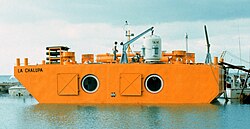
Some of the 1960s projects continued into the next decade, including Hydrolab, Helgoland, and Chernomor. Few new habitats began in the 1970s, and these included Seatopia, Tektite II, and La Chalupa. These furthered the concept of undersea living to some degree. Tektite II hosted the first all-female mission. La Chalupa could accommodate 50 aquanauts at a time.
La Chalupa
Underwater History—1980s
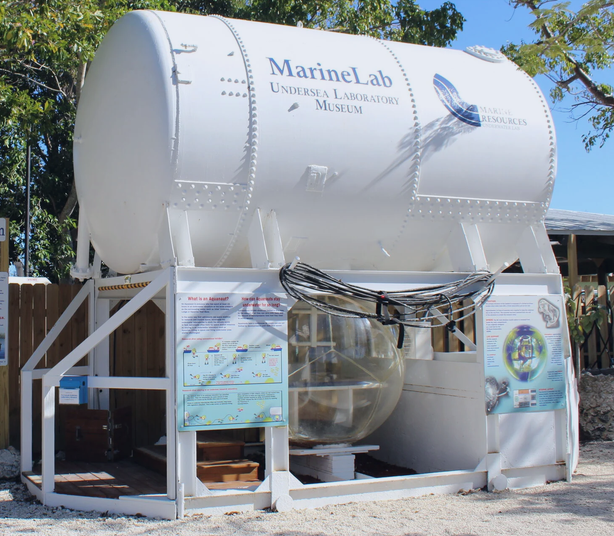
Three more habitats began operating in the late 1980s, namely Aquarius, MarineLab Undersea Classroom, and Jules’ Undersea Lodge. That latter one had been converted from the La Chalupa habitat and can be booked for brief stays like a hotel. All three of these remain operational today.
MarineLab Undersea Classroom
Underwater History—1990s
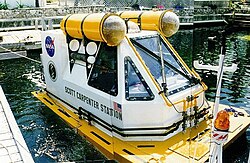
To my knowledge, only one habitat started in this decade, the Scott Carpenter Space Analog Station.
Scott Carpenter Space Analog Station
Underwater History—2000s
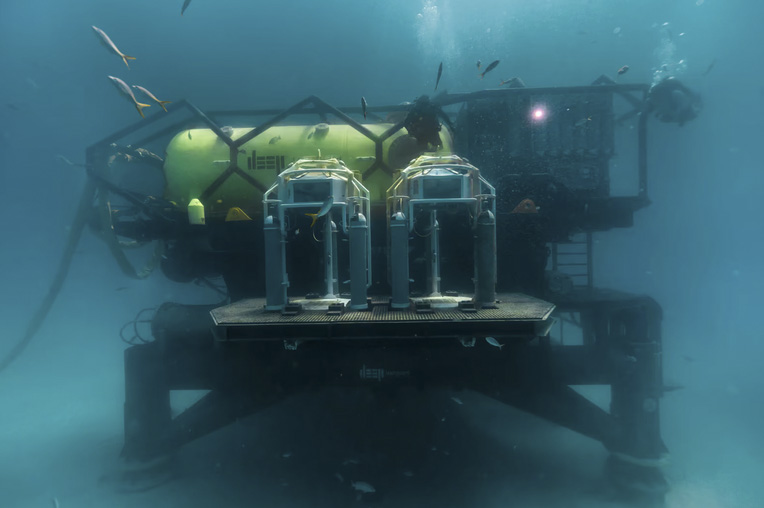
The company DEEP started the habitat Vanguard this year. This CNN story about it inspired my blogpost.
DEEP Vanguard
Comparison to Space Habitats
With all these undersea habitats over all those decades, with most located a few miles from shore, with resupply and rescue so much easier, you’d think we’d have many more man-hours of experience living underwater compared to space. Right?
Not even close.
International Space Station
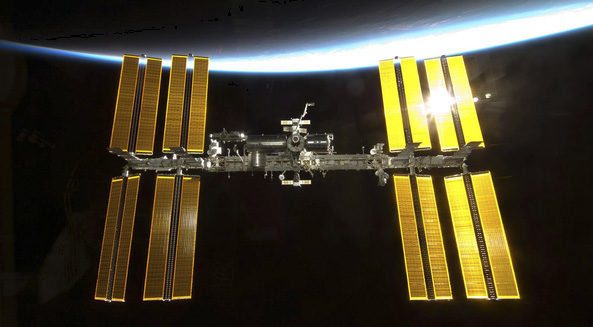
Space habitats started later, in the 1970s. Since Salyut-1 in 1971, there have been only 8, with 2 still operational. But in man-hours of operation, space habitats far exceed their underwater counterparts. At most, aquanauts stay for days or weeks. Astronauts remain for months, and one stayed over a year.
Why Water Homes Fell Behind
Was the pressure of competition too much for the underwater habitats? No, but pressure played a part. Engineers designed almost all such habitats for “saturation diving” or “ambient pressure operation.” That means the air pressure inside the habitat matched that of the ocean outside. This allowed aquanauts to don scuba gear, exit the moon pool, and work outside for hours each day.
Though saturation diving eases outside work, it limits the occupants’ time in the habitat. After four weeks, the aquanaut must decompress back to atmospheric pressure to avoid adverse physiological and psychological effects. Further research into chemical supplements might result in extensions to that 28-day limit.
One-Atmosphere Alternatives
You’re wondering if engineers could design underwater habitats with normal surface air pressure inside, so people could live there longer, not limited by the saturation diving limit. Sure. Designers would have to make the hull thicker, but it would resemble, in concept, a submarine resting on the bottom.
Two existing habitats—the Jules’ Undersea Lodge and Aquarius, and the upcoming DEEP Sentinel offer part-ambient and part 1-atmosphere options.
Imagine
Both oceans and outer space represent hostile environments, unsuited to long-term human living. But people have made fledgling attempts in both areas. One day, some will choose to live underwater, and others will opt to live in space. To read a fictional take on living at sea, with some cities underwater, read The Seastead Chronicles by—