You may have noticed I have not yet interviewed all the authors who have stories in the newly famous anthology Avast, Ye Airships! Today I’m pleased to bring you one more; I’m interviewing Stephen Blake.
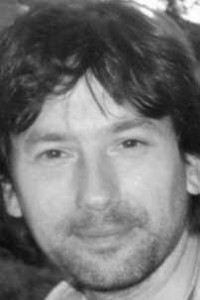 On his website, Stephen describes himself as just an ordinary bloke (he’s English), and a fantasy and science fiction loving geek. His Twitter page describes him as “Writer & exaggerator. Cat, Dog & Guinea Pig Wrangler. Tai Chi Enthusiast. Cornish and Proud.”
Now, the interview (British spelling and all!):
Poseidon’s Scribe: When and why did you begin writing fiction?
Stephen Blake: I’d always spoken about writing, always dreamed that I might be able to do something. It took a redundancy, illness and a lot of encouragement from my wife to actually go for it. I should say that a trip to a convention (BristolCon 2012) also made a difference. I’d always had ideas for stories but never did anything about it. Finally meeting authors who were real people, who sometimes held down jobs and seeing that they were not that different from me – it got me thinking. I realised the only difference between us were my own excuses – so I got rid of them (the excuses that is; all the authors I met are fine and did not meet their demise).
P.S.: What are the easiest, and the most difficult, aspects of writing for you?
S.B.: Ideas seem the easiest. In fact I probably have too many. Having free flowing ideas is great until you can’t decide which one to work on next.
The most difficult aspect for me is that of personal discipline. I’ll procrastinate and dance around getting on with a job but once I start I am usually very productive. It’s just the getting going part.
I should say I also struggle with the reading in public. Unless you write so well as to not need to promote your work, it seems that giving a reading is an important part of being an author. I get nervous but I read in public at least once a month now and I’m dealing with it better all the time.
P.S.: How did you become interested in writing steampunk?
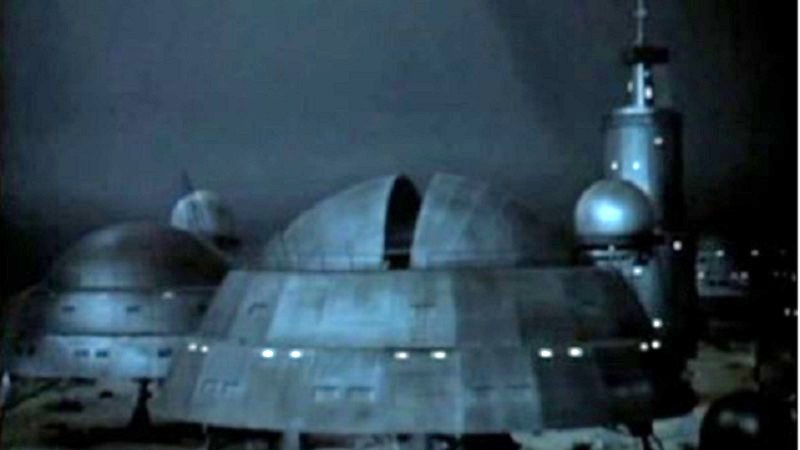
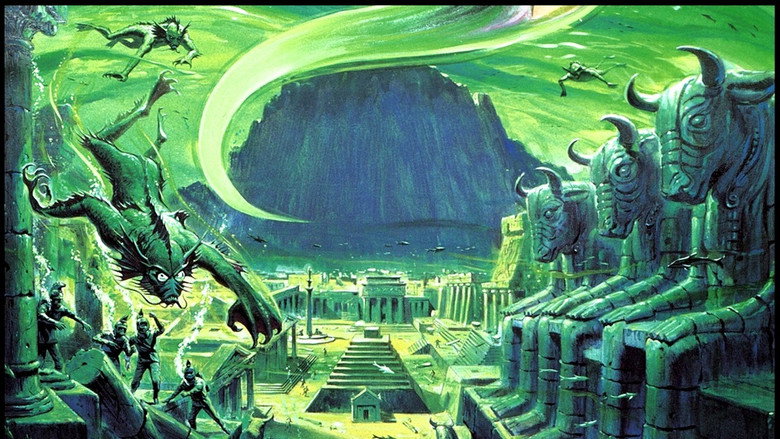
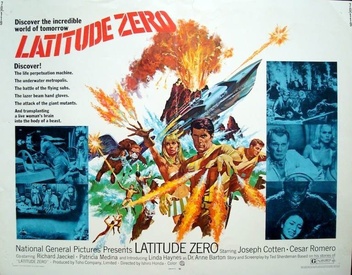
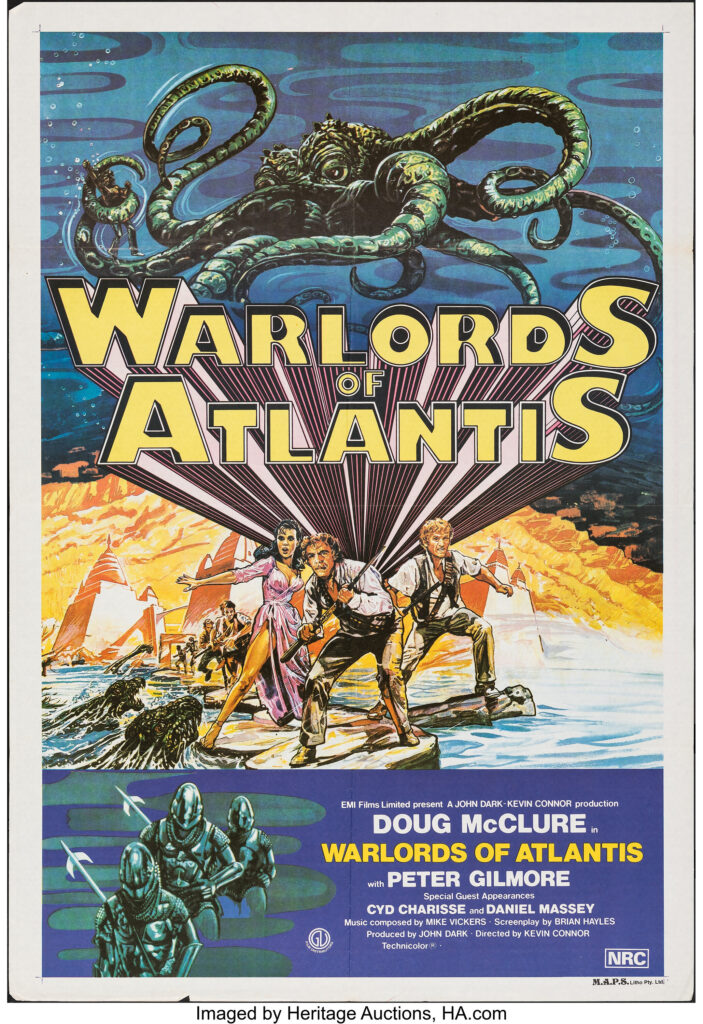
S.B.: I find the whole idea fascinating. I grew up watching things like “Island at the Top of the World,” “20,000 Leagues Under the Sea” and “Warlords of Atlantis.” Steampunk, for me, encapsulates adventure and excitement. The possibilities are huge. You can go fantasy and discover lost races, you can go sci-fi and have clockwork automatons. The setting, usually the Victorian age, is so interesting. Remember how interested they were in the supernatural, the thing to do back then was to have a séance. Someone will say you can do all these things in any setting or time period. All I’ll say is ‘steampunk’ lets you do it with style.
P.S.: What other authors influenced your writing?
S.B.: I’ve always been a voracious reader. Childhood favourites stay with me now, such as Enid Blyton, C.S.Lewis, and Roald Dahl.
At school I always had one book out of the library over and over and that was a collection of Greek myths. Even now, I enjoy reading them.
More recently I’ve enjoyed R. A. Salvatore, Gareth Powell, Kim Lakin-Smith, and Joanne Hall. I read all kinds of things. I’ve not long finished some Agatha Christie and Robert Louis Stevenson. I like reading all sorts, I even believe Stan Lee has had an influence on me, hence my characters always seem to have a disability of some sort or they are a social outcast. I think as writers we can learn from one another. I’m like a sponge trying to take in every lesson I can.
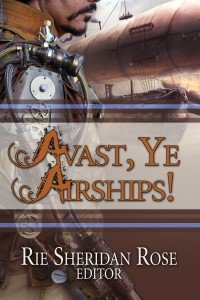 P.S.: You wrote “Beneath the Brass” for Avast, Ye Airships! Can you tell us a bit about the story?
S.B.: It’s a journal, kept by a young woman who has been put into an asylum. There’s nothing wrong with her but she accused her brother of attacking her and he’s made it seem like she is mad. Pirates rescue her and it is her account of all that befalls her during that time. It’s love, peril, airships and automatons but not necessarily in that order.
P.S.: In your website, you mentioned having joined a critique group. How has that group affected your writing?
S.B.: Well hopefully I’m reducing the vast amount of commas I apparently use. Mostly it is just very supportive, knowing that people are going to be honest with you and give you constructive criticism. I struggle sometimes with confidence – believing myself to be more lucky than talented. I know that these people (Victoria and Inez) will be brutally honest, so that when they say “it’s good”, it really means a lot.
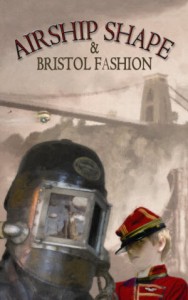 P.S.: Your story “Lord Craddock: Ascension” appears in the anthology Airship Shape and Bristol Fashion. What is that story about?
S.B.: It’s about fighting slavery, fighting stereotypes and preconceptions and using those preconceptions to your advantage when trying to take down slave traders. It also involves automatic carriages and jumping automatons.
Bristol has history of being part of the ‘triangular’ slave trade route and I liked the idea of someone fighting racism and slavery in a steampunk vigilante kind of way.
P.S.: Before writing your stories, do you imagine a scene, a character, or a plot outline?
S.B.: I get an idea. Usually it’s a ‘what if?’ scenario. After that I just think about it and see how it plays out. It’s usually no more than the beginning and end. I normally take a while to figure out what happens in the middle. I can just think and scribble notes for months before I actually start typing a story.
Recently I had a story accepted for an anthology typed out and submitted within ninety minutes. I don’t see that happening often though, if ever again.
For “Beneath the Brass,” my first thought was, what if Stephen Hawkins was alive in that time period? What if he became a pirate? In the end the story is not about the pirates but about Miss Alice Reynolds, the lady stuck in an asylum. Until you start typing away on your keyboard you can never be entirely sure how it will unfold.
P.S.: What is your current work in progress? Would you mind telling us a little about it?
S.B.: I’ve a few things on the go. My big work in progress is tentatively called “Blood Key” and is a YA fantasy with elements of steampunk. It’s the tale of a young girl who ends up in a world not seen by us since the days when the Celtic druids travelled there. It’s the story of her trying to get home and those who want to use her to get the magic flowing again and seize power.
I’m also working on a really interesting project called “The Adventures of Dayton Barnes.” It’s an anthology of children’s stories designed to encourage young boys to read. It’s very fascinating because each story will actually be chapters. I’ve written three stories for it but that is not the end. I now have to work with the other authors to make all our stories fit seamlessly together as if it were a single book. I’ve got to say this has tested my imagination no end. I can dream up tales of Victorian steampunk, demons and zombies quite easily – trying to put myself in the shoes of a mid west American twelve year old has been one of the hardest things I’ve ever written.
Poseidon’s Scribe: What advice can you offer aspiring writers?
Stephen Blake: Go for it – that is the best advice. You’ve got to give it a go. The more you write the better you’ll get. Lord Craddock was my first attempt and it got published (after an awful lot of editing mind you). For some time I believed that was a fluke and yet here I am with a story in Avast, Ye Airships!, and soon I’ll have another three stories in a children’s anthology, “The Adventures of Dayton Barnes.” All because I just stopped talking about how I’d like to write and did it.
One other thing I realised early on is that writing is like music. One person hears a song and it evokes an intense feeling of dislike within them. Another hears the same tune and they feel it touches their very soul and fills them with happiness. Write the stories you want to write and they’ll find an audience, even if it’s only you (but that is highly unlikely!).
I could go on and on. Join a local group of writers. Read lots. If possible meet authors and compare notes. Keep trying for anthologies because you’ll meet great editors who will take your writing by the scruff and knock it into shape.
Thanks, Steve! All my readers will soon be regular followers of you on Twitter, Facebook, and Goodreads, and will become avid readers of your blog.
Poseidon’s Scribe