
Most of us can’t relate to the question in this post’s title. We don’t have to choose either one. We live on land, on Earth.
Still, someday, people may live for long periods—their whole lives—either underwater or in space. Which would you choose?
Underwater History—1960s
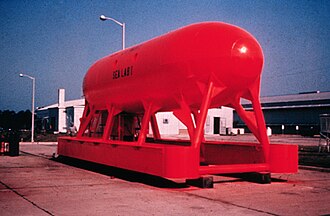
The chronology of underwater habitat history began, and blossomed, in the 1960s. Some of the more notable habitats of that era include Man-in-the-Sea I and II, Conshelf I, II, and III, SEALAB I and II, Glaucus, Hydrolab, BAH I, Tektite I, Helgoland, and Chernomor. These housed between 1 and 10 occupants for missions ranging from hours to a few weeks. Professional divers manned the early ones, but starting with Tektite, scientists participated.
Underwater History—1970s
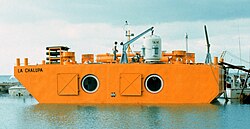
Some of the 1960s projects continued into the next decade, including Hydrolab, Helgoland, and Chernomor. Few new habitats began in the 1970s, and these included Seatopia, Tektite II, and La Chalupa. These furthered the concept of undersea living to some degree. Tektite II hosted the first all-female mission. La Chalupa could accommodate 50 aquanauts at a time.
Underwater History—1980s
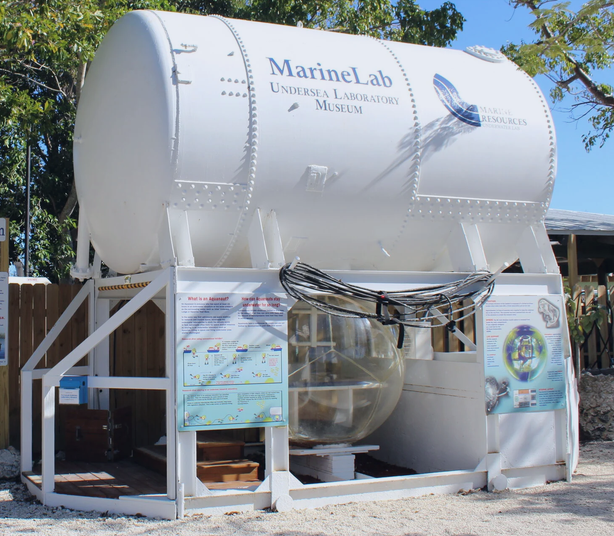
Three more habitats began operating in the late 1980s, namely Aquarius, MarineLab Undersea Classroom, and Jules’ Undersea Lodge. That latter one had been converted from the La Chalupa habitat and can be booked for brief stays like a hotel. All three of these remain operational today.
Underwater History—1990s
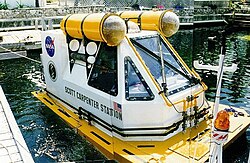
To my knowledge, only one habitat started in this decade, the Scott Carpenter Space Analog Station.
Underwater History—2000s
The company DEEP started the habitat Vanguard this year. This CNN story about it inspired my blogpost.
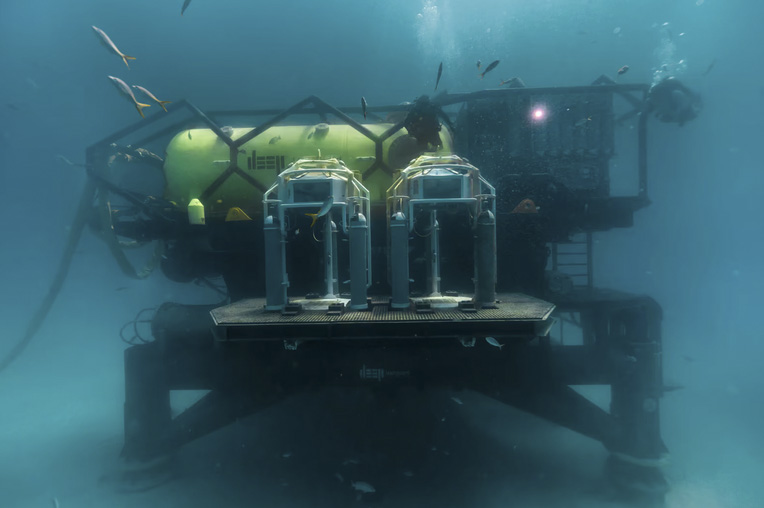
Comparison to Space Habitats
With all these undersea habitats over all those decades, with most located a few miles from shore, with resupply and rescue so much easier, you’d think we’d have many more man-hours of experience living underwater compared to space. Right?
Not even close.
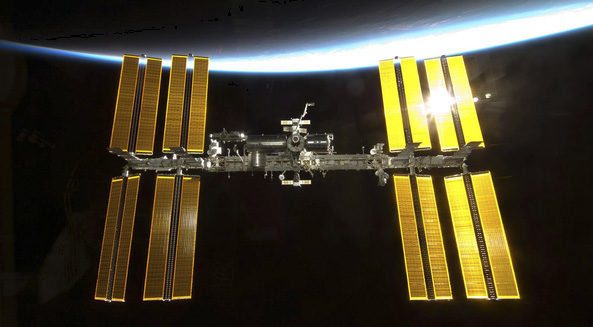
Space habitats started later, in the 1970s. Since Salyut-1 in 1971, there have been only 8, with 2 still operational. But in man-hours of operation, space habitats far exceed their underwater counterparts. At most, aquanauts stay for days or weeks. Astronauts remain for months, and one stayed over a year.
Why Water Homes Fell Behind
Was the pressure of competition too much for the underwater habitats? No, but pressure played a part. Engineers designed almost all such habitats for “saturation diving” or “ambient pressure operation.” That means the air pressure inside the habitat matched that of the ocean outside. This allowed aquanauts to don scuba gear, exit the moon pool, and work outside for hours each day.
Though saturation diving eases outside work, it limits the occupants’ time in the habitat. After four weeks, the aquanaut must decompress back to atmospheric pressure to avoid adverse physiological and psychological effects. Further research into chemical supplements might result in extensions to that 28-day limit.
One-Atmosphere Alternatives
You’re wondering if engineers could design underwater habitats with normal surface air pressure inside, so people could live there longer, not limited by the saturation diving limit. Sure. Designers would have to make the hull thicker, but it would resemble, in concept, a submarine resting on the bottom.
Two existing habitats—the Jules’ Undersea Lodge and Aquarius, and the upcoming DEEP Sentinel offer part-ambient and part 1-atmosphere options.
Imagine
Both oceans and outer space represent hostile environments, unsuited to long-term human living. But people have made fledgling attempts in both areas. One day, some will choose to live underwater, and others will opt to live in space. To read a fictional take on living at sea, with some cities underwater, read The Seastead Chronicles by—
Poseidon’s Scribe