Why I Love My Mourning Dove

Sometimes Nature teaches us lessons. I learned one from a mourning dove.

Backstory and Surprise

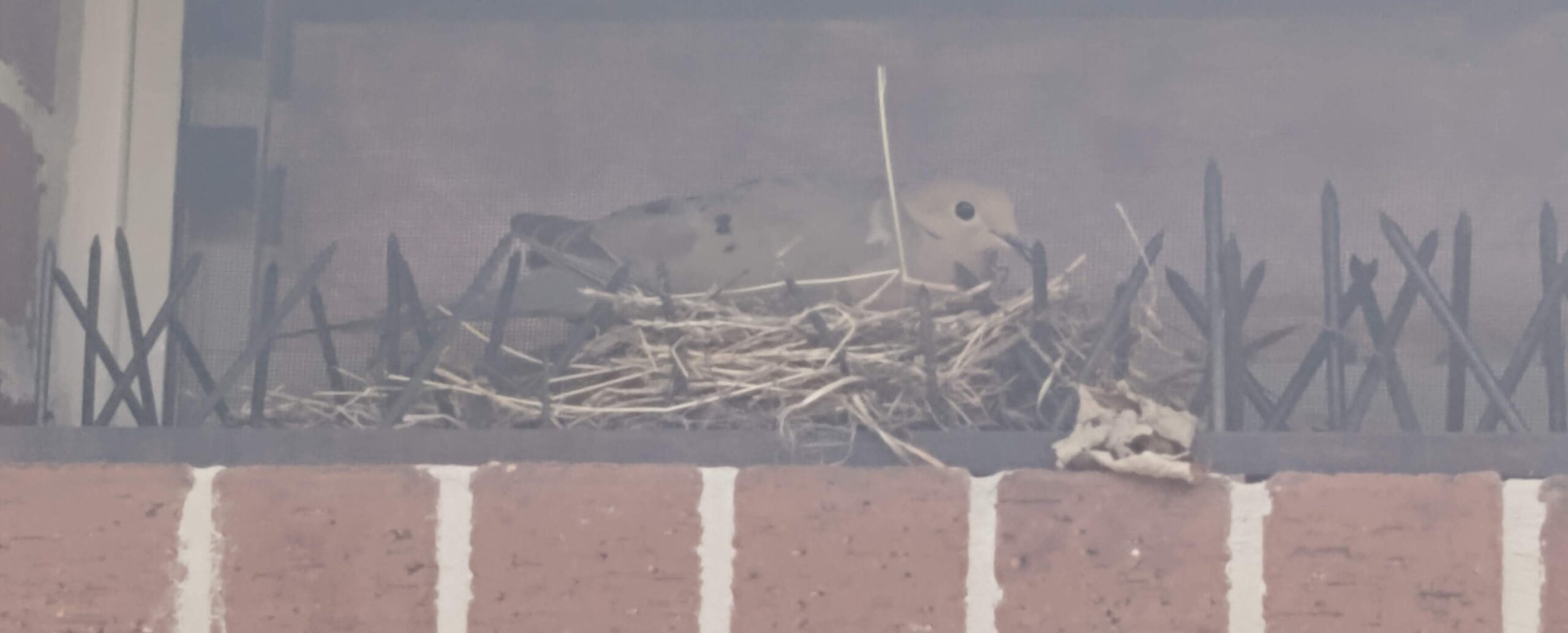
Last year, birds nested on the brick ledge outside our bathroom window. This year, to discourage a repeat of that behavior, I pounded dozens of nails through a board and placed it, with nail points up, on the ledge. A few days ago, after returning from a trip, I spied a bird’s nest resting amid the nails. I climbed a step-ladder and chased the bird away. In the nest lay a single egg. Had the egg not been there, I’d have removed the nest and pounded more—and longer—nails in the board. Instead, soft-hearted me allowed the nest, egg, and bird to stay.

Classification and Assessment

Not being a bird-watcher, I’m guessing, by appearance, this one is a mourning dove. I started calling her Momma Mourning Dove. I’ve since learned both expecting dove parents take turns minding their nests. Half the time, I suppose, Pappa sits there.

I wondered what kind of pea-brained idiots would pass up a pleasant and traditional home in any of the plentiful trees in our area, and instead build their nest on a ledge full of nails. That can’t be comfortable.

Realization and Apology

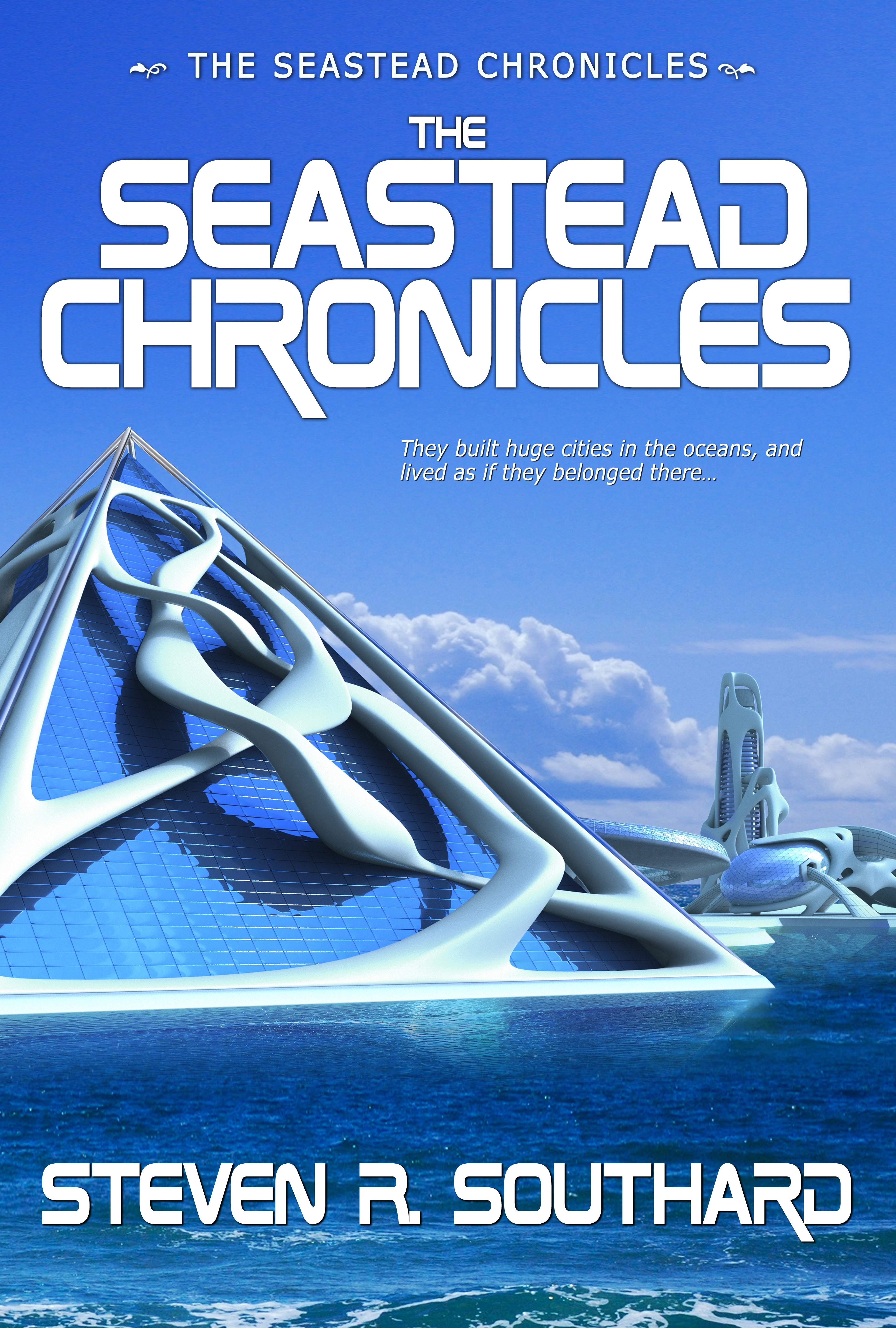
Then it hit me. I know the sort of idiots who do that. I’ve written a book about people who do something similar. The book is The Seastead Chronicles. In it, my characters abandon the safe and long-established location for housing—the land—to live on the danger-filled oceans. They do this for various reasons—economic, political, religious, etc. But they don’t act from stupidity. So, doves, I get you now. Sorry I called you idiotic and pea-brained.

(However, when you’re done with that nest, I still plan to remove it and put more nails in the board.) 

As I write, a dove sits there, as one has for many days, incubating and turning that egg, unbothered by nails. Unaware, too, I imagine, how its behavior inspires—

Poseidon’s Scribe

Triumphant Return from my Soonercon Voyage

This past weekend, I participated in Soonercon 34, Oklahoma’s premier pop culture convention. Sponsored by the Future Society of Oklahoma, this year’s con chose “Through Salt & Storm” as its motto.

Food on the Seas

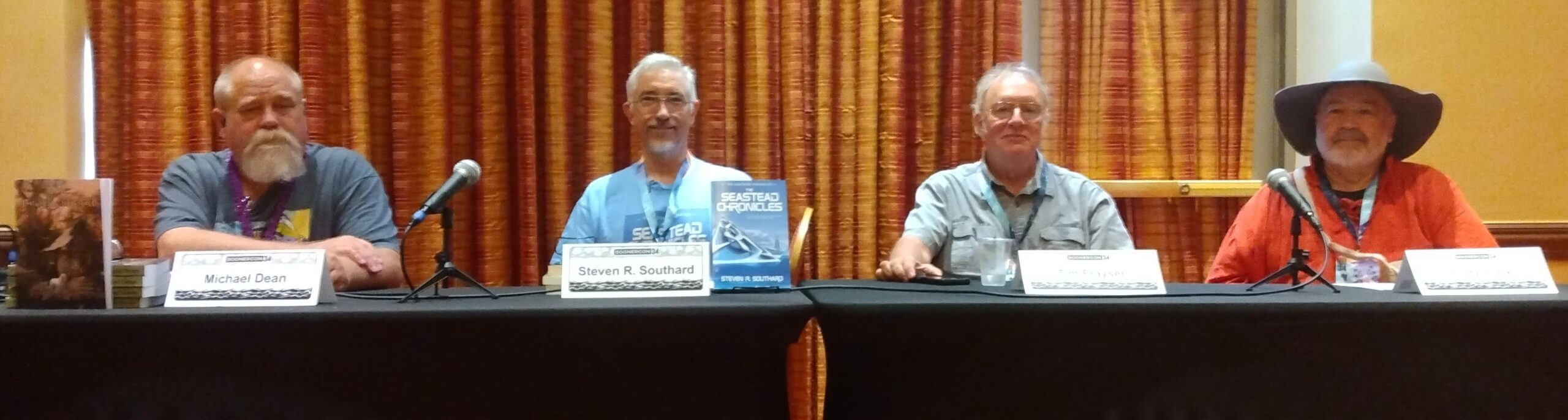
Michael Dean moderated my first panel of the weekend—“Ship’s Biscuits, Limeys, and Rum: Food on the Seas.” My fellow panelists—Tim Frayser and Cody Clark—held a lively discussion about hardtack, grog, and other maritime sustenance. Weevils also came up. Afterward, no one in the audience seemed inclined to ride an old-time sailing ship for long periods.

Michael Dean, me, Tim Frayser, and Cody Clark

Non-Human Protagonists

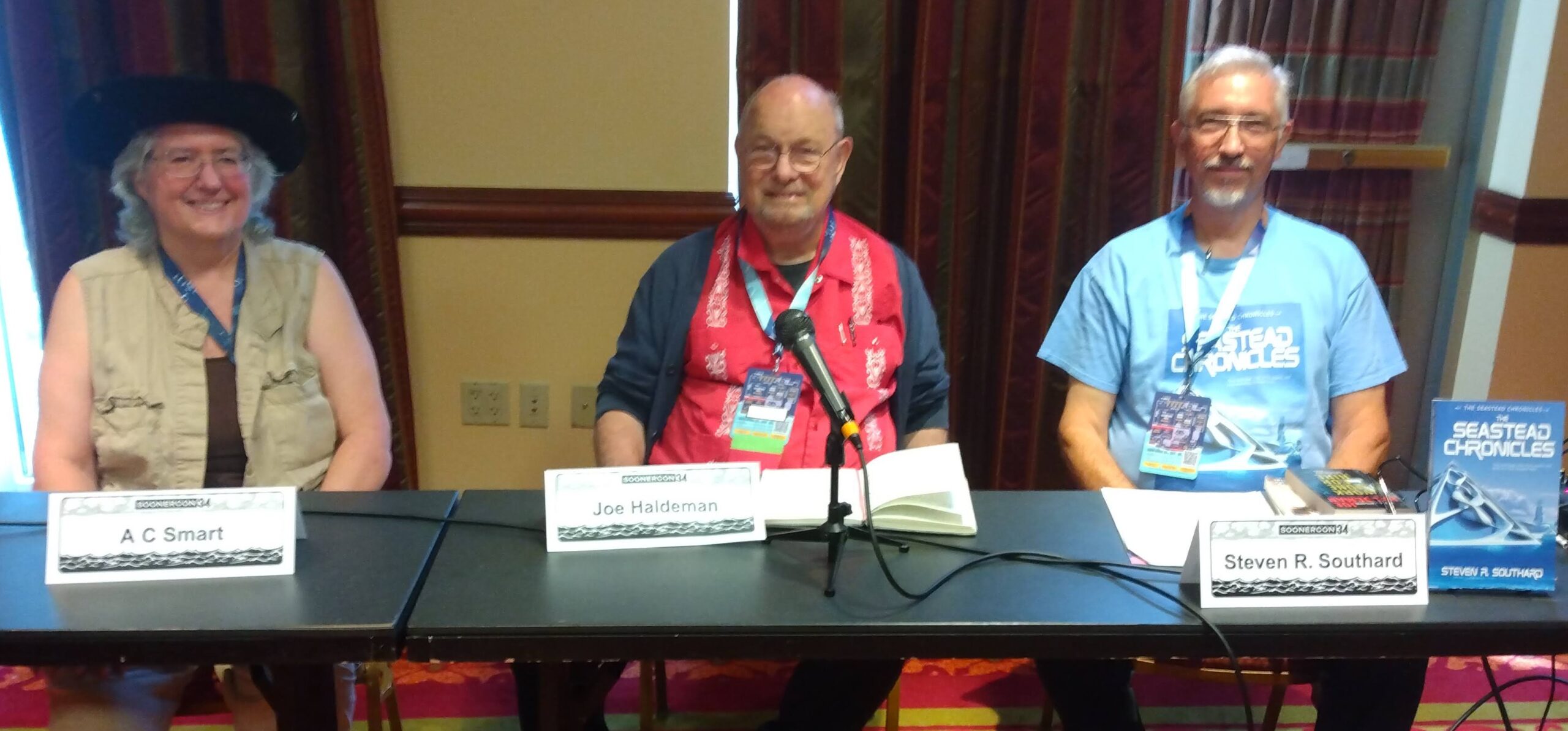
I moderated the next panel, titled “Writing the Inhuman: Crafting Non-Human Protagonists.” With no sentient non-humans willing to serve as panelists (at the prices Soonercon could pay), we made due with humans, in particular A.C. Smart and Joe Haldeman. Yes, that Joe Haldeman. Both of them delighted the audience with valuable information about robots, aliens, and other non-humans (even cats) as main characters. They gave budding scifi writers actionable tips about how to create vivid, believable non-human characters.

A.C. Smart, Joe Haldeman, and me

Book Signing

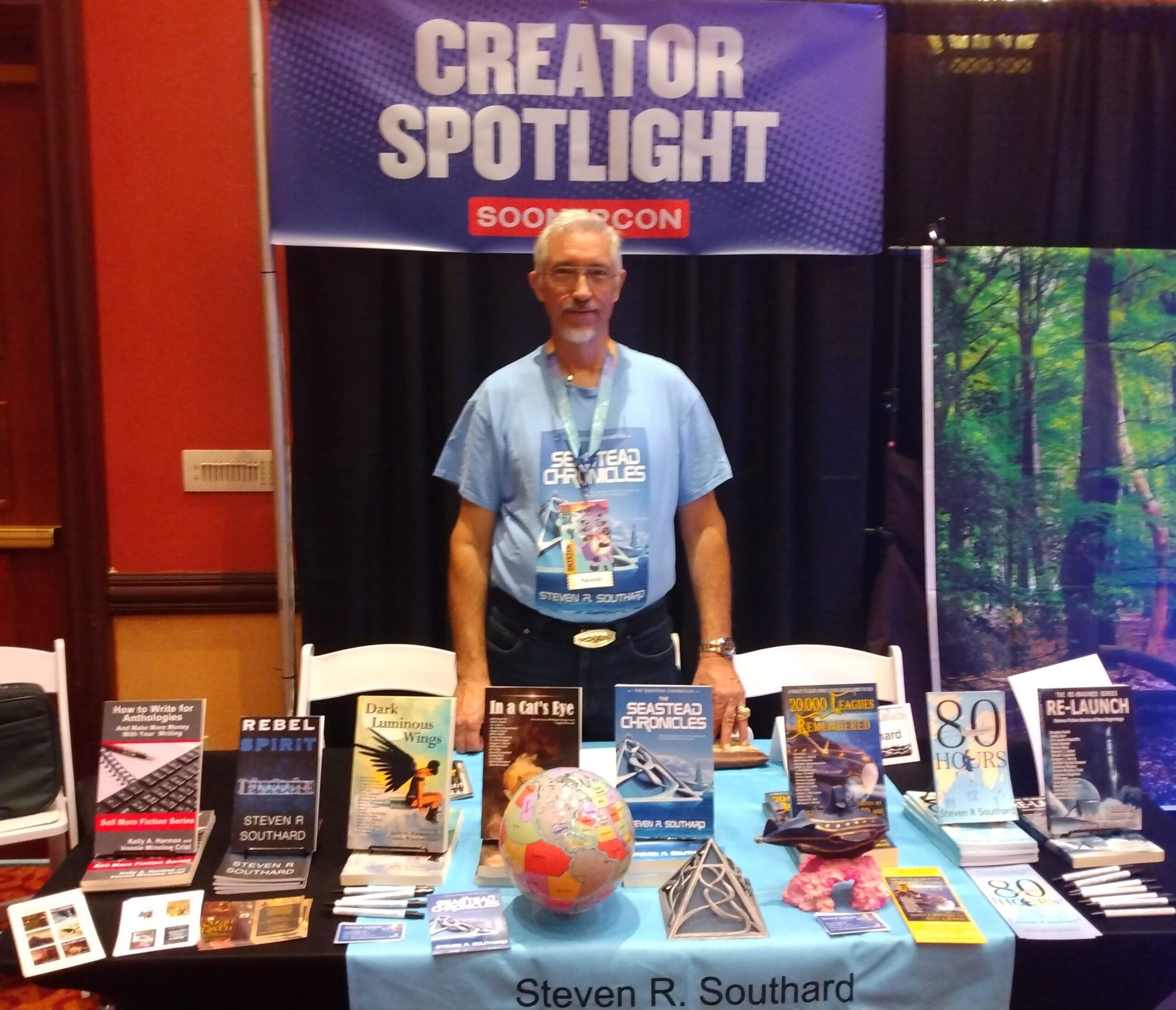
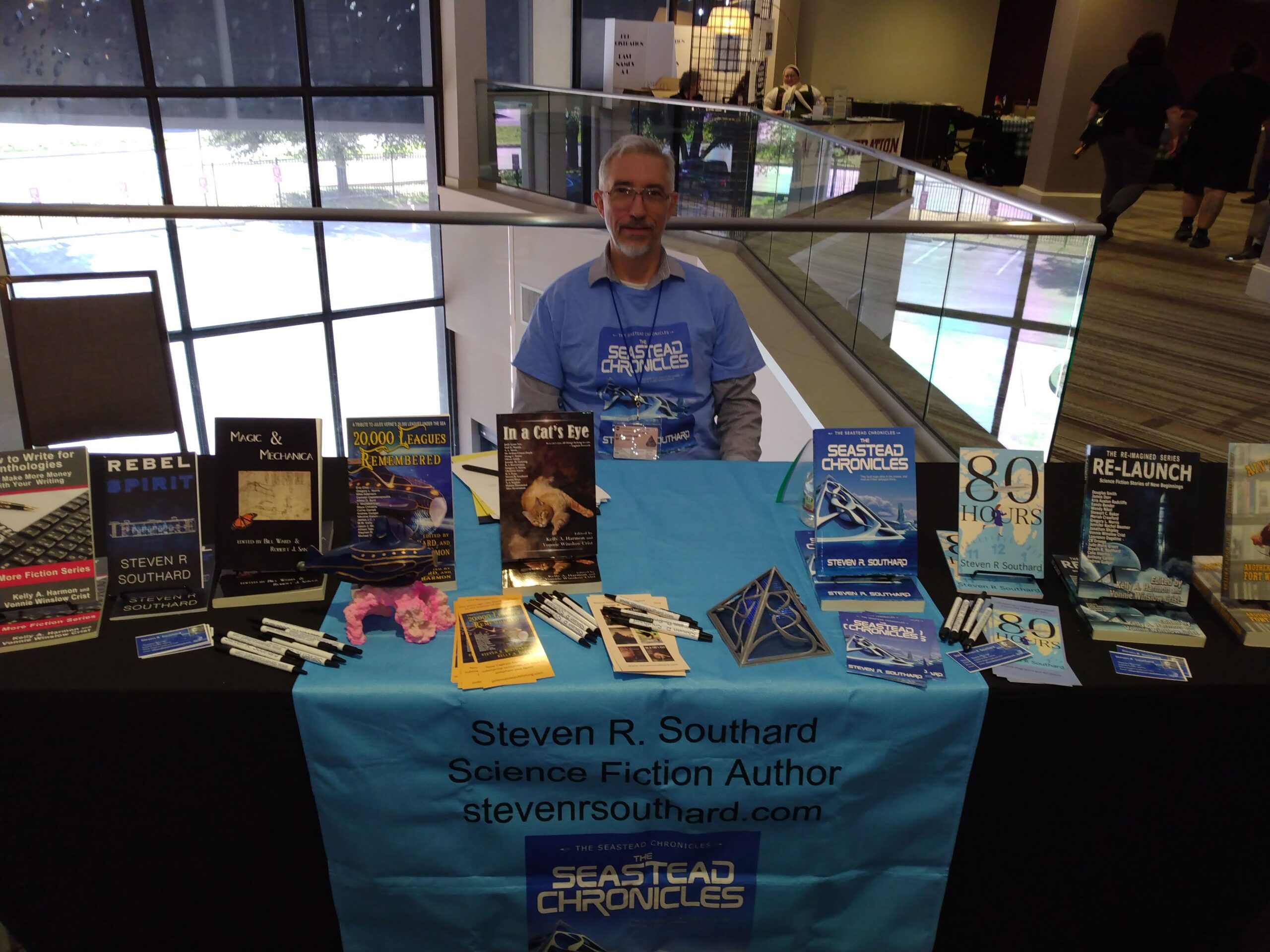
Several people, those without anything more pressing to do, stopped by the table I’d set up for selling books.

Stars and the Sea

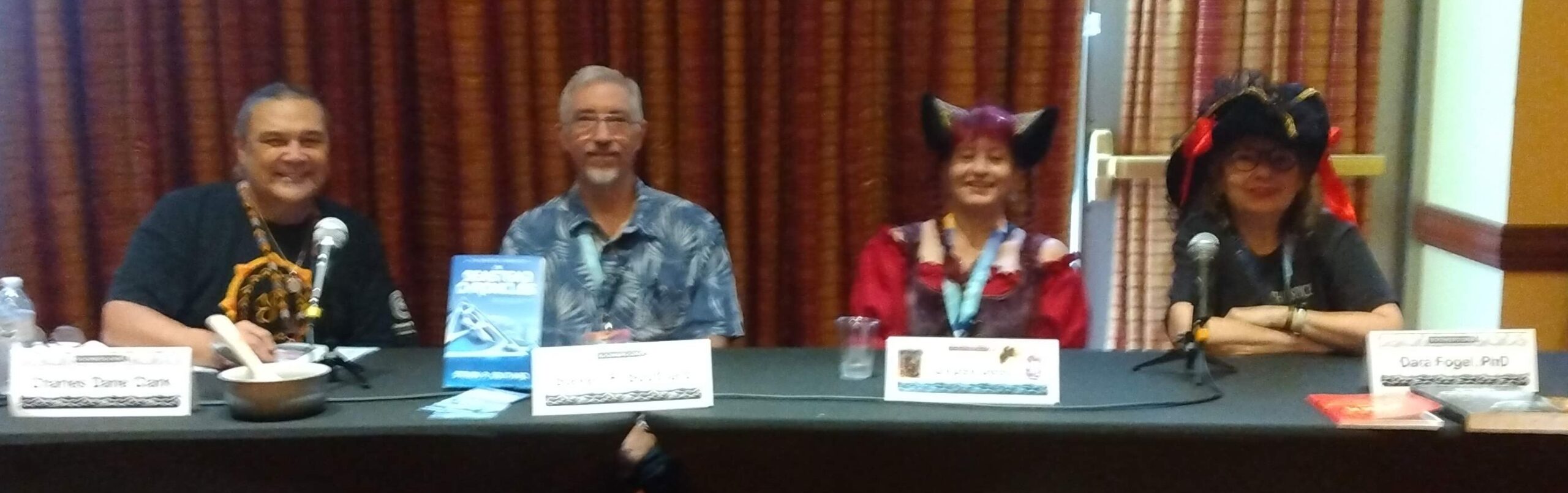
Charlie Clark moderated my only Saturday panel, “Stars and the Sea: Constellations in Myth and Legend.” The panel consisted of Dr. Dara Fogel, Gypsy Jess, and me. A member of the Choctaw Nation, Charlie told the audience about Choctaw legends involving solar eclipses. Both other panelists described how star patterns and their stories affected most cultures throughout history.

Charlie Clark, me, Gypsy Jess, and Dr. Dara Fogel

Building the Temple

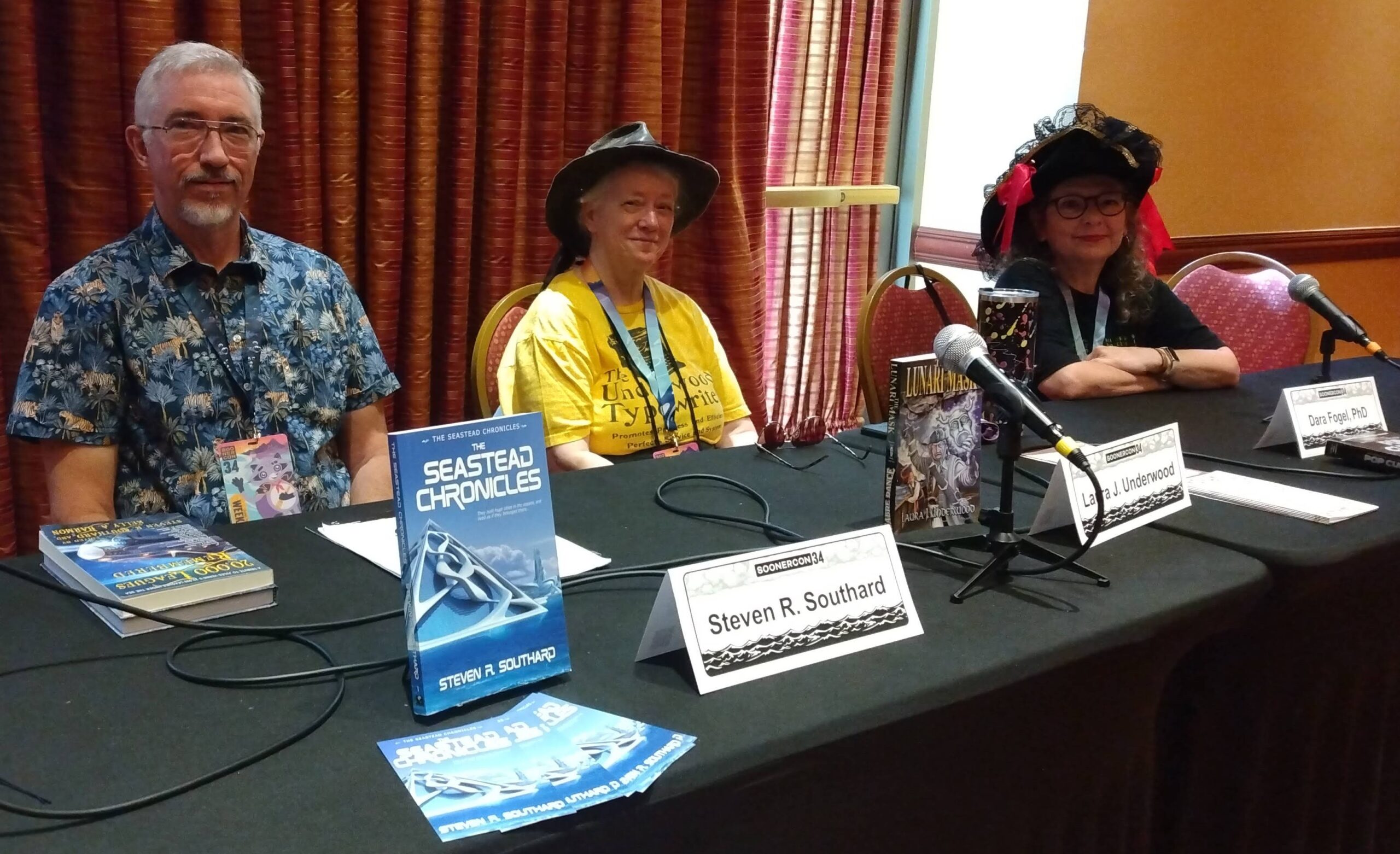
On Sunday at 11:00 (appropriately), I moderated a panel titled “Building the Temple: Believable Religion in Speculative Fiction.” Though I started it off much like a religious service, panelists Dr. Dara Fogel and Laura J. Underwood helped the audience understand the elements of a religion and how to create a credible one for a fictional work, citing examples from their own and others’ books.

Me, Laura J. Underwood, and Dr. Dara Fogel

Golden Age

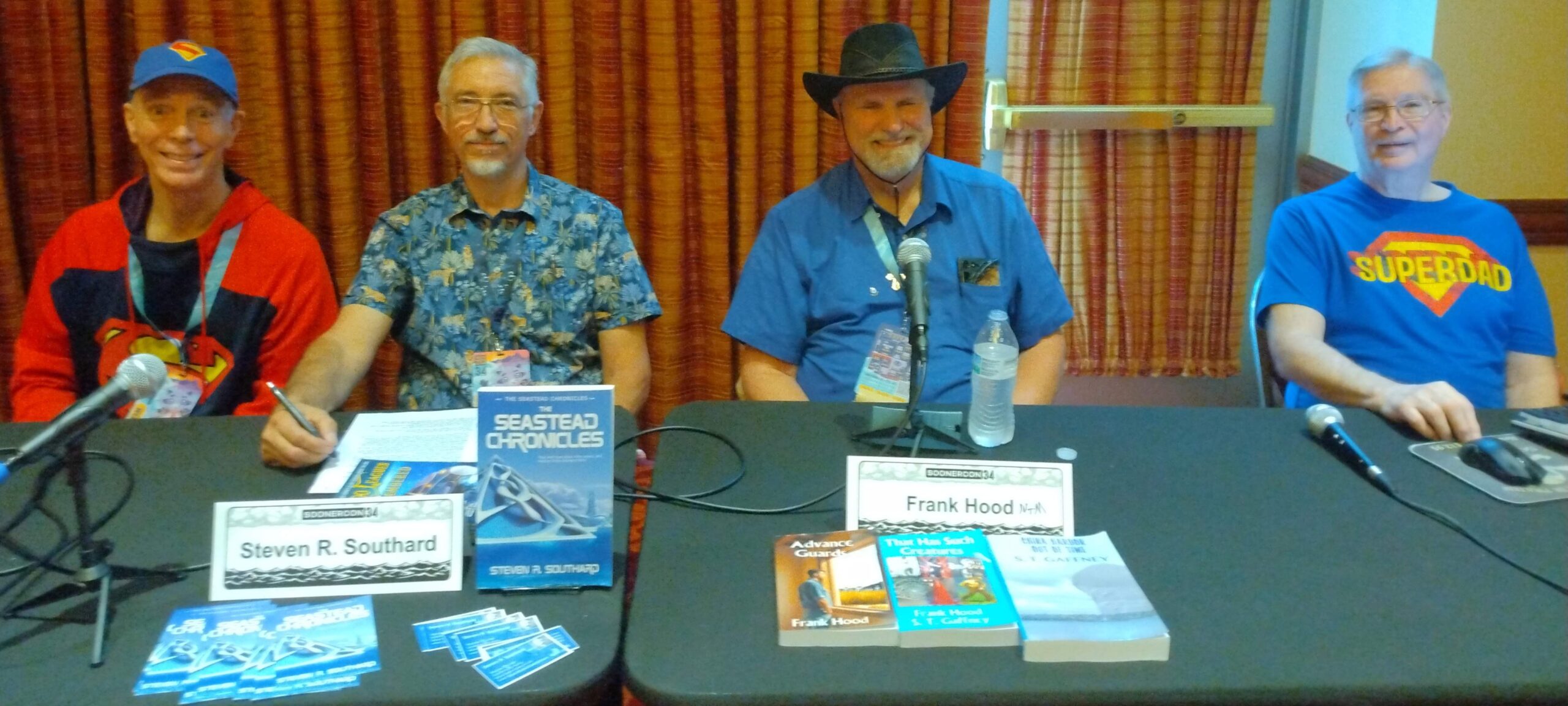
At 3:00, I moderated a panel titled “The Golden Age of Sci-Fi: What Makes Classic Stories Endure?” Panelists Frank Hood, William Bernhardt, and Mark Alfred covered the classic definition of science fiction’s Golden Age (late 1930s to late 1950s), but also the more universal definition (whatever scifi you started reading at age 12). They covered the prime examples of Golden Age literature and what qualities keep them readable today.

William Bernhardt, me, Frank Hood, and Mark Alfred

Overall

Though Soonercon got its start 34 years ago focusing on science fiction, it has broadened to pop culture. Now the vendor booths display anime, manga, stuffed animals, stickers, and other trinkets rather than books. Most of the panels and activities focus on cosplay, e-sports, hentai, and painting, etc., with science fiction as a minor sideshow. Thousands of attendees showed up, most young, and most in costumes I didn’t recognize.

I couldn’t ignore a con with a nautical theme, of course. Wherever and whenever fans go “through salt & storm,” you’ll find—

Poseidon’s Scribe

Did You See Me at FenCon 2026?

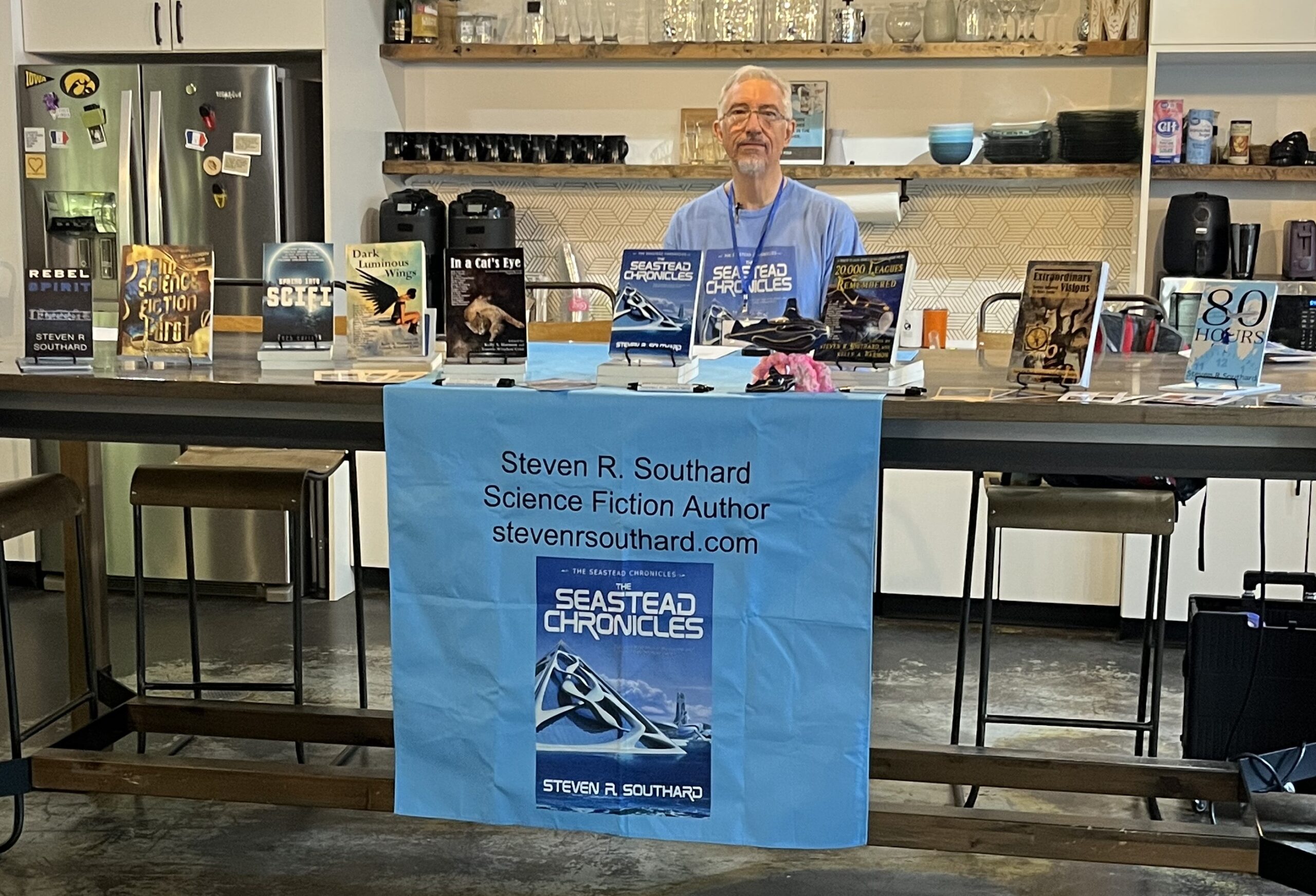
Things fell into place last Saturday when I learned I could set up a table to hawk my wares at FenCon, a science fiction convention based in Dallas, Texas.

I find the etymology of “FenCon” interesting. If “man” earns the plural form “men,” then what’s the plural of “fan?” Fen, of course. It’s a convention for more than one fan of scifi—way more.

The con organizers granted me a prime location for my table, where I sold several books and conversed with buyers and other passers-by. Fellow author Jan S. Gephardtwhom I’ve interviewed—stopped to talk while on the way to her next panel.

This marked the first opportunity to display my new glowing seastead pyramid. It attracted the eye of more than one potential customer.

Many thanks to the FenCon staff for providing a sales table for—

Poseidon’s Scribe

Author Interview—Rachel Aukes

Could you write a million words a year? That’s the equivalent of a novel a month. Meet today’s interview guest, Rachel Aukes, who aspires to write a million words a year and has already published over forty novels. I met Rachel at ICON (an eastern Iowa scifi conference) in 2023 and saw her there again in 2025. Buckle up for a fast-paced interview, one that barely registers in her million-word count.

Bio

Rachel Recker, writing as Rachel Aukes, is a bestselling author known for gritty science fiction and chilling horror that explore humanity at the edge. She’s written over forty novels, including 100 Days in Deadland—a zombie apocalypse retelling of Dante’s Inferno that was named a “Best of the Year” pick by Suspense Magazine—and The Lazarus Key, a high-octane sci-fi thriller featured by The Big Thrill magazine. One of Wattpad’s first Stars, her stories have reached over eight million readers around the world.

Rachel is a licensed pilot, former tech executive, and lifelong comic book collector. When not plotting the end of humanity, she hikes state and national parks with her dog.

Interview

Poseidon’s Scribe: How did you get started writing? What prompted you? 

Rachel Aukes: Like many writers, storytelling is in my blood. I was fascinated with stories as a child, and I wrote quite a bit. However, life led me on a meandering journey that eventually brought me back to my original passion. While I’m thankful for my life’s experiences, I’m so glad to be writing full time.

P.S.: Tell us about your comic book collection. Do you prefer certain comics, or a variety? Does your interest in that medium (high adventure, vivid graphics, brief speech balloons) influence your fiction in some way?

R.A.: Like most kids growing up in the 80s, I began with Marvel and DC. My childhood collection grew to over 3000 comics, though now I tend to read comics digitally to save physical space and invest in high-quality graded comics.

Comics have absolutely impacted my punchy, action-driven writing style. I can pack a lot of storyline in a scant ten pages.

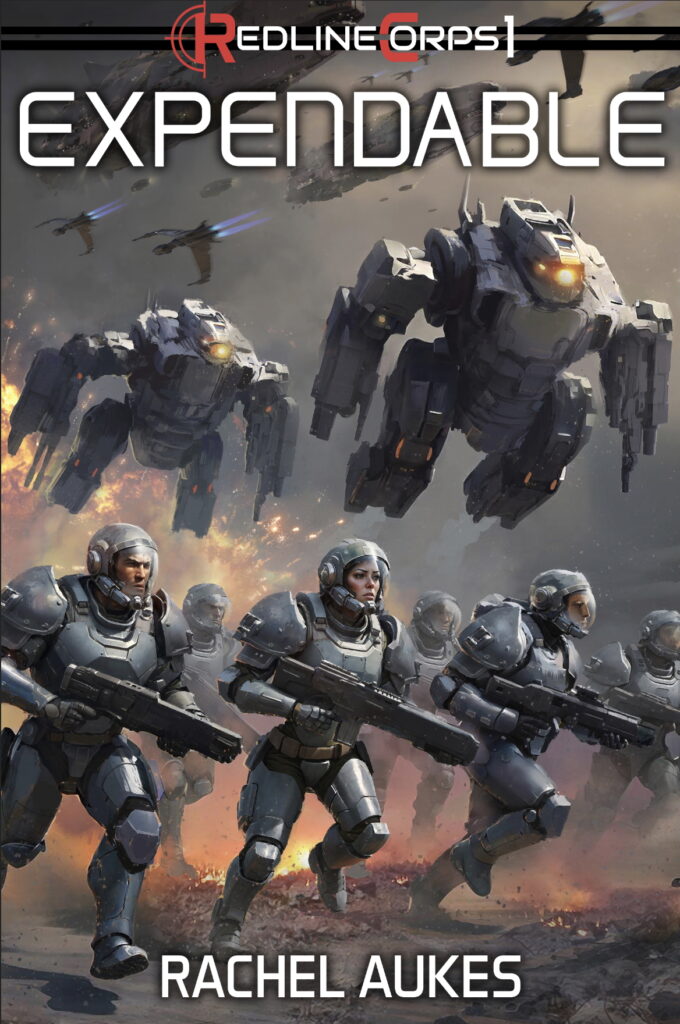
P.S.: With over 500 ratings on Amazon, your novel Expendable, first in the Redline Corps series, has readers enthralled. Tell us about the main character, Liv Reyes, and the book’s premise.

R.A.: The idea of Liv came about from seeing a survey of Gen As who overwhelmingly aspire to be social media influencers (yikes, but that’s a debate for another day). So, I decided to create an influencer as a main character who gets drafted as a war correspondent with the task to put a positive spin on the war.

P.S.: Having published over forty novels, you’re one of the most prolific authors I’ve ever interviewed. Your website states your personal goal of writing a million words this year. That’s over 2700 words per day, well beyond the average for the (now closed) high-speed Nanowrimo challenge. Will you achieve your goal? How do you write so fast?

R.A.: Writing is my career, and I treat it like a job, setting regular hours and deadlines. I think some writers get into this mindset that writing should only take place while inspired, but that’s hogwash. Sure, story ideas and characters come from inspiration, but a story comes from hard work, craft, and dedication.

I unfortunately won’t hit the goal this year due to a lot of personal changes in my life right now, but I definitely plan to hit it next year!

P.S.: Congratulations on earning your pilot’s license. Do you fly often? Has that knowledge and skill helped you in your writing?

R.A.: Thanks! I don’t fly often right now, but I use the ideas and concepts of flying through most of my books. Taking the “write what you know” literally, nearly every book has an aviator character.

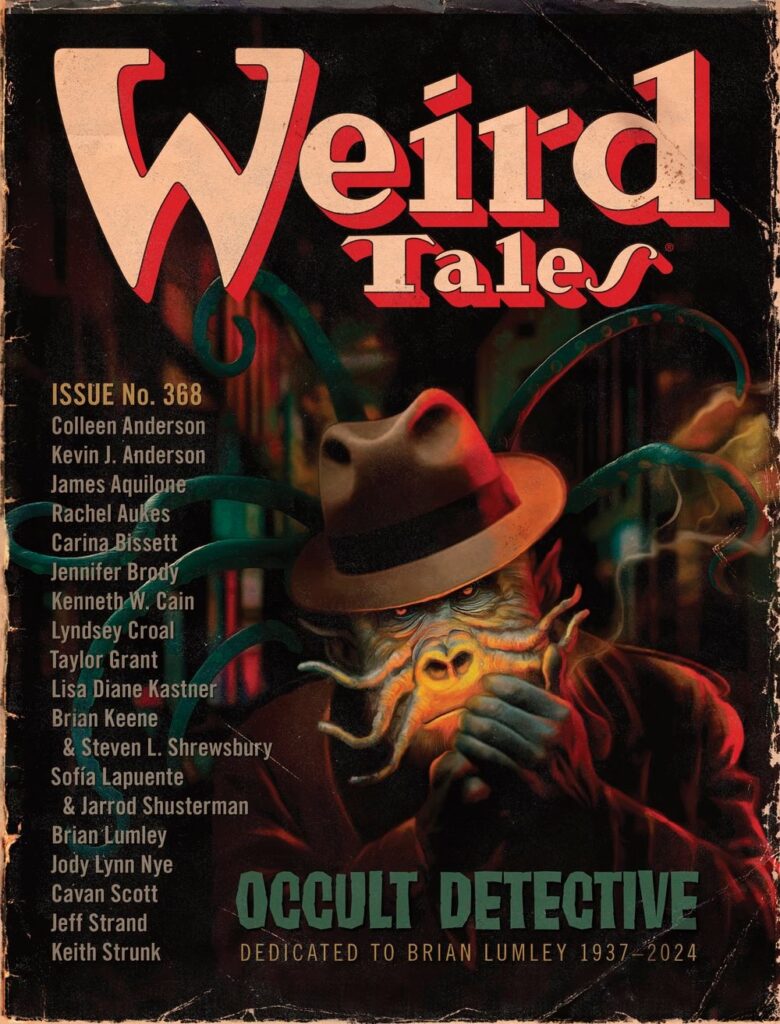
P.S.: Your short story, “Three-Headed Problem” appears in Weird Tales #368 – The Occult Detective Issue. Tell us about this story and what prompted it.

R.A.: I was catching up with Jonathan Maberry (who’s a great guy and an amazing writer) as a recent conference, and he mentioned about my writing a story for Weird Tales, which is a magazine I adore. The next issue with an opening was the Occult Detective issue. I came up with the idea of Roy Stinson, the best damned detective in hell, who’s the most tenacious PI in the underworld. His day job takes a twist when someone steals Cerberus’s favorite bone. And without his treat, the hound refuses to stand guard at the infernal gates. So, all hell will break loose if Roy doesn’t solve the crime and fast. 

P.S.: Is there a common attribute that ties your fiction together (genre, character types, settings, themes) or are you a more eclectic author?

R.A.: I only write speculative fiction, covering primarily the science fiction, fantasy, and horror genres. Other than that, I’ve written everything from current day apocalypse to far-future galactic wars. An underlying theme in most of my stories, though, is humanity on the brink of disappearing.

P.S.: What are the easiest, and the most difficult, aspects of writing for you?

R.A.: The easiest are the ideas. I have SO many story ideas that I desperately want to write, but don’t have the time, which leads to the most difficult part: finding the time and energy to write as many of those ideas as I can (and to write them as good as I can).

P.S.: You own your own publishing company, Waypoint Books. How and why did you come to create a one-woman publishing company?

R.A.: I wanted to have a corporation set up for my self-publishing activities. I also felt it looked more professional to have books listed under a “real” publisher than under my name, especially since I write under a pen name.

P.S.: What is your current work in progress? Would you mind telling us a little about it?

R.A.: I’m co-writing a progression science fiction series with JN Chaney that we’re launching in early 2026. The series, Infinity Upgrade, is about a blue-collar guy getting a highly advanced, experimental AI shoved into his brain without his consent. Needless to say, it brings a lot of problems with it.

Poseidon’s Scribe: What advice can you offer aspiring authors?

Rachel Aukes: Just write. It’s as simple as that. Don’t let anything else cloud your mind. If you want to write, then do it. The more you write, the better you’ll get. Let the complications, like deciding if you want to publish and then how to publish, come later. When you’re new at this game, focus on the fundamentals. And it all boils down to the writing.

Poseidon’s Scribe: Thank you, Rachel. Great advice!

Web Presence

I wish readers and fans the best of luck keeping up with Rachel. She writes faster than we all can read. You can learn more about her at her website, on Facebook, Amazon, and Goodreads.
November 6, 2025Permalink

What Was I Doing at ICON 49.5?

Last Saturday, I had a wonderful time at ICON 49.5. Most often held in Cedar Rapids, the Iowa Scifi Conference, or ICON, took place in Iowa City this year. Poised to celebrate their fiftieth anniversary in 2026, they decided to hold a one-day mini-conference this time, hence 49.5.

Book Signing

Conference organizers allowed me to set up at a table in the Iowa City Book Fair taking place the same day. For six hours, people stopped by to talk, look over my books, and buy some. I enjoyed sharing the table with Tricia Andersen, Darby Harn, and, later, Bree Moore. By watching these experienced authors, I learned more about how to do book signing events.

Indie Publishing Panel

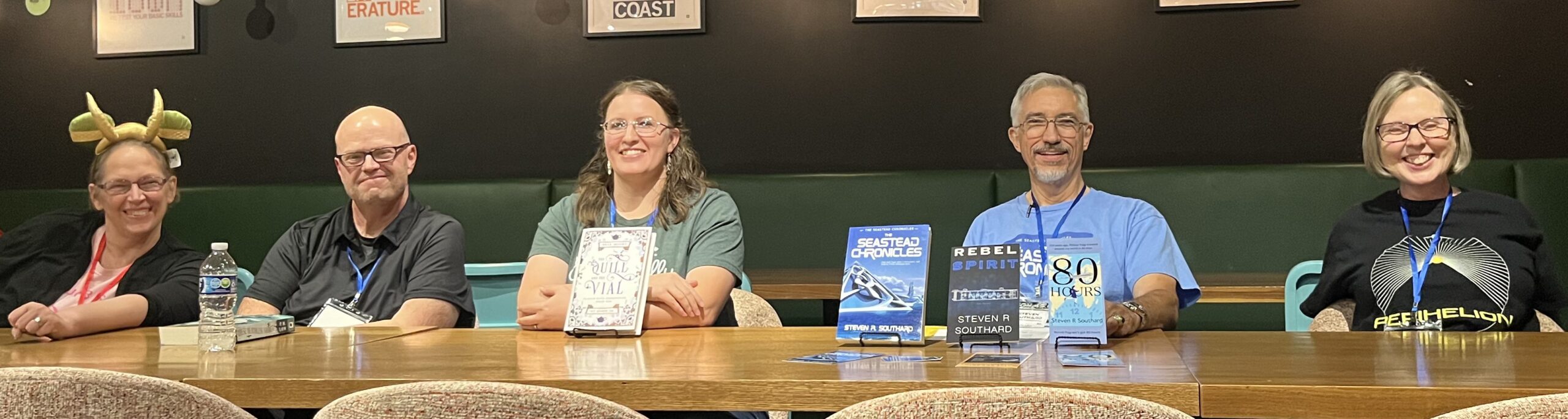
To cap off the mini-conference, I spoke on the subject of Indie Publishing on a panel. Pictured from left to right are Tricia Andersen, Darby Harn, Bree Moore, me, and Rachel Aukes. By rights, I should have sat in the audience, because the other panelists seemed to have graduated summa cum laude from Indie Publishing University where I’d just enrolled as a freshman.

Gratitude

Still, I enjoyed the day’s experience and would like to thank not only the conference programming staff for allowing me to attend, but also my sister for accompanying me and helping me sell books. If there’s one writer who could really use the help, it’s—

Poseidon’s Scribe

October 16, 2025Permalink

Music of the Seasteading World

What comes after Rock? In my book The Seastead Chronicles, you’ll find a story about the next sound, the coming musical wave.

The world of The Seastead Chronicles shows much of humanity abandoning the land to live in cities on and under the sea. That new environment shapes them and gives rise to new art, new jargon, a new religion. And new music.

Liquisic

They call it liquid music, or liquisic. I introduce it in my story, “Deep Currents.” Like rock, liquisic employs syncopation. Unlike rock’s typical 4/4 rhythm, liquisic uses 6/8. This gives songs a rolling, undulating feel, like waves at sea.

Where rock often features a strong melody and background harmony, liquisic intertwines several equal melodies. This mimics the overlapping nature of ocean waves. No single melody predominates, and all blend harmoniously. Music theory experts might call it counterpoint, or contrapuntal.

Instruments

Liquisic instruments use water to achieve an ethereal, fluid sound. Some of the instruments exist now, and one awaits invention.

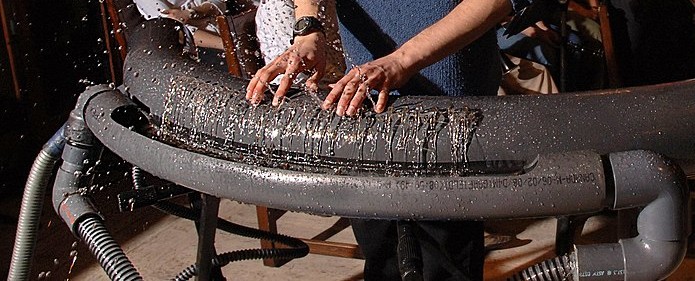
The hydraulophone sounds and works like a pipe organ, but uses water rather than air.

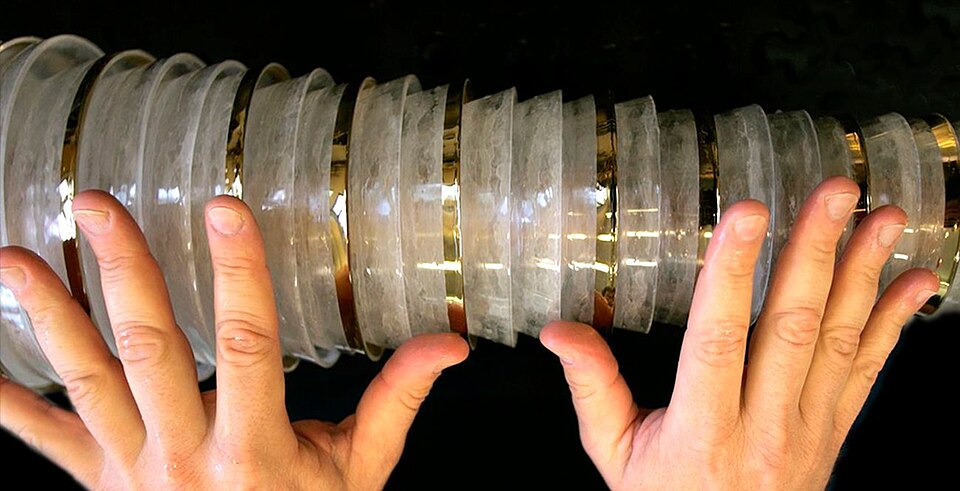
The glass armonica takes the sound you make when rubbing a wet finger around a wine glass, and expands the idea to a full “keyboard.” You get haunting, mysterious tones.

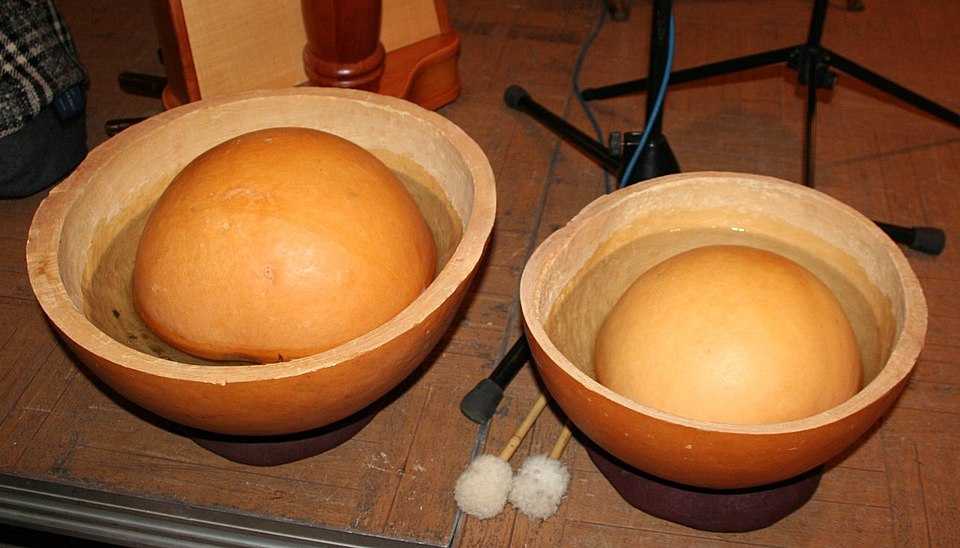
As for the fluidrum, I made up the name, but water-based drums exist in Africa, Asia, and among Native American tribes. Germans gave it a different name, the wassertrommel. In India, they play the Jal Tarang. Whatever fluidrums are, they provide rhythm for the liquisic group.

Water drums, photo by Smalltown Boy on Wikipedia

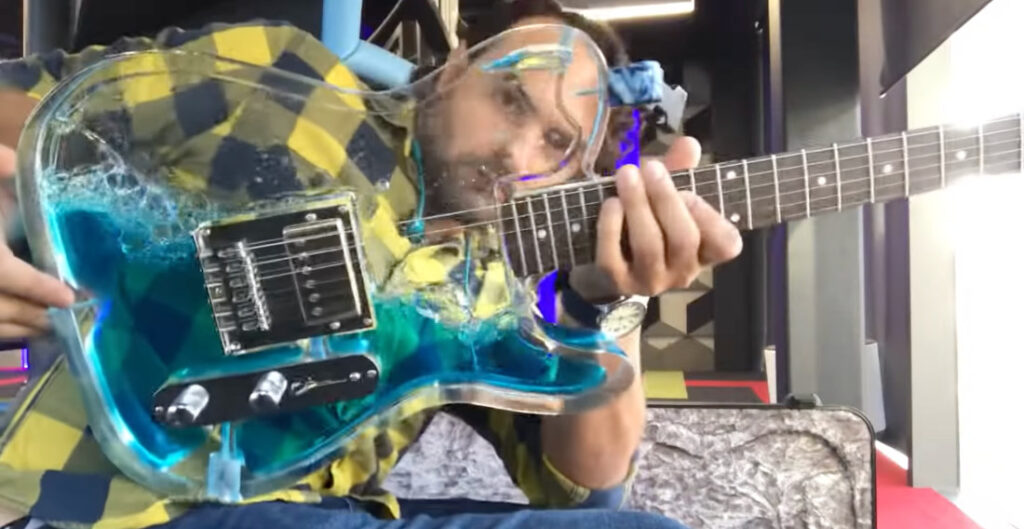
The aquatar might serve as the star of the group, but I have no idea what it looks like, how it works, or what it sounds like. I leave that for readers to imagine. Perhaps the strings stretch within flexible, water-filled membranes. A player would strum them with fingers, not picks. Maybe you could see through the aquatar’s transparent body to the colored water sloshing around inside, with lights illuminating it.

Your Turn

There. I’ve done the hard work—naming the music genre, coming up with its characteristics, and proposing the instruments. All you have to do is get a band together, practice, do some concerts, and make your fortune. My story “Deep Currents” in The Seastead Chronicles offers a name for your band and several ideas for song titles.

One more thing. After you hit it big with liquisic, show a little love to—

Poseidon’s Scribe

How do the Two Chronicles Compare?

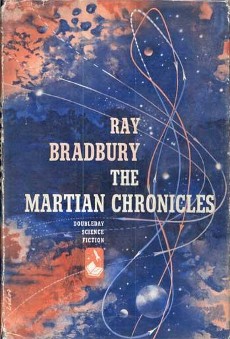
Seventy-five years ago, Doubleday published Ray Bradbury’s The Martian Chronicles (TMC). One month ago, Pole to Pole Publishing released my book, The Seastead Chronicles (TSC). A comparison of similarities and differences follow.

Similarities

Both books (1) contain the word “Chronicles” in their titles, (2) concern colonization, (3) belong in the science fiction genre, and (4) could be classified as fix-ups. I’m hard pressed to think of more similarities. On to the differences.

Creative Intent

Bradbury wrote all the short stories for TMC separately, with no intent of combining them. A publisher suggested the Chronicles idea to him. Bradbury then revised the stories to fit better, and added bridging narratives to form a consistent overall story.

I wrote a seastead short story with no initial plan to write more. After that, my muse suggested other stories and the notion of combining them took over. For that reason, TSC stories required no revision, and no bridging material to get them to mesh. Rather than calling it a fix-up novel, you could call TSC a “short story cycle.”

Plot Structure

Bradbury ordered his stories in a logical sequence and divided them into three sections, each occurring over specific designated years. Stories in the first part concerned exploration and initial contact with Martians, the second part with colonization and war, and the third part with the aftermath of what’s happened to humans on Earth and to Martians on Mars.

Although stories in The Seastead Chronicles appear in sequential order, I didn’t group them into parts, nor mention any specific years. The early stories depict initial seasteads and the search for seabed resources. The middle stories show the spread of aquastates and war between them as colonization proceeds. Later stories portray the blossoming of a new, oceanic culture.

Themes

Any discussion of story themes becomes subjective, since readers interpret tales in individual ways. Bradbury explored many deep themes in TMC, but overall I believe he intended a comparison of the colonization of Mars to the 19th Century conquest of indigenous people in the American West. The stories promote living in harmony with nature and suggest that those who don’t do so end up destroying nature and themselves.

For TSC, readers can draw their own conclusions. However, I intended to focus on humanity’s creative impulses, rather than its destructive ones. Though moving to a new environment introduces dangers, it also promotes new ways of thinking. From those, new cultures can arise, including fresh art, music, language, and religious beliefs. If you’re looking for real-life parallels, consider that all historical colonization efforts have changed the colonizers as they adapted to their new home.

Style

Bradbury wrote in a poetic, lyrical style, rich in imagery and metaphor. You can tell he loved the sound and rhythm of words. Few science fiction authors of his time wrote that way, so his prose stands out. By contrast, I’d characterize mine as plain and unadorned. I strive to make my sentences descriptive and easy to read.

Influences

The Wikipedia article on TMC lists several people whose works inspired Bradbury, including Edgar Rice Burroughs, Sherwood Anderson, and John Steinbeck. Editor Walter Bradbury (no relation) at Doubleday gave him the idea of combining his Martian-themed short stories into a single book.

For TSC, my influences start with Andrew Gudgel, who heard about seasteads and mentioned them to me. As general science fiction influences, I’d cite Jules Verne, Isaac Asimov, Robert Heinlein, Arthur C. Clarke, and Ray Bradbury.

Final Thoughts

In this brief blogpost, I’ve missed some similarities and differences. To perform your own comparison, you’ll have to read both books and decide for yourself. Don’t take the word of—

Poseidon’s Scribe

Will Oceanism Become Your New Religion?

Sometimes science fiction authors create religions for their stories. According to Wikipedia, they do this to satirize, to propose better belief systems, to criticize real religions, to speculate on alien religions, to serve as stand-ins for real religions, or other reasons.

Examples

I could cite many cases of this, but I’m most familiar with the following:

  • Church of Science – Foundation (1951) by Isaac Asimov
  • Church of All Worlds – Stranger in a Strange Land (1961) by Robert A. Heinlein. Note: This book inspired the creation of a real religion by the same name.
  • Bokononism – Cat’s Cradle (1963) by Kurt Vonnegut
  • Bene Gesserit – Dune (1965) by Frank Herbert
  • Earthseed – Parable of the Sower (1993) and Parable of the Talents, (1998) by Octavia Butler

Oceanism

For my new book, The Seastead Chronicles, I created the religion of Oceanism. It begins with one man’s revelation and spreads through the seasteading community of aquastates. In some of the book’s stories, I mention certain aspects of Oceanism, but never describe it in full detail. Oceanism serves the purposes of the stories, not the other way around.

I don’t mean to make Oceanism sound like a fully-formed religion, complete in every aspect. Few writers, least of all me, would go to that much trouble. I created more features of it than appear in the stories, but not much more.

Aspects

All religions, even fictional ones, share certain basic attributes. Here’s how Oceanism addresses several of these aspects.

  • Belief in a higher power—For Oceanists, that’s their god: Oceanus.
  • Rules for living a virtuous life—Oceanists seek to obey the 5 Orders and avoid committing the 5 Sins
  • Sacred Texts—Oceanists call theirs the Tide.
  • Celebrations and Holidays—Oceanism recognizes five sacred days, evenly spaced through the year
  • Prayer and Meditation—Oceanism advocates daily meditation, while mostly immersed in water.
  • Rituals—Oceanists participate in the Five Life Events. Of these, Immersion is the most rigorous. During Immersion, adherents undergo permanent dying of their skin to some watery color, webbing of fingers and toes, inking of a forehead tattoo, and choosing an aqua-name.
  • Symbols and Iconography—the five-armed starfish serves as the main symbol of Oceanism, but adherents may choose any sea creature for their forehead tattoo. The number five contains special significance for Oceanists.
  • Sacred Spaces—Oceanism services take place in temples. There, worshippers wear bathing suits and sit in saltwater up to their necks.
  • Leaders who provide guidance—a High Priest leads the religion, with five pentapriests supporting him, and a hierarchy of priests supporting them.

Purpose

Earlier I cited several reasons authors create fictional religions. Oceanism exists to illustrate one of the ways cultures form in new environments. I imagined, if people moved to the sea in large numbers, new sea-based cultures would also arise and catch on, with new artforms, music, jargon, and religious sects. My stories make no judgements about the validity of Oceanism or any other religion. I leave religious satire and criticism to others.

Given what I’ve said about this religion, would you join with Oceanists? If not, does it sound plausible, at least? Feel free to leave a comment for—

Poseidon’s Scribe

Does Your Fiction Book Need a Glossary? Does Mine?

Ever read a work of fiction and wish it included a glossary of the book’s unusual terms and names? Or do you think of glossaries as useless wastes?

In General

More common in nonfiction, glossaries sometimes appear in science fiction and fantasy books, to help readers orient to the unfamiliar world of a novel bristling with strange words and numerous proper nouns.  

Daniel J. Tortora posted a nice discussion of glossaries giving you everything you need to know.

Your Context-Free Slang Word Quiz

My new book, The Seastead Chronicles, lacks a glossary. I hope readers can pick up terms from context, without needing a reference section.

Readers might discern the meanings of many words even without context. For example, can you guess what the following seasteading slang words from my book might mean?

Here’s your list: blub-blub, blubbing, ebb-tide, flotz and jetz, fluke, kelpee, pelagic, squido, steader, tidal, and up-bubble. 

In the book, character actions and dialogue provide context as they use these terms. Even if you couldn’t guess meanings without reading the stories, you’d deduce them without pondering too hard.

While creating the world of my book, I assumed characters would create new slang as they moved to live in ocean-based cities. That seemed likely, since the phenomenon occurs whenever people relocate and settle in a new environment.

Quiz Answers

Ready to find out how well you did at guessing the meanings of my fictional seastead slang? Below, I’ve provided a part of the glossary that doesn’t appear in The Seastead Chronicles. I bet you came close, even without context, to the correct meanings for many of them.

Word/Phrase             Meaning

Blub-blub                   yada yada

Blubbing                    kidding, joking

Ebb-tide                     disappointing

Flotz and Jetz           nonsense (from flotsam and jetsam)

Fluke                          swear word/oath

Kelpee                       kelp tea

Pelagic                       out/away, as in “I’m going pelagic”

Squido                       crazy

Steader                      a resident of a seastead, also Seasteader

Tidal                           popular, viral

Up-bubble                 positive, enthusiastic

Grading Yourself

If you couldn’t guess many slang term meanings, I blame myself. I didn’t give you any background material, but readers of The Seastead Chronicles have all the context needed.

I think the book works well without a glossary, but that’s the biased opinion of—

Poseidon’s Scribe

Launch of The Seastead Chronicles

My newest science fiction book, The Seastead Chronicles, launched today. You can purchase the ebook version on Amazon, Kobo, Barnes & Noble, and Smashwords and soon at Apple Books.

The Seastead Chronicles takes you through the 21st century struggle to colonize the seas, to carve oceans into nations, and to build cities on and under the water.

Spanning decades of time and several generations, these fifteen tales include the early efforts to construct sustainable seasteads, the hostile reaction of land nations, and the scramble for seabed resources. After the pioneers come the settlers, who battle over territory and then form a new, ocean-based culture with fresh music and a new religion.

Seasteads are permanent dwellings located in (what are now) international waters. The word combines “sea” and “homestead.” In my book, seasteads form the cities that comprise “aquastates”—nations in the ocean. Not all seasteads stay put. Some move around, and one (an aquastate by itself) wanders the world. Aquastate borders sometimes change through disputes, or even conflicts, as land borders do.

The stories all take place in this world, our world of the near future, but each follows different characters as they grapple with the challenges of living at sea. As always when humans do something or go someplace new, they bring what’s best and worst about humanity with them.

A huge thank-you goes to Pole to Pole Publishing for accepting this book and for believing in it.

Today, you can only purchase the ebook version. The publisher should release a paperback version soon, and I’ll let you know about that in a future blogpost.

Get ready, readers, for The Seastead Chronicles, by—

Poseidon’s Scribe