This past weekend, I participated in Soonercon 34, Oklahoma’s premier pop culture convention. Sponsored by the Future Society of Oklahoma, this year’s con chose “Through Salt & Storm” as its motto.
Food on the Seas
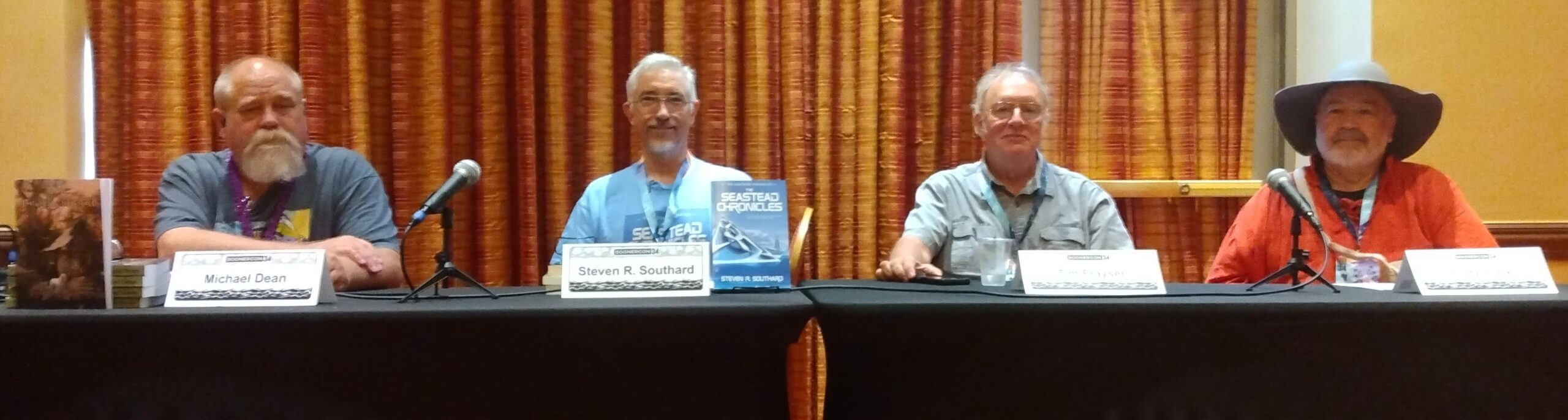
Michael Dean moderated my first panel of the weekend—“Ship’s Biscuits, Limeys, and Rum: Food on the Seas.” My fellow panelists—Tim Frayser and Cody Clark—held a lively discussion about hardtack, grog, and other maritime sustenance. Weevils also came up. Afterward, no one in the audience seemed inclined to ride an old-time sailing ship for long periods.
Non-Human Protagonists
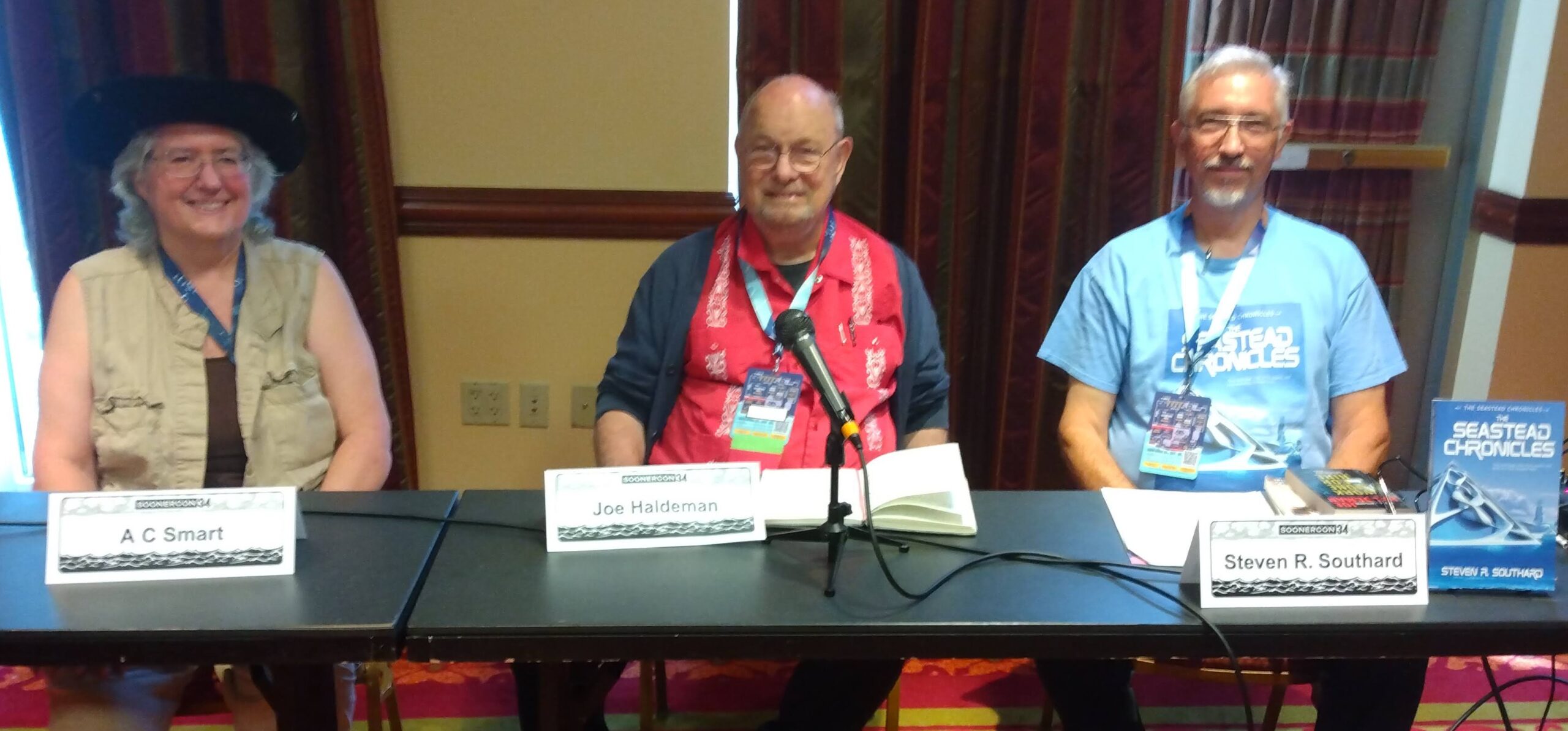
I moderated the next panel, titled “Writing the Inhuman: Crafting Non-Human Protagonists.” With no sentient non-humans willing to serve as panelists (at the prices Soonercon could pay), we made due with humans, in particular A.C. Smart and Joe Haldeman. Yes, that Joe Haldeman. Both of them delighted the audience with valuable information about robots, aliens, and other non-humans (even cats) as main characters. They gave budding scifi writers actionable tips about how to create vivid, believable non-human characters.
Book Signing
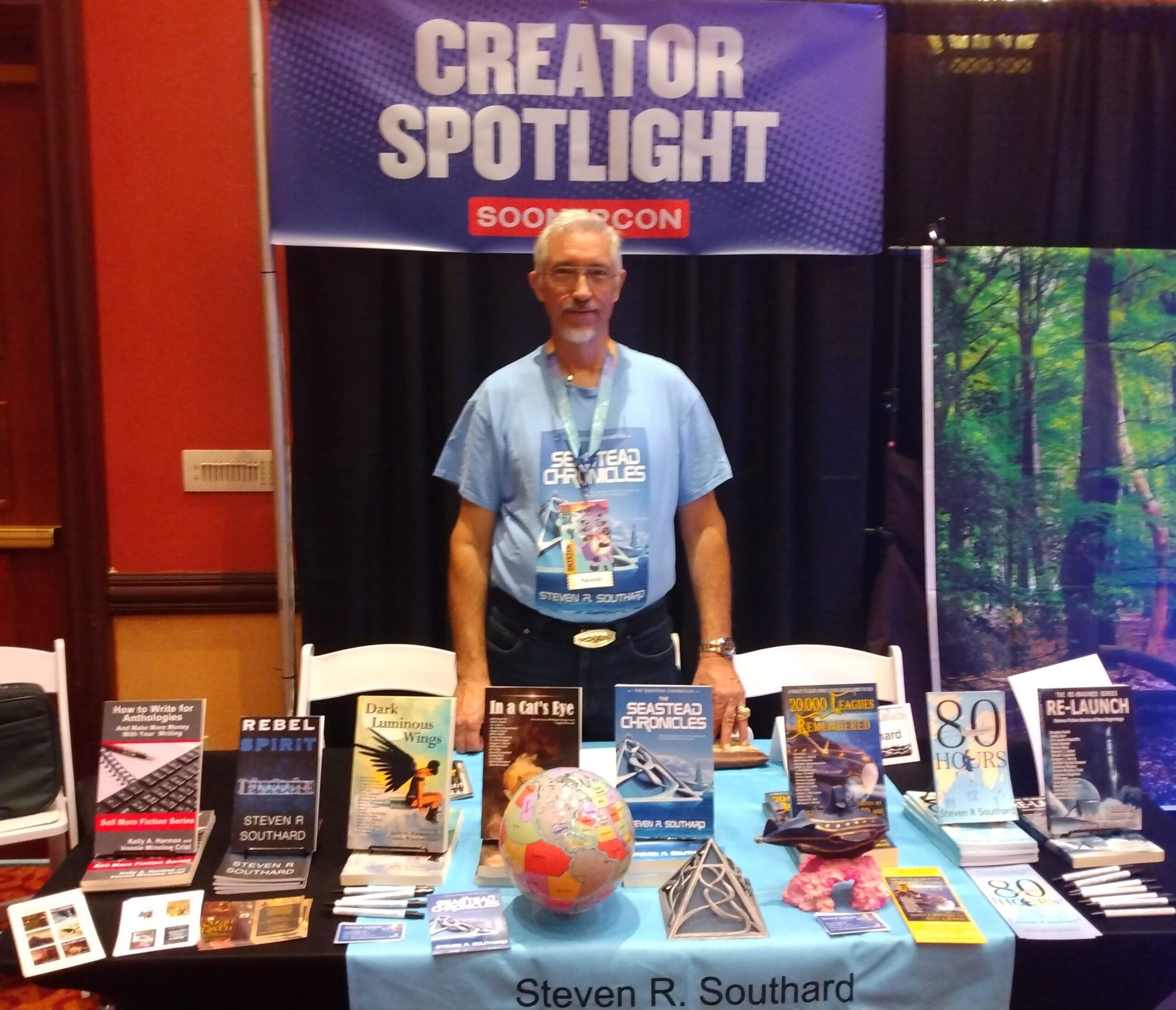
Several people, those without anything more pressing to do, stopped by the table I’d set up for selling books.
Stars and the Sea
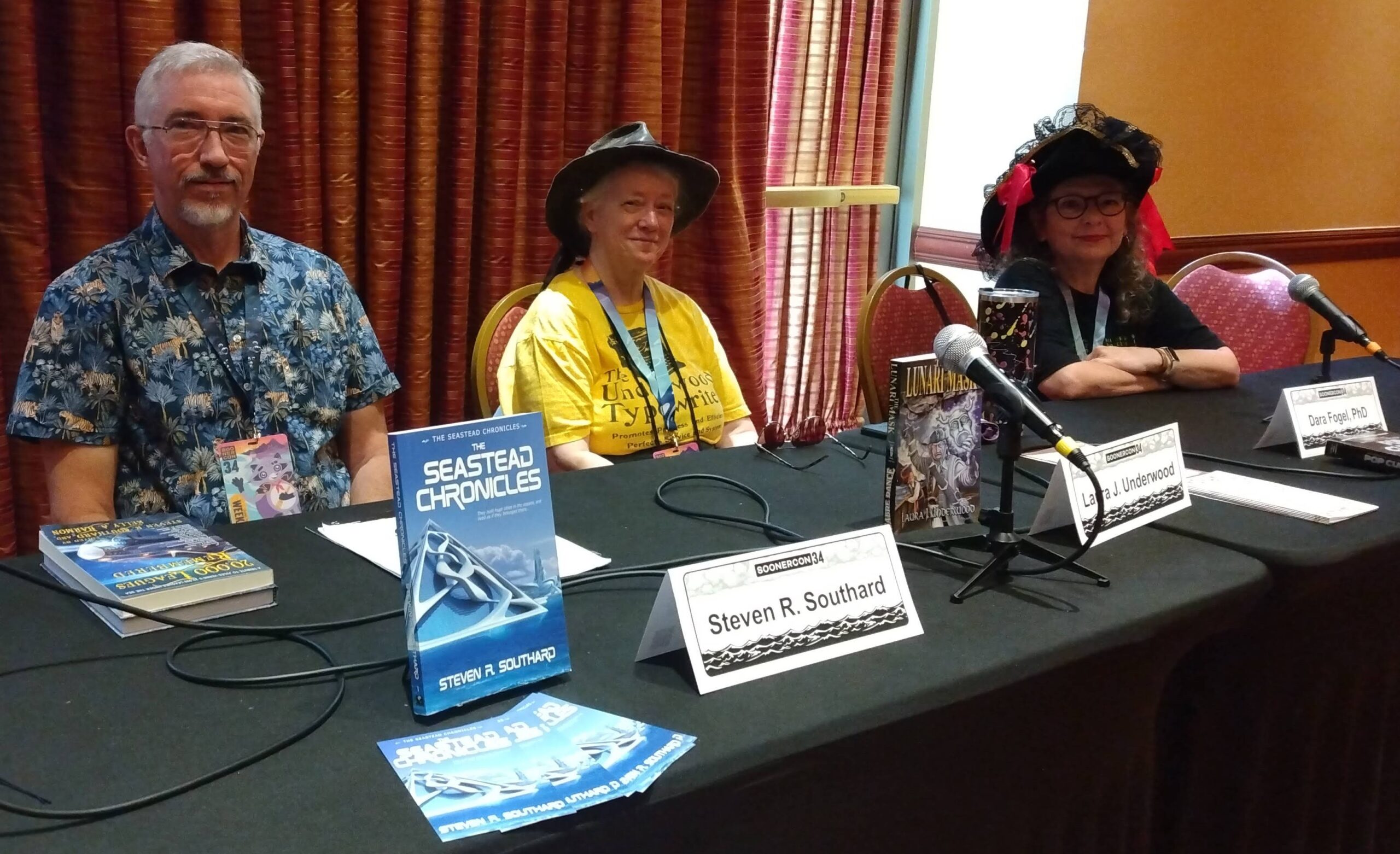
Charlie Clark moderated my only Saturday panel, “Stars and the Sea: Constellations in Myth and Legend.” The panel consisted of Dr. Dara Fogel, Gypsy Jess, and me. A member of the Choctaw Nation, Charlie told the audience about Choctaw legends involving solar eclipses. Both other panelists described how star patterns and their stories affected most cultures throughout history.
Building the Temple
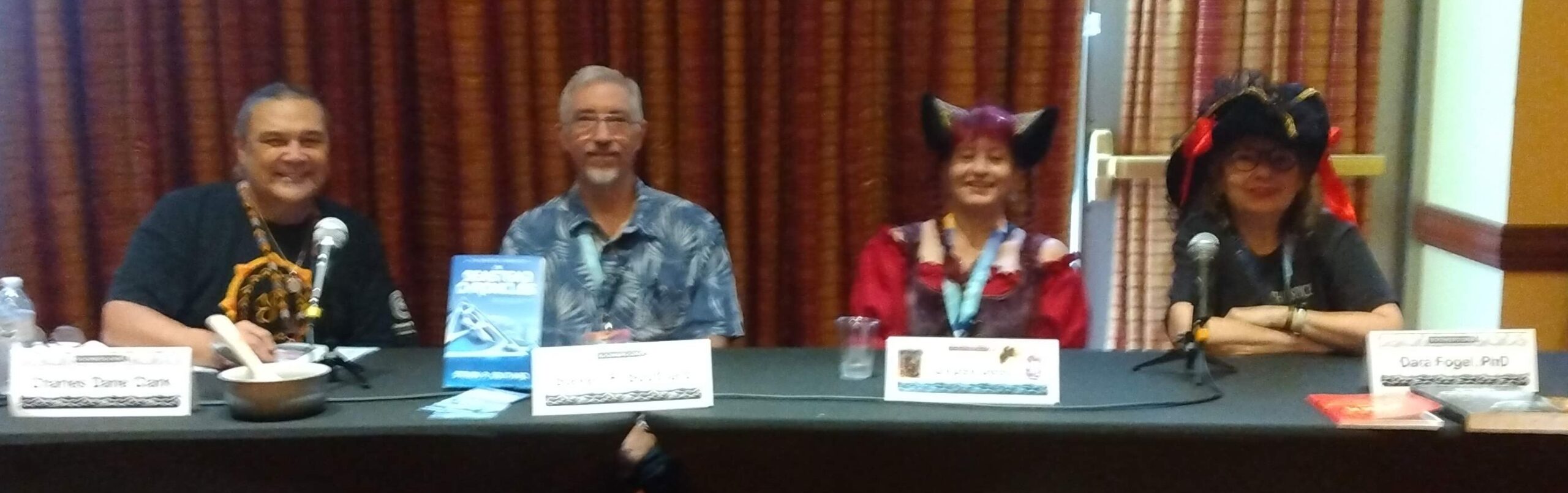
On Sunday at 11:00 (appropriately), I moderated a panel titled “Building the Temple: Believable Religion in Speculative Fiction.” Though I started it off much like a religious service, panelists Dr. Dara Fogel and Laura J. Underwood helped the audience understand the elements of a religion and how to create a credible one for a fictional work, citing examples from their own and others’ books.
Golden Age
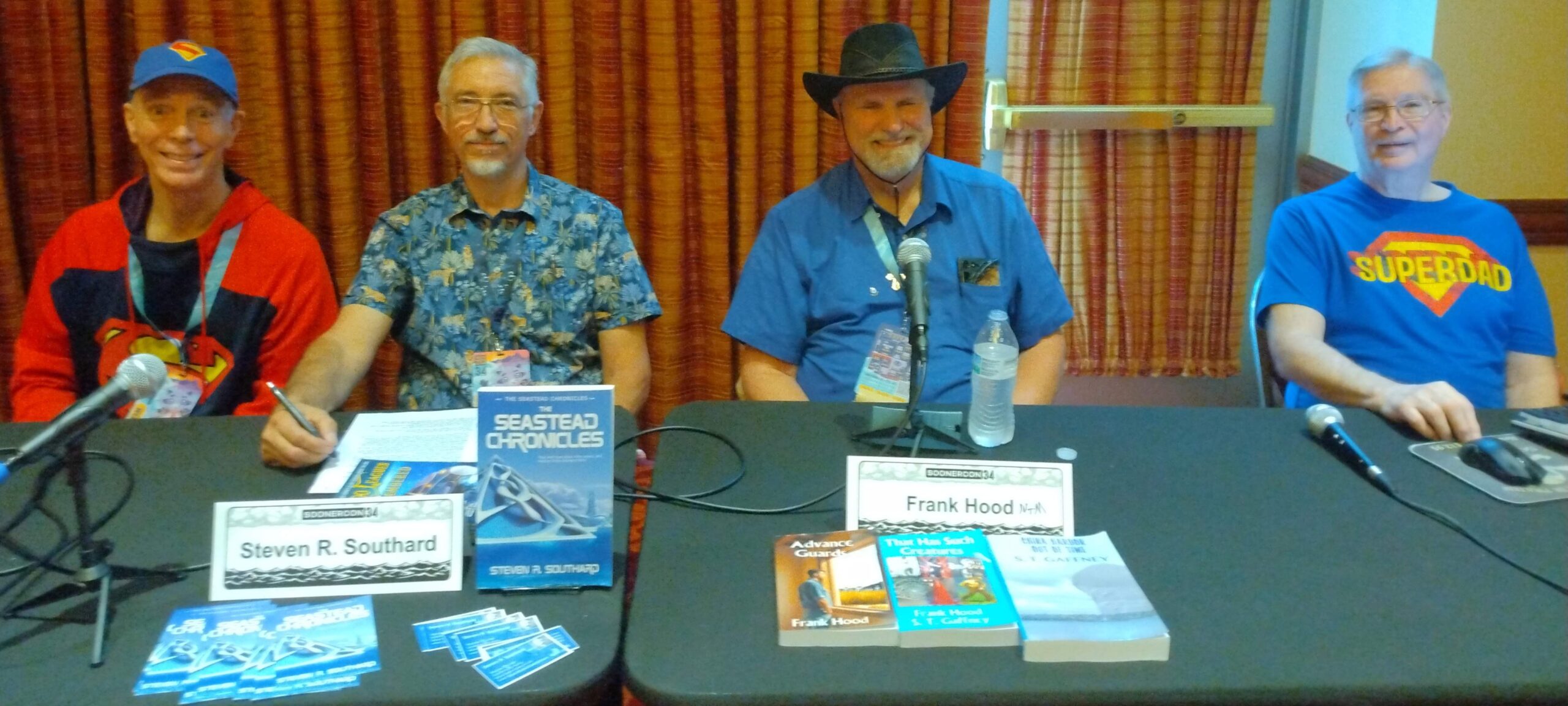
At 3:00, I moderated a panel titled “The Golden Age of Sci-Fi: What Makes Classic Stories Endure?” Panelists Frank Hood, William Bernhardt, and Mark Alfred covered the classic definition of science fiction’s Golden Age (late 1930s to late 1950s), but also the more universal definition (whatever scifi you started reading at age 12). They covered the prime examples of Golden Age literature and what qualities keep them readable today.
Overall
Though Soonercon got its start 34 years ago focusing on science fiction, it has broadened to pop culture. Now the vendor booths display anime, manga, stuffed animals, stickers, and other trinkets rather than books. Most of the panels and activities focus on cosplay, e-sports, hentai, and painting, etc., with science fiction as a minor sideshow. Thousands of attendees showed up, most young, and most in costumes I didn’t recognize.
I couldn’t ignore a con with a nautical theme, of course. Wherever and whenever fans go “through salt & storm,” you’ll find—
Poseidon’s Scribe