
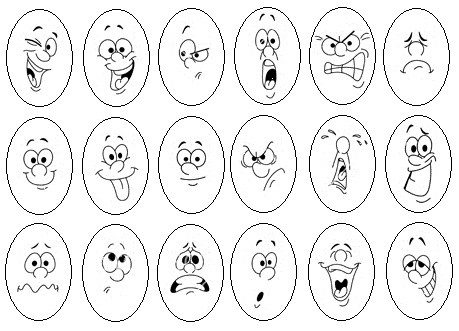
 It’s important for a fiction writer to learn how to describe human facial expressions. A person’s face is the most communicative body area, and often it reveals a character’s feelings. Amazing, isn’t it, how many things we can make our faces do! There may be as many facial aspects as there are possible mental states.
Small wonder there are so many English verbs devoted to describing a person’s mien: blanch, blush, grimace, grin, smirk, etc. It surprised me to find the Wikipedia article on Facial Expressions only listed six “classically defined facial expressions: Anger, Disgust, Fear, Joy, Sadness, and Surprise. However, the article goes on to list “other examples of feelings that can be expressed” including: Concentration, Contempt, Desire, Empathy, Frustration, and Love. Maybe the list isn’t infinitely long, but it doesn’t end at six.
Writers aren’t restricted to single-word descriptions of human facial expressions, of course. Sometimes it’s useful to describe what’s happening on a character’s face and trust the reader to recognize the expression and deduce the character’s feelings. In Clement Clarke Moore’s poem known popularly as “The Night Before Christmas,” we encounter the line, “His droll little mouth was drawn up like a bow,” and we know St. Nicholas is smiling, and therefore is happy. Although you could break down all facial expressions and describe them in detail in your story, that would get tedious, so be sparing in your use of that technique.
Of course you shouldn’t restrict yourself to describing facial expressions alone. Your characters adopt bodily poses, make hand gestures and other movements. These can also express mood, sometimes more accurately than the face does when a character is trying to hide his or her feelings.
Returning to my subject of faces, I should also mention that characters (like real people) can have, well, characteristic or habitual facial expressions. These might be due to an almost perpetual non-neutral mood, or some nervous habit. Giving a character one of these habitual expressions can help readers become familiar with the character.
While doing research for this blog entry, I came across some great references for writers.
- Descriptive Faces–A Resource for Writersis a blog set up by writer Charity Bradford where she discusses facial expressions in detail.
- The Nonverbal Dictionary contains a list of at least 250 nonverbal expressions, each linked to detailed discussions.
- The Bookshelf Muse website offers a book called The Emotion Thesaurus by Angela Ackerman, and Becca Puglisi. Although I haven’t read the book, some sample entries from it are available on the site.
- The MacMillan Dictionary has a website listing words for describing facial expressions, and their meanings.
Was this helpful? What are your favorite ways to describe character’s facial expressions? Can you think of an example where a writer did it particularly well? Feel free to send me a comment on the subject. Since this blog entry is in the written medium, you can’t see what’s written all over the face of—
Poseidon’s Scribe
 I just wanted to thank all of you who voted for my stories in the Critters Workshop Predators & Editors Readers Poll. The results for 2012 are in, and my story “
 Back a year ago when I came up with this idea for a blog post topic, I figured I would have made a few short story promotional videos by this time. That didn’t happen, but lack of experience has never prevented me from having opinions. (In fact sometimes I have more to say about things I know less about!)
 Do you have what it takes to be a writer? If you did, would you know you did? Sometimes it’s difficult to tell. To make it easy for you, I’ve developed a handy test along the lines of Jeff Foxworthy’s ‘Redneck Test.’ See how many of these apply to you.
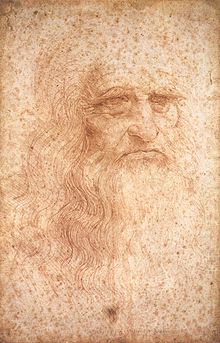 True, Leonardo da Vinci was an anatomist, architect, botanist, cartographer, engineer, geologist, inventor, mathematician, musician, painter, scientist, and sculptor. Arguably he was the greatest genius of all time. But…he never wrote fiction.
 In his book
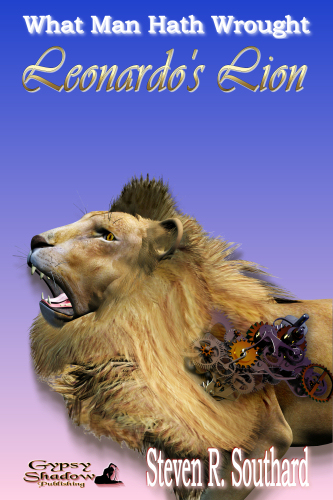 At this point, I can’t resist a personal plug. Leonardo da Vinci is such a fascinating historical figure, I wrote a story about the mechanical automata lion he constructed for the King of France. Had that been all da Vinci did, it would have been achievement enough, far beyond the norm of the day, but it’s barely a footnote in any list of his accomplishments. My story,
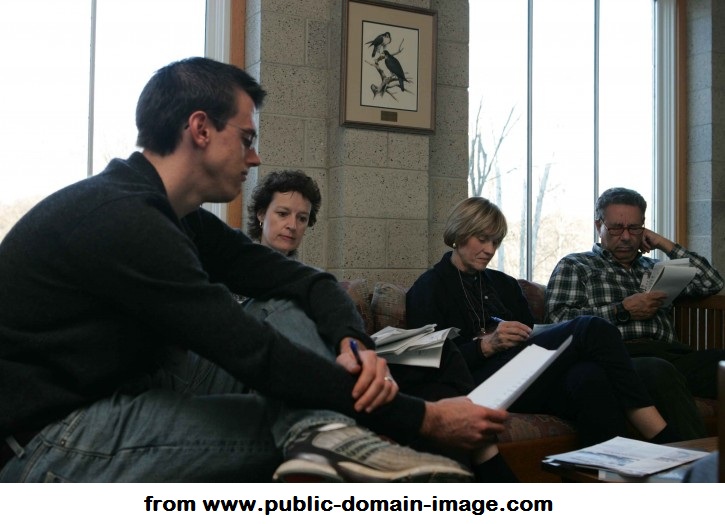 experience is based solely on twenty years of being in small, amateur, face-to-face critique groups; not writing workshops, classes, or online critique groups; so the following advice is tuned to that sort of critique.
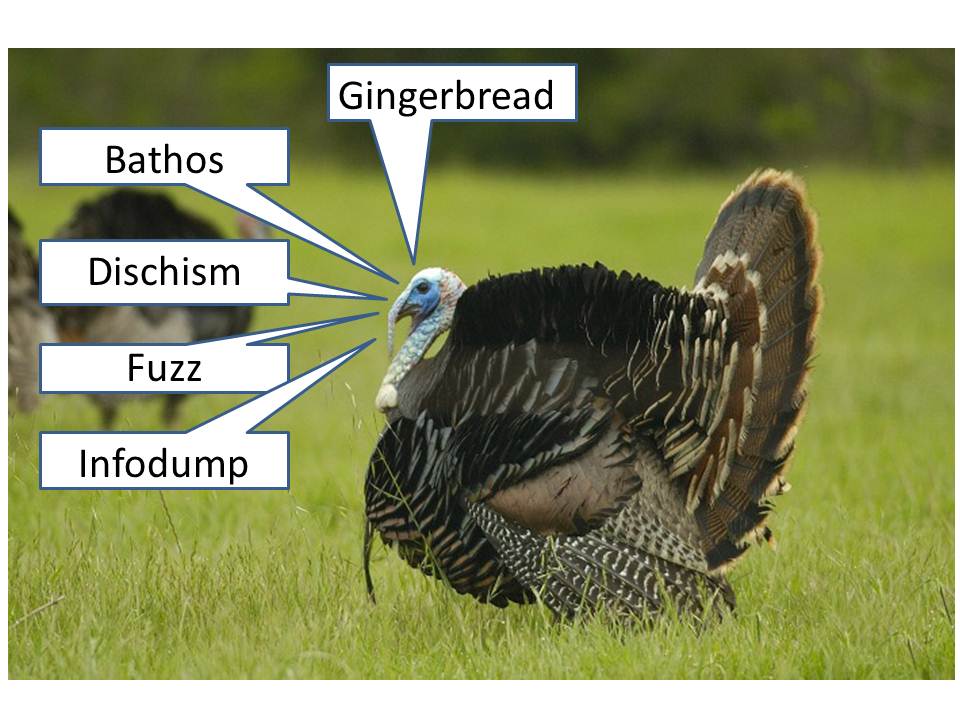 Some time ago, in science fiction writing workshops, the participants worked out a vocabulary of writing terms called the Turkey City Lexicon (TCL). There is no authoritative source for the TCL, nor is it copyrighted. It’s available on many websites; just search for “turkey city lexicon.”
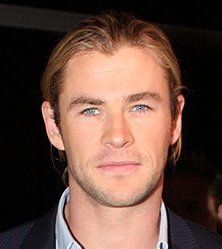 Federmann could be played well by actor Chris Hemsworth. He’d have to speak English with a German accent, but doesn’t have to do it well, since it’s a comedy. Count Federmann is a brooding character, angry at and jealous of Baron Münchhausen. The Count is intelligent, determined, and optimistic, but lacks sense.
 The Count has a young French servant named Fidèle, and I’ll select Shia LaBeouf for that role. Mr. LaBeouf would have to speak English with a French accent, but not an especially good one. Fidèle is full of life, but has the sense to fear danger, though he’s always respectful of nobility.
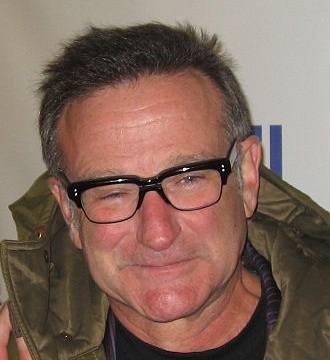 Robin Williams. I need an older character of plain appearance who’s able to speak English with a German accent and captivate an audience with his words alone. Robin Williams played the part of the King of the Moon in the 1988 Movie “
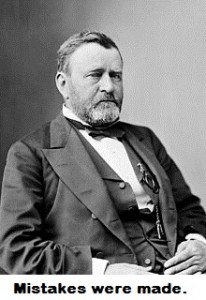 Among the worst passive sentences ever written is “Mistakes were made.” Politicians since Ulysses S. Grant have used that one to acknowledge a problem but to hide the responsible party from blame. However, the press and the public are on to that tactic, and would pounce on any official who uttered it (after laughing out loud).