
Oh, did you really think you could surf to this blog entry and learn how to design and construct an entire planet? Well, okay, you were right. So long as you’re expecting a how-to about fictional planets.
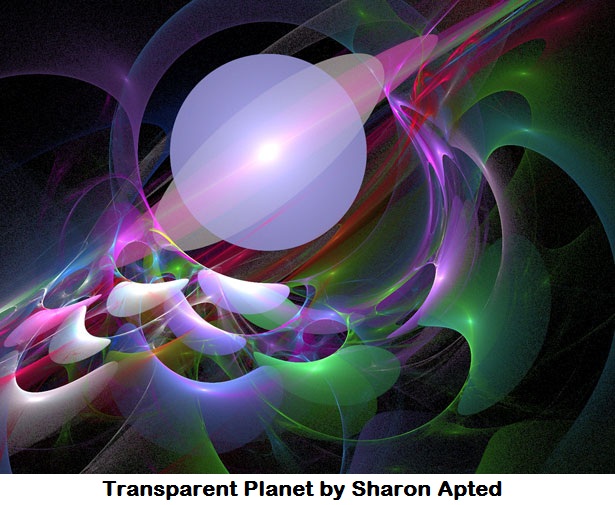 Authors call this ‘world-building’ and they sometimes use the term ‘world’ in a different sense than the term ‘planet.’ In fiction, the world is not just the physical planet, but its inhabitants, their culture, and their environment too.
In most fiction, it’s not necessary to build a world, since the authors use the present-day (or historical) world we already inhabit. They can assume readers are familiar with Planet Earth. Such authors are free to focus on key aspects of Earth that are relevant to their story, to paint a biased picture of our world as seen by the author or one (or more) characters.
But in fantasy fiction or science fiction, it’s often interesting and fun to imagine and create very different worlds from Earth, or a very changed Earth.
Memorable, classic, examples of world-building include (1) Middle Earth from J.R.R. Tolkien’s books including The Hobbit and The Lord of the Rings, (2) the planet Arrakis from Frank Herbert’s novel Dune and its sequels, and (3) the strangely-shaped structure of Larry Niven’s novel Ringworld.
If you set out to build a world for your fiction story, what things might you consider? A partial list includes the particular laws of physics, the solar system, the planet’s size and gravity, configuration of solids and liquids internally and on the surface, the atmosphere, geography, climate, plants, animals, and sentient creatures. If your world has sentient creatures, then you could consider such things as cultures, languages, religion, art, education, economics, government, law, traditions, taboos, and technology.
Although Wikipedia has an interesting article on World-building, there are two other sites that I found more beneficial: this one, and this one. The latter site is run by Melanie Simet, who has come up with four cardinal rules of world-building that I really like, starting with zero:
0. Be Original.
1. Don’t distract your reader.
2. Make your world coherent.
3. Know at least one level of detail deeper than you need to.
She explains these in more depth on her website, so I won’t repeat those details here. I would like to emphasize Rule 1, though. It can be a temptation to get so involved with world-building that you forget it’s just a setting. Stories are about characters dealing with problems, so don’t give your readers a documentary.
I’m sure this world-building is starting to sound like an awful lot of work, when all you set out to do was write a story. It can be involved, but it needn’t consume you if you keep Simet’s cardinal rules in mind as you go. If you write short stories, like me, you don’t have as much need for comprehensive world-building as a novelist would, unless you’re planning a long series of stories set on the same world.
That’s a glimpse at the basics of world-building. Have fun. Make your world an interesting one to read about. Enjoy your taste of God-like power. If this blog entry has inspired you, and you end up selling your story set in a fascinating new world, please let me know. Your world could well be visited by—
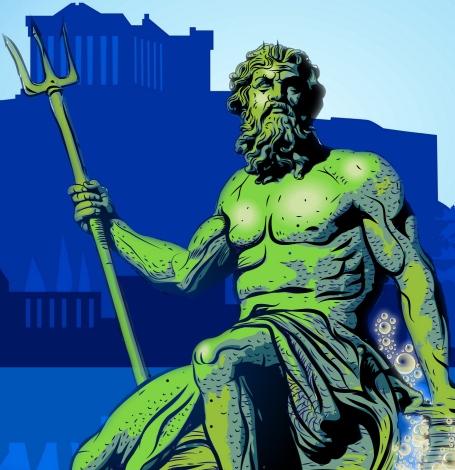
Poseidon’s Scribe
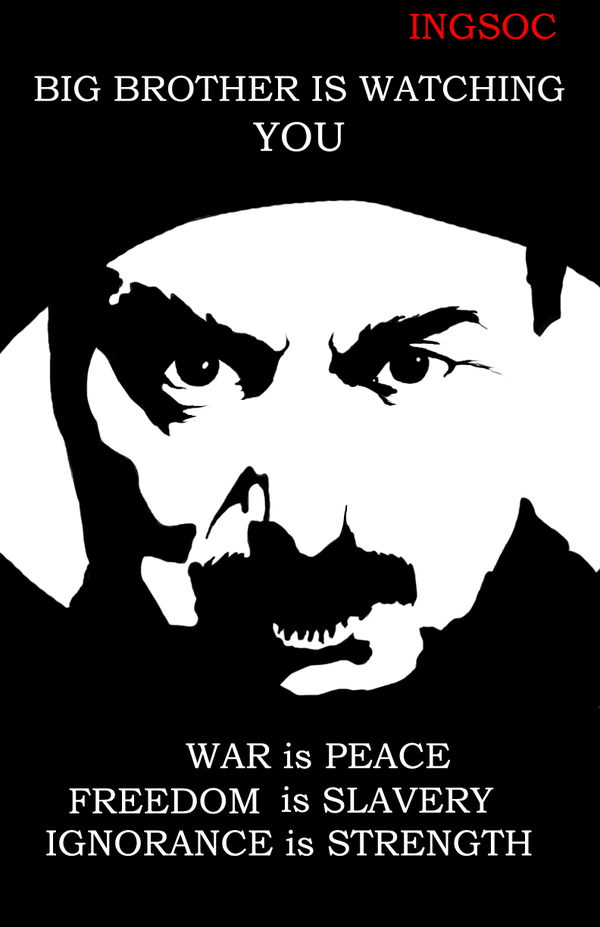

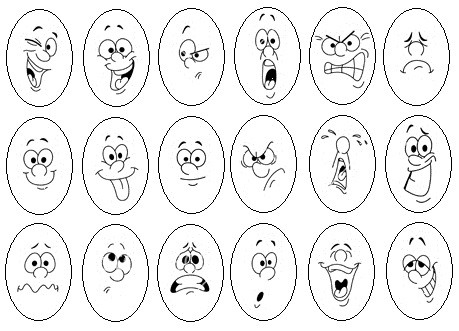 It’s important for a fiction writer to learn how to describe human facial expressions. A person’s face is the most communicative body area, and often it reveals a character’s feelings. Amazing, isn’t it, how many things we can make our faces do! There may be as many facial aspects as there are possible mental states.
 I just wanted to thank all of you who voted for my stories in the Critters Workshop Predators & Editors Readers Poll. The results for 2012 are in, and my story “
 Back a year ago when I came up with this idea for a blog post topic, I figured I would have made a few short story promotional videos by this time. That didn’t happen, but lack of experience has never prevented me from having opinions. (In fact sometimes I have more to say about things I know less about!)
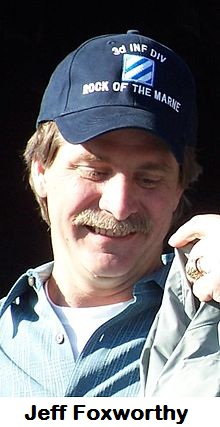 Do you have what it takes to be a writer? If you did, would you know you did? Sometimes it’s difficult to tell. To make it easy for you, I’ve developed a handy test along the lines of Jeff Foxworthy’s ‘Redneck Test.’ See how many of these apply to you.
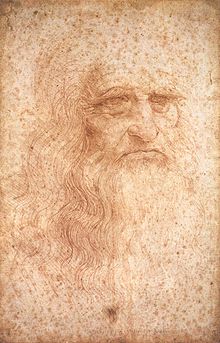 True, Leonardo da Vinci was an anatomist, architect, botanist, cartographer, engineer, geologist, inventor, mathematician, musician, painter, scientist, and sculptor. Arguably he was the greatest genius of all time. But…he never wrote fiction.
 In his book
 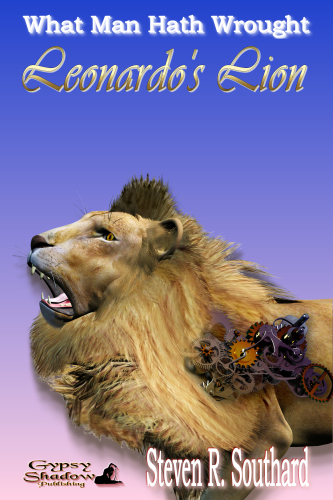 At this point, I can’t resist a personal plug. Leonardo da Vinci is such a fascinating historical figure, I wrote a story about the mechanical automata lion he constructed for the King of France. Had that been all da Vinci did, it would have been achievement enough, far beyond the norm of the day, but it’s barely a footnote in any list of his accomplishments. My story,
  experience is based solely on twenty years of being in small, amateur, face-to-face critique groups; not writing workshops, classes, or online critique groups; so the following advice is tuned to that sort of critique.