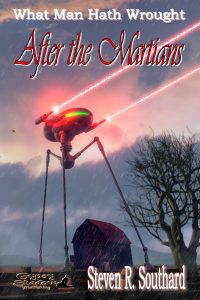
Today I’m pleased to present my interview with M. J. Ritchie, another author with a story in the anthology Hides the Dark Tower.
![Pageflex Persona [document: PRS0000039_00001]](https://stevenrsouthard.com/wp-content/uploads/2015/10/HidesTheDarkTower-DigitalCover-FINAL2-200x300.jpg) A lover of words, and things that go bump in the night, M. J. Ritchie’s been writing since the age of nine. She has degrees in business from Drexel University and Johns Hopkins University with experience in everything from accounting to sales. As a faculty associate at The Johns Hopkins University Carey School of Business, she has helped graduate students learn the intricacies of business processes and organizational change. In her consulting practice, she works with organizations to improve performance. Writing fiction indulges her desire to play god on a small scale. She hopes her writing will educate, entertain, or inspire her readers. She’s married and lives in Maryland. Visit her at www.mjritchie.com.
A lover of words, and things that go bump in the night, M. J. Ritchie’s been writing since the age of nine. She has degrees in business from Drexel University and Johns Hopkins University with experience in everything from accounting to sales. As a faculty associate at The Johns Hopkins University Carey School of Business, she has helped graduate students learn the intricacies of business processes and organizational change. In her consulting practice, she works with organizations to improve performance. Writing fiction indulges her desire to play god on a small scale. She hopes her writing will educate, entertain, or inspire her readers. She’s married and lives in Maryland. Visit her at www.mjritchie.com.
Now for the interview:
Poseidon’s Scribe: When and why did you begin writing fiction?
M.J. Ritchie: Ever since I learned to talk I’ve had a love of words and language. I began writing poetry at the age of nine and have written in various forms for my own enjoyment throughout my life. I began writing fiction with an eye toward publication a little more than a decade ago. At the time, I was working as an independent consultant on a variety of systems projects in which the only project variable that didn’t change was my deadline. Writing fiction appealed to me because it allowed me to play god on a small scale, to be the one in control. I’ve since learned that playing god isn’t easy.
P.S.: Who are some of your influences? What are a few of your favorite books?
M.J.R.: To this day, I remember the plight of the land turtle crossing the road, so vividly described in The Grapes of Wrath. I think I read that book in high school. It was my introduction to Steinbeck, who devoted a chapter to that one scene. That book made me aware of what good fiction could be and do. I made it a point to read all of Steinbeck’s works available to me at the time. I also enjoy the psychological horror of Shirley Jackson, as exemplified in “The Lottery” and We Have Always Lived in the Castle. I’ve written an homage piece to “The Lottery,” which I hope to get published. I love the Irish short stories of Frank O’Connor, and Frederick Busch’s “Ralph the Duck,” a study in understated writing that packs a wallop. I love the beautiful simplicity of children’s stories. The Velveteen Rabbit and Charlotte’s Web with their life lessons are favorites. I enjoy reading poetry too, especially when I’ve hit a writing wall. Poetry has an evocative effect that helps me work through a stumbling block.
P.S.: What are the easiest, and the most difficult, aspects of writing for you?
M.J.R.: I don’t know that any aspect of writing is easy for me. Like Dorothy Parker, I “hate writing, but love having written.” That being said, I can’t imagine not writing. One of my biggest writing challenges is to write multi-sensory descriptions without having them seem appendages to the scene. I admire those who write scenes so that you can smell the coffee, or the manure; hear the wind or see the room and its garish furnishings. I struggle with that.
P.S.: Where do you get the ideas for your stories?
M.J.R.: Anywhere and everywhere: My own life experiences, watching people, eavesdropping, reading articles. Every once in a while, an idea just pops into my head.
P.S.: What is the primary genre you enjoy writing in? What interests you about that genre?
M.J.R.: To be honest, I don’t know that I have espoused a genre. I’m still flirting with different types of stories. I enjoy writing stories that entail elements of tragedy, lives gone awry, darkness, the supernatural, mysterious events, adversity. I have a curiosity about things that we can’t see or explain. I also am awed by people who, despite misfortune, somehow survive, succeed.
P.S.: In what way is your fiction different from that of other authors in your genre?
M.J.R.: This is a difficult question to answer because my writing is not specific to a genre. I’m interested in character and what motivates people to do what they do. I like exploring how people react to life events. Many of my stories involve a death of some kind. I don’t know if it’s because I’ve experienced the death of loved ones that I’m drawn to that topic or not, but I have a certain fascination with the subject. I also am a great admirer of the human spirit and its resilience, so my stories, though sometimes dark, are usually hopeful.
P.S.: What is your favorite story that you have written? Can you tell us a little about it?
M.J.R.: My favorite story is my novel, Emily’s Child, which is about a happily married couple whose world shatters when their eight-year- old son dies. Each grieves the loss of their son, but in different ways.
The husband, Tony, juggles the increasing demands of work, while tending to his grief. His position as the lead architect on a major project keeps him away from home and his wife, Emily. The stakes are high—this is the career opportunity of a lifetime.
When a project of her own falls through because of a trusted colleague’s betrayal, Emily feels increasingly lost and adrift. She begins acting strangely. An accident causes a psychotic break, and she is hospitalized. Here, she must unearth and confront her past.
This story of a young woman’s confrontation with death and her past is also a study of human relations. The story explores the ways that people cope with loss—some healthy, some not, and the strain that such loss places on relationships. Childhood trauma, betrayal, and mental illness are also potent themes of the novel.
P.S.: Your story in Hides the Dark Tower is “Soul for Sale,” a haunting tale of the value of that thing one shouldn’t offer on an online auction site. What prompted you to write it?
M.J.R.: Several years ago I read an article about the bizarre items people were auctioning on eBay. I remember thinking at the time that the theme might make for a good story. This idea resurfaced when I saw the submission guidelines for the Hides the Dark Tower anthology. I’ve been to the Yucatan and thought that it would be a good setting for “Soul for Sale,” which tells the tale of atheist Nicholas Marsden who sells his soul—something he doesn’t even believe he possesses—on eBay to a wealthy, attractive buyer for whom money is no object. The buyer’s sole condition of purchase is that Nicholas accompany her to Mexico on an all-expense paid trip. Such a deal, right? At the outset, Nicholas finds the whole arrangement amusing, as well as lucrative. He soon discovers, however, that this venture may involve a high price—to him.
P.S.: What is your current work in progress? Would you mind telling us a little about it?
M.J.R.: I’m currently writing a story with the working title “Semper Fi” that’s about the casualties of war. A couple loses their only son, a young Marine, in the war in Iraq. The fallout of this terrible loss is their relationship with each other. Marva, the wife, who did not want her son to join the military in the first place, handles her grief by building a wall around her emotions. She is unavailable to her husband, Jude, who consequently enters into a brief relationship outside the marriage. Marva has to decide on how to move through her grief and whether she can forgive her husband.
My research for this story renewed my appreciation for our military and the sacrifices they and their families make. We need to remember that their sacrifices enable our freedom and the lifestyle we enjoy. While we sit eating dinner or watching TV, people are putting their lives on the line for us. No one returns home from war the same. Not all wounds are visible. These days, it’s all too easy to forget that we are indeed the “home of the free because of the brave.” We have to honor and value our veterans.
Poseidon’s Scribe: What advice can you offer aspiring writers?
M.J. Ritchie: My advice to aspiring writers and to anyone pursuing something that matters to them is to keep at it and to listen to your intuition or gut. Quiet your internal critic as best you can and don’t set up imagined obstacles for yourself such as I’m too old, too young, not smart enough, not talented enough, not whatever enough. Focus on what matters to you. Write what you enjoy writing. I have a saying hanging in my office: Dum spiro, spero. While I breathe I hope. Do the work, put it out there, and hope for the best. Save your old stuff—your rejected work that never saw the light of day. When you become famous, everybody will want to publish it. And if possible, join a solid writers group. My own group has been an invaluable source of knowledge and encouragement. They’ve kept me going when I might have given up otherwise.
Thank you, M.J.!
Readers inspired to find out more about her can visit her author website at www.mjritchie.com.
Poseidon’s Scribe

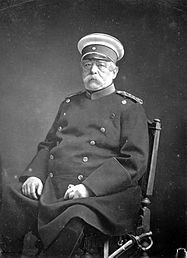
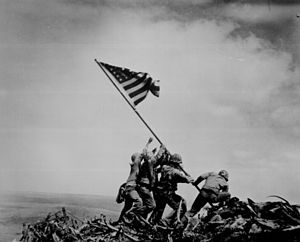 Regardless how that question is resolved, it’s a reminder of the influence certain images have on us.
 To understand branding, think of the effort major corporations put into getting customers to associate the corporations’ products and logo with a happy experience.