Why Young Adults Should Love Tom Swift

In a significant way, Tom Swift guided me toward a career in engineering, and also toward the genre of fiction I write. I wonder if authors of young adult (YA) fiction understand the seeds they plant in young minds.
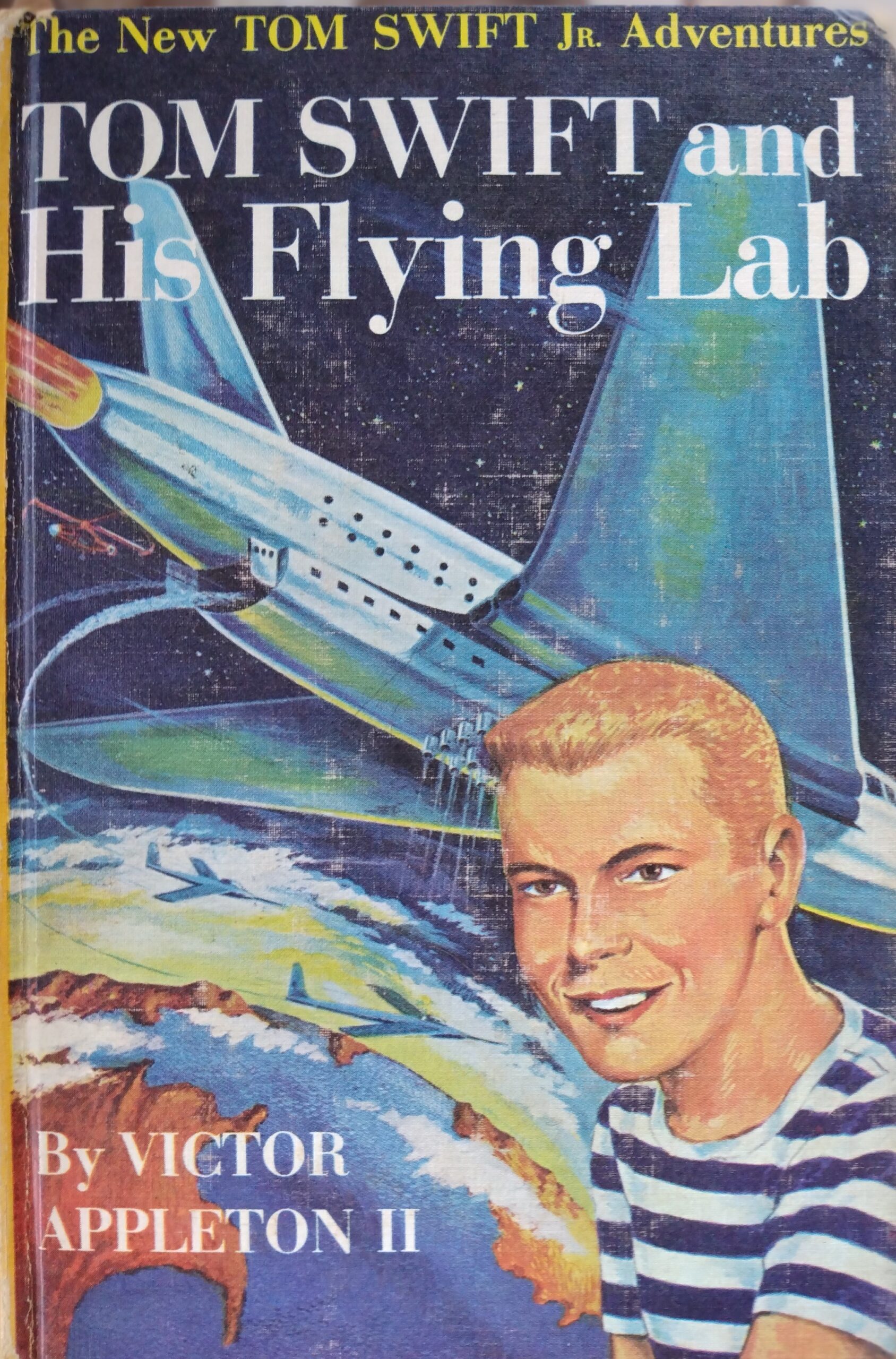
First book in the Tom Swift Jr. (second) series 1954-1971

Tom Swift and Me

As a young boy growing up in the 1960s, I enjoyed reading the Tom Swift Jr. series, attributed to Victor Appleton II (a pseudonym for several contributing authors), and published by Grosset & Dunlap during the years 1954 to 1971. One of my aunts gave me the first book in the series, Tom Swift and His Flying Lab, as a gift. After that, my collection grew to include most of the thirty-three books in the series.

I loved reading about Tom Swift’s inventions and adventures. He built a nuclear airplane, a submarine, a spaceship, a robot, and earth-blasting machine, and many, many more. Each book fired my imagination. In my mind, I traveled along with Tom and his sidekick, Bud Barclay, in their amazing vehicles.

Tom Swift, I believe, influenced my later choice to major in engineering (specifically, Naval Architecture) at college. After serving in the military, I spent a career as an engineer and program manager at an engineering organization. However, I didn’t end up building my own nuclear airplane, submarine, spaceship, etc.
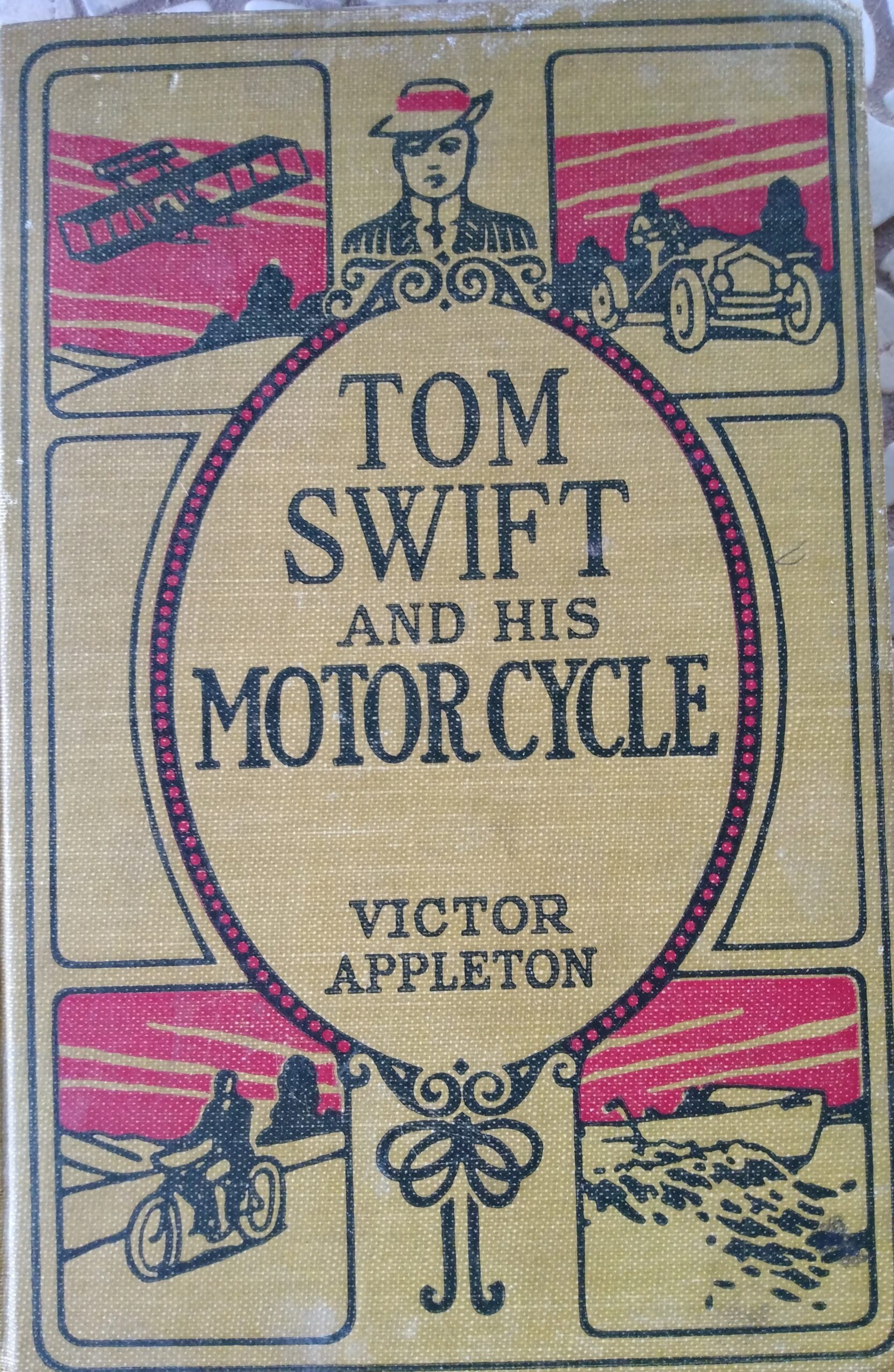
First book in the Tom Swift Sr. (first) series 1910-1941

The Senior Tom Swift

The 1960s-era Tom Swift series I loved followed an earlier series, published from 1910 to 1941. That first series of forty books showcased the father of Tom Swift, Jr. and his inventions and adventures. I’ve collected a few of them, but their racism makes them difficult to read now.

Tom Swift vs. Harry Potter

Not meaning to disparage the Harry Potter series, but I’d rank it a step below Tom Swift. You can’t become a wizard in real life, but you can become a scientist, inventor, or engineer. Yes, I understand Harry Potter inspires qualities besides magic, such real-life attributes as friendship, hard work, cleverness, and a willingness to confront and overcome evil. All of those virtues will serve Harry Potter fans well in their later working lives.

I also know, if I point out how unrealistic a magic academy is, you’ll counter with how unbelievable it is for an eighteen-year-old to be inventing the gadgets Tom Swift does. You’ll tell me how Tomasite plastic and Swiftonium nuclear material and “repelatrons” violate just as many laws of physics as Harry Potter’s magical conjuring does.

Still, Tom Swift inspires kids toward real lines of work, but Harry Potter doesn’t.

Tom Swift Reborn
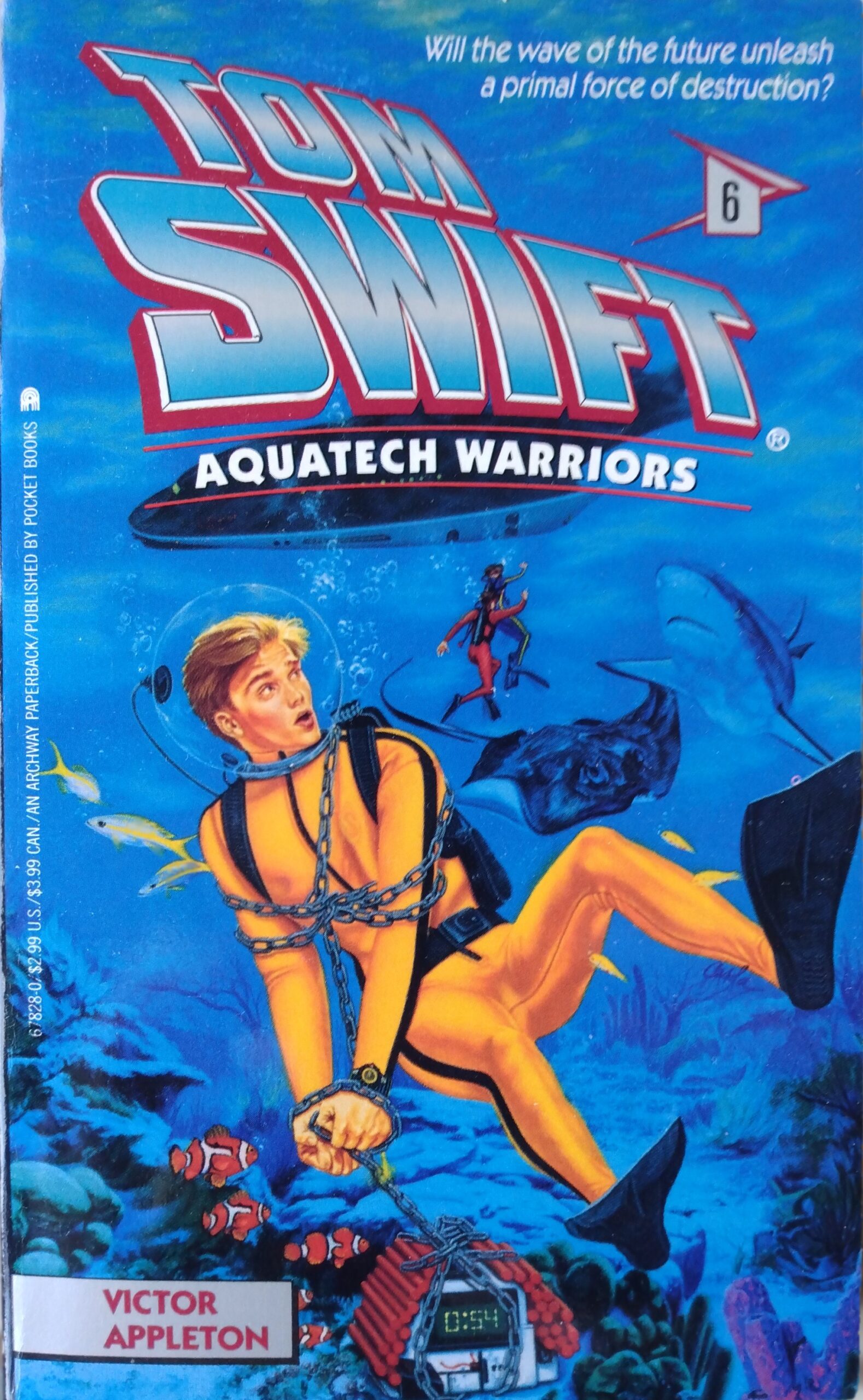
Sixth book in the fourth series 1991-1993
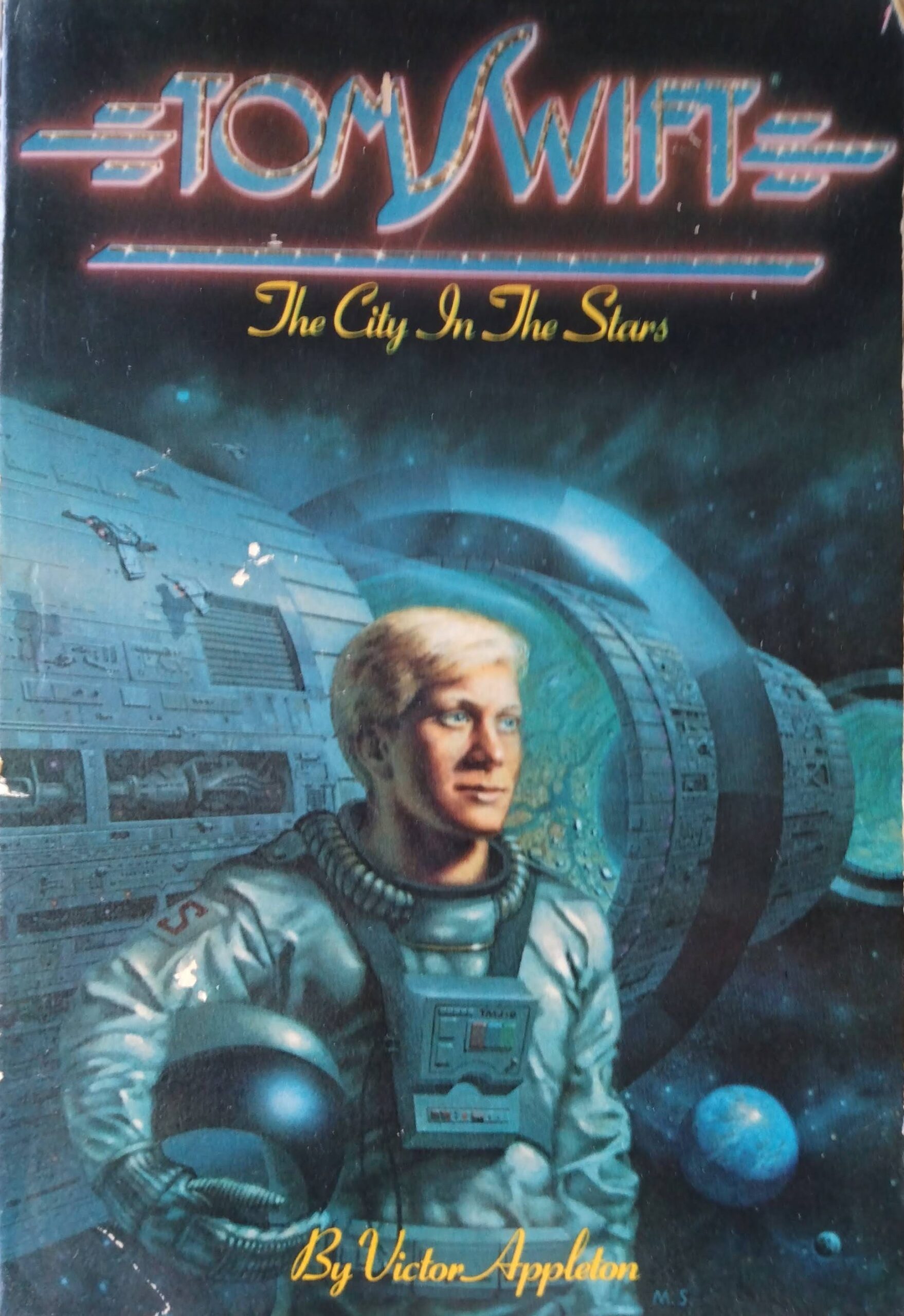
First book in the third series 1981-1984

Modern authors have updated Tom Swift for today’s young readers. I know of five such series:

  • 1981-1984, Tom Swift III series, 11 books
  • 1991-1993, Tom Swift IV series, 13 books
  • 2006-2007, Tom Swift, Young Inventor series, 6 books
  • 2019-2022, Tom Swift, Inventors’ Academy series, 8 books
  • 2018-2023, Tom Swift Lives! series, by Scott Dickerson, 50 books

I hope one or more of these series gains in popularity and serves to steer many children toward science and engineering.

Past attempts to bring Tom Swift to the screen in movies or TV series have all failed. Perhaps with good screenwriting, realistic computer graphics to depict the inventions, and a strong focus on the target audience, a Tom Swift show could succeed.

Two to three decades ago, when society lamented how few women graduated in male-dominated fields, I considered writing a series of YA books about a female version of Tom Swift. I never wrote that, but now, women hold their own in most fields. You go, girls!

Perhaps someone could write YA novels featuring twins—a boy and a girl—working together on amazing inventions, and experiencing perilous adventures.

I offer that idea for free—go crazy with it. The world would have to wait a long time for those books to get written by—

Poseidon’s Scribe
The Ring of Gyges

Wouldn’t it be amazing if you could make yourself invisible at will? Do you wish you could just disappear and reappear when you wanted to? If you had the Ring of Gyges, you could.

The philosopher Plato discusses the Ring of Gyges in The Republic. He uses the ring as an allegory, similar to his use of Atlantis and his famous allegory of the cave.

In Plato’s ring allegory, Gyges is a shepherd in the country of Lydia. An earthquake uncovers the opening of a cave, which Gyges discovers while tending his flock of sheep. He goes into the cave and finds a bronze horse statue with its torso opened up. Within it is a man’s corpse with a golden ring on one of its fingers. Gyges takes the ring. He finds that if he turns the ring’s collet (the part that secures the stone in place) so its stone points toward the base of his finger, he disappears. If he turns the collet 180 degrees so the stone points to his fingertip, he reappears. He goes to the palace of Lydia, seduces the Queen, kills the King, and becomes King himself.

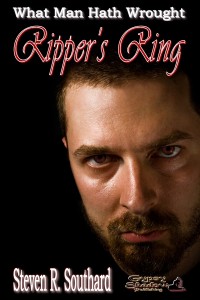
Why am I telling you about the Ring of Gyges? It’s because I make use of that ring in my upcoming story, RippersRing72dpi“Ripper’s Ring,” which will be launched in early May. In my story, a troubled character in East London comes across the ring in the summer of 1888, and starts killing prostitutes. He becomes the murderer we know as Jack the Ripper. Now you understand why they never caught the Ripper. When you read “Ripper’s Ring” you’ll also learn how the Ring of Gyges works, and why Gyges found it on a corpse inside a horse statue in a cave.

Some of you are thinking, “A magic ring? Hasn’t that been overdone? Does the literary world really need another magic ring?” You’re recalling Aladdin’s ring in Arabian Nights, the Ring of Solomon, J.R.R. Tolkien’s One Ring, Wagner’s Ring Cycle, the rings in C.S. Lewis’ The Chronicles of Narnia, and Marvolo Gaunt’s Ring in the Harry Potter books by J. K. Rowling.

Enough with the magic rings already, you’re saying. Well, my ring is different. Not only does it turn its bearer invisible, but it also provides the bearer some mental visions of all the ring’s previous owners. When my troubled character comes across the Ring of Gyges, he learns its history and what it can do.

Now back to Plato. What was that ancient Greek philosopher doing discussing a ring of invisibility? He stated that the ring separated actions from consequences; that is, an invisible man could commit an immoral act (as Gyges did by killing the King) without fear of retribution, since no one could connect him with the crime. Further, Plato believed that if a person had such a ring, his eventual commission of immoral acts was inevitable. In other words, no one can resist the temptation of invisibility and the power it conveys.

No one? Well, in The Republic, Socrates doubts the temptation is as inevitable as Plato thinks.

My scientifically minded readers are laughing at the whole idea of human invisibility. After all, the human eye only works because light interacts with the rod and cone cells in the retina at the back of the eyeball. If the eyeball is invisible, light passes through without interacting. In other words, an invisible person is also blind. You could get around that with partial invisibility, allowing only the retinas to remain opaque. It would be a bit creepy—two partial eyeballs seeming to float around, but at least you could see.

How did I resolve that problem in my story? I didn’t. Sorry. I chose the course most writers do and ignored the problem. At least I’m admitting that here.

If you come into possession of the Ring of Gyges, just keep it. Better yet, destroy it. Whatever you do, don’t bring it to—

Poseidon’s Scribe