Dear Arthur C. Clarke

Though you’ve been dead these past eight years, you live on in your stories.  That’s true for me and for millions of others.

ClarkeThroughout my life I’ve read many of your works, including more of your short stories than I can remember, and the following novels:  Childhood’s End, The Deep Range, 2001:  A Space Odyssey, 2010:  Odyssey Two, 2061:  Odyssey Three, Rendezvous with Rama, Rama Revealed, The Songs of Distant Earth, and The Hammer of God.

I recall purchasing your book 2001:  A Space Odyssey (or maybe my dad bought it) just two weeks before the movie was due in the theaters of my childhood town for the first time.  I was about ten years old, and determined to finish the book before seeing the movie.  Finish it I did, and I enjoyed the book much more than the film.

At that time, the year 2001 seemed a long way off, and fantastic things would happen by then.  To a boy growing up starry-eyed in the Sixties, the future appeared extraordinary.  Your books helped me see it that way. More than most authors, you conveyed the pure wonder of a scientific future.

That’s what comes through for me in your tales, the positive vision of science as a way to solve man’s problems, and to explore.  You even believed science could solve political problems.  In The Songs of Distant Earth, you depict human societies living under a utopian “Jefferson Mark 3 Constitution,” suggesting a political evolution toward better government.  In Rama Revealed, you show an alien race with enormous military power but a staunch unwillingness to enter into conflict.  The reason becomes clear when one of the aliens says their politicians can declare war, but anyone voting for war is put to death.  Strong disincentive, indeed!

Another thing I learned from reading your work is that aliens might not be bent on invading.  When many other authors wrote of aliens attacking Earth, you wrote about creatures who either helped mankind (Childhood’s End), led mankind on series of strange advancing paths (the Odyssey books), or completely ignored us (the Rama series).

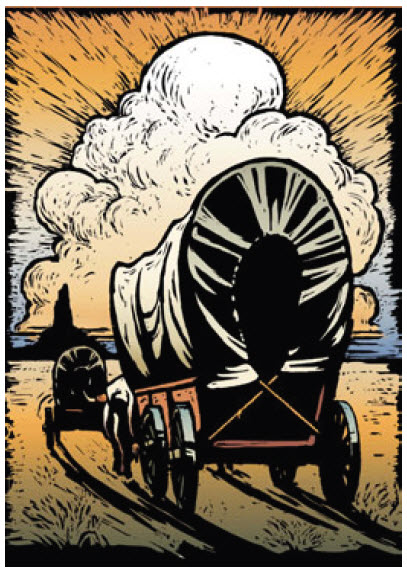
It’s possible that your novel The Deep Range influenced me, in some subtle way, to serve in the submarine force.  That story took the Old West struggles between cattle ranchers and crop farmers and set it under the sea, where whale herding competed with plankton farming.  Science fiction stories with an oceanic setting are rare gems, for me.

A reviewer of my stories would be hard-pressed to find your influence on my writing.  However, your fiction has been described as technical and the style as somewhat dry at times.  As a trained engineer, I strive to include sufficient technical detail so that people can understand how my gadgets work.  My fellow critique group members say the details sometimes get in the way of the story-telling.

Like you, I’m enamored of the science.  I love it, and can’t help including a sense of awe and wonder in my tales.  There will be those who grasp that, and those who skip those paragraphs and feel unfulfilled by the rest of the story.

That said, thank you so much, Sir Arthur, for passing the wonder to me.  In 2010:  Odyssey Two, Heywood Floyd asks, “What’s going to happen?”  Dave Bowman answers, “Something wonderful.”  That says it all, or so it seems to—

                                                         Poseidon’s Scribe


December 1, 2013Permalink

Meet the Punk Family

If you’re into science fiction, particularly alternate history or speculative fiction, there are some interesting sub-genres to be aware of.  They all have -punk in their name:  cyberpunk, clockpunk, steampunk, dieselpunk, and atompunk.

Punk FamilyI’ve blogged about steampunk before, but here I’ll step back and introduce the Punk family.

  • Cyberpunk. This term describes fiction involving a world of the near future where computer technology has made life miserable and degraded society.  Author Bruce Bethke is credited with coining the term in 1980 in connection with his short story “Cyberpunk.”  Major writers of cyberpunk include Pat Cadigan, William Gibson, and Bruce Sterling.  Some cinematic examples of cyberpunk are 1984, Blade Runner, Mad Max, the Terminator movies, and Tron.  In my graphic I’ve depicted it as the parent of the Punk Family since it came first.
  • Clockpunk.  This refers to fiction set in a time when metal springs are the primary technological energy storage mechanism, an era prior to the invention of the steam engine.  A player of the Generic Universal RolePlaying System (GURPS) invented the term.  Clockpunk authors of note include Jay Lake, S. M. Peters, and Terry Pratchett.
  • Steampunk.  This subgenre depicts settings with steam-powered mechanisms, often in time periods similar to the nineteenth century.  Author K. W. Jeter invented the term in 1987.  Early giants of steampunk literature include James Blaylock, K. W. Jeter, and Tim Powers, though there are many, many writers continuing in their footsteps.  Movie examples of steampunk include Atlantis: The Lost Empire, The League of Extraordinary Gentlemen, The Prestige, Sherlock Holmes, Van Helsing, and Wild Wild West.  I think it’s fair to say this child of cyberpunk has surpassed its parent and all its siblings in popularity.  It has spawned a culture all its own with jewelry, clothing, art, music, and dedicated conventions in addition to books.
  • Dieselpunk.  In Dieselpunk we see the gasoline-based technology of the 1920s, 30s, and 40s.  Game designer Lewis Pollak came up with the term in 2001.  Authors of dieselpunk include David Bishop, Robert Harris, Brian Moreland, and F. Paul Wilson.  Some examples of dieselpunk movies are Rocketeer and Sky Captain and the World of Tomorrow.  As with steampunk, dieselpunk also comes with its own visual style — art deco.
  • Atompunk.  This refers to fiction set in the exuberant post World War II age, the Atomic Age.  I couldn’t find anything about who coined the term.  Some atompunk authors are Adam Christopher and Dante D’Anthony.  I don’t know of any atompunk movies made since the sub-genre emerged, but many science fiction movies of the 1950’s can be thought of as proto-atompunk.  There are associated visual styles with atompunk, too:  Googie Architecture, Populuxe, and Raygun Gothic.

There are other, lesser known, members of the Punk family:  Decopunk, Biopunk, Nanopunk, Stonepunk, Nowpunk, Splatterpunk, Elfpunk, and Mythpunk.  Perhaps if these attract sufficient readers, I’ll blog about them too.

The ‘-punk’ aspect of each of these is meant to convey that these are not celebrations of the technology in question.  The idea in these stories is to convey dark and disturbing faults in the societies driven by the technology, and by extension, to point out analogous problems with our own modern society.

My steampunk stories include “The Steam Elephant,” “The Wind-Sphere Ship,” (call that one Iron Age steampunk), “Within Victorian Mists,” “A Steampunk Carol,” “The Six Hundred Dollar Man,” and the upcoming “Rallying Cry.”

I’ve written a couple of clockpunk stories too:  “Leonardo’s Lion” and “A Tale More True.”

Perhaps you’ll enjoy getting to know the Punk Family.  They’re an odd bunch, but they’re getting more famous every day.  Leave a comment and explain what you think about them to the world and to—

                                                        Poseidon’s Scribe

November 24, 2013Permalink

10 Reasons You Really Are Good Enough to Write Fiction

Perhaps you have a story inside you, but you feel too scared or intimidated or inadequate to believe you could ever write fiction.  Here are some ways to banish those feelings.

First, there are at least three levels of fiction-writing.  (1) These days you can write and publish something yourself without an editor, at near zero cost.  (2) You can get your writing accepted by a publisher, but not make enough money to live on.  (3) You can write fiction as your sole means of support.  I’ll limit myself to discussing level (2) today.

Never be a writerTrue, some people aren’t cut out to be writers at all.  My purpose today is to keep you from cutting yourself out of the running at the start.  Let’s look at ways you might think you’re not fit to be a writer:

  1. I just know I could never be a writer.  Where is your resistance to writing coming from?  Do you immediately think “I could never do that” when presented with other opportunities in life?  Maybe this isn’t about writing at all, but your general negativity toward trying new activities.  How many amazing human initiatives haven’t happened because somebody said, “I could never do that,” hmm?
  2. I don’t know anything about writing.  Don’t let this stop you.  That’s the part you can get help with, through critique groups, writing courses, books about writing, writing conferences, etc.
  3. I’d never write as well as [insert your favorite famous author’s name here].  Stop comparing yourself to the great authors.  You can’t know today how you’ll stack up against them one day.  So what if you’re not quite as good?  You can still get published and win over some readers.
  4. I’m unknown, and people only read books by known authors.  Think about it; all published authors started off unknown.  What if your favorite author had talked herself or himself out of writing?
  5. No editor will read my stories because I’m unpublished.  Not true.  Consider that latching on to a new, undiscovered top talent is every publisher’s dream.  All they need is one (you?) to make their career.
  6. Novels seem so hard to write.  No need to begin with a novel.  Try a novella, a short story, flash fiction.  Do blog posts for a while.
  7. My teacher told me I’d never be a writer.  Is one long-ago English or Language Arts teacher still in your head criticizing you?  Keep that teacher in your mind, but dedicate yourself to showing how wrong he or she was; sweet revenge will be yours one day.
  8. My story idea seems trite, or already used, etc.  At this point your idea is just a story concept; it might match hundreds of already-published stories.  Once you flesh it out and write it down, it becomes uniquely yours, different from all others, and possibly publishable.
  9. It takes too long to write a story.  True, writing takes time.  But, of all the skills and abilities you’ve developed in life, how many did you master in a day?  Let the strength of your story idea sustain you.  If it’s truly grabbed you, you’ll persevere until you write it all down.
  10. I couldn’t stand being rejected or getting a bad review.  That does stink, no denying it.  Any creative endeavor requires a thick skin.  Look at editor’s rejections as permissions to send your story elsewhere.  As for bad reviews, remember it’s far easier to be the critic.  At the worst, the reviewer may actually have a valid point you can use to improve your writing for the next story.

See?  You are good enough to at least try being a writer.  Shake off those negative emotions.  Let your imagination soar.  Allow yourself to try it out.  Someday, when you’re a famous author, be sure and give partial credit to—

                                                Poseidon’s Scribe

November 17, 2013Permalink

Dear Robert Heinlein

Yeah, I know the records say you’ve been dead since 1988, but I figure you found or inherited some way to cheat the reaper, like your character Lazarus Long did.  By some weird and inexplicable means, I think you could be reading this.

170px-RAH_1929_YearbookOver my lifetime, I’ve read several of your novels and short stories.  In my high school and college days, I read “By His Bootstraps,” Time Enough for Love, Star Beast, The Man Who Sold the Moon, Starship Troopers, Stranger in a Strange Land, Farnham’s Freehold, and The Number of the Beast. In later years I read Friday, Grumbles from the Grave, and The Moon is a Harsh Mistress.

I’m not sure what it was about your work that stuck with me most.  Maybe the cool future technologies.  Perhaps the gritty, wise-cracking, rough-and-ready characters, all of whom pulled themselves up from humble backgrounds.  The writing style, full of well-turned phrases, could have been part of it.  Or possibly the hard-nosed, no-excuses, freedom-loving philosophy undergirding it all.  I can’t say, and likely I’ll never know.

Though I didn’t realize this until later, there is some similarity in our backgrounds, yours and mine.  I was born about fifty years after you, but also grew up in the Midwest, also graduated from the Naval Academy with an engineering degree and also served in the Navy.  After leaving the service, both of us turned to writing fiction.

I’m not comparing my writing to yours, just pointing out reasons I can relate to your life experiences.  After I began writing, I began to appreciate your approach to authorship even more.  I liked your rules for writing with their linkage of hard work to eventual success.

I also began to see how different a writer you were from some of my other author heroes.  Jules Verne lucked into a new field; no one else was writing science fiction.  Isaac Asimov took the established model of the time (publishing short stories in pulp magazines) and churned out an enormous output following that model.

By contrast, you rejected the status quo and uplifted the whole genre.  You believed science fiction should be regarded as respectable literature and worked to bring that about.  Your success benefitted not only you, but other authors too.  Without question, your stories inspired generations of engineers, scientists, and writers.

When I pondered over my own portfolio of published work, I had to confess I didn’t see the Heinlein influence there.  My story themes and characters differ quite a bit from yours.  But when I thought about it more deeply, I realize now what I took from your example wasn’t a writing style, but the hope that a guy like me could sell stories.

For inspiring me to be a writer, not necessarily to write like you, thanks.  And if you don’t mind, I’ll ask a favor.  How about taking time off from shaking up the status quo in your current plane of existence, to sprinkle just a bit of your writing talent on—

                                                              Poseidon’s Scribe

November 11, 2013Permalink

Books in the Shadows

Recall the brouhaha in February and March 2012 between PayPal and Smashwords?  It’s been a year and a half since then; time for a retrospective look.

PayPal vs SmashwordsIt started when PayPal told Smashwords to remove all content referring to bestiality, rape, and incest from its website or else its customers could no longer buy books using PayPal.  The problem for PayPal was that it was backed by major credit card companies; all of whom had reputations to uphold.  They couldn’t be seen as permitting, let alone advocating, what many customers saw as smut.

That put Smashwords in a real bind.  PayPal wasn’t just a means for paying for books on the site; it was integral to the site.  Accordingly, Smashwords notified all its authors of the change in policy and engaged in negotiations with PayPal.  The negotiations got into the minutiae of defining bestiality, rape, and incest.

Meanwhile a funny thing happened.  People reacted.  In a big way.  The internet backlash campaign against PayPal rose up with the power and immediacy of a tidal wave.  By the thousands, people signed petitions, wrote angry blog rants, and cancelled their PayPal accounts; whole organizations formed to fight this one issue.

By mid-March it was over.  PayPal reversed its stance.

So, problem solved, right?  We can all move on?

Not really.  Just a couple of weeks ago, the British bookseller W.H. Smith shut down its website due to a problem involving pornographic books.  Using the search term ‘daddy,’ like a child might do, resulted in some book choices that were, let’s say, inappropriate for children.

So the fight continues and will likely go on as long as there are books, and people.  Each side in this war has a valid point and a principle worth defending.  One side seeks to keep adult-themed books out of the reach of minors.  Failure, as they see it, leads to moral decay and the collapse of civil society.  The other side strives to defend freedom of expression.  Failure, to them, leads to book-burning and thought control.

The boundaries of what’s acceptable have been shifting for centuries, even millennia.  What is appropriate for children?  To what lengths shall we go to protect them?  These questions are ageless.

What’s new today is the explosion of adult interest in pornographic books, the ease of electronic searches for books, and the fact that children are often more adept with the internet than their parents.

I don’t bring this up because I have some magic answer, nor am I taking sides.  I’ve written one story that young children shouldn’t read, and that’s “Blood in the River” in the horror anthology Dead Bait.  I’m trusting parents not to purchase a book of horror stories for their toddlers.  So far I haven’t written anything else that could be described as erotic or pornographic.  If I do, I’ll publish it under another name.

My point is only that this ain’t over.  Battle lines will shift; skirmishes will erupt at the borders of the eternal culture conflict; periods of peaceful equilibrium will end with further clashes and uprisings.

For me, the danger lies at both extreme ends of the spectrum.  I think there should be a way for parents to protect their young children from exposure to porn (and parents need to define that term ‘porn’ for themselves).  Similarly, I don’t want society (especially the government) to ban porn for adults.

That’s my take on the books of the shadows.  What’s yours?  Leave a comment and let your views be known to the world and to—

                                                            Poseidon’s Scribe

November 3, 2013Permalink

The Seed and Twist Revisited

I’ve mentioned a couple of times before (here and here) my method of coming up with story ideas.  I call it the seed and twist.  The seed is some humdrum, everyday thing.  The twist is where you look at the seed in a new way, give it some novel alteration.

By way of illustration, I’ll discuss the seed and twist for each of the stories I’ve had published to date.  Don’t think of it as a glimpse into how my mind works; you don’t want to know.  Think of it as a jumping off point for coming up with your own story ideas.  Sometimes my seed ideas aren’t very everyday things.

  • Target Practice
    • Seed:  a prison
    • Twist:  It’s a prison of the future, underwater, and prisoners are made to drive weaponless mini-subs to serve as targets for the country’s submariners.
  • Alexander’s Odyssey
    • Seed:  the legend that Alexander the Great descended in a diving bell
    • Twist:  How would the sea-god Poseidon react?
  • The Sea-Wagon of Yantai
    • Seed:  some obscure references I found that someone had made a submarine in China around 200 BC
    • Twist:  make it a tale pitting war against peace
  • Blood in the River
    • Seed: your standard vampire
    • Twist:  This is an Amazonian vampire-fish known as a candiru, that shape-shifts between human and fish forms.
  • The Finality
    • Seed:  the disaster to come in the year 2012 foretold by the Mayan calendar
    • Twist:  The disaster is the universal end of time itself.
  • The Vessel
    • Seed:  a ship and its crew returning home
    • Twist:  It’s a ship from Atlantis, and their home has sunk beneath the seas.
  • The Steam Elephant
    • Seed: the huge, mechanical elephant from a Jules Verne story set in India.
    • Twist:  Take the same characters, with a newly built steam elephant, and set them in African in 1879, in time for the Anglo-Zulu War.
  • The Wind-Sphere Ship
    • Seed:  the little steam toy invented by Heron (also spelled Hero) in 1st century Alexandria
    • Twist:  What would happen if he’d used steam to power a ship?
  • Within Victorian Mists
    • Seed:  a steampunk romance
    • Twist:  Lasers and holograms get invented early, in the late 1800s.
  • Seasteadia
    • Seed:  a story of young love between opposites
    • Twist:  The story is set against the backdrop of the world’s first permanent sea colony, or seastead.
  • A Sea-Fairy Tale
    • Seed:  a man learning that the world must have some fantasy in it
    • Twist:  He learns this from an oceanid, a mythological sea fairy.
  • Leonardo’s Lion
    • Seed:  the life-size clockwork lion built by Leonardo da Vinci in 1515
    • Twist:  It’s about fifty years later and the lion is found by a small boy who finds a secret hidden inside the lion.
  • Against All Gods
    • Seed:  a journey to visit all seven wonders of the ancient world
    • Twist:  The gods of Greek mythology are angry with a pair of mortal lovers and will stop at nothing to ruin their love for each other.
  • A Steampunk Carol
    • Seed:  Charles Dickens’ A Christmas Carol
    • Twist:  The story is played out using the characters of “Within Victorian Mists.”
  • The Six Hundred Dollar Man
    • Seed:  the 1970s TV show, “The Six Million Dollar Man”
    • Twist:  It’s set in steampunk times.
  • A Tale More True
    • Seed:  the notion of man travelling to the moon
    • Twist:  The story is set in a time even before steam power, when the most powerful man-made source of energy was the metal clockwork spring.

It’s one way of coming up with story ideas.  So far, it’s worked for—

                                                        Poseidon’s Scribe

October 27, 2013Permalink

A Review of “The Six Hundred Dollar Man”

TheSixHundredDollarMan72dpi-1coffeethoughts(1)ReviewedAtCTR


My story, “The Six Hundred Dollar Man,” received a favorable review by Lototy over at Coffee Time Romance.  Check out her review here; she really understood the message of the story, and knows how to craft a fine review.

I don’t know if Lototy even likes coffee, but someone should buy her an urn-full.  Someone like—

                                             Poseidon’s Scribe

October 26, 2013Permalink

Dear Dr. Asimov

You may have some difficulty reading this, since you’ve been dead for over 21 years, but I hope somehow this tribute finds its way to you nonetheless.  I just wanted to say thanks, however belatedly, for your books and the way they influenced me.

isaac-asimov2I started reading science fiction in the early 1970s, and by then you were a giant in the field.  I read dozens of your short stories, and some of your novels including Foundation, Fantastic Voyage, The Gods Themselves, The End of Eternity, The Naked Sun, and others.  Later I read some of your nonfiction books and essays and some of your non-SF fiction, including The Union Club Mysteries and Azazel.

In fact, I read more stories written by you than by any other author.  (Of course, there are more stories written by you than any other SF author!)

In the late 1980s or very early 1990s I had the opportunity to attend one of your speeches—a great thrill for me since I was then thinking of becoming a writer.  You had traveled (by train, of course, since you never flew) to my area to speak in a lecture hall.

Alone on stage, you began speaking in your thick Brooklyn accent.  “I’ve done a number of these things already, so to save time, I’ll ask the questions you would ask, and then answer them.  First question:  Dr. Asimov, how did you come to write so many books?  Well, I type ninety words a minute and before I knew it, I’d written five hundred books.  If someone wants a 5000 word short story, I type 5000 words and stop; with any luck, I’m at the end of a sentence.”

You gave advice to budding writers like me that day also.  “My first draft is my final draft.  I don’t believe in rubbing words together until they sparkle in the sunlight.  As my good friend, the late Bob Heinlein said, ‘They didn’t want it good; they wanted it Wednesday.’”

It was a great hour-long lecture, and you kept the audience laughing the whole time.  But that was just one hour.  Your impact on my life goes much deeper.

Your SF stories are based on sound science, and your characters confront bedeviling problems that spring from unalterable facts.  The science is a central part of each story.  I’ve strived for that in my stories as well.

Moreover, your tales are celebrations of science.  I don’t recall any stories where science leads humanity irrevocably astray.  Even your dystopian works end with hope for the future.  That’s true of my writing, too.

Others have spoken of your clear, uncluttered style of writing, and you’ve acknowledged that yourself.  My critique group tells me my style is similar at times.

Looking back over the list of my published short stories, I think I can see your influence in each one, to some extent.  Alas, I don’t type ninety words a minute, and I labor over several drafts, so I will never equal the quantity of your output.  But it’s my dream to write a story someday that approaches the quality of your fiction.

Here’s to you, Dr. Isaac Asimov!  Thank you.

Steven R. Southard

aka

Poseidon’s Scribe

October 20, 2013Permalink

Make Your Readers Cry

How can you cause your readers to cry?  No, I don’t mean crying about having bought your book.  That’s easy.  I want to explore how you should write so as to cause readers to experience a powerful emotional reaction, one you actually intend to cause.  It need not be sadness, but any powerful reaction.

I can’t find the precise quote, but Isaac Asimov once said the aim of writing good fiction is to maximize the emotional response of the reader.  That makes it sound so mathematical; simply take the multi-dimensional equation for reader emotional response, select the right combination of character, setting, and plot variables that result in a local maximum in the solution surface.

Right.

Except there is no equation, and none of those story elements are numbers.  In fairness to Dr. Asimov, I’m pretty sure he knew that too.

But what if we looked at this another way?  Maybe there’s some trick or shortcut that always works, some valve in the human psyche you can turn with just the right words, and cause tears to flow.

800px-Adele_2009Consider the singer and composer Adele, and her song, “Someone Like You.”  That song has a reputation for causing listeners to cry.  What is it about that song?

Over two decades ago, Dr. John Sloboda, a British psychologist, studied the phenomenon of music making people cry and concluded most of the sob-inducing passages (including, it now turns out, “Someone Like You”) contained a common element.

That common element is known to music scholars as an appoggiatura.  It basically involves delaying the resolution of a melody through use of an interfering note that creates a brief emotional tension prior to completing the melodic phrase with its logical conclusion.  There’s more to the definition, but I wanted to convey that this is a single, simple musical technique.

Really?  That’s all there is to it?  Composers have a simple trick by which they can make us cry, and there’s nothing we can do about it?  Of course it’s not that simple.  Appoggiaturas may be a part of it, but there’s also something about how the rest of the melody flows, the singer’s voice, and the powerful meaning of the words.  I believe it’s the combination of all those things that brings magic to “Someone Like You.”

Getting back to writing…is there, then, some formula for writing fiction that makes readers cry?  For us authors, where is our appoggiatura?  Here are some things that might work, but this can’t be an exhaustive list:

  • A character the reader cares deeply about.  (How to achieve that is a blog subject in itself.)
  • A “bad” event happens to that character.  Something like death, serious injury, divorce, leaving for a long time, etc.
  • A skillful management of reader tension, through use of words that jar a bit, and delay the resolution of emotion.  This relates to the appoggiatura in music.
  • Another character to experience the emotion intended.  I think this can be optional, since it’s the reader’s emotion we’re after, but it helps for the reader to experience the sadness along with a character.

I don’t know of any scientific studies of books that make people cry, analogous to Dr. Sloboda’s studies of music, but I suspect the above elements might be common features in anyone’s list of tear-prompting literature.

Please leave a comment on all this, if you can pull yourself together.  With a box of tissues by my side, I’m—

                                                   Poseidon’s Scribe

October 13, 2013Permalink

The Techno-Thriller, a Tribute to Tom Clancy

Author Tom Clancy died earlier this week on October 2nd at the age of just 66.  During his writing career he reinvented and popularized the genre known as the techno-thriller.

Tom_Clancy_at_Burns_Library_croppedYou can read all about Clancy’s life elsewhere; my purpose today is to mention how he and his work influenced me.

When his first book, The Hunt for Red October was published in 1984, I was completing my first (and last) tour as an officer aboard a submarine and headed for two years of shore duty.

The novel didn’t really become popular at first, but the publisher, U.S. Naval Institute Press, was used to leaving books out and available for longer periods than traditional fiction presses were.  Good thing, too, because the book eventually caught on and became a best-seller.

The U.S. Navy benefited from that novel, I think, because it popularized the military at a time when it still suffered from the post-Vietnam stigma, and it rode the wave of the expansion of the military led by then-President Reagan.  It was a heady time for the submarine service.

I recall a cartoon at the time depicting a young woman addressing a naval officer seated at a bar table, drinking beer.  He wore sunglasses and had winged aviation insignia on his uniform.  She was asking, “Are you a submariner, like those guys in Red October?” and he responded, “Yeah, babe.”  The caption read, “The first recorded instance of an aviator impersonating a submariner.”

I enjoyed the book, and my familiarity with submarines probably heightened my appreciation for it.  I went on to read the first six of Clancy’s books, through The Sum of All Fears.  Although Hunt is the shortest of his works (I think), readers should not be intimidated by the length of his novels, for they are split up into short sections and chapters, and Clancy writes with considerable tension so that you won’t want to stop reading.

In the mid 1990’s, when Tom Clancy’s fame was assured, he actually spoke to the local writing group in my area, of which I was a member.  He waived his usual speaking fee, which was probably thousands of dollars.  Unfortunately for me, I was away on travel for my day job at that time and missed his talk.  I heard it went well and that he was inspiring.

As I mentioned, Clancy took the genre of techno-thriller to new heights.  Some complain about the lengthy paragraphs he devotes to describing how technology works.  But as an engineer, I never minded that.  I disagree with those who assert that technology itself becomes a character in Clancy’s novels.  He well knew that people operate technology, and he created memorable characters who had been well trained to work with the sophisticated equipment.

In fact, Clancy lavished much attention on those lowest in the military hierarchy.  His novels are filled with enlisted men from humble backgrounds who operate complex machinery with skill and great competence.  I think he greatly admired American enlisted men and women, and at one point I believe he said they were the real difference between the U.S. and Soviet militaries.  He said you’d expect officers from both countries to be top-notch, and they were, but it’s the American enlisted who far exceeded their Soviet counterparts.

Almost all of my stories deal with characters grappling with technology, too.  Moreover, many of my characters are low on the social pecking order, as are Clancy’s enlisted characters.  None of my works can be called techno-thrillers, but I think Clancy’s works did influence mine in some way.

Rest in peace, Mr. Clancy, and thanks for the pulse-pounding excitement!  You gave many enjoyable hours to millions, and to—

                                                       Poseidon’s Scribe