How I Inspired an Expedition

According to news accounts here, here, and here, divers will use a special diving suit (called the Exosuit) to explore off the coast of Antikythera Island near Greece. The site is a debris field left by a Roman merchant ship estimated to have sunk around 60 B.C. in 200 feet of water.

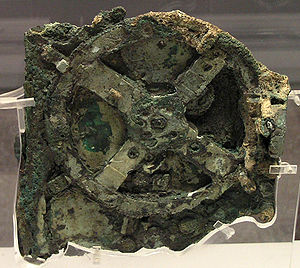
300px-NAMA_Machine_d'Anticythère_1They’ll be looking for more pieces of “the world’s oldest computer.” It’s a geared calculating machine, discovered by divers in 1900. No one credited the ancient Greeks with much knowledge of gear technology, until the discovery of this machine.

The question you’re probably wondering is, why now? The mechanism has been known about for more than a century. Why are scientists and explorers suddenly interested in finding out if they are missing some parts of the machine, or if they already have extra pieces and there were two devices aboard the ship? What prompted this new expedition?

I might have had something to do with it.

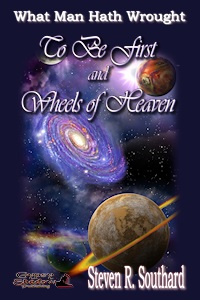
ToBeFirstWheels3fYou see, I wrote a story about the Antikythera Mechanism called “Wheels of Heaven,” and it just got published (by Gypsy Shadow Publishing) a couple of months ago. In my tale, I explain what the machine is and how it came to rest at the bottom of the Aegean Sea.

You’d have to agree this can’t be a coincidence. Obviously someone read my story and got to thinking, “I wonder if he’s right? Is that how it happened?”

No one associated with the expedition is likely to admit it, of course. They might even deny it if asked. After all, no scientist wants to confess to being inspired by a mere fictional short story.

But we know the truth, don’t we? The connection is too strong to ignore. They can refute it all they want.

At this point you’re probably curious what the fuss is all about. You can purchase “Wheels of Heaven” along with another story “To Be First” here, here, here, and other places too. Sail along on the ship Prospectus with the Roman astrologer Drusus Praesentius Viator, and a common sailor from Crete named Abrax as they argue over whether the machine can tell the future.

Once again we see mysterious parallels between the breaking news of today’s world and the worlds depicted in my stories. A few weeks ago, I told you about the upcoming landing on a comet, an event similar to the one in my story “The Cometeers.”

The question we must ask, then, is which will be the next story of mine to have some strong link to the news headlines? Which of my other books of alternate history will prompt the next scientist, explorer, or engineer to undertake a grand investigative effort? You can offer your own answer to this question by leaving a comment to this blog post.

Strange how this keeps happening, isn’t it? If you want to know the science and technology news of tomorrow, simply to turn to the works of—

Poseidon’s Scribe

September 21, 2014Permalink

12 Reasons to Change Your Name

Pen NamesAs a writer of fiction, you might choose to be published under a name other than your real one for a variety of reasons. The use of pen names, (or nom de plumes, literary doubles, or pseudonyms, if you prefer) is not uncommon. Although I’ve blogged about one reason for pen names before, I figured I’d provide a more comprehensive list of reasons today.

• The first three on my list have to do with Branding.
1. To separate your books into different genres or types or styles. For each name, readers know what to expect.
2. To give the reader the impression the book is an autobiography. You can adopt a character’s name as your pen name, as Daniel Handler did by choosing Lemony Snicket as a nom de plume in A Series of Unfortunate Events.
3. To share the same pen name with other authors, making it seem like a book series was written by one person. With the Tom Swift series of children’s books, several authors wrote under the single pen name, Victor Appleton.

• You may have reasons to shield your true identity.
4. To keep your real name in reserve until you’re a more established author. Eric Blair used the name George Orwell for this purpose, though it’s not clear what he was waiting for!
5. To protect your reputation. As a don at Oxford University, C. S. Lewis got published under the names Clive Hamilton and N. W. Clerk for this purpose.
6. To maintain your privacy. Enough said.

• There may be problems with your real name.
7. To choose a name more appropriate to the genre you write in. Pearl Grey chose the pen name Zane Grey for his Westerns.
8. To present yourself as the other gender. As a woman, you might feel your military adventure novels would sell better with a man’s name as the author, and similarly for you men who write romance novels.
9. To enable readers to more easily pronounce your name. Face it, some names are difficult to say.
10. To distinguish yourself from someone else. Your real name might spell or sound like another person (or thing). The British statesman and author Winston Churchill always wrote under the name Winston S. Churchill (I know, not much of a pseudonym) to avoid being confused with the then-famous American author Winston Churchill.

• Sometimes the publisher has reasons for suggesting a pen name.
11. To enable several of your stories to appear in the same magazine. Thus Robert A. Heinlein became also Anson MacDonald and Caleb Strong to avoid the appearance that a single author was monopolizing that issue.
12. To keep from saturating the market. If you write very fast, publishers might fear the public will see your name too often and tire of your novels too quickly. For this reason, some of Stephen King’s books were published under the name Richard Bachman.

Sure, there might be additional reasons for using a pen name. You don’t really need a reason, after all. It’s a personal choice and nobody’s business except yours and the publisher’s. (You’ll want your publisher to know your real name so they send those huge advance and royalty checks to the right account!)

Other good sites or blog posts that list reasons for pen names include this one, this one, and this one.

Oh, yeah, in case you were wondering, my real name isn’t—

Poseidon’s Scribe

September 14, 2014Permalink

The Seven Habits of Highly Effective Writers

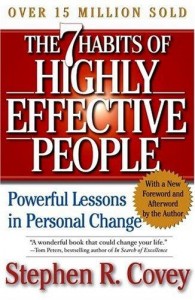
In 1989, author Stephen Covey came out with his best-selling book, The Seven Habits of Highly Effective People.  I’m a sucker for self-improvement books and found Covey’s book inspiring and practical. At the risk of insulting the late Stephen Covey, I’ll dare to suggest seven habits of highly effective fiction writers.

The_7_Habits_of_Highly_Effective_PeopleCovey presented his seven habits in a logical order, with a nice, organic structure. He phrased his habits—aimed at helping people live better lives—as brief directives, but took about a chapter to explain each one. They included such things as “Be proactive,” “Begin with the end in mind,” and others.

In a similar manner, my suggested habits have a rough order to them, but are not as neatly structured as Covey’s. My habits do not parallel Covey’s, but they do consist of brief directive statements which require some explanation. Here they are:

  1. Listen to your inner storyteller. First and most important, you’re a writer because you have story to tell, because you can’t imagine not writing. Keep that inner spark always burning; it will sustain you through the difficult times.
  2. Form the discipline of writing. Sometimes your inner storyteller doesn’t yell loud enough, and the rest of life’s obligations close in. If you’re to be a writer, you still need to write, write, write. There is no substitute for time spent with butt in chair and fingers on keyboard.
  3. Get help with the craft. Seek all kinds of help. Study English again. Develop your vocabulary. Read about writing. Read the classics. Attend writing classes and conferences. Join a critique group.
  4. Follow your muse. As you write more, you’ll think of characters, plots, and settings during odd, idle moments when you’re not writing. That’s your unconscious, creative voice—your muse—talking. Pay attention. Though she may lead you to unimagined and uncomfortable places, she might help you develop your unique writing voice.
  5. Submit your best. Don’t rely on editors to see the genius of your story through all the spelling, grammatical, and plot errors. Do a thorough job of self-editing, thinking critically, viewing your manuscript as a reader and English teacher might. Submit only when you can honestly say it’s your best product and you’re proud of it.
  6. Be a professional. Present yourself to the world as if you’re already a successful author. Establish an author website. Don’t get so angry at editors, reviewers, blog commenters, or readers that you descend into flame wars, emotional outbursts, or other unprofessional conduct.
  7. Actively seek improvement. This may sound like number 3 above, but that earlier habit is about the initial learning of fiction writing; this one is about continual development, honing, and advancement of your craft. It means to cycle through all the habits as you go, improving known weak areas, always working to ensure your next story is better than all the previous ones.

Long-time followers of my blog will recall my post proposing 15 writing virtues. The seven habits I’m advocating today are another approach. It’s easier to remember 7 things than 15 anyway, right? There are many paths to self-improvement, and you’re free to find your own. For now, it’s back to growing and improving for—

Poseidon’s Scribe

September 7, 2014Permalink

First to Land on a Comet?

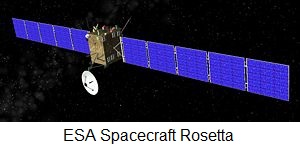
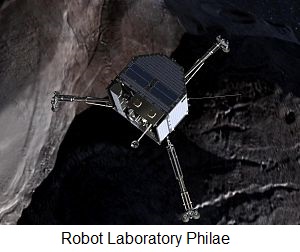
This week the European Space Agency (ESA) announced they will choose from among five sites on Comet 67P/Churyumov-Gerasimenko for the Rosetta spacecraft’s robot laboratory Philae to land, as reported here, here, and here. Crop_from_the_4_August_processed_image_of_comet_67P_Churyumov_Gerasimenko300px-Rosetta

Philae_over_a_comet_(crop)They claim this will be the first time a human-built spacecraft has landed on a comet.
I beg to differ.

I’m aware of an alternate universe very close to our own, a universe in which an actual manned—not robotic—landing has already occurred.

In 1897.

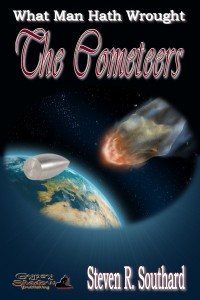
It’s all documented in my story, “The Cometeers,” a story to be launched tomorrow by Gypsy Shadow Publishing. Yes, that’s tomorrow. The 1st of September.TheCometeers72dpi

That means you don’t have to wait for the ESA to take their sweet time choosing a landing site and preparing to send down the Philae probe. They’re not even attempting their landing until mid-November. That’s not for two and a half whole months!

Who wants to wait that long? You can be witness to a manned landing on a comet as soon as tomorrow.

Also, in my story, the comet isn’t some benign rock way out there at some safe distance.  Not at all.  It’s huge, and it’s hurtling toward Earth.

A planet-buster.

Further, the heroes of “The Cometeers” don’t have fancy computers, or Ariane 5 rockets, or robots, let alone nuclear weapons. All they’ve got is gunpowder. And a big cannon. And their ingenuity.

And a few sticks of gum.

I’ve got nothing against the fine folks at the ESA. Really. The Rosetta mission is exciting, and it has the added benefit that it’s really taking place in our own universe.

Sometimes, though, alternate universes can be fun, too. Read “The Cometeers” and see if you agree. Jules Verne said, “Anything one man can imagine, other men can make real.” It looks like the ESA will soon make something real, something that first blasted like a cannon shot from the imagination of—

Poseidon’s Scribe

Interview with a Cometeer

Today I’m interviewing the protagonist, Commander Hanno Knighthead, from my story, “The Cometeers,” scheduled for release by Gypsy Shadow Publishing in early September.

TheCometeers72dpiPoseidon’s Scribe: Greetings, Commander Knighthead, and welcome to our blog—er, newspaper. I’m Poseidon’s—I mean, I’m Steven Southard, the Editor in Chief.

Commander Knighthead: Thank you, Mr. Southard. I’m pleased to be here.

S.S.: Can you tell our readers about your upcoming mission?

CDR K.: Well, I think most people already know we’re travelling into outer space to blast Comet Göker with gunpowder to divert it away from the Earth.

S.S.: Can you remind our readers when the comet is due to collide with Earth, if not diverted in time?

CDR K.: Yes, on September 9th.

S.S.: Of this very year, 1897, is that correct?

CDR K.: Yes.

S.S.: Very interesting. Let’s get to some personal matters. How old are you and where did you grow up?

CDR K.: I’m 35 and I was born and raised at a farm near Emporia, Kansas. Born one year after Kansas became a state, in fact.

S.S.: But you didn’t stay to work the farm when you grew up?

CDR K.: No. After reading Moby-Dick, Two Years Before the Mast, and other such books, I felt the call of the sea. I received an appointment to the Naval Academy in Annapolis, and graduated from there in ’84.

S.S.: Pardon me for asking, but how did your parents pick your first name—Hanno? It’s most unusual. Is it a family name?

CDR K.: (laughs) No. My name is Hanover. Hanno is just a nickname.

S.S.: What was your most recent command in the Navy before being selected for the comet mission?

CDR K.: I was captain of the torpedo boat, USS Hopkins, home-ported in Newport, Rhode Island.

S.S.: Are you married, Commander?

CDR. K.: No.

S.S.: Come now. A good-looking man like you, in the prime of health, with a successful Navy career going? I’m sure there are scores of young ladies who—

CDR. K.: I preferred not to subject a wife to the difficulties of dealing with my life at sea.

S.S.: I understand, though our young, female readers will likely wish you’d make an exception.  How were you chosen for this mission?

CDR K.: That was the shocking part. I’m told President McKinley selected me personally.

S.S.: Really? Why? Did the President know you?

CDR K.: No. When I had the opportunity to meet with him in the White House, he told me he wanted someone able to lead a small group of men in a confined craft on a long mission. I’m honored he chose me.

S.S.: As you should be. I understand the rest of your crew for the comet mission was hand-picked as well.

CDR K.: Yes, hand-picked for their expertise in various disciplines needed on our mission—explosives, mechanics, orbital mathematics, comet geology, physics, and other specialties. They’re from the nine countries that contributed the most to finance the expedition.

S.S.: A multi-national crew, then. Do you foresee difficulties in communication?

CDR K.: Not in communication. They all speak English.

S.S.: Your answer suggests you see difficulties of another kind. Do you?

CDR K.: We’re sending twenty three projectiles into outer space, three of them manned. We’re trying to guide the ones filled with gunpowder so they hit a comet travelling very fast, and we’re trying to keep that comet from hitting the Earth. Of course, I see difficulties. I see nothing but difficulties.

S.S.: I meant, do you see problems with your crew, other than communication?

CDR K.: (hesitates before answering) I think it’s no secret that leading a crew of well-educated civilians experts presents different challenges that leading a crew of a few officers and dozens of enlisted men. Having said that, I look forward to the mission and have full confidence every crewman will do his job.

Steven Southard: I know you’re a busy man, so I’ll end here by wishing you and the rest of the Cometeers complete success. The rest of us are depending on you.

CDR Knighthead: Thank you. We won’t let you down.

As a reminder, my story, “The Cometeers,” will be launched in early September. I think you’ll find Commander Hanno Knighthead has, if anything, underestimated the challenges he’ll face on this mission. Challenges imposed on him by—

Poseidon’s Scribe

The Story behind “The Cometeers”

As I mentioned in my News page, Gypsy Shadow Publishing has accepted my story, “The Cometeers” which will be published as part of the What Man Hath Wrought series. The intended launch date is in early September.

TheCometeers72dpiHere’s the marvelous cover, designed by Charlotte Holley.  Yes, that’s a planet-destroying comet headed right toward the Earth.  But if you look closer, you’ll see an silvery man-made projectile on an intercept course.  Just possibly, its occupants might save the entire world.

Inquiries have been streaming in from every corner of the planet (and from some of the comets), asking what this story is about. Far be it from me to deny my fans information about my latest tale.

Here’s the book blurb: A huge comet speeds toward a devastating collision with the Earth, but no one will launch space shuttles filled with nuclear weapons. It’s 1897. Instead they’ll fire projectiles from the Jules Verne cannon and try to deflect the comet with a gunpowder explosion. Commander Hanno Knighthead isn’t sure he can motivate his argumentative, multinational crew of geniuses to work together. It turns out one of them is a saboteur. Then things get worse. Only a truly extraordinary leader could get this group to cooperate, thwart the saboteur, and jury-rig a way to divert the comet. Lucky thing Hanno brought his chewing gum.

Armageddon-poster 1998If you recall the 1998 movie “Armageddon,” then you can think of my story as Steampunk Armageddon.

I don’t recall the exact inspiration for this story. As stated in this post, and this one, I use the “seed and twist” method of coming up with story ideas. In this case the seed is the standard save-Earth-from-destruction idea, and the twist is to set the action in Victorian times.

My problem became one of technology. They just didn’t have sufficient know-how in the Nineteenth Century to divert or destroy a comet. It’s an open question whether we really have the technology today.

640px-From_the_Earth_to_the_Moon_Jules_VerneTherefore, I assumed the world of Jules Verne’s novel From the Earth to the Moon.  In that world, men had already achieved space travel in 1867. With funds from many nations, the Baltimore Gun Club had built a 900 foot long cannon outside Tampa, Florida, and launched a projectile containing three men.

My story is set thirty years later and no one has used the cannon since, due to the enormous expense. With a giant comet on the way, however, something must be done, so every country contributes what it can.

You can’t simply launch projectiles full of gunpowder at the comet and expect to hit it. The target is too small, the distance too great, and the calculations too imprecise. You must send men up also, in separate projectiles, to travel with your gunpowder bombs to make the necessary course corrections along the way.

That plan should work.

Unless something goes wrong.

“The Cometeers” will launch in September. For further updates, keep visiting this blog and reading the posts by—

Poseidon’s Scribe

Keep Up the Pacing

Today we’ll tread through the topic of pacing in fiction. If you’d like readers to maintain interest in your stories, you might want to step along with me.

PacingThe term ‘pacing’ refers to how fast the reader is reading, and the speed at which the story’s events take place. A good writer not only controls the pace of reading, but also varies that pace throughout the story. Fast-paced scenes are followed by slow-paced ones, and then another fast scene, etc. Jamming too many fast scenes together leaves a reader overwhelmed and lessens each scene’s impact. Slow scenes that are too long or not separated by a fast intermediate scene can bore the reader.

Even within a scene, some pacing should occur. There will be slightly fast moments in a slow scene and slightly slow moments in a fast one. Pacing relates to rhythm, and it’s important to keep varying it.

            Fast

Use a fast pace for action-packed portions of the story. Examples of emotions felt by characters in these scenes are anger, fear, energy, excitement, joy, and surprise.

Create a fast pace with short sentences and short paragraphs. Keep the writing plain, free of modifiers. Use brief and impactful verbs. There should be more dialogue, and it should be snappy. Some sentence fragments.

In other words, you’re maximizing the “white space.”

            Slow

A slower pace allows the reader to catch her breath and more fully absorb what happened in the faster scenes. A relaxed tempo serves to emphasize important points, let characters to refresh and recharge after action sequences, reveal character backgrounds and motivations, and permit characters to react and reflect on moments of high drama as well as to plan for future events.

The slow paced sequences allow better expression of these character emotions: anger, fear, astonishment, awe, and disbelief. Yes, anger and fear can belong in both the fast and slow parts.

To slow down the pace, stay with more narrative and less dialogue, make use of longer sentences, and embellish the prose with descriptions. Don’t overdo any of those, however; your aim is to keep the reader interested, not bore him.

Alternating

As mentioned, my advice is to alternate the fast and slow sections. Also alternate fast and slow paragraphs, and sentences within a paragraph. Such variation avoids monotony and keeps the reader intrigued enough to stay with your story.

This isn’t the only fine blog post about pacing. You can find others here, here, here, and here.  Thanks for striding along with—

Poseidon’s Scribe

Avoid the Dreaded POV Wobble

What’s a POV Wobble? Why should you dread it? What happens if you encounter it? How can you avoid it?

POV WobbleFour vital and weighty questions. An average blogger would shrink from the challenge of answering them all in one short post. But you’ve surfed to no ordinary website. I laugh at such challenges, or at least chuckle in a menacing way.

I’ll assume you understand Point of View (POV) already, perhaps by having read this, or some lesser source. The phenomenon of POV Wobble is when the writer shifts to a different character’s POV without a break in the narration. Here’s a blatant example:

Jetta stared at Cliff over the breakfast table and wondered if he was still happy with their marriage. Cliff thought she must have forgotten he preferred grape juice over orange juice.

That’s not so much a POV wobble as a POV fall flat on your face. We shifted right from Jetta’s mind to Cliff’s mind in the same paragraph. Here’s another example:

Jetta looked up toward the window as she heard a loud, warbling sound from outside.   Neither she nor Cliff could have known an alien spaceship had landed in their back yard, nor understood then the consequences for the human race.

Not only did we leap from just Jetta’s mind to encompass both hers and Cliff’s, but that’s very poor foreshadowing, too. Here’s more:

Her heart pounded. Jetta heard the creak of the outside stairs and sensed the grip of the alien’s hand on the kitchen doorknob.

Sure, she knows when her heart is pounding, and she can hear noises. But she can’t sense anyone else’s hand on a doorknob. Another example:

Jetta and Cliff edged their way to the kitchen’s far side, afraid of making any noise. Flat against the wall, Jetta stood with her hand to her mouth, ready to scream, appearing as if posed for a horror movie role.

Here, the first sentence states they’re both afraid, but we shouldn’t know about Cliff’s fear since we’re not in his POV. In the second sentence, we’re seeing Jetta from the outside, posing, which she couldn’t see unless by reflection in a mirrored surface.

The trouble with POV wobbles is, they mark a shift from third-person limited to third-person omniscient. In other words, you’ve gotten the reader comfortable with being in one character’s head, and then suddenly you lift the veil and reveal stuff that character can’t know. You bounce the reader (maybe only briefly and with subtlety) into another character’s head.

It’s possible some readers won’t notice, or will notice but remain unbothered. Why take the chance? First of all, an editor may catch it and that POV wobble might be enough to get your story rejected before a paying reader even sees it.

You’re thinking, “This seems pretty basic stuff. The POV wobble thing will be easy to avoid. I’ll never fall in that trap.”

Good luck. POV wobble is a sneaky problem. As an author, your aim is to tell a story, to provide maximum emotional response in the reader. It’s too easy, as you’re writing along, with your godlike knowledge of the plot and all characters, to forget (even for a moment) that you’re conveying the story—or at least the chapter—from the limited POV of one character alone.

Someday you’ll want the reader to know something the POV character can’t know. Or you’ll need to describe something the POV character can’t sense.

Avoid POV wobble by (1) choosing your POV character wisely, (2) concentrating on staying in that character’s head. Really put yourself in that character’s mind, and (3) making it obvious as soon as you shift to a new character’s POV, at the beginning of a chapter or after a section break.

You’ll find more great info about the POV wobble phenomenon here, here, and here. That’s it, from a blogger who will never go wobbly on you—

Poseidon’s Scribe

Who’s Telling This Story, Anyway?

As you plan your fiction stories, one important consideration is figuring out how they will be told. In other words, who is the narrator? You have several choices, each with benefits and drawbacks.

Narrative VoiceI’ve discussed Point of View (POV) before, but this is slightly different. Today I’m talking about Narrative Voice. Wikipedia’s article on Narrative Mode discusses POV and Narrative Voice as separate items.

You might invent your own new type of Narrative Voice, but for now, the main categories are Stream-of-Consciousness, Character Voice, Epistolary, and various Third Person voices.

  • Stream of Consciousness. You’re in my mind as I tell this, getting every little thought. Some connected, some not (doesn’t matter), even partial. What I’m conveying is the scattered, haphazard/fleeting nature of a human mind’s thoughts as they carom-collide-cascade around inside a skull. The advantage (good news!) is getting that intense/inside/intimate sense of one person’s—a character, or outside narrator (you choose)—perspective on the story’s events. A downside-disadvantage-drawback-(damn!) is that it can be hard to write, hard to read, hard, hard, hard to pull off well.
  • Character Voice.  Yeah, I’m a character, but the author’s makin’ me do double duty by also tellin’ the story. You readers’ll see things through my eyes, and I’ll let you know exactly what I think about everyone else. I’m a main character, but the author coulda picked one of them spear carriers. My author also picked first person, but he mighta picked third person instead. By the way, you can trust me. But some o’ these other character voice narrators in other stories? They lie. They’re what you call ‘unreliable voice narrators’ and you gotta sort out the truth yourself. Another type you might come across is the ‘naive narrator.’ Sometimes ya get these kids tellin’ the story, or worse is, some adult whose cheese ain’t sittin’ square on top of his cracker, if you know what I mean. With Character Voice, you’re gonna feel like you’re right with me, part of the action. Still, even I can’t really be everywhere and see everything, so pick your narrator character carefully.
  •  Epistolary VoiceEpistolary
  • Third-Person Subjective. Jane knew her author was using her to tell his story, and she secretly resented it. All the story’s actions got to the reader through her eyes and other senses. Worse, the author was just telling the reader many of her innermost thoughts. In her story’s case, the author used Third Person Subjective – Limited in that he never strayed from Jane’s mind. She wished he had chosen Third Person Subjective – Omniscient instead, and told the story by switching into other characters’ minds every so often. It certainly didn’t help matters that this was known as the most popular and currently most common type of narration.
  • Third Person Objective. James saw what his author was doing. He was narrating the story by describing what James sensed, but only what James sensed. No feelings or thoughts were involved at all. James drove past a sign that said this method maintained a neutral, unbiased narrative, similar to the style used by news reporters.   James said, “This technique helps the reader appreciate how reliable the narrator is, but some readers may miss the inner emotions.”
  • Third Person Omniscient. As the sun rose, no one in the tiny town suspected their story was being told by an omniscient narrator. The narrator knew everything about everyone, including each person’s secret desires, hopes, and wishes. Alone in her ranch style home, Jane suspected that this once-popular technique would work well for epic stories with many characters and widely-dispersed action. But as James drove by Jane’s house, he wondered if the technique could be disorienting to readers, or introduce too much distance between story and reader.

There you have the various types of narrative voice. For your story, make your choice based on your experience with each technique, as well as what’s best for the story. For this blog post, your narrator has, of course, been—

Poseidon’s Scribe

I, Spear-Carrier

Today I’ve invited a guest-blogger to my site. He’s a spear-carrier and his name is…um…

spear carrierThat’s the thing, Mr. Poseidon’s Scribe, I don’t even have a name. My author didn’t give me one. I appreciate you giving me a chance to have my say at your website, but most authors aren’t that nice to us spear-carriers.

I suppose I should back up a bit and explain what a spear-carrier is. We’re the minor characters in stories, the ones who remain mostly in the background. We sometimes get to say a few lines, but never as much as the protagonist, sidekick, or antagonist.

The first spear-carriers really carried spears. Back in the days of Ancient Greek drama, they stood near entrances or with backs against the wall while the main characters had all the fun. Boring! These days, we’re the ‘other ones’ at the party, or walking along the street, or shopping in the store.

Oh, authors always say they need us, and that we’re important, but then they treat us like crap. We rarely get names, usually don’t merit more than a word or two of description, and get no chance at character development. For example, I have no personality at all. None!

Life for us is generally boring, though we do get to react, on occasion, to something said or done by a main character. Whoopee!

Giving us the boring roles, not letting us speak much, treating us like furniture—all of that is bad enough. But there’s something worse.

When a protagonist, sidekick, or antagonist dies, it’s a big deal, with a lot of weeping and wailing. But authors bump us spear-carriers off without a second thought. In fact, the major characters never pause to morn our deaths for very long. Often we’re made to die just to show how mean the bad guy is. How sick is that?

Yeah, I know. Authors (sadists one and all) also treat main characters badly. The protagonist, in particular, has to go through a number of tests and trials as she deals with the story’s central conflict. She endures a lot, for sure, but I’d still trade places any day.

The protagonist gets a name and a personality, and generally comes out okay in the end after having learned something. Even when a protagonist dies, it’s a death with meaning and honor.

When it comes to trading places, the one I’d really like to swap with is the author. I have no desire to be an author, but I have an absolute, passionate craving to see how one of those arrogant writers likes being a spear-carrier. Even for just an hour. Oh, yeah.

Let the author fade into the background for a while and see how he likes it. Okay, Mr. Poseidon’s Scribe, let’s try it with you.

Uh, me?

Yeah. Just stand there. Like that, only with no motion at all.

Like this?

No talking. Did I tell you to talk? No looks of surprise either; stop that. Keep your face expressionless. No, even more blank than that. And hand gestures like that are totally unacceptable.

All right. Now that you’re standing without any motion or facial expression, completely unsuspecting, it’s time to demonstrate just how evil the villain in this story really is. No, Mr. Poseidon’s Scribe, you’re supposed to just stand there—

That’s enough for now. I’d like to thank the spear-carrier for guest-blogging today. I think we’ve learned quite a lot about the lives and secret yearnings of these characters. As an author, I need my spear-carriers. They’re important to my stories. But let’s face it, I can’t give every minor character a name, a personality, a whole lot of dialogue; my stories would go on forever. And if a spear-carrier has to be sacrificed for the betterment of my story, well, that’s the way it has to be for—

Poseidon’s Scribe