How to Assemble a Planet

Oh, did you really think you could surf to this blog entry and learn how to design and construct an entire planet?  Well, okay, you were right.  So long as you’re expecting a how-to about fictional planets.
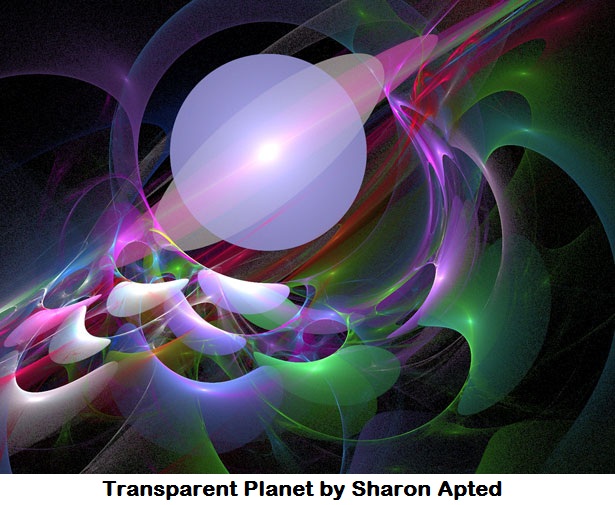
transparent-planetAuthors call this ‘world-building’ and they sometimes use the term ‘world’ in a different sense than the term ‘planet.’  In fiction, the world is not just the physical planet, but its inhabitants, their culture, and their environment too.

In most fiction, it’s not necessary to build a world, since the authors use the present-day (or historical) world we already inhabit.  They can assume readers are familiar with Planet Earth.  Such authors are free to focus on key aspects of Earth that are relevant to their story, to paint a biased picture of our world as seen by the author or one (or more) characters.

But in fantasy fiction or science fiction, it’s often interesting and fun to imagine and create very different worlds from Earth, or a very changed Earth.

Memorable, classic, examples of world-building include (1) Middle Earth from J.R.R. Tolkien’s books including The Hobbit and The Lord of the Rings, (2) the planet Arrakis from Frank Herbert’s novel Dune and its sequels, and (3) the strangely-shaped structure of Larry Niven’s novel Ringworld.

If you set out to build a world for your fiction story, what things might you consider?  A partial list includes the particular laws of physics, the solar system, the planet’s size and gravity, configuration of solids and liquids internally and on the surface, the atmosphere, geography, climate, plants, animals, and sentient creatures.  If your world has sentient creatures, then you could consider such things as cultures, languages, religion, art, education, economics, government, law, traditions, taboos, and technology.

Although Wikipedia has an interesting article on World-building, there are two other sites that I found more beneficial:  this one, and this one.  The latter site is run by Melanie Simet, who has come up with four cardinal rules of world-building that I really like, starting with zero:

0.  Be Original.

1.  Don’t distract your reader.

2.  Make your world coherent.

3.  Know at least one level of detail deeper than you need to.

She explains these in more depth on her website, so I won’t repeat those details here.  I would like to emphasize Rule 1, though.  It can be a temptation to get so involved with world-building that you forget it’s just a setting.  Stories are about characters dealing with problems, so don’t give your readers a documentary.

I’m sure this world-building is starting to sound like an awful lot of work, when all you set out to do was write a story.  It can be involved, but it needn’t consume you if you keep Simet’s cardinal rules in mind as you go.  If you write short stories, like me, you don’t have as much need for comprehensive world-building as a novelist would, unless you’re planning a long series of stories set on the same world.

That’s a glimpse at the basics of world-building.  Have fun.  Make your world an interesting one to read about.  Enjoy your taste of God-like power.  If this blog entry has inspired you, and you end up selling your story set in a fascinating new world, please let me know.  Your world could well be visited by—

                                                       Poseidon’s Scribe
February 24, 2013Permalink

Being Poseidon’s Scribe

Many fans have noticed the headline of my website:  “Poseidon’s Scribe—Advice for beginning scribblers, straight from Olympus.”  Questions have been pouring in about that, and it’s time I answered them.

Are you really Poseidon’s Scribe?  Yes.  It’s not the sort of thing you’d make up, or dare to impersonate.

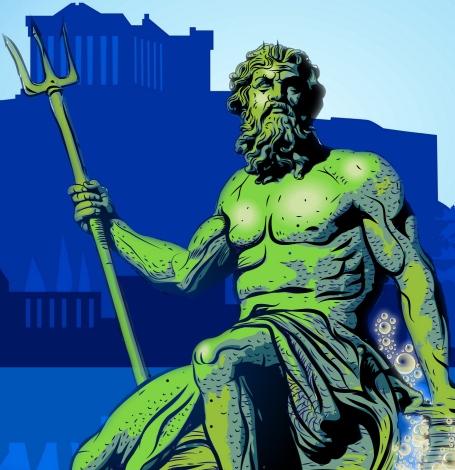
PoseidonI thought Poseidon was a myth.  Does he really exist?  Oh, yes.  God of the Sea, Earth-Shaker, Tamer of Horses.  He exists, all right.  And he gets rather upset when some mortals think him a myth, so I’d believe in him if I were you, especially if you’re going near water.

The Romans called him Neptune; does he prefer to go by Poseidon?  He’ll answer to either name, but I think deep down he prefers the one with more syllables.

Why does he need a scribe?  I never really thought to ask him.  The twelve gods and goddesses in the pantheon each have one, probably because they want their exploits preserved for posterity, but can’t be bothered to write for themselves.

What sort of things does he have you write about?  Oh, you know.  On this day, he created an island.  On that day, he got angry at some sailors who worshiped him insufficiently, so he sent a storm.  Made whirlpools, created sea-monsters, went to New Orleans in mortal form to have a good time at Mardi Gras.  That sort of thing.

What is Poseidon like to work for?  Officially? A great guy, a wonderful boss.  (But the stuff I could tell you…!)

How did you get the job?  Saw the ad, sent my resume, sat for an interview.  Pretty much the same as any job.  Well, except for being teleported to Olympus for the interview.  He looked over samples of my writing, and must have liked them.

What does the job pay?  Poseidon didn’t really get the whole ‘salary’ thing at first, so I had to be insistent.  Then he wanted to pay me in gold, with a morsel of ambrosia and a half cup of nectar a month.  I finally introduced him to direct deposit.  Basically the salary isn’t stellar; it’s about what a Grecian earns.

What are your work hours?  Irregular, to say the least.  At any time of day, Poseidon can pop in and demand I write some account of him making a sea spout to terrorize people, or whipping up a squall for fun.  After the first month, I got the hang of the self-glorifying language he preferred, so it’s a rare week when I need to work more than forty hours.  That leaves time for my hobby, writing fiction.  I’m just glad I’m not Hermes scribe; that poor guy has to write fast.

Where is your office?  Can you work from home?  I do work at home, actually, though on some occasions the sea-god teleports me to some ocean or other to see an event (or its aftermath) myself so I can describe it as an actual witness.

Do you get benefits?  No.  Although I keep telling Poseidon it’s a full-time job and I’m entitled to benefits, he’s an immortal and considers me a temp.

Can Poseidon fire you?  Or worse?  In theory, yes.  There was a period, a few centuries ago when he would turn his scribes into goats or banish them to Hades if they wrote poor accounts.  But that led to a shortage of mortal volunteers, so now there’s a process he has to follow.  No changing into any sort of animal without thirty days advance notice, arbitration hearings, full documentation of deficiencies, access to a lawyer, etc.  I think my job’s pretty safe.

How do I get a job like that?  Well, there are only so many gods, and they like to hire young scribes who will serve for a full mortal career, so positions don’t open that often.  If I had to guess, I’d say Hephaestus’ scribe would be next to retire, maybe in fifteen years or so.  If you’re into writing about fire, metalworking, masonry, and sculpture, that could be the job for you!

There you have it.  If you think of more questions, just leave a comment or click on Contact in my menu above to send an e-mail to—

                                                           Poseidon’s Scribe

February 17, 2013Permalink

Details,Details…

When I said I’d blog about choosing details wisely in writing fiction, I meant it; I just didn’t say how soon I’d get around to it!  Writers often have to describe scenes, characters, or objects in their stories.  Which details do they choose to mention, and why?

First let’s examine some of the things writers try to accomplish in their descriptions:

  • First and foremost, create an image in the reader’s mind
  • Convey the mood and theme of the story
  • Show the attitude, personality, and mood of the point-of-view character
  • Foreshadow a later event
  • Illustrate connections to, or separations from, other scenes, characters, or objects in the story

That seems like a lot to accomplish, a lot of baggage to weigh down a few words.  Partly for that reason, in books written in the Nineteenth Century and earlier, descriptions were long and tedious.  Writers weren’t as selective about details; they threw them all in.  Today’s readers won’t stand for that, so as a modern writer you’ll have to keep your descriptions brief.

Say you’re writing about something or someone and you want to convey the image to the reader’s mind.  How do you choose the details?  Here are some guidelines:

1.  Three is a magic number, as far as the number of details to pick.  Don’t stray too far from it either way.

2.  Specific details beat general ones every time.

3.  Nouns and verbs are better than adjectives, and adjectives are better than adverbs.

4.  Consider using a mind map to mentally play with all the details you can think of, then select the few that best serve your purposes.

5.  You don’t have to gather all the details together in one place, in one solid paragraph.  You can sprinkle some of them around later in the scene; that helps break up the narration and keeps the image fresh in the reader’s mind.

Here’s an exercise you can do to improve your skills in selecting details for your descriptions.  Pick something to describe–the scene out your window, a movie or TV character, a household object.  Now create a mind map filled with key words about your chosen thing.  Next write two description paragraphs, one in a happy mood and one in a sad mood.  Write two more paragraphs, each as if narrated by characters with opposite personalities.  Write another one that contrasts your chosen thing with some other.  Just as no two witnesses describe a traffic accident the same way, using the same details, there are innumerable ways to describe anything.

Let’s analyze how George Orwell described the scene outside a character’s window at the beginning of his novel, 1984.

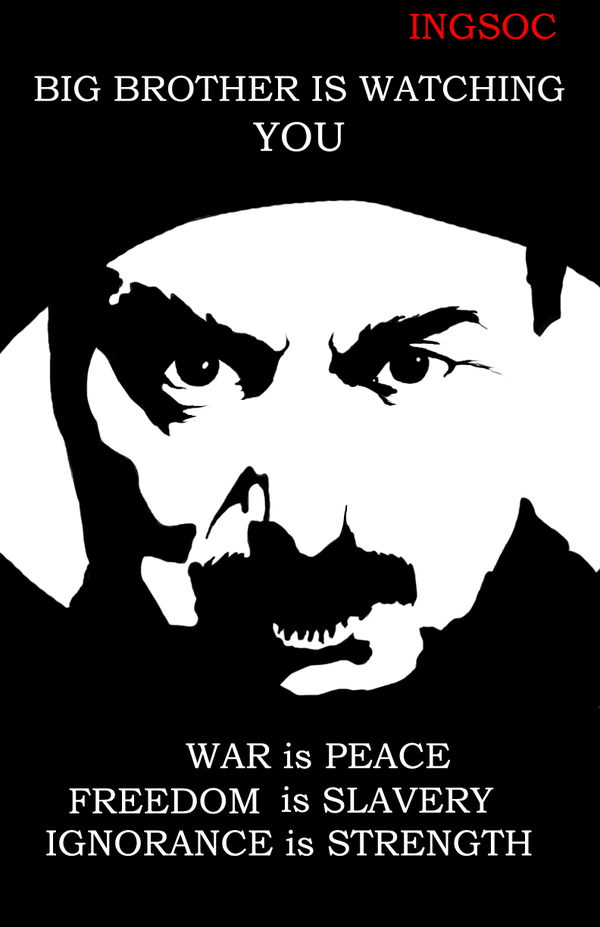
Outside, even through the shut window-pane, the world looked cold. Down in the street little eddies of wind were whirling dust and torn paper into spirals, and though the sun was shining and the sky a harsh blue, big_brother_is_watching_you_by_teabladezz-d20dgysthere seemed to be no colour in anything, except the posters that were plastered everywhere. The black moustachio’d face gazed down from every commanding corner. There was one on the house-front immediately opposite. BIG BROTHER IS WATCHING YOU, the caption said, while the dark eyes looked deep into Winston’s own. Down at street level another poster, torn at one corner, flapped fitfully in the wind, alternately covering and uncovering the single word INGSOC. In the far distance a helicopter skimmed down between the roofs…

In addition to giving a concrete image, this certainly conveys mood and theme, and also foreshadows.   I like the contrast between nature (shining sun, blue sky) and man-made items (torn paper, poster flapping, commanding corners).  Well-chosen details.

More practice will increase your skills at picking details to include.  Leave me a detailed comment if you got something out of this blog post.  Knowing the devil is in the details, I’m—

                                                            Poseidon’s Scribe

February 9, 2013Permalink

Donkey and Elephant Stories

donkey elephantIs it wise for a fiction writer to inject personal political beliefs into his or her stories?  Or is the question moot; is all fiction in some sense political?  Let us roam with elephants and donkeys.

Arguably, both politics and good fiction are about ideas.  The ideas explored by politics surround questions like:  How shall people be governed?  What is the role of government?  What is the nature of power? Can we arrange governing systems for maximum benefit to all?

Fiction also deals with ideas, though these are not limited to political ideas.  Often they boil down to basic questions of philosophy:  What is beauty?  What is truth?  What is justice?  What happens after death?

But my real question is whether writers should make their political leanings obvious in their stories.  Some authors certainly do.  L. Neil Smith is very libertarian.  Robert Heinlein, too, leaned libertarian.   Isaac Asimov leaned to the liberal side, though not blatantly so.  Ayn Rand was passionate about her political philosophy, which she felt was new and different enough to have its own name—Objectivism.

In my view, there are dangers in making your political views obvious in your fiction.  For one thing, you can turn off at least half of your potential audience.  Those who disagree with your political stance won’t read more than one of your books.

If your intent is to persuade, consider this.  Have you ever heard anyone say something like this after a political argument: “Thank you.  I’ve come around to your side, based on the strength of your logic.  I see now that I’ve been voting the wrong way my whole life.  Thanks again, for helping me see the light.”  Almost nobody changes his party affiliations that easily.

Another danger in overt political fiction is predictability, and therefore dullness.  When the good guys believe as the writer does, and the bad guys are of the other political party, the reader knows who will win.  The reader can feel like she’s being preached to.  Clever and rare is the writer who can represent the opposite side in a fair and convincing way.

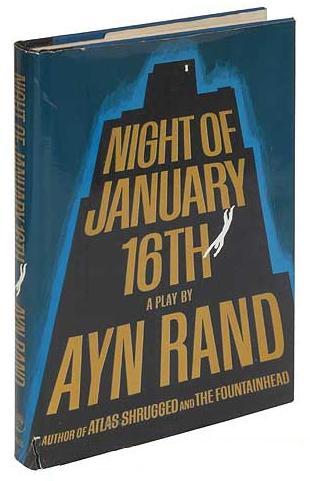
NightOfJanuary16thIt’s my view that Ayn Rand achieved this in her stage play “Night of January 16th.” The play occurs, for the most part, in a courtroom.  Near the end, the judge dismisses the jury to their room to render a decision. At that point it’s announced to the audience that they are the jury and will be allowed to vote guilty or not guilty.  (Either that or twelve audience members are selected at the start to play the jury.)  A vote of not guilty represents a tilt toward Objectivism, and a vote of guilty means the opposite.  There are two endings to the play, and the actors perform the one voted on by the “jury.”  I understand that, in all the plays performances since it premiered in 1935, the ‘guilty’ and ‘not guilty’ outcomes occur about equally often.

My recommendation, if you’re set on writing overt political fiction, is to (1) do so in a subtle, metaphorical way without preaching to your readers, (2) poke fun at or lambaste all politicians equally, focusing on the separation between politicians and the rest of us, or (3) be as even-handed as possible, with bad guys and good guys on both sides.

What are your thoughts?  No, not about the last election—I mean about the prudence of putting politics in your fiction!  Leave a nonpartisan comment and let me know.  Steering well clear of donkeys and elephants, I’m—

                                                   Poseidon’s Scribe

February 3, 2013Permalink

It’s Written All Over Your Face

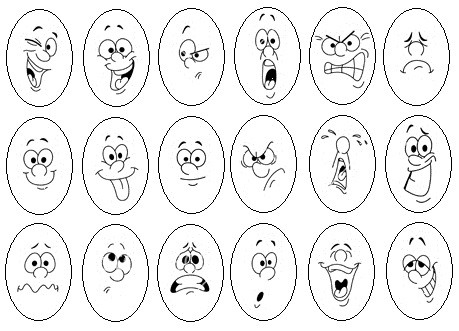
facial-expressions-It’s important for a fiction writer to learn how to describe human facial expressions.  A person’s face is the most communicative body area, and often it reveals a character’s feelings.  Amazing, isn’t it, how many things we can make our faces do!  There may be as many facial aspects as there are possible mental states.
Small wonder there are so many English verbs devoted to describing a person’s mien:  blanch, blush, grimace, grin, smirk, etc.  It surprised me to find the Wikipedia article on Facial Expressions only listed six “classically defined facial expressions:  Anger, Disgust, Fear, Joy, Sadness, and Surprise.  However, the article goes on to list “other examples of feelings that can be expressed” including:  Concentration, Contempt, Desire, Empathy, Frustration, and Love.  Maybe the list isn’t infinitely long, but it doesn’t end at six.

Writers aren’t restricted to single-word descriptions of human facial expressions, of course.  Sometimes it’s useful to describe what’s happening on a character’s face and trust the reader to recognize the expression and deduce the character’s feelings.  In Clement Clarke Moore’s poem known popularly as “The Night Before Christmas,” we encounter the line, “His droll little mouth was drawn up like a bow,” and we know St. Nicholas is smiling, and therefore is happy.  Although you could break down all facial expressions and describe them in detail in your story, that would get tedious, so be sparing in your use of that technique.

Of course you shouldn’t restrict yourself to describing facial expressions alone.  Your characters adopt bodily poses, make hand gestures and other movements.  These can also express mood, sometimes more accurately than the face does when a character is trying to hide his or her feelings.

Returning to my subject of faces, I should also mention that characters (like real people) can have, well, characteristic or habitual facial expressions.  These might be due to an almost perpetual non-neutral mood, or some nervous habit.  Giving a character one of these habitual expressions can help readers become familiar with the character.

While doing research for this blog entry, I came across some great references for writers.

  • Descriptive Faces–A Resource for Writersis a blog set up by writer Charity Bradford where she discusses facial expressions in detail.
  • The Nonverbal Dictionary contains a list of at least 250 nonverbal expressions, each linked to detailed discussions.
  • The Bookshelf Muse website offers a book called The Emotion Thesaurus by Angela Ackerman, and Becca Puglisi.  Although I haven’t read the book, some sample entries from it are available on the site.
  • The MacMillan Dictionary has a website listing words for describing facial expressions, and their meanings.

Was this helpful?  What are your favorite ways to describe character’s facial expressions?  Can you think of an example where a writer did it particularly well?  Feel free to send me a comment on the subject.  Since this blog entry is in the written medium, you can’t see what’s written all over the face of—

                                                          Poseidon’s Scribe

January 27, 2013Permalink

Thanks to My Fans

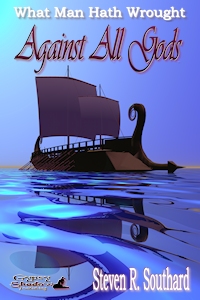
TheSixHundredDollarMan5AgainstAllGods3fI just wanted to thank all of you who voted for my stories in the Critters Workshop Predators & Editors Readers Poll.  The results for 2012 are in, and my story “The Six Hundred Dollar Man”  came in 2nd out of 8 steampunk short stories.  My story “Against All Gods” was tied for 4th in a list of 38 romance short stories.  I feel so much gratitude for the amazing fans of—

                                                      Poseidon’s Scribe

January 21, 2013Permalink

Promoting Your Short Story with a Video

Should you use videos to promote your short stories?  Do they help sales?

promo videoBack a year ago when I came up with this idea for a blog post topic, I figured I would have made a few short story promotional videos by this time.  That didn’t happen, but lack of experience has never prevented me from having opinions.  (In fact sometimes I have more to say about things I know less about!)
Some writers have developed videos to encourage sales of their short stories, though the practice is more common for novels.  Many people today watch videos online, sometimes while surfing on a topic of interest, and it’s possible they could run across the video about your story, like it, and buy the story when they otherwise wouldn’t have known about it.  This is especially true if the video gets lots of hits.

If you decide to make a promo video, how should you go about it?  First, let’s list some basic principles:

  • The point of your video is to influence people to buy your story.
  • To do that, the video has to convey what your story is about, what readers can expect when they read the story—the genre, setting, conflict, and protagonist.
  • The video must be appealing and enticing.  Don’t ever bore the viewer.  Keep image changes frequent, and don’t make the video too long.

There are various software packages available for making videos and prices range quite a bit based on features and user-friendliness.  The two main elements of any video are the visual portion and the aural portion and the software will have the ability to deal with both.

The visual portion usually consists of some combination of moving images (video), still images, and text.  For videos and still images you can shoot your own, use free ones that are in the public domain, or seek permission to use those that are owned by someone else.  If you do use still images, I suggest using zoom in or out, or some other way to keep the picture changing to avoid viewer boredom.  Any text you use should be in a big, readable font with good contrast against its background.

The audio part of your clip can consist of music, voice, or both.  Music can really help make the video appealing.  If you have musical talent, you can create and tape your own tunes to use.  If you have musical friends who are agreeable, see if they’ll accommodate you.  Otherwise you’ll have to get music that is in the public domain, or seek permission and pay for the use of owned music.  Make sure the images in your video shift in sequence with the music.  If you decide to have a voice-over, make sure the narrator enunciates and doesn’t speak too fast.

Is there value in making such videos?  Do they increase sales?  I can’t really answer that, due to my lack of experience.  However, I do know that time spent making promo videos is time not spent writing your next story.  Also, I don’t see these videos very often on author websites.  In various blogs about promoting stories, I don’t see the making of videos highlighted as a sure-fire marketing strategy.

What do you think of videos for the promotion of short stories?  Ever made one?  If so, how did it work for you?  Leave a comment and let me know.  Or put your comment in the form of a video.  Still waiting to go viral on YouTube, I’m—

                                                   Poseidon’s Scribe


January 20, 2013Permalink

You Might Be a Writer If…

Jeff FoxworthyDo you have what it takes to be a writer?  If you did, would you know you did?  Sometimes it’s difficult to tell.  To make it easy for you, I’ve developed a handy test along the lines of Jeff Foxworthy’s ‘Redneck Test.’  See how many of these apply to you.
You might be a writer if:

  1. You’ve ever jotted down a plot idea by interrupting a shower.
  2. You celebrate the birthdays of William Strunk and E.B. White.
  3. You’ve day-dreamed an entire talk-show interview about your best-selling novel.
  4. You have a favorite intransitive verb.
  5. You’ve cried over the loss of your favorite pen.
  6. You’ve ever invoked Hemingway to defend a drunken binge.
  7. Your muse is as real to you as your spouse, and that seems to bother your spouse.
  8. You have checked the Thesaurus…for mistakes.
  9. You’ve ever sneaked in extra writing time while at your day job, in the bathroom.
  10. Your computer keyboard cringes when you come in the room.
  11. You’ve ever said, “Honest, Officer, I was doing research.”
  12. Your few remaining friends groan when they hear you say, “Want to hear about my latest story?”
  13. You’ve called a company to rant about grammatical mistakes in their advertisements.
  14. You read the dictionary for pleasure, and then re-read it.
  15. The last three months of your wall calendar read October, Nanowrimo, December.
  16. Your study is wallpapered with rejection letters.
  17. Microsoft Word software development engineers call you for ideas.
  18. Your three children have told you they hate their names.  All three of them, Shakespeare, Dickens, and Dostoevsky.

Lastly, you might be a writer if:

19. Your spouse has asked when you’re coming to bed, and you’ve replied “as soon as I finish writing this intimate bedroom scene.”  An hour later, your characters collapse in satisfied weariness, but your spouse is no longer in the mood.

For those of you out there who are already authors, feel free to comment and add any other items to my test.  If you weren’t sure if you’re a writer, let me know if you found the test useful, or at least interesting.  As always I strive to be of help to beginning, struggling writers.  It’s all part of the free service provided by—

                                                             Poseidon’s Scribe


January 13, 2013Permalink

Write like Leonardo da Vinci?

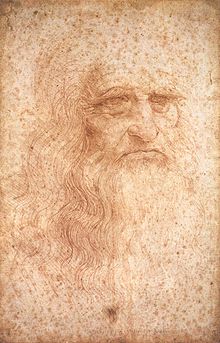
Leonardo da VinciTrue, Leonardo da Vinci was an anatomist, architect, botanist, cartographer, engineer, geologist, inventor, mathematician, musician, painter, scientist, and sculptor.  Arguably he was the greatest genius of all time.  But…he never wrote fiction.
Still, it may be possible to adapt da Vinci’s methods to the task of writing great fiction.  “But wait, Mr. Poseidon’s Scribe,” (I hear you objecting), “Leonardo was a genius.  I wasn’t born a genius.”

It’s been argued before that genius is some combination of luck and time spent at an activity.  You can’t do much about the luck, but you can spend time learning, practicing, honing your skills.  If you’re going to spend that time, why not ask how Leonardo spent his time?

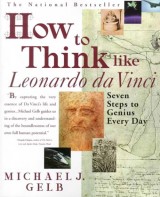
how-to-think-like-leonardo-da-vinci-160x197In his book How to Think Like Leonardo da Vinci, Michael J. Gelb has already researched the methods Leonardo used and distilled them into principles.  You need to get this book and read it to understand the seven principles.  As you read the book, you’ll be able to extrapolate how each one applies to writing fiction.  Here are those seven principles:

  • Curiosità:  An insatiably curious approach to life and an unrelenting quest for continuous learning
  • Dimonstrazione:  A commitment to test knowledge through experience, persistence, and a willingness to learn from mistakes
  • Sensazione: The continual refinement of the senses, especially sight, as the means to enliven experience
  • Sfumato:  A willingness to embrace ambiguity, paradox, and uncertainty
  • Arte/Scienza:  The development of the balance between science and art, logic and imagination; “whole-brain” thinking.
  • Corporalita:  The cultivation of grace, ambidexterity, fitness, and poise.
  • Connessione:  A recognition of, and appreciation for, the interconnectedness of all things and phenomena; systems thinking

Just reading through the list should remind you of what you know about da Vinci. Leonardo never wrote down these principles himself; he was far too disorganized for that, though he intended to get around to it someday.  Michael Gelb developed the principles from what is known of da Vinci’s life.

Even the bare descriptions of each principle should suggest to you how each one applies to writing fiction.  Maybe you’re scratching your head at the Corporalita principle, wondering how that one relates to a sedentary activity like writing.  It does, trust me.  I will devote seven future blog posts to a discussion of each principle, and how you can use each one to improve your fiction writing.

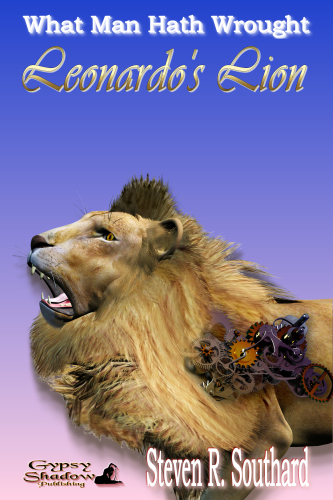
LeonardosLion5At this point, I can’t resist a personal plug.  Leonardo da Vinci is such a fascinating historical figure, I wrote a story about the mechanical automata lion he constructed for the King of France.  Had that been all da Vinci did, it would have been achievement enough, far beyond the norm of the day, but it’s barely a footnote in any list of his accomplishments.  My story, “Leonardo’s Lion,” deals with the question of what eventually happened to that clockwork marvel.
Right after you buy my book, buy How to Think Like Leonardo da Vinci, and get started writing with the skill of your inner genius.  When you become famous and people ask how you learned to write so well, be sure to tell them it was all due to a blog post written by—

                                                 Poseidon’s Scribe

Giving and Receiving…Critiques

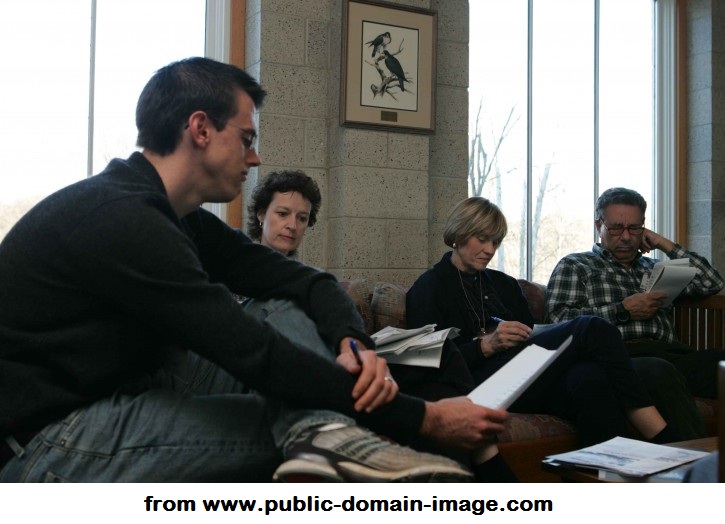
‘Tis the season for giving and receiving, so I thought I’d discuss critiques of fiction manuscripts.  Last time I did so, I said I’d let you know how to give and receive critiques.  My critique group meeting 2experience is based solely on twenty years of being in small, amateur, face-to-face critique groups; not writing workshops, classes, or online critique groups; so the following advice is tuned to that sort of critique.

First of all, to give the critique, keep the following points in mind:

  • Read the submitted manuscript straight through once, and just note where you were “thrown out of the story” for some reason.  Jot down why and come back to those points later.
  • Re-read the manuscript again. You could mark some of the grammar or spelling problems, but don’t concentrate on those.  The author wants you to find the bigger stuff.
  • Where there are stand-out positives (“Eyeball kicks” in TCL parlance) note those and praise the author.  The word critique should not have solely negative connotations.  A positive comment from you could keep the author from later deleting a really good description, metaphor, or turn of phrase.
  • Be clear and specific in the comments you write; avoid ambiguity.
  • Look for the following story elements and comment if they’re not present or they’re weak:

1.  Strong opening or hook

2.  Compelling, multi-dimensional, non-stereotypical protagonist with human flaws

3.  A problem or conflict for the protagonist to resolve

4.  Worthy secondary characters, different from the protagonist, who do not steal the show

5.  Vivid settings, not overly described

6.  Consistent and appropriate point of view

7.  Appropriate dialogue that moves the plot and breaks up narration

8.  Narration that shows and doesn’t tell.

9.  A plot that builds in a logical way, events stemming from actions that stem from understandable motivations

10.  A story structure complete with Aristotle’s Prostasis, Epitasis, and Catastrophe (beginning, middle, and end)

11.  Appeals to all five senses

12.  Active sentence structure, using passive only when appropriate

13.  Appropriate symbolism, metaphors, similes

14.  A building of tension as the protagonist’s situation worsens, followed by brief relaxing of tension before building again

15.  An appropriate resolution of the conflict, without deus ex machina, resulting from the striving of the protagonist, and indicative of a change in the protagonist

  • If your group shares comments verbally, do so in a helpful, humble way.

You think all that sounds pretty difficult?  Ha!  It’s much harder to receive a critique.  When doing so, here are the considerations:

  • Submit your work early enough to allow sufficient time for thorough critiques.  Be considerate of your group members’ time.
  • While being critiqued, sit there and take it.  No comments.  No defensiveness.  Just listen to the honest comments of a person who not only represents many potential readers, but who wants you to get published.

So, when it comes to critiques, is it better to give than to receive?  In contrast to most gifts, it’s harder to receive them, but it’s still a toss-up which is better overall.  But perhaps both are just a bit easier for you to deal with now, thanks to this post by—

                                                      Poseidon’s Scribe

December 30, 2012Permalink