½ Price Sale on Many of My Books!

You’re looking for some great beach reads for your Kindle this summer. You keep hearing about that author—what’s his name?—who everyone is talking about. That’s right, it’s Steven R. Southard, the one who calls himself Poseidon’s Scribe.

You’ve been meaning to read my books, but you keep thinking they’re so darned expensive. Well, you’re in luck. Your wait is over.

For the month of July only, Smashwords is offering many of my books (the ones in the What Man Hath Wrought series) for ½ price! That’s right, get two for the price of one.

Here’s how to take advantage of these great prices. When you click on any book at my Smashwords site, a message will appear telling you to use a specific code at checkout to get the discount.

Here’s the list of stories and their prices during July:

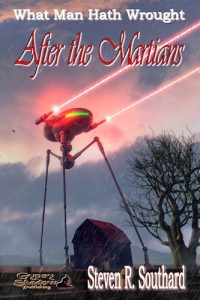
AftertheMartians72dAfter the Martians
$2.00


RippersRing5Ripper’s Ring
$2.00


TimesDeformedHand3fTime’s Deformèd Hand
$2.00


TheCometeers3fThe Cometeers
$2.00


ToBeFirstWheels4To Be First and Wheels of Heaven
$2.00


RallyingCry3fRallying Cry and Last Vessel of Atlantis
$2.00


ATaleMoreTrue3fA Tale More True
$2.00


TheSixHundredDollarMan72dpi-1The Six Hundred Dollar Man
$1.50


ASteampunkCarol3fA Steampunk Carol
$1.50


AgainstAllGods4Against All Gods
$2.00


LeonardosLion4Leonardo’s Lion
$2.00


AlexandersOdyssey3fAlexander’s Odyssey
$2.00


WithinVictorianMists4Within Victorian Mists
$1.50


WindSphereShip4The Wind-Sphere Ship
$1.50


Better take advantage of this limited time offer before Smashwords wakes up and realizes what they’ve done. Heck, you could buy all 14 books for a cool $26. How’s that for value?

Remember, go to Smashwords and grab these deals while they last. Tell ‘em you were sent by—

Poseidon’s Scribe

My Story Inspires More Antikythera Mechanism Research

These scientists and anthropologists must have read my story. Is there any other explanation?

NAMA_Machine_d'Anticythère_1
Antikythera Mechanism (from Wikipedia)

ToBeFirstWheels3fLet’s review the timeline. My story “Wheels of Heaven” was published two years ago, in June 2014. “Wheels” tells the story of the Antikythera Mechanism, that ancient Greek geared machine found in the seabed wreck of a Roman ship. Then in September of that year scientists mounted a diving expedition to see if they could find more pieces of the device. I blogged about that expedition.

Although the expedition did not uncover any additional gears, there’s been a new development, reported last week here, here, and here. With Computational Tomography (CT) imaging and Polynomial Texture Mapping, or PTM, they’ve discovered the Antikythera machine came with written instructions, a guide to its operation, an owner’s manual etched on its surfaces.

The newly translated 3500 characters of text refer to parts of the mechanism that weren’t recovered, such as a display of spheres representing the Sun and known planets. The text suggests the device wasn’t an astronomical research tool, nor an astrological prediction tool. Rather it was a teaching aid, an astronomy textbook of sorts.

Well, that would have been useful to know when I was writing “Wheels of Heaven.” In my tale, the machine has no display spheres, and no engraved text to read. The character in my story, Drusus Praesentius Viator, is an astrologer, and does use the machine to make horoscopic predictions. I based my story on the best understanding of the Antikythera Mechanism at the time.

Ah, well, science marches on, I suppose. Science Fiction writers are used to new discoveries rendering their stories obsolete. That phenomenon doesn’t happen as often to writers of alternate history, but it’s not unknown.

Of course, “Wheels of Heaven” is not obsolete. Scientists don’t know for sure that the ancients didn’t use the machine for astrological predictions. It would be a simple matter for me to update my story to include the text and display spheres.

AntikytheraMechanismSchematic-Freeth12
Gear Arrangement in the Antikythera Mechanism (from Wikipedia)

Further, I’m not accusing scientists of deliberately trying to undermine my story. They may well be motivated to find the truth about this mysterious artifact. After all, no one credited the Ancient Greeks with having any understanding of gears before finding this machine containing at least thirty meshing gears. Not just simple gears, either, but some are complex epicyclic gears.

Still, I’d like to think some of the anthropologists might have read, and been inspired by, “Wheels of Heaven.” Could my story have sparked some of the research? Who knows?

Maybe you’re a scientist who’s curious about ancient technology. Or maybe you just enjoy reading good stories. Either way, perhaps you, too, could be inspired by reading the works of—

Poseidon’s Scribe

When Characters Wrest Control

Sometimes, while playing God, writers get surprised. Occasionally, while we’re creating our little worlds and our little people to inhabit them, one of those people doesn’t stay in the intended space.

Wresting ControlToday I’ll consider the topic of characters getting too big for their britches, and assuming a bigger (or different) role than the one planned for them. When this happens in your writing, should you take it as a good thing or a bad thing?

This has happened to me a few times. In my story “After the Martians,” the character Frank Robinson is a war AftertheMartians72dphotographer. He’s meant to be a secondary character, pursuing a parallel plot line that intersects the protagonist’s life near the end in a meaningful way. However, Frank became a little more compelling than intended and darn near overshadowed the protagonist. I kept most of his exploits in, so the reader cares what happens to him and follows his plot line with interest.

RippersRing72dpiIn “Ripper’s Ring,” Diogenes is a Bassett hound owned by a Scotland Yard detective. You know how some movie actors dread performing with animals because the animal might steal the scene? That nearly happened with droopy old Diogenes, whose seeming lack of interest in following a scent made him an endearing comic character in an otherwise dark and philosophical story. I kept him that way.

ATaleMoreTrue72dpiThere’s a French servant named Fidèle in my story “A Tale More True” who almost ended up having a more compelling personality than that of his master, the protagonist. Once again, he was a secondary character meant to provide comic relief and to showcase the protagonist. However, he tended to get the best lines, and to be the one suggesting the right course of action. I kept him as I’d written him, since the story is a voyage of learning and discovery for his master, and Fidèle is a necessary part of that.

WithinVictorianMists9Another servant, this time a plump Irish one named Daegan MacSwyny, nearly took over my story “Within Victorian Mists.” I’d meant this secondary character to be funny and unintelligent, but he ended up being secretly wise in almost magical ways. As with Fidèle, he gently prodded his master, the protagonist, toward the right answer at every step, though it’s never clear whether that’s by intention or accident. MacSwyny and all the Victorian Mists characters appeared again in “A Steampunk Carol” but there the servant kept to his secondary status.

In each case, a secondary character threatened to take over the story by force of personality and by being more endearing than the protagonist. That’s just the way my muse rolls.

But not only mine. Other writers have blogged about this phenomenon. Mae Clair lets it happen, for the most part, and later writes separate stories featuring such characters.

Melanie Spiller had written such a good scene about the death of a character whom she hadn’t meant to kill off, that she kept the scene in. She’d once been told a character wresting control of the story is a sign you’ve created a believable character.

When a character takes on a bigger role, you have choices. You can:

  1. Let that character go in this new direction, at least to some extent.
  2. Rewrite the story to keep the character as intended.
  3. Delete the character.

So far, I’ve always chosen option 1. Other writers choose either 1 or 2. It would be gut wrenching to opt for 3, so I suspect that’s rarely done.

When you play God by writing fiction, do you have characters wresting control every now and then? If so, what do you do? Or do you just like that word ‘wrest?’ Rise above your role as a blog post reader, and leave a comment for—

Poseidon’s Scribe

Making an Ottoman Spacecraft

Yes, the title of this post is correct, not a misprint. And, yes, I’m aware the Ottoman Empire did not build any spacecraft. At least, not in our timeline…

ToBeFirstWheels4I’ve been blogging about some 3D-printed models made by a close acquaintance that depict gadgets and vehicles from my stories. Today I’m featuring the Ottoman spacecraft from my tale “To Be First,” which is combined in one book with another of my stories, “Wheels of Heaven.”

IMG_0104The model she built is the way I imagined it while writing. I pictured a variant of the Apollo spacecraft, but with a Command Module shaped something like the dome of an Ottoman mosque.

For inspiration, she used this model, designed by Dan Marohl, who is known as sterling500. For mine, she deleted some harder-to-print details like retrorockets on the Service Module, and substituted the mosque-shaped Command Module, with a very impressive spire.

IMG_0105When painting the model, I added some writing on it. I would have loved to write “Ottoman Space Agency” in Ottoman Turkish, but I settled for what I could easily find—the motto of the Ottoman Empire, pronounced “Devlet-i Ebed-müddet” or, ironically, “The Eternal State.”

IMG_0107“To Be First” takes place in an alternate historical timeline where the legendary exploits of Lagâri Hasan Çelebi really happened. That is, a man actually took flight in a rocket-powered chair in the year 1633. (I found out about this legend watching an episode of the TV show Mythbusters.)

IMG_0109In the backstory of my tale, that event did not fade into obscurity, but rather prompted the rapid development of rocketry by the Ottomans. Three hundred years later, when my story takes place, the Empire is a vast—and advanced—superpower. It’s just 1933, and the two heroes of my story are on their way back from the first manned mission to the Moon.

IMG_0108Before re-entering Earth’s orbit, they encounter a weird ionic storm, which sends them to an alternate universe…ours. The story involves these two Ottoman lunanauts dealing with a comparatively backward Earth in the grip of a worldwide economic depression. On this Earth, the Ottoman Empire is gone and rocketry is in its infancy.

“To Be First” is really about the two rocket-men themselves, as Yazid learns from Kemal about the human yearning to explore.

I’m very pleased with the model, and would love to read what you think about it, when you leave a comment for—

Poseidon’s Scribe

Making Leonardo’s Lion

An artistic acquaintance of mine has been making 3D printed models of vehicles and gadgets from my stories. Today I’ll introduce another one she made, the mechanical clockwork lion from my book “Leonardo’s Lion.”LeonardosLion5

It’s a modification of the one available on Thingiverse here, designed by YahooJapan. She added a cutout section showing gears inside. I painted the model myself.Lion 1

According to some accounts, Leonardo da Vinci made a working, mechanical lion. It was toward the end of his life when he was living in France. Records aren’t clear, but the newly crowned King of France, Francois I, met Pope Leo X in Bologna on December 19, 1515. Either the lion was presented at that event, or was commissioned then and given to the king at a party two years later.

Lion 2The lion could walk, move its head from side to side, and open and shut its jaws. It then sat on its haunches; its chest cavity opened, and a bouquet of lilies fell out. The lion was the symbol of Pope Leo X and lilies symbolized France, so this mechanism represented the strong bond between the two.

Lion 3


In our modern world of automated gadgets, it’s difficult to imagine the effect such a lion would have at a party in the early 16th Century.

Lion 4I got to wondering what might have happened to that lion afterward. My story, “Leonardo’s Lion,” takes place some fifty years later. The lion stands forgotten in a storeroom, hidden among numerous other gifts presented to previous kings.

A ten-year-old boy named Chev comes upon the lion after escaping an orphanage. He’s able to get the automaton working, and is small enough to ride on its back. Inside the lion, he finds a message Leonardo had meant for King Francois I to discover, and a clue to a world-changing secret. Thus begins Chev’s ride on the lion’s back, through a country torn apart by warring religions.

In potential future improvements to this model, I’d love to have movable legs, a swaying head, and a seam for the chest cavity.

I welcome your thoughts about my model. Leave a comment on this post for—

Poseidon’s Scribe

Making the Queen of the Clouds

The advent of 3D printing has made it economical to design and make some of the gadgets, vehicles, and character figurines from readers’ favorite stories. I’ve been working with a 3D printing expert to make some objects from my own books.

WithinVictorianMists9Readers of this blog already know about the Ring of Gyges from my story “Ripper’s Ring,” and the Martian tripod fighting machine from “After the Martians.” Today, I’ll discuss the Queen of the Clouds airship from “Within Victorian Mists,” a model I first displayed publicly at BALTICON last week.

The model airship is the one available on Thingiverse.com here. It was designed by Arnold Patrick Martin, who goes by RealAbsurdity on Thingiverse.

I painted mine a cream color. I know the airship in the story is silver, but I wasn’t sure my silver paint would be light enough. I later realized I could have mixed silver with white to lighten the hue.

WVM3

“Within Victorian Mists” is steampunk, and airships are common in that genre, but the Queen of the Clouds is actually a small part of the story. WVM4The main gadget in the tale is the laser hologram invention of the male hero, Stanton Wardgrave, but that wouldn’t be much to look at. The airship makes an appearance near the end when the female lead, Josephine Boulton, is about to board it and leave Stanton forever.

WVM5The concept of clouds/steam/mists/vapor/etc. is a main metaphor and symbol in the story, so Queen of the Clouds is an apt airship name.

For this prototype, I selected a design available online. If I were a 3D Printing designer, there are a few things I’d change to make the model truer to the story, aside from the color discussed above. First, I’d make the whole hull slimmer. Second, the Queen is a steam-powered dirigible (I know, not practical, but it’s fiction) with smokestacks, so I’d add those. Third, I’d add more propellers, and each would have just two blades. Last, there should be three gondolas underneath, not just one.

Please let me know what you think of this model. Have any of my stories inspired you to make your own 3D printed objects? If so, send pictures of them to—

Poseidon’s Scribe

A Great Time at BALTICON 50

BALTICON50_banner_1The major science fiction and fantasy convention in Baltimore turned fifty this year, and the organizers went all out. With George R. R. Martin as the Guest of Honor, and some seventeen previous GoH being there as well, this was a star-studded event.

I’m told attendance more than doubled the usual number, and from the way folks crowded the Renaissance Baltimore Harborplace Hotel, I can believe it.

Nobody would describe this convention as a well-oiled machine that ran like clockwork. Still, what impressed me was the good attitude of the attendees. Most people accepted the chaos as a given; they went with the flow.

I shared a book-signing table with author Paul Cooley, an engaging and entertaining guy. One fan, a pregnant woman, asked him to sign a book she intended to give to “Jude.” When Paul asked who Jude was, she patted her bulge. He told me it was the first time he’d signed a book for someone who hadn’t been born yet.

KellyAHarmon at Balticon50
Kelly A. Harmon

I managed to grab a pic of fellow author Kelly A. Harmon during the Broad Universe rapid-fire reading session. She captivated the room while reading from her latest novel, A Blue Collar Proposition, third in her Charm City Darkness series.


At a later reading session, I had the pleasure to join authors Ming Diaz (left), Michelle Sonnier (second from right), and Goldeen Ogawa (far right). Ming is a natural storyteller, with a melodious voice that mesmerizes. Both Michelle and Goldeen read from unpublished manuscripts of theirs—sections from novels in progress. (I’m not brave enough to do that.) I read from “After the Martians.”

Reading at Balticon50 (2)
Ming Diaz, me, Michelle Sonnier, and Goldeen Ogawa
Balticon pic009
Goldeen Ogawa’s sketch inspired by “After the Martians”

Goldeen Ogawa served as our moderator and kept things lively and fun. She’s a graphic designer as well as a writer, and creates her own book covers. While Ming, Michelle, and I were reading our selections, Goldeen drew little sketches based on what she saw in her artist’s mind while we spoke. The sketch she drew for me is a great rendering of a Martian tripod fighting machine battling in a desolate landscape. Thanks, Goldeen!

After every convention, I come away charged up and full of story ideas. I get a vivid reminder of the devotion of science fiction and fantasy fans, their hunger for good stories, and their willingness to learn about undiscovered authors. BALTICON 50 will be long remembered by—

Poseidon’s Scribe

BALTICON 50 – My Schedule

I’ll be at BALTICON this weekend and hope to see you there. Here is my schedule:

BALTICON50_banner_1

Saturday May 28     1:30 PM         Autograph Session

I’ll be available to sign books, along with Paul Cooley and David Lee Summers

Location: Renaissance – PDR Table 1


Sunday May 29       7:00 PM         Reading

I’ll be reading from one of my stories, along with Ming Diaz, Goldeen Ogawa, and Michelle Sonnier

Location: Renaissance – St. George


Perhaps you’ve read one or more of my stories, or maybe just read my blog posts. You’ve got an intense (and understandable) curiosity about me, and are eager to meet me. Here’s your chance. Go to BALTICON this weekend.

Oh, I understand there will be other writers there as well. Folks like George R.R. Martin, Kim Stanley Robinson, Michael F. Flynn, Harry Turtledove, Larry Niven, Connie Willis, and Joe Haldeman.  You may have heard of them, too.

More importantly, you’ll be able to chat, and shake hands, with—

Poseidon’s Scribe

After the Martians – the Cast of Characters

Today I’ll introduce you to the four major characters in my new book, “After the Martians.” The alternate World War I of my story has brought them together in and near the Black Forest of Western Germany in 1917, some 16 years after the Martians’ failed attempt to conquer the Earth.

AftertheMartians72d

In order of their introduction in the story, let’s meet them.

  • Private Johnny Branch is seventeen, an American from Wyoming. The hero of my story, he’s enthusiastic about getting to fight in the war, and thrilled to be driving a Martian fighting machine, a tripod. He grew up listening to, and reading about, the Martian War. Like boys across the nation, he built rudimentary models of the fighting machines and waged little battles with toy tin soldiers, pretending to be Teddy Roosevelt in the Battle for Washington, D.C.
  • Second Lieutenant Henry Wagner is about twenty-three, and commands the fighting machine driven by Johnny. Their machine is part of Crazyhorse Troop, Tiger Squadron, Third Armored Cavalry Regiment. He’s from Norristown, Pennsylvania, near Philadelphia. He’s been in the war since the beginning and is now seasoned by battle, and quite skeptical about the war. He looks forward to the end of the war, when people can develop peaceful uses for Martian technology.
  • Frank Robertson is a photographer for “The American Magazine,” initially assigned to send back pictures to give the public a sense of the life of a doughboy. As the war has gone on and casualties have mounted, his editor tells him to snap some shots of American heroism and gallantry in battle, to keep up the patriotic spirit. However, it’s hard to get close to the action in a modern war, with Martian heat rays and poisonous black smoke.
  • Hilde Gottschall is an old German woman living in a wooden cabin on Feldberg Mountain. She lost her husband in the Martian War and her son in the Great War. After the death of her daughter-in-law, she lives alone with her infant grandson, Andreas Gottschall, whom she calls her Schätzchen (darling). She is cynical and angry about all wars.

In addition, there are a couple of minor characters with bit parts, but those four are the major ones. Each of the latter three influence Johnny in various ways as he matures toward full adulthood.

On a separate note, I’m hoping to speak on a panel or two at BALTICONBALTICON50_banner_1, the science fiction convention in Baltimore, next weekend. At a minimum, I’ll be signing my books on Saturday from 1:30 to 2:30, and I’ll be reading from one of my books on Sunday from 7:00 pm to 7:50.

I’ll post my complete schedule when it’s approved. If you’ll be in the area, you can meet, in person—

Poseidon’s Scribe

After the Martians—the Story Behind the Story

It’s the question readers ask authors most often: “Where do you get your ideas?” I’ve blogged about that before, but today I’ll reveal the birth of the idea behind my just-launched book,AftertheMartians72dAfter the Martians.”

It wasn’t my idea at all.

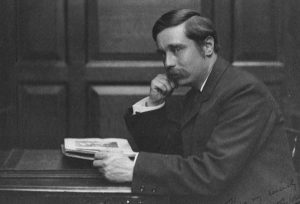
My friend, fellow author, and critique group partner, Andy Gudgel, thought of the idea. Heaven knows where he got it. At one of our critique group meetings, he mentioned he’d like to write a sequel to H.G. Wells’ The War of the Worlds, but his story would deal with the aftermath, with dead Martians lying around, but also their technology. After all, the tripod fighting machines would be still standing where they stopped. The assembly machines would be intact and stationary near the landing sites of the Martian projectiles. Even a few flying machines might be available.

Andy’s idea was that humans would then use these weapons in a very different version of World War I.

This notion captivated me, and I urged him to write the story. Each time he sent us manuscripts of other tales, I’d ask him about the Martian story. “This one’s good, Andy,” I’d say, “but when are you going to give us that War of the Worlds sequel?”

Then at one December meeting, (at which we exchange little gifts to each other), I unwrapped his gift to me, and there were all his notes, and his copy of H.G. Wells’ novel. A note stated he was giving his story idea to me. I should write the tale, since he would not likely ever get around to it.

Wow! That could be the greatest gift one writer could give to another.

I say ‘could be’ because of an emotionally painful event that happened to me some twenty years earlier. At that time, I belonged to a different writing critique group. One other group member had written more than half of his novel. As I recall, it involved a modern-day (well, mid-1990s) nuclear attack on the United States.

Sadly, this writer died young. He had not completed writing that novel, let alone sent it to any agents or publishers.

His wife wrote to me to say how much her husband had appreciated my critiques of his work, and said he’d wanted me to finish, and seek publication of, his novel.

With a heavy heart, I had to decline the offer, but found it gut-twisting to tell his widow that. To write a story, I must have passion about it and care deeply about it and about the characters. I just didn’t feel that way in this case. Moreover, even if I’d had that enthusiasm, I would have had to rewrite large portions of the other writer’s novel to make it mine, and would have felt terrible about not honoring the deceased writer’s wishes exactly, or not living up to his hopes.

In the case of Andy’s WotW sequel, he hadn’t started writing yet. He’d compiled some notes and a rough outline, but I decided to take the story in a different direction than he’d planned. I didn’t feel badly about that, since he hadn’t begun the actual writing and my passion drove me toward the story that became “After the Martians.”

That’s the story behind the story written by—

Poseidon’s Scribe