Did you know you can order a custom globe—one with your own map printed on a spherical surface? You can. I did.
Your Own Little World
If you’ve ever enjoyed sketching your own planet with continents, islands, mountain ranges, oceans, seas, bays, and rivers, you can hire a service to convert your map into a globe.
Or if you’ve loved novels with world maps, such as J.R.R. Tolkien’s The Hobbit, George R.R. Martin’s A Song of Ice and Fire, Brandon Sanderson’s The Way of Kings, Ursula K. LeGuin’s Earthsea, Leigh Bardugo’s Grishaverse series, or H.P. Lovecraft’s Dream Cycle series, you could have any of those made into globe form.
Perhaps you accomplished a trip around the world—by ship or plane. Or you relished the idea of tracing someone else’s circumnavigation—say, Magellan’s or Phileas Fogg’s—on a globe. Put away the Sharpie. Get a globe to order.
Seasteading World
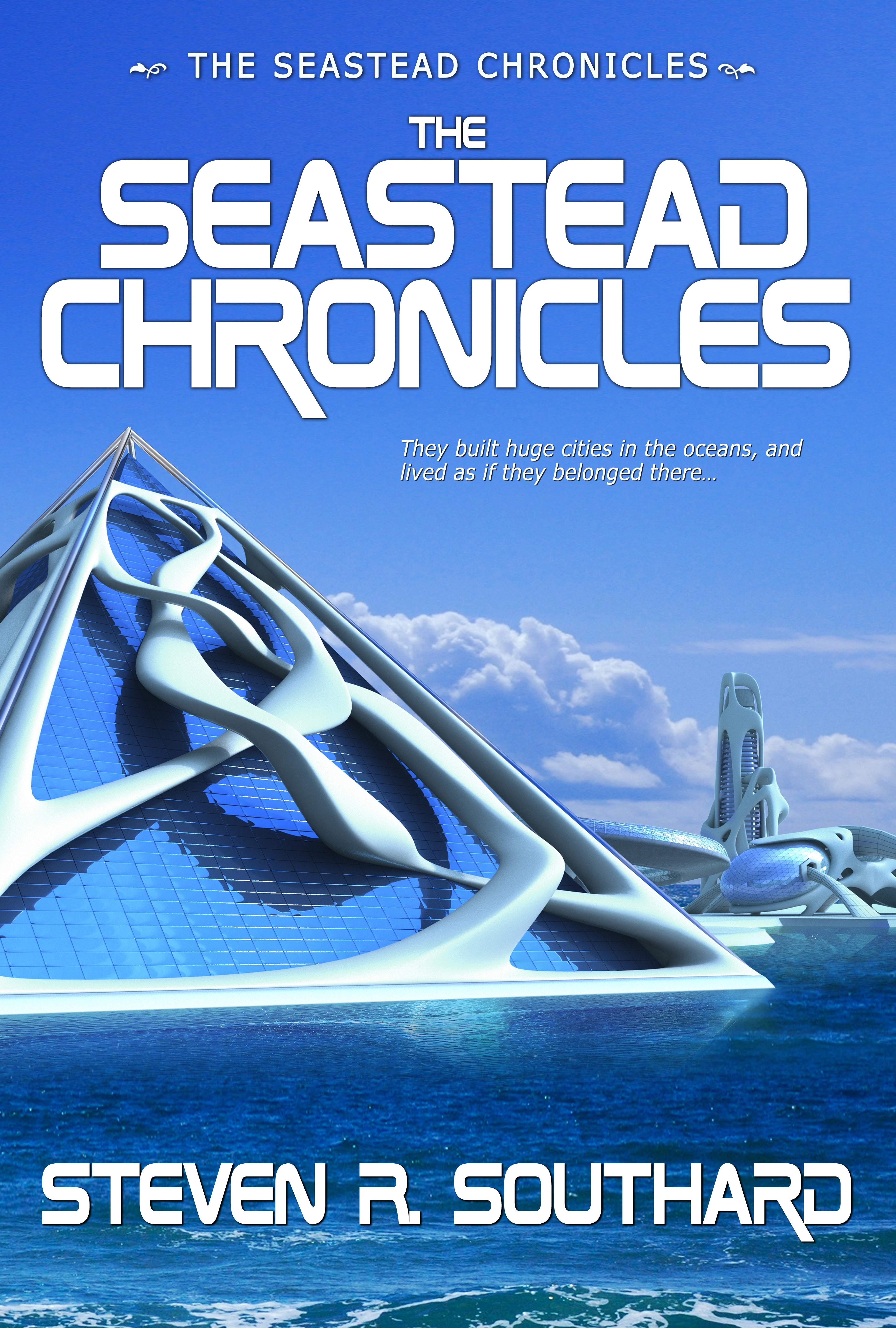
For my book, The Seastead Chronicles, I drew a map of our world’s oceans, with all international waters carved up into countries. (I call those countries aquastates.) My stories span a future history of many decades from humble beginnings to a world full of aquastates. As the concept of seasteading spread, I assumed countries would form based on seabed resources (mineral nodules, petroleum deposits, etc.), and bottom features (hydrothermal vents, deep trenches, etc.).
In time, competition for resources would result in conflicts over borders—diplomacy, and even war. Each aquastate would take on specific characteristics based on who settled there, the country’s main economic income, and its type of government. Over a period of decades, perhaps, they’d reach a point of relative stability, and that’s what I depicted on my map.
Globe-building Experience
I wondered If somebody could construct a globe based on my map—a globe worthy of displaying at science fiction conventions and other book-selling events. I hoped the model of my seastead world would attract potential readers.

After searching for custom globe companies, I settled on SnapSpheres. They proved easy to work with and answered all my questions. They seemed just as enthused about my weird idea as I was.
For my map, I used a rare projection that looked like an orange cut into unequal slices and flattened. However, with mine, the slices cut through continents to emphasize the oceans. Cartographers call it an Interrupted Goode Homolosine Oceanic View projection. I sent that map to SnapSpheres and the rarity of it didn’t bother them at all.
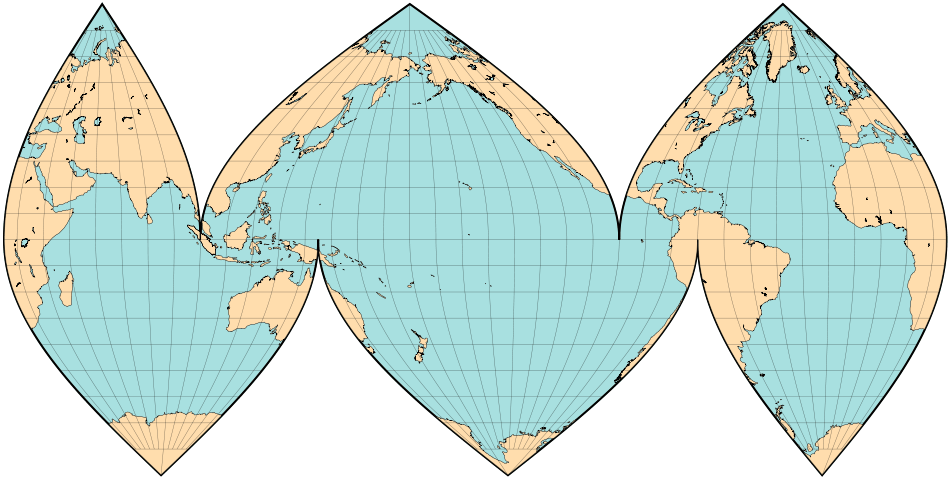
Matt, at SnapSpheres, sent me pictorial depictions of what the finished globe would look like. I loved it. After I approved the design and paid the invoice, the product arrived in short order.
Resulting Globes
I received two globes, one three inches in diameter and one seven inches. The small one is all pentagons, and the larger one includes pentagons and hexagons. The pieces attach with magnets and snap into place. Assembly and disassembly are easy, and I can store all the pieces of both globes in small boxes for convenient transport.
When I put a puck light inside the larger globe, it shows through the translucent pieces in an attractive way. I bought a stand that rotates the larger globe for a more enticing display.
The larger globe shows off the aquastates better, but some book-selling events limit my table space. For those, I’ll put out the smaller globe.
They say writers live in their own little worlds. That’s true, now, for—
Poseidon’s Scribe