Sensazione

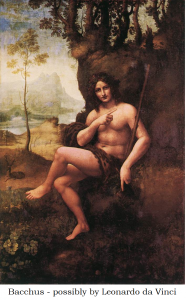
We’ve come to the third principle in Michael J. Gelb’s remarkable book, How to Think Like Leonardo da Vinci. In recent blog posts, I’ve been relating each principle to fiction writers, encouraging you to think like Leonardo as you write.

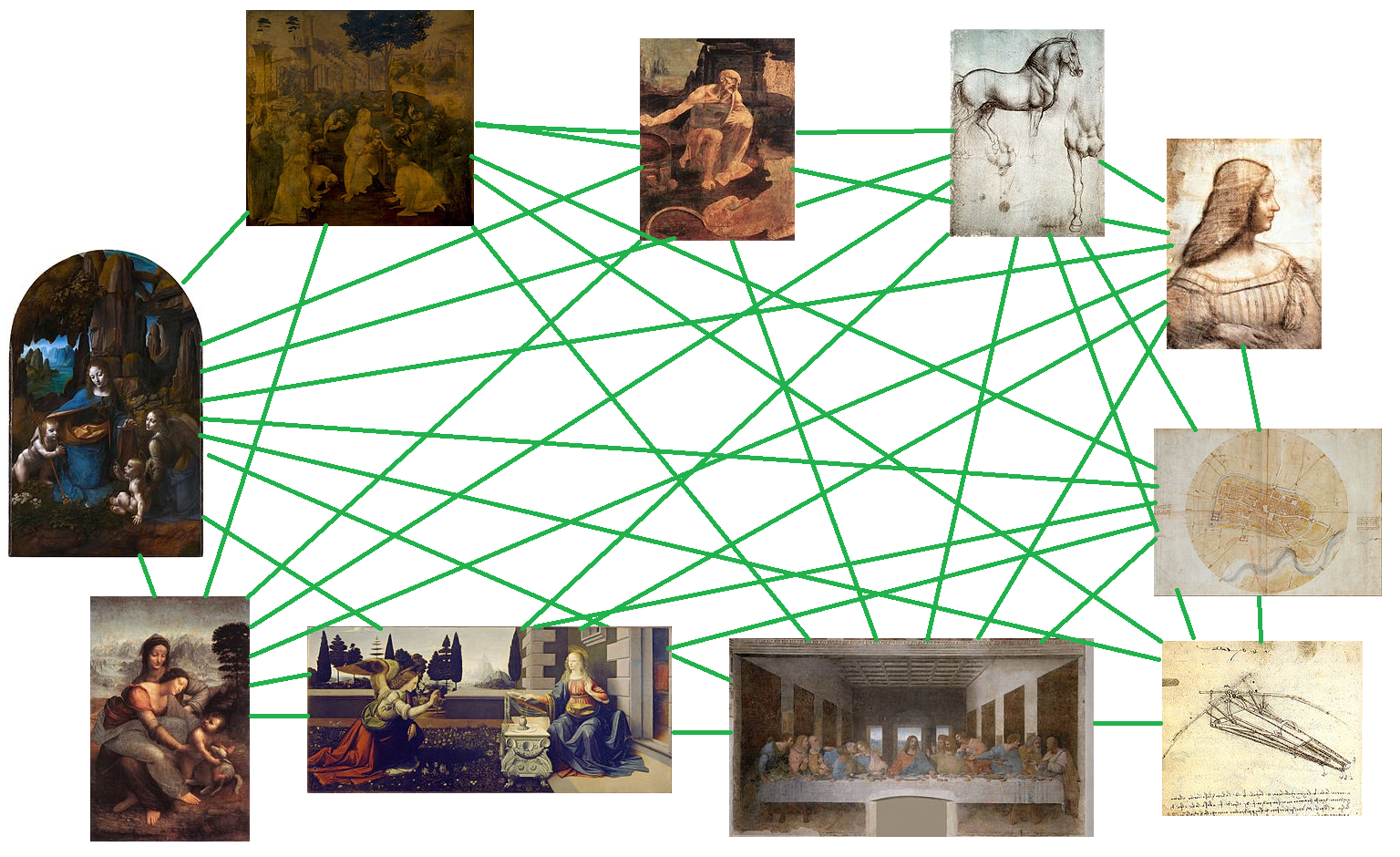
SensazioneThe third principle is Sensazione, which Gelb defines as “the continual refinement of the senses, especially sight, as the means to enliven experience.” Leonardo knew that we experience life through our five senses; therefore, only the person who could enhance his or her senses in perception and accuracy could experience life fully.

Da Vinci’s sight and hearing were superb, and he worked to improve all his senses. He regarded sight as the most important, following by hearing.

The exercises in the Sensazione chapter of Think Like Leonardo da Vinci are among the most fun in the book. For example, Gelb suggests you smell and taste things while blindfolded until you can identify each odor and taste, even those with only slight differences.

How does this relate to writing? The Point of View character in your story also experiences life through her or his senses, just as real people do. However, the only way you can convey these sensations to your reader is through words.

I’ve blogged about the senses before, and encouraged you to incorporate all five of them in your stories. To apply Sensazione in your writing, you must choose words that precisely convey the sensations experienced by your POV character.

I don’t necessarily mean you should pile on adjectives like beautiful, pungent, sonorous, delicious, and velvety—or adverb forms. Adjectives (and to a lesser extent, adverbs) can be useful if you’re selective and choose just the most apt one. Some adjectives, like “beautiful” and “delicious” are not distinct; they tell rather than show.

Another method is with metaphors and similes. If you can compare the sensation your character is experiencing with something to which the reader can relate, and make the comparison distinct and descriptive, that’s Sensazione.

As Leonardo knew, sight is the primary sense for humans, and so it will be for your characters most of the time. But if you appeal to the other senses, too, it can only enhance the reader’s enjoyment. Also, there are times when a character’s first sensation is through one of the other senses, such as when a sight line is blocked and the character hears or smells something before seeing it. Your character might be blind, or in darkness, and will have to rely on the other four senses.

If you work to cultivate your senses in your own life, by going through Gelb’s recommended exercises, you should also strive to become more adept at describing each feeling and sensation in words. As your skill improves, readers will be drawn into your stories and connect with your characters’ experiences.

Ah! I see, hear, and smell breakfast being prepared. I’ll have to end this post now, for soon I shall feel the fork in my hand, and a succulent repast will be tasted by—

Poseidon’s Scribe

September 13, 2015Permalink

Book Giveaway Contest

I’m running my first book giveaway!  I’ll be giving away three free copies of “The Wind-Sphere Ship,” which normally sells for $2.99.

WindSphereShip4Here are the rules:

Giveaway ends September 24, at 11:59 PM EST. There will be three winners, each receiving an eBook copy of The Wind-Sphere Ship, by Steven R. Southard. The giveaway is open to anyone with an e-mail address.    Digital copies will be distributed via Smashwords.com where the preferred format can be chosen. Winners will be selected randomly via Rafflecopter.com and be notified by email. Each winner will have 48 hours to respond before a new winner is selected. The book offered for the giveaway (The Wind-Sphere Ship) is free of charge, no purchase necessary. The promotion is in no way sponsored, endorsed or administered by, or associated with, Facebook or Twitter. By providing your information in this form, you are providing your information to Steven R. Southard alone. I will not share or sell your information and will use your information only for the purposes of contacting the winner, and for offering a newsletter, if I ever start one of those. If you have any additional questions – feel free to send me an email at steven-at-stevenrsouthard-dot-com.

a Rafflecopter giveaway

You can enter by:

1. Tweeting the message “Steve, I’d like to enter your giveaway contest to win The Wind-Sphere Ship.”

2.Visiting my Facebook page.

3. Leaving a comment on this blog post (worth twice as much as tweeting or visiting Facebook). Comment must contain my first name, and the name of the book.

Think of The Wind-Sphere Ship as proto-steampunk. We know Heron of Alexandria invented the steam engine in the 1st Century, A.D.  History books don’t reveal that Heron used this engine to propel a ship.  If his steam-ship could beat a man-rowed galley, could he make the Industrial Revolution happen 1700 years early?  Let the race begin!

The contest starts on September 8th and ends on September 28th. Good luck!

Poseidon’s Scribe


September 6, 2015Permalink

Dimonstrazione

We’re continuing today with my series of blog posts discussing the principles of How to Think like Leonardo da Vinci, by Michael J. Gelb, and how they relate to writing fiction. Today’s principle is Dimonstrazione, a commitment to test knowledge through experience, persistence, and a willingness to learn from mistakes.

DimonstrazioneIt’s not enough just to be curious about people and the world, as the first principle of Curiosità advocated. You must add to your knowledge and seek truth by testing and experimentation.

In our current Age of Information, it’s so easy to accept the word of experts, to trust Wikipedia, etc. But Leonardo da Vinci didn’t put his faith in the word of others. He put things to the test. He experimented and tried things for himself.

How does this apply to your fiction writing efforts? The world, the web, and even my own website are all full of advice for beginning writers. But no one knows what novels will catch on next year. Your ideas about what might become a bestseller may conflict with every bit of common knowledge out there, but you might be right.

You have to be willing to try things, different things, bizarre things. If they work, ride that wave and keep doing them, even if the professionals advise against it. If they don’t work, stop doing them, even if it means disregarding every expert in the world.

Here are several ways you can employ Dimonstrazione in your writing life:

  • If you’re trying to find out writing habits that work the best for you, try writing at different hours of the day, in different locations, for different lengths of time, using different word processors (or even pen and paper), etc. Find what works best and stick with that.
  • Realizing that some people accept the principle of Dimonstrazione and others don’t, make that a contrasting trait between two characters in a story—one who won’t accept authority and puts established knowledge to the test, and the other who accepts the word of authority as fact.
  • To determine what your ‘voice’ is, try different voices. See which one your readers respond to best.
  • If money or fame are not important to you and you only write for enjoyment, find those genres, plot types, themes, settings, and character types that give you the greatest pleasure to write about.
  • If you’re trying to increase your readership, experiment with the various elements of fiction (plot, character, setting, theme, and style) and see which stories sell the most copies.
  • What are the best conferences for you to speak at? Try several, and see which one causes the biggest uptick in sales.
  • If you don’t know what type of free book giveaway will result in the largest e-mail list, try different types of giveaways—different rules, etc.
  • Study the market and see what’s working for other authors. Don’t copy everything they do, but consider changing your methods to get a little closer to their way of doing things.

The important thing about Dimonstrazione is its philosophy, its approach to understanding knowledge. When you read or hear the advice of an authority, be skeptical and apply some critical thinking. If you believe the truth is different than what the authority says, test it for yourself. If the experiment proves you wrong, admit your error and adjust your beliefs.

Through persistent application of Dimonstrazione, you’ll start to think more like Leonardo da Vinci, or at least more like—

Poseidon’s Scribe

September 6, 2015Permalink

Curiosità

Some time ago, I promised to write seven separate blog posts, one for each of the principles espoused in How to Think like Leonardo da Vinci, by Michael J. Gelb. I said I’d relate them to writing fiction. This is the first post in that series.

how-to-think-like-leonardo-da-vinci-160x197The first principle is Curiosità, which Gelb defines as “an insatiably curious approach to life and an unrelenting quest for continuous learning.” He discusses Leonardo’s curiosity and provides worthwhile exercises for developing your own inquisitiveness. (I encourage you to buy his book and to work through the exercises.)

Fiction writers must have boatloads of curiosity. They must ponder things like:

  • CuriositaWhat is the meaning of life?
  • Why do people behave as they do?
  • What do readers want from books?
  • What is the meaning and origin of this or that interesting word?
  • How do I improve my writing?
  • What would happen I twisted this real-world situation around differently?
  • What would that setting be like?
  • How would my protagonist act in this situation?
  • etc…

On and on forever. Moreover, each answer sparks five more questions.

Curiosity is something you once had, then lost, and now must strive to regain. When you were four or five years old, you were intensely, ravenously curious. You barely had the language skills to form questions, but you asked hundreds of them. We all did, at that age. We especially liked questions starting with “why.”

Then older people and life experiences supplied answers. Some adults told you religion had your answers; some said science did; some said both. They gave you books to read, hoping to satisfy you.

Some answers discouraged further inquiry. Few answers satisfied you at first, but later you came to accept, to believe. You learned societal taboos and sensitive areas. You tamped down your curiosity and asked fewer questions.

Lately, you’ve grown accustomed to the Internet and search engines. If you have a question about something, you type it in. Out pops (what you believe is) the correct answer, courtesy of your magical answer machine.

Things have changed since Leonardo’s time, you say. These days we have instant answers to every question; we don’t really need to be curious. There’s no point in it.

When I hear that, my curious mind can only ask: Really? Why? How do you know?

I advise you, as a writer, to reclaim some of your childhood curiosity, for two reasons.

First, we do not yet live in an age with all questions answered. Every day, someone uncovers facts that overturn a thing that “everybody knows.” Take any single thing you can name, anything, and decide to become an expert in it. Explore it, study it, read source material, visit the sites. You’ll soon explode a myth or two about your chosen subject; you’ll shift a paradigm; you’ll find out that what everybody knows just ain’t so. Despite what it says on the Internet.

Far from having all questions answered, we still live in humanity’s infancy. We are ignorant—monumentally, staggeringly ignorant. Worse, we don’t know how much we don’t know, and we truly know a lot less than we think we know.

The other reason I advise you to reinvigorate your curiosity is that it is precisely the questions that authors are really exploring in fiction—the deeper, thematic ones—for which the answers remain most elusive. How do I live a good and worthwhile life? Why am I here? What does it mean to be human? What is the nature of love?

If you aspire to write great fiction, think like Leonardo da Vinci. Embrace Curiosità. Ask questions. Many, many questions.

But there is no need to question the wisdom of—

Poseidon’s Scribe

Writing Blurbs

Whether readers buy books online or in a bookstore, they look at the cover first and the blurb second. If the blurb doesn’t grab them, they move on. Don’t kill that sale with a bad blurb.

BlurbA blurb is defined as a short description of your book, written for promotional purposes and appearing on the back cover. That definition sucks all the life out of the word, though. Scratch out “written for promotional purposes” and substitute “written to seize the prospective reader’s attention and imbed an irresistible desire to possess the book and read every word.”

My primary publisher, Gypsy Shadow Publishing, asks for two blurbs for each book—a long one that’s less than 150 words, and a short one no longer than 25 words. Both of these are difficult for me to write, but the short blurb is the toughest.

What should be in a blurb?

  • Hint at the plot or main conflict.
  • Name and mention distinguishing trait of main character(s).
  • Describe the setting or ‘world.’ This is vital in science fiction and fantasy.
  • If available, include quotes about this book or your previous books.
  • If space available, include an author bio.

How do you write one?

  • Study other book blurbs in your genre. Learn the common words and language.
  • Write a summary of your book (if not done already), then shorten it down to its essence. What’s the book’s “elevator speech?”
  • Use image-laden words, those powerful words that speak to readers of the book’s genre.
  • Ensure the tone of the blurb matches that of the book.
  • Write several blurbs and combine the best features.
  • Set it aside for a few days, then read it again. If meh, rewrite.
  • Ask your critique group to comment on it. You are in a critique group, right?

Further Reading

You can find out even more about blurbs from Amy Wilkins, Marilynn Byerly, and the master of writer advice, Joanna Penn. I’ve shamelessly stolen from them in writing this post.

Examples

Here are three of the 25-word blurbs from my most recent books. These don’t contain all the elements noted above, but the 150-word, lengthier versions do:

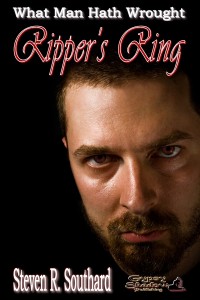
  • Ripper’s Ring:” The ancient Ring of Gyges grants the power of invisibility to Jack the Ripper. A Scotland Yard detective tracks a killer who can’t be seen.
  • Time’s Deformèd Hand:” Time for zany mix-ups in a clock-obsessed village. Long-separated twins, giant automatons, and Shakespeare add to the madcap comedy. Read it before it’s too late!
  • The Cometeers:” A comet threatens Earth…in 1897! Of the six men launched by cannon to deflect it, one is a saboteur. It’s steampunk Armageddon!

With some practice and creativity, your blurbs should be even better than any written by—

Poseidon’s Scribe

Dumped in the Middle of the Road

You’re reading along down the story highway, racing through action scenes, taking the dialogue curves at a good clip, the wind of the story’s world in your hair. All of a sudden, a truck up ahead upends its load and a pile of text pours onto the pavement, right in your path.

You’ve been stalled by an infodump.

Infodump

You come to a stop to decide what to do. You could plow right through it at slow speed, but you hate that. You could drive around, avoiding it entirely, but some of that text might be necessary to understand the story. If you’re in an angry mood, you could forget the whole book and move on.

An Infodump is one of the Turkey City Lexicon terms. It refers to a passage of text used to explain things and give background information to the reader. It can be one paragraph, or go on for several pages. It’s most common in science fiction and fantasy, where the story’s world is unlike our own, and you need to immerse the reader in it.

From a writer’s perspective, it seems so necessary to convey that information. The reader needs to understand certain things so later events in the story make sense. Many of the great writers of the past used infodumps; Herman Melville spent whole chapters that way, and it hasn’t hurt his sales. Oh, perhaps the writer could think of clever ways to work the information into the story, but who has time for that?

Better make time, you Twenty-First Century Writer, because readers these days don’t want to slow down and plow through your dump.

Here are some techniques:

  1. Delete it. What does that info add to your story, anyway? Do readers really need to know it? Are you dumping that load to help reads understand, or to show off your research or add credibility? If you can delete it, do so. If you can delete most of it, do that, and use other techniques to convey the rest.
  1. Work it into dialogue. Readers speed through your characters’ dialogue pretty fast, so inserting some of your infodump into their speech is one way to avoid slowing readers down. Caution: there’s danger here. You must not swerve into the As You Know, Bob lane. Make sure the dialogue is realistic as well as explanatory.
  1. Work it into the action. By ‘action’ I don’t necessarily mean fight scenes or car chases, but any passages where characters are doing things, moving about, or actively interacting with their environment or each other. It’s characterized by action verbs. It can be interspersed with dialogue, and often serves as a ‘dialogue tag,’ letting the reader know which character is speaking.
  1. Make it entertaining. If you can turn those smelly tons of interfering text into pure, golden fun, readers will actually enjoy the interruption. By ‘entertaining,’ I don’t necessarily mean funny, but humor is a great way to accomplish this, if you can pull it off. This method calls for considerable creativity and skill.
  1. Make it short. As a last resort, keep the infodump, but reduce its length. Readers may forgive a short, explanatory passage here and there.

I struggle with infodumps in my fiction, but it’s important to eliminate them where possible. Dump trucks are fine in real life, but when they drop their load in the middle of your story’s road, it really ticks off your readers. Not good.

Doing my part to beautify the nation’s literary highways and byways, I’m—

Poseidon’s Scribe

Read Your Story Aloud — 10 Reasons Why

It’s vital to read your story aloud before submitting the manuscript for publication. You may consider that a waste of time, since you can Reading Aloudread the story silently to yourself more easily, and because silent reading is the way most readers will experience your work as well.

I contend you really should take the time for reading aloud, and for making that technique one of your final editing methods. For several of the reasons below, I’m indebted to Joanna Penn.

  • After reading your story silently several times, reading aloud will give you the different perspective of the spoken word, enabling a more thorough edit.
  • You’ll find it easier to spot story inconsistencies and plot continuity problems.
  • With this different style of reading, you’ll find the typos and punctuation errors you skipped over earlier.
  • You’ll hear more readily if your story’s dialogue is realistic or forced.
  • The need to breathe when speaking will aid you in identifying overlong sentences.
  • You’ll have an improved sense of whether you’re building tension effectively.
  • By timing your reading, you’ll know how long the audiobook or podcast version of your story will be.
  • You’ll find right away if you have any tongue-twisting phrases or words that sound jarring when juxtaposed.
  • By saying words aloud, you’ll likely have a better notion of which ones to emphasize by italicizing.
  • You’ll better hear the rhythms of the words and sentences, the cadences of your story, and might identify edits to make them flow better.

You might be thinking you’ll have a friend read your story to you, or get a software program to read the text aloud, while you just listen and let the words wash over you. I advise against that and recommend you read the story with your voice, letting the words tumble from your own lips. Both speaking and listening will give you a stronger mental connection with the story than mere listening would.

If you’re one of the few writers who doesn’t regularly employ this technique, I recommend you join the majority. It will improve the quality of your stories, and that guarantee is straight from the mouth of—

Poseidon’s Scribe

Before You Write that Scene

What are the things you should be thinking about before you write a scene in your story? Pantzers and Plotters will approach this question differently in the first draft, but in subsequent drafts, the questions will be the same.

Whether your work is a novel or short story, it is a sequence of scenes. A novel’s chapter can have one or more scenes, as can a ‘part’ or ‘section’ of a short story.

I’ll look at two approaches today, and you can combine them or pick the one you like. When I researched the topic, I found an approach used by Larry Brooks and a different one used by Dr. Randy Ingermanson. I’ve mentioned Ingermanson before in connection with his snowflake method of writing.

Larry Brooks’ View

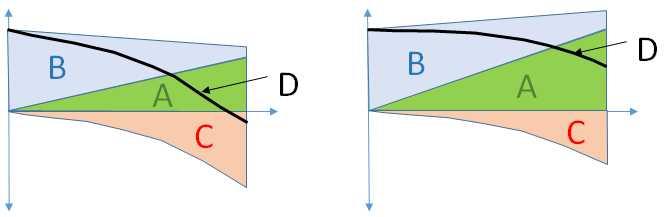
My picture of Larry Brooks’ method shows the story as a sequence of scenes. If written well, each scene serves an important purpose in the story. If written poorly, a scene can seem out of joint, or even seem like a side-trip out of the story.

Scene Structure -BrooksI’ve drawn a single scene as a system with inputs and outputs, but Brooks hammers home the importance of having a mission for the scene, a mission that advances the plot somehow. The scene’s mission must also support the overall strategy for the story.

He discusses ways to choose the point to start the scene—the cut-in point. He suggests you think about sub-text to put in the scene, those unstated inferences that show the reader a character’s true thoughts, or make some metaphorical thematic point. Brooks says that all scenes should develop or reveal characters, but that should never be the sole point of the scene.

In Brooks’ view, a writer must align every scene with one of the four parts of a story. These parts are the Set-Up, the Responder, (where the protagonist is responding to the First Plot Point), the Warrior (where the protagonist grapples with the main conflict), and the Resolution.

Lastly, the scene has to end in a way that urges the reader on.

Randy Ingermanson’s View

Randy Ingermanson takes a more structural and prescriptive approach. He encourages writers to view scenes at a Large Scale and a Small Scale. In discussing the large scale view, he uses terminology from Dwight Swain and suggests that all scenes are either scenes or sequels. (I prefer to use the terms tension and relaxation.) These alternate in sequence, to allow the reader to catch a breath between points of high drama or action.

Scene Structure - IngermansonThe tension (scene) scenes each include a goal, a conflict, and a disaster. The relaxation (sequel) scenes each include a reaction, a dilemma, and a decision. That sets the write up for the next tension scene.

Turning to the small scale, Ingermanson says good writers construct each scene from a series of MRUs – Motivation-Reaction Units. The motivation is some external happening sensed by the point-of-view character. The reaction is the internal emotions or thoughts experienced by the POV character as a result.

Final Thoughts

I’ve condensed the thoughts of both Brooks and Ingermanson, and I encourage you to read each of their full posts. There is much to learn from both views, and they are not contradictory, so it’s possible to do both.

If you consider their approaches before and during your first drafts of any scene, and during the rewriting and editing of subsequent drafts, I’m betting your stories will be more focused, more readable, and more enjoyable.

Time to split this scene and return to the other never-ending duties of—

Poseidon’s Scribe

Starting With Pen or Keyboard?

Do you write your fiction stories longhand before typing them? I do, and I’m not alone. There are several great blog posts touting the benefits of the pen, by Lee Rourke, Patrick E. McLean, Melanie Pinola, Chris Gayomali, and Julianne MacLean.

LonghandWhy do we pen-wielders do it? Why do we eschew the fantastic technology of the modern era, designed specifically to make writing easier, and choose instead the old-fashioned, obsolete, and outmoded pen and paper?

Are we Luddites? Are we afraid of, and angry about, those newfangled machines with their pushbuttons, glowing screens, and word processors?

Maybe some are, but not me. I love my laptop and am quite at home with its wizardry. I type at a competent speed, and am adept with word processors. No fear there.

While working on this post, I thought hard about my reasons for preferring the age-old writing stick over more recent digital marvels. There are many reasons why people still pick up pens in a computerized world, but these are not my reasons:

  • There are fewer distractions; I’m less likely to pause to look up things, research, respond to e-mail, etc.
  • It’s easier to ignore my inner editor and so I write better first drafts.
  • I get a better sense of accomplishment when I see the cross-outs, arrows, insertions, etc. rather than pristine text.
  • I can reconsider deleted text since it’s still visible.
  • My speed of writing longhand matches my thought process better  than my typing speed.
  • Longhand evokes the spirit of writing as a craftsman’s task, writing books the way all the great classics were written.
  • I prefer the tactile sensation of my favorite pen scratching out words on paper to the frenetic pushing of dozens of identical buttons.
  • I write my first drafts faster in longhand.
  • Pen and paper are far more reliable than computer or tablet.
  • Studies have found that, in people who are equally skilled in longhand and typing (children), that longhand produces better writing faster.
  • Other famous writers like Truman Capote, Tess Gerritsen, James Patterson, and Susan Sontag write (or wrote) longhand.

True, some of the above reasons resonate with me. But if I cited them, I’d really be rationalizing a decision made because of a different factor. Here’s the real reason I use a pen:

  • It’s the only way to make my commuting time effective. I commute to my day job by subway train, and I cannot bring a tablet computer to work, so writing longhand is the only way to do it.

I still have to transcribe my inky scribbles to a computer. But that becomes the first revision process for me. Writing looks different when it’s clean and pristine on the screen rather than the unplanned dreamland of longhand. The act of transcribing therefore becomes the creation of a second draft. Often I’ll print that out double-spaced and do further editing of follow-on drafts on the train, with a pen.

When I’ll retire from the day job, I’ll have to rethink my writing habits and might retire my pen. Old habits die hard, though. We’ll see.

What’s your preference, pen or keyboard, paper or display screen? What are the reasons for your choice?

Now that I think about, I have another reason for using a pen. If I didn’t, I couldn’t very well call myself—

Poseidon’s Scribe

Upcoming Anthology – Hides the Dark Tower

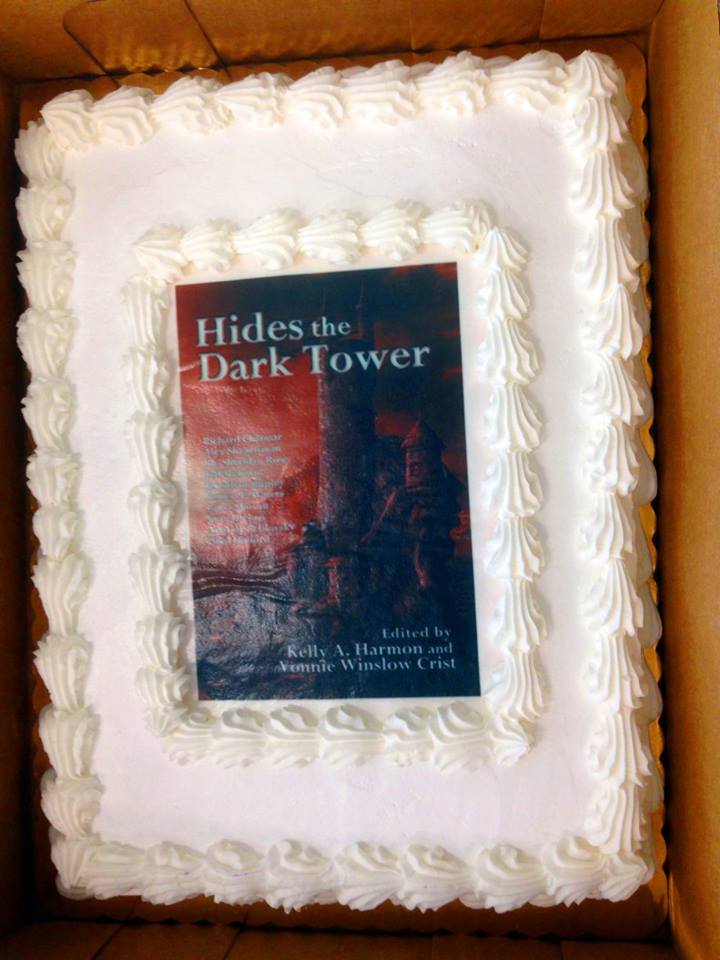
My short story, “Ancient Spin,” will appear in the anthology Hides the Dark Tower, scheduled to appear in October. It’s a new publisher, Pole-to-Pole Publishing, and I think this is their first anthology.

Hides the Dark Tower-Purchased_Artwork_72pxThe anthology’s editors, Kelly A. Harmon and Vonnie Winslow Crist, have been great to work with. They’ve selected a stunning piece of artwork for the cover, don’t you think?

The anthology features stories involving towers. There’s just something about towers. They represent man’s attempt to reach the heavens. Viewed from the ground, they’re mysterious and imposing. From the top, they provide a view that makes you feel commanding and godlike.

By now, you’re wondering where that title, Hides the Dark Tower, comes from. Glad you asked. It’s from the poem “Childe Roland to the Dark Tower Came,” by Robert Browning. Here are two of the 34 verses (italics are mine):

What else should he be set for, with his staff?
What, save to waylay with his lies, ensnare
All travellers who might find him posted there,
And ask the road? I guess’d what skull-like laugh
Would break, what crutch ’gin write my epitaph
For pastime in the dusty thoroughfare,

If at his counsel I should turn aside
Into that ominous tract which, all agree,
Hides the Dark Tower. Yet acquiescingly
I did turn as he pointed: neither pride
Nor hope rekindling at the end descried,
So much as gladness that some end might be.

Browning, in turn, spun off his poem from Shakespeare’s King Lear, so maybe all literature just builds on other works, like bricks upon bricks. Like a tower.

As I mentioned, the anthology comes out this fall, and I’ll provide more details and reminders as the date nears. Looking down upon you all from the newly constructed, sky-scraping, world-record-holding tower here at Poseidon’s Scribe Enterprises, I’m—

Poseidon’s Scribe