Everyone turns to me for news on the latest trends, the hottest aesthetics, and the current fashions. Never one to disappoint my many fans, I’ll delve into writercore today.
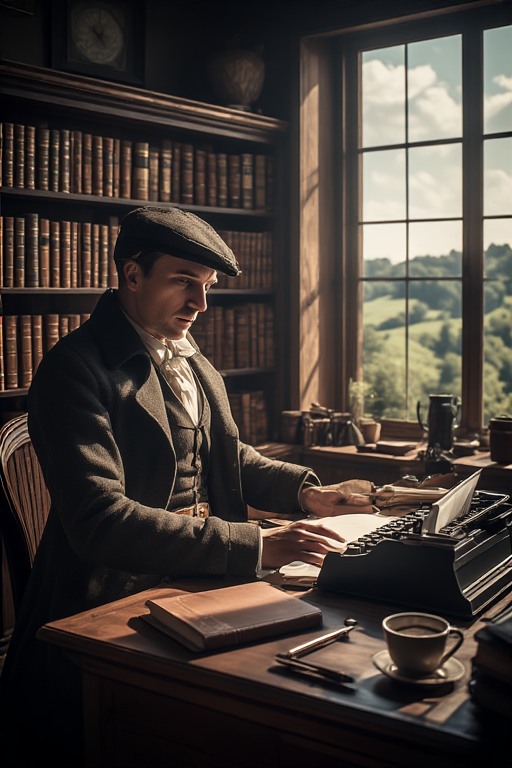
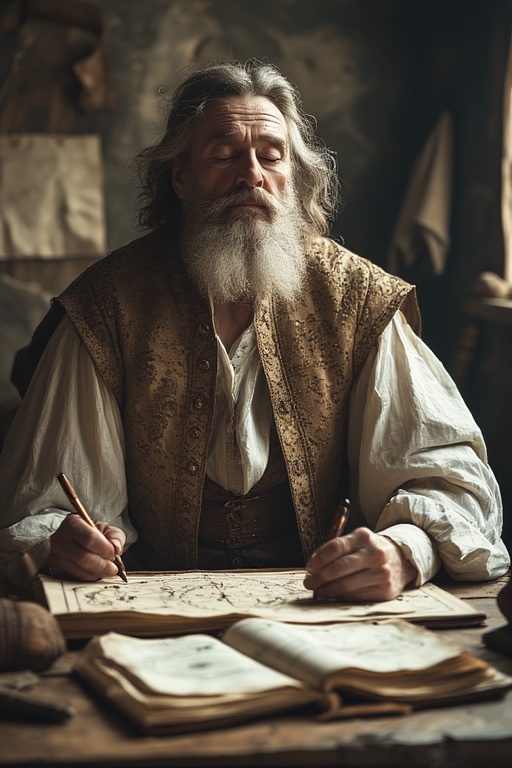
It’s a vibe, a style meant to announce you’re a writer. To achieve it, wear a vest and long coat (leather or tweed) with a wide belt. When you go out, wear a flat cap. Select colors in the brown and sepia range. Carry a fancy fountain pen and a leatherbound journal.
To complete the look and feel, sit at a desk with your typewriter (yes, typewriter) and your coffee mug (or teacup and saucer). Nearby stands your bookshelf weighed down with books and inspirational knickknacks.
For a better description of writercore, see this post by Kara Race-Moore.
Because everything’s -core these days. Add the suffix -core and you’ve got an aesthetic. It derives from the Latin cor, meaning heart. Writercore = the heart (or core) of being a writer.
Are there other -cores?
More than I wish to mention, but I’ll cite four examples. Cluttercoreallows you to crowd your living space with things you love. Those into Gorpcorewear outdoor recreation clothes as urban streetwear. Normcore seems a reaction against the -core trends, since its adherents wear unassuming, average clothes. Yes, even that requires its own special name.
Poetcore deserves its own paragraph. At the moment, it seems a more defined and widespread fashion trend, with writercore as a minor offshoot. Though related, the two differ a little. For more information about poetcore, see this New York Post article and this article in Culture Mosaic.
Will writercore really make me a writer?
Maybe. Who am I to say? Perhaps you need the vibe to get in the mood to write.
To be honest, I think the odds stack up against it. Seems to me you’re better off actually writing and getting published first, and then inventing your own version of writercore style later. Perhaps writing style exceeds clothing and furniture style in importance.
With nary a typewriter, fountain pen, or leatherbound journal in sight, I’m—
Tomorrow, the Martin Luther King Jr. Birthday holiday coincides with National Imagination Day. Appropriate, huh?
What is National Imagination Day?
Picture a day set aside to celebrate the unlimited power of your mind to think whatever it wants to, to dream impossible dreams, to imagine a better world (or a worse one). That’s National Imagination Day.
Who Started It?
The folks at NationalDayCalendar.com started National Imagination Day in 2024, just two years ago.
Imagination—the ability to form mental images of things not detected by the senses or not considered real.
From out of nothing at all, we can form something in our mind—something new to the world. Or, from raw materials at hand (or those we can think of) we can picture a new formation, a new construct, a new use.
We think of it as a trait exclusive to humans, but animals imagine too. What might they be imagining?
How Do I Celebrate National Imagination Day?
Glad you asked. Here are a few suggestions:
First, if you haven’t used your imagination in a while, you might need to prime your imagination pump. Let your mind return to a time when you imagined things with ease—as a young child. What did you imagine then? What did you pretend to be or do? Recall that time and remember the fun.
Another priming technique—watch a movie or TV show, or (better) read a fiction book. (If you’re not sure which books to read, I can recommend some.) Imagine yourself in the settings of that story. Or think how you would direct the show or write the book in a different and better way.
Consider a problem you face in your life, or one someone else faces. Write twenty solutions to the problem. Don’t limit yourself to practical, feasible solutions. Go crazy, but don’t stop until you reach twenty of them.
Take a walk in nature, maybe somewhere you haven’t walked before. Imagine an adventure there, with talking trees and animals, castles, wood sprites, or whatever.
Compose a song, with or without lyrics. Sing or hum it. Dance to it. They say music is the language of the soul.
Draw or paint a picture of whatever your mind imagines.
Build an imaginative physical creation using whatever materials you have at hand.
Write a story or poem about whatever your mind imagines.
Imagine your ideal video game. Write the premise of the game and its major characteristics.
Since we celebrate Martin Luther King Jr’s birthday on the same day, read his famous “I Have Dream” speech. Imagine the country of that dream. What would that nation be like? Imagine yourself there.
What’s the Point?
Whichever suggestion you chose, did you have fun? If so, why not do a little imagining every day? No need to wait a year.
Look back at what you did. Did your imaginative activity spark something bigger? Did you brainstorm a workable solution to the problem? Could you write that story, or screenplay, or poem, and could you submit it? Might that song be something you could record? Is the picture you made or the structure you built sharable with others? How about that video game—would someone in the industry be interested? What might it take to get our country to resemble the one in Martin Luther King’s dream?
Don’t be disappointed if you imagined something silly or stupid or too private to share with others. Some imaginative ideas lead to profitable outcomes, but most don’t. National Imagination Day isn’t about making money.
However, consider this—every profitable innovative idea, every new song or story or painting or video game started out in someone’s imagination. They imagined them on a day like today.
You have an imagination. Use it! Don’t let that powerful ability go to waste. Every day can be National Imagination Day for people like you, and for writers like—
I’m starting a newsletter, and would love it if you’d subscribe.
Called “Steven R. Southard’s Log,” it will take the form of a ship’s log chronicling my voyage through the literary seas. You’ll get a fresh log entry in your email inbox around the middle of each month, (when the Romans called the Ides).
Through the newsletter I’ll keep you up to date on what’s happening with my writing, my upcoming stories and books, information on stories I’ve published before, links to my blog entries for the month, and whatever else I can dream up.
As with any newsletter, you may unsubscribe at any time. I’ll do my best to keep the log entries short and interesting, so you’ll be inclined to stick with me.
To subscribe:
After you click the box, you should see a form asking for your name and email address. After providing those and clicking Subscribe, you should receive a Welcome Aboard email.
You’ll find the newsletter a more personal way to keep in touch with—
As we start 2026, let’s begin by remembering the many authors we lost in 2025. To reduce the list to a readable blogpost, I’ll just honor the prominent American science fiction authors who died last year. I used the Encyclopedia of Science Fiction as a source.
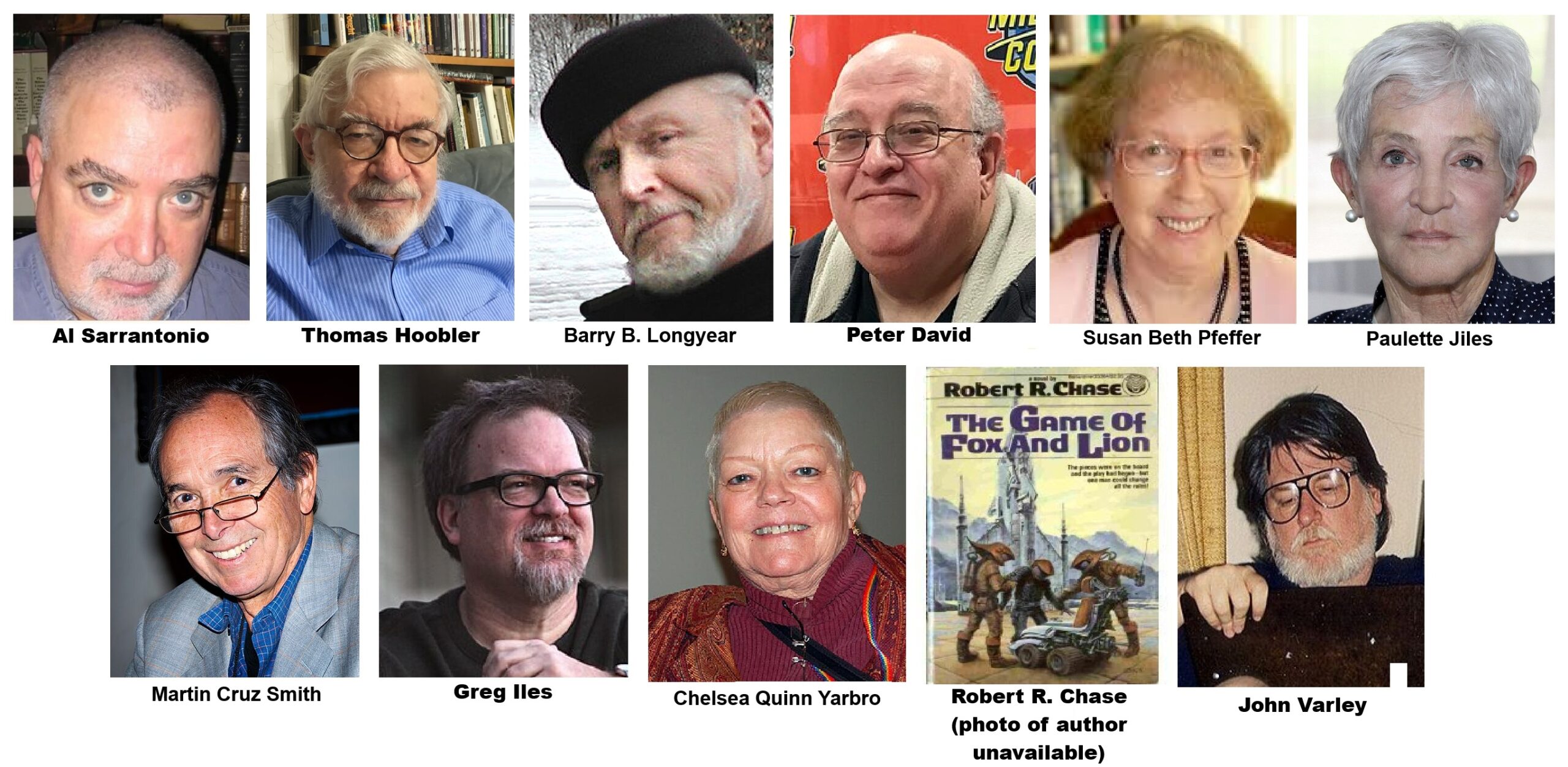
Al Sarrantonio (1952-2025)
A horror writer, editor, publisher, he authored more than fifty books and ninety short stories, and edited several anthologies. He authored the Five Worlds science fiction trilogy and the Master of Mars scifi trilogy.
Thomas Hoobler (1942-2025)
Along with his surviving wife, Dorothy, he co-authored more than 100 books. In science fiction, they wrote The Hunters, Treasure Hunters, and Dr. Chill’s Project.
Barry B. Longyear (1942-2025)
He wrote numerous scifi novels, including the Hugo and Nebula winning novella Enemy Mine, later made into a movie. He was the first writer to win the Hugo, Nebula, and Campbell awards in the same year.
Peter David (1956-2025)
Though primarily a comic-book writer, he also wrote the novel several popular Star Trek novels, Babylon 5 novels, and novel adaptations of films, among others.
Susan Beth Pfeffer (1948-2025)
She wrote over seventy science fiction and young adult novels, including the popular Moon Crash series.
Paulette Jiles (1943-2025)
Though mainly a poet and memoirist, Jiles also wrote science fiction, notably The Late Great Human Road Show (set in a future dystopic Toronto), and Lighthouse Island (set in an overpopulated future with a worldwide city).
Martin Cruz Smith (1942-2025)
He wrote scifi and mystery. The Indians Won was alternate history. His Gypsy series featured a detective with ESP. He also wrote scifi thrillers The Inca Death Squad, Code Name: Werewolf, and The Devil’s Dozen.
Greg Iles (1960-2025)
Though he wrote novels in many genres, The Footprints of God features the blending of a human mind with a computer to run the government.
Chelsea Quinn Yarbro (1942-2025)
More known for occult and mystery novels, she also wrote Cautionary Tales and the dystopian future novels Time of the Fourth Horseman, False Dawn, and Hyacinth.
Robert R. Chase (1948-2025)
His scifi short stories appeared in Analog, and Asimov’s Science Fiction magazine. He also published three scifi novels.
John Varley (1947-2025)
A Hugo and Nebula award winner, he wrote fourteen novels and numerous short stories. Notable series include the Eight Worlds series and the Thunder and Lightning series. In style, he compared to Robert A. Heinlein.
Requiescant in pace
May these authors rest in peace. In a way, they live forever, since their writings endure. They’re remembered today by—
I’ve made scifi publication predictions before, with little success. However, the methods I used—crystal balls, tea leaves, tarot cards, astrology, palmistry, ChatGPT, and a Ouija Board—didn’t produce accurate prophesies.
This year, I sought the most reliable and proven prognostication technique of all—the method of Nostradamus himself.
Imitating that 16th Century French seer, I secreted myself in the attic, meditated, prayed, consulted astrological charts, and made sketches and notes of the visions that came to me. To my surprise, a set of four-line poems—quatrains—emerged from this process. Contrasting with those of Nostradamus, my quatrains came to me in English.
I’ll provide the quatrains, and my interpretation of their cryptic phrasing, below.
Translated SF
In ’26 the science fiction bands Will stretch to languages of distant lungs The tales from writers writ in other lands Will translate fiction from their foreign tongues
I believe this means we’ll see a surge of translated science fiction in 2026.
Space Opera
The coming year will see space opera bloom Vast empires ’cross the galaxies galore Equipped with FTL, the starships zoom Through epic dramas, aliens, and war
This suggests a revival of space opera in 2026. FTL = faster than light.
Characters Beyond Gender
Some authors will play more with gender norms Not always stuck with females and with males Their characters will switch or take new forms Within new trans and gender-fluid tales
I interpret this to mean we should expect to leave female and male characters behind, in favor of new genders, changeable genders, non-genders, and who knows what else.
Serial Fiction
We’ll see rebirth of serials again With shorter bites to match attention spans Subscriptions, author newsletters, and then Some dedicated apps with bundled plans
If I’m construing the meaning of this in the right way, we should find authors writing short chunks with cliffhanger endings to entice readers to subscribe to read the complete stories in serial form.
Hybrid Genres
Next, hybrid genres will remain a trend Scifi can mix with others all the time To form a very complement’ry blend With horror, and romance, and even crime
This quatrain hints at the continuing trend of mixing scifi with other genres.
Year of the Horse
In Chinese myth, this next year marks the horse And scifi books will emulate the steed With high adventure, optimistic force Heroic, active, with pulse-pounding speed
It’s hard to extract much meaning from this. Perhaps it’s suggesting scifi in 2026 will take on equine attributes of power, independence, perseverance, and confidence.
Conclusion
Look for the results of these predictions next December. Being curious, I couldn’t resist applying Nostradamus’ methods to discover what the new year will mean for me. Here’s what resulted:
This lies beyond the sight of any seer Will he soon join “best-selling author” tribe? He’ll work hard but the outcome is unclear It’s unknown what awaits—
It’s the most embarrassing time of the year…when I judge how well I did at foretelling what types of science fiction books would be published this year.
In past years, I’ve tried and failed with crystal balls, tea leaves, tarot cards, astrology, palmistry, and ChatGPT, but last year at this time I used a sure-fire method—the Ouija Board. Let’s see how well I did:
Prediction: Climate Change and Solarpunk
Authors will give us post-apocalyptic, post-climate-disaster recovery stories with emerging solarpunk civilizations.
Assessment:
The Ouija Board did well here, and I found several examples, including:
All the Water in the World by Eiren Caffall. Future glaciers have melted, flooding the earth and forcing people to live in the topmost floors of skyscrapers.
Private Rites by Julia Armfield. An environmental crisis brings continuous, worldwide rain.
Monk and Robot by Becky Chambers. This book combines two previous stories, A Psalm for the Wild-Built and A Prayer for the Crown-Shy, which take place in a far-future solarpunk utopia.
Prediction: Driverless Cars
Writers will show us the pros and cons of more advanced driverless cars than we have now.
Assessment:
The Ouija board called this category as well. These books drive on the dark/horror side of the road:
The Driverless: Phantom Wheels by Leonard Boblea Adrian. This horror story features an evil, driverless car.
An ICE-Y Ride: A Dystopian Tech Horror Short Story by TH Sterling. An autonomous car accuses its passenger of sedition and becomes her prison.
Prediction: Futurism Beyond Africa
While Afrofuturism will continue, we’ll see books exploring the future of other cultures and regions.
Assessment:
This didn’t seem as widespread as the Ouija board made it sound. I only found one example:
You Must Take Part in Revolution: A Graphic Novel by Badiucao and Melissa Chan. This is set in Hong Kong and Taiwan during a future war between the U.S. and China.
Prediction: Fact-ion
Scifi authors will combine their fiction with fact. That is, they’ll base a fictional tale on a true event.
Assessment:
Proving that Ouija boards aren’t all-knowing, I found no examples of this in 2025.
Prediction: Future Romance
Setting a romance novel in the future is fine, but in the coming year, authors will further explore how human relationships might change in the future. What bizarre, new kinds of relationships might emerge?
Assessment:
The board played it safe with this one. Anyone could’ve made this prediction for almost any year. I stopped looking for examples after finding these:
Useless: Male Superhero in a Reverse World by Strawman Context. A man finds himself in an alternate world where women far outnumber men and hold all the power.
A Future Undone: A Gay Sci-Fi Romance Thriller About Time Travel and Artificial Intelligence by Kurt Harding. The subtitle says it all.
The House That Learned Her Name by Wanda Miller. A grieving widow develops a relationship with her smart home.
Mated to the Possessive Cyborg: An Impreg Cyborg Sci-Fi Romance by Laura Cauldwell. Like Beauty and the Beast, only this beast is a troubled, military cyborg.
Prediction: Interacting With Readers
Remember choose-your-own-adventure books? In 2025, authors will find new ways to allow the reader to influence the story-reading experience.
Assessment:
Ouija boards are interactive by nature, and I got the impression my board enjoyed making this prediction. Here are some examples I found:
Unseen Archives Magazine: An Interactive Graphic Novel Experience by Anthony L Abraham. The more I read about this magazine, the less I understood, but it seems interactive.
Access The Bridge: A SciFi Choose-Your-Own-Path Adventure GameBook by Henry Butler. This goes beyond standard choose-your-own adventure books, since the wrong paths provide knowledge needed for other paths.
Lumen Calls: A Pathfinder Adventure by Gene Anders. A strange anomaly beckons near a small town. You, the reader, make choices, but each choice changes how the anomaly sees you.
Prediction: Linked Minds
Extrapolating the possibilities of Elon Musk’s Neuralink, writers will craft stories featuring human characters interfacing with computers via brain implants.
Assessment:
The Ouija board didn’t exactly go out on a limb in predicting more books with this long-time staple of science fiction, and authors obliged in 2025:
Virtuality by Derek Cressman. In the near future, everyone has brain implants providing infotainment, but there are side effects.
Veritas Dawn by Tal Azar. A pill upgrades people’s minds, and connects them. An algorithm emerges, but has its own agenda.
Prediction: Merged Worlds
Pairs of authors will collaborate on novels that combine characters and worlds developed separately and previously by each writer.
Assessment:
These are a type of what are called Crossovers, and the Ouija board failed with this one. I found no examples.
Prediction: Quality AI Fiction
In the coming year, an AI will write a good science fiction book.
Assessment:
I thought for sure the board nailed this, and I did find examples of books written with AI assistance, but no verified AI solo performances this year.
Conclusion
I find the Ouija board a little creepy, and of dubious value in predicting the near future of scifi. I’ve picked a much better prognostication tool, and next week I’ll reveal my spot-on predictions for science fiction in 2026. First, I foresee you’ll check back for next week’s post by—
To use this scorecard, you rank each attribute from one to five. One = below expectations. Two = partially meets expectations. Three = meets expectations. Four = exceeds expectations. Five = far exceeds expectations.
You’re comparing actual performance during the year to expected performance. If you performed as expected, you’d give yourself a three. If you scored three in all twenty attributes, you’d get 60.
My 2025 Performance and Plan for Improving in 2026
I did a little better this year than last, earning 70 out of 100. However, I earned a 1 in one category and a 2 in two others.
That dismal 1 rating applied to “goal orientation” (just like last year)—a tough area for me. I don’t like counting words written or hours spent, so instead I’ll set goals for chapters written and chapters edited.
I earned ratings of 2 in “organization and planning” and “strategic thinking.” I’d gotten 2s in these areas last year as well. For organization and planning, I’ll measure my progress toward meeting the chapter goals I’ve set. For strategic thinking, I’ll see if I can connect with readers with a newsletter I plan to start in 2026.
got my short story, “Infinity in Your Hand” accepted for publication in Tamarind Literary Magazine;
got my short story, “The Ballad of Joan Henry” accepted for publication in Fiction on the Web, where it’s slated to appear on February 2, 2026;
wrote seven poems for personal enjoyment;
made good progress on a final draft of novel number one (working title: The Hydronaut);
completed a second draft of novel number two (working title: Pressurized); and
completed a second draft of a humor travel book (working title: 48-State Odyssey).
Most employers and employees keep annual performance reviews private. My employer insists I display mine to the world as a service to other writers. May all of us who create written universes have a prolific and successful 2026. That’s the New Year’s wish of—
Sidekick: Thanks, but you’ve got the wrong person. I’m not a sidekick.
P.S.: Really? I thought you were. What are you?
S: I’m the main character, the protagonist, the hero.
P.S.: Ah, so you’re the one driving the plot forward.
S: I guess, sort of.
P.S.: You’re standing in someone’s shadow. Who’s that?
S: That’s my sidekick.
P.S.: I see. But you’re the one who seems to be assisting that person a lot.
S: Yeah. My sidekick really needs help.
P.S.: I’ve heard, of the two of you, you’ve got the better sense of humor. Is that true?
S: Yes. Authors always give the hero the best lines.
P.S.: Ah. From what I’ve seen, that person confides in you, trusts you. You act like the person’s conscience.
S: Yup. My sidekick bounces ideas off of me, usually bad ones, and I have to be the one coming up with the right plan. My sidekick probably couldn’t survive without me.
P.S.: You two seem to complement each other, with many opposite personality traits.
S: Well, they say opposites attract.
P.S.: True. Tell me, at the end of the story, which of you will get the most credit for resolving the major conflict—you, or the person in whose shadow you’re standing?
S: Um…well…I guess…Is it possible that I’m not the hero? That I’m really just a sidekick?
P.S.: Never say just a sidekick. You’re vital to the story. As you said, the hero would be lost without you. I’d say that hero is lucky to have a pal, a sounding board, a loyal ally like you.
S: Yeah. Lucky to have me. That’s right.
Poseidon’s Scribe: Thank you for stopping by today. I know you have to get back to supporting and looking after the hero.
Sidekick: Believe me, it’s a full-time job. That is one flawed character.
In the 2005 movie Sahara, Al Giordino is Dirk Pitt’s sidekick. When another character asks Al how long he and Dirk have been together, he says, “Kindergarten, college, Navy, NUMA. Poor guy’s always been in my shadow…Always the Al’s maid, never the Al.”
All along I thought I was the hero of my life’s story, but now I wonder if someone else’s sidekick is—
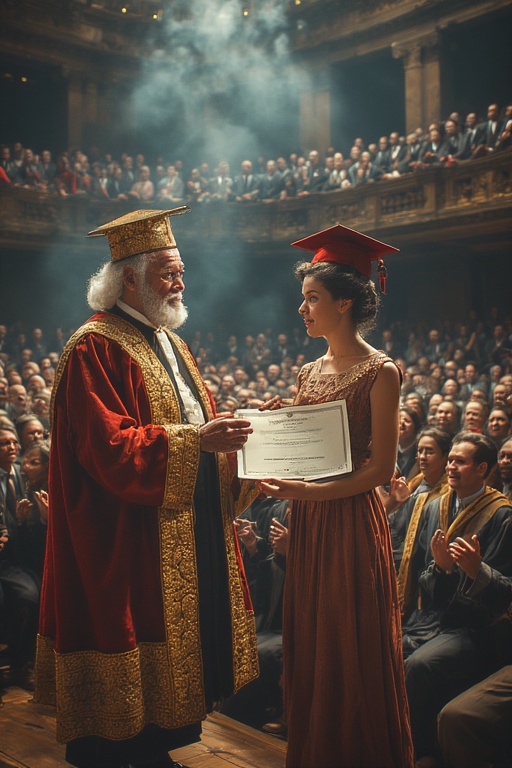
I understand the confusion. We speak of “poetic license” as if an official committee confers a certification or other formal document declaring you to be a writer. If you’re waiting for that, or searching the internet for where to apply, let me reassure you.
There’s no license.
No badge. No medal. By the power invested in me by nobody, I hereby pronounce you…a writer.
A Good Writer?
With that permission out of the way, your next thought might be, “I want more. I want to be a good writer. How do I do that?”
Again, no specific license exists. Moreover, no matter how hard you work at improving your writing, you have limited control over whether you become a good writer. The reading public has a say in it. They determine whether you’re a good writer or not.
The question then turns to, “How can I write in a way that appeals to readers?” The answer to that includes factors like (1) writing as well as you can, (2) writing what readers want to read, (3) having great timing, and (4) being lucky. You have some control over the first two, but none over the last two.
Lowered Expectations
Did you anticipate instant success as a writer? Time for resetting those expectations. Author Jessi Waugh wrote a great blogpost on that topic. In it, she included an example that stuck with me. Imagine a nursing home where the staff conducts training classes for the elderly residents. They learn activities such as painting, singing, pottery, yoga, etc. Do any of the aged participants believe they’ll excel at these newly-learned skills? No. They expect only to gain new knowledge, and have a little fun.
What if you approached writing the same way? What if you only did it because you enjoyed it? With this framing, any financial gain becomes an unexpected, surprising benefit.
Paperback Writer
Don’t adopt the attitude of the narrator of the Beatles song, “Paperback Writer.” In his fictitious pitch to an editor, he gets everything wrong and demonstrates unrealistic expectations. In particular, the line “If you really like it, you can have the rights/It could make a million for you overnight” shows someone possessing severe overconfidence.
Even the less outrageous line “And I need a job, so I want to be a paperback writer” demonstrates ignorance of why most beginning writers keep their day jobs.
Because it Feels Good
To sum up, I’ve given you license to write and helped you set reasonable expectations about becoming a good writer. Maybe you should write because it feels good. The rest is up to you and the reading public, not to—
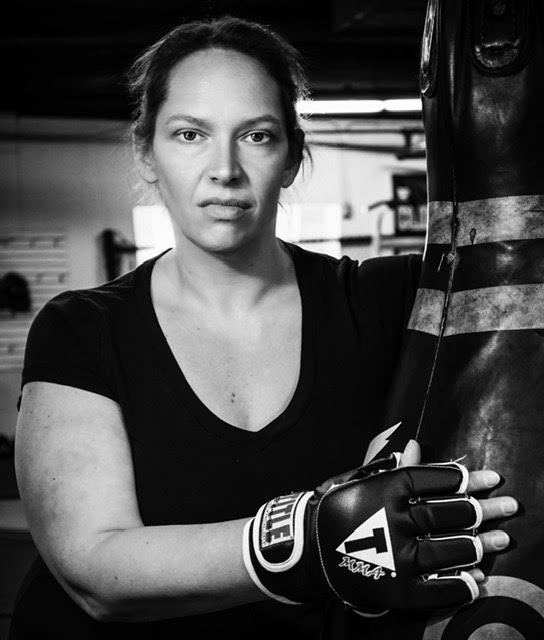
At the ICON 49.5 conference in Iowa City last month, I met and sat with author Tricia Andersen at a book signing. Luckily, I stayed on her good side—she knows kickboxing and Jiu Jitsu. If you’re wondering how a skill in martial arts helps with writing fiction, particularly romance fiction, read on to see how Tricia explains it.
Bio
Tricia Andersen lives in Iowa with her husband and her three children. She graduated from the University of Iowa with a Bachelor of Arts in English and from Kirkwood Community College with an Associate of Arts degree in Communications Media/Public Relations. She writes romance for all genres, from paranormal to historical to contemporary. She also has a couple of non-fiction historical titles and a few children’s picture books under the pen name, Lynette Andersen.
Interview
Poseidon’s Scribe: How did you get started writing? What prompted you?
Tricia Andersen: I have actually been writing since I was young. My mom has a “book” I wrote in preschool when I was five. It’s something I have loved to do since I can remember.
P.S.: Who are some of your influences? What are a few of your favorite books?
T.A.: I love books written by Karen Marie Moning. She made me realize that my voice and the way I write are a legitimate method. Before that, I felt that no one would want to read what I wrote because it wasn’t similar to what most authors sounded like. I also enjoy reading what my friends write. I think it’s important to support other authors.
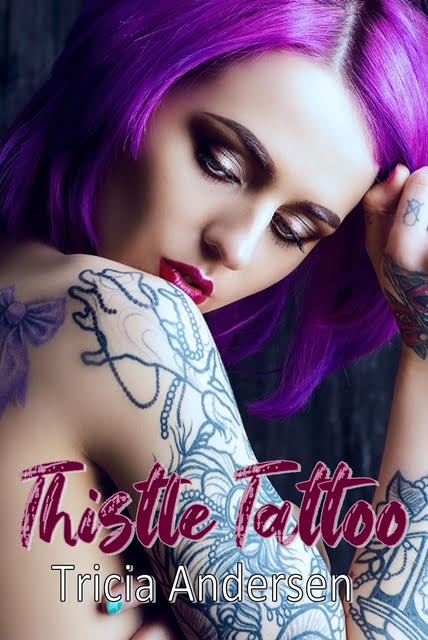
P.S.: Thistle Tattoo features a man struggling with PTSD, on the edge of suicide, who receives help from a woman working in a tattoo parlor. Do you find it difficult to address the touchy issues of PTSD and suicide?
T.A.: I do. I was honored to help with Operation First Response, an organization that assists wounded soldiers. That experience opened my eyes to the issues that veterans face. While the original premise (and first couple of chapters) of Thistle Tattoo was a short story for an anthology, it was a challenge to continue to flesh out Rhett while being aware of the real issue of PTSD and veteran suicide.
P.S.: Tell us about your experience with kickboxing and Brazilian Jiu Jitsu. Do you engage in these sports for research, enjoyment, or what?
T.A.: It has been both research and enjoyment. I didn’t originally plan to get involved in martial arts. When I got my first publishing contract (Black Irish is the first book I published with a small publisher), I wanted to write a book as a sort of thank you for my dreams coming true. I wanted to write a book with a character that had the same disorder my daughter has, Cyclic Vomiting Syndrome. I needed a male main character who had a sports-type job that others would look down on. I settled on Mixed Martial Arts (MMA). I reached out to the owner of a local MMA gym to see if he would answer questions for me. He agreed. While I was waiting for a reply, I noticed they had kickboxing classes. I always wanted to try so I talked my husband into one month. That was in 2013. I paused my training at the start of the pandemic in 2020 but I hope to get back to it soon. I love every bit of it. I love the people I worked out with. I love the path it has put me on. I do have a bronze medal in jiu jitsu from a competition in Chicago that I took part in. It has also given me a great deal of knowledge that I put into my books.
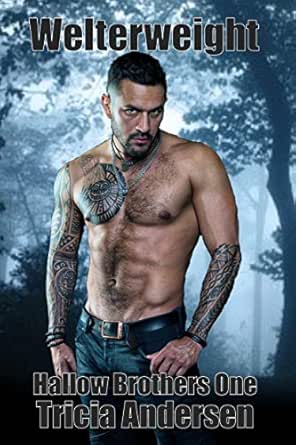
P.S.: Congratulations on earning your bronze medal. In Welterweight, the first in your Hallow Brothers series, you give readers an MMA fighter who’s also a werewolf, and the story involves mysteriously appearing tattoos. Tell us about Meg Riley, the female main character, and also what ties the Hallow Brothers series together?
T.A.: At the beginning of Welterweight, Meg is the new ex-girlfriend of Caleb’s opponent, the fighter who is currently holding the welterweight belt. She is tough, sassy and can hold her own against a werewolf with a bad attitude. Their tension melts throughout the book as they fall in love with each other and learn the few little secrets that they didn’t know about their mate.
Each of first seven books of the series profile a brother meeting his mate, forming the mating bond and confronting whatever trouble is brewing against them. There is an underlying plot that involves the reincarnation of an ancient evil Egyptian magician and the artifacts he conjured to help him take over the world. These items, along with the current version of him, can give anyone who possesses them whatever they want. Oh, one last thing. The current reincarnation is a mate of a Hallow Brother.
P.S.: What are the easiest, and the most difficult, aspects of writing for you?
T.A.: The easiest part of writing for me is coming up with an idea. I can listen to a song or watch a show and come up with a plot. The hardest is to find time to get the words down and to keep myself to one story.
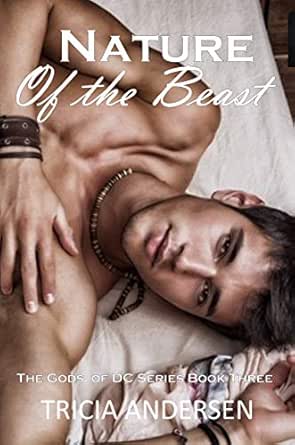
P.S.: Your novel Nature of the Beast, third in your Gods of DC series, explores love across an age difference—older woman and younger man. It also delves into Greek mythology, a common thread of this series. Without revealing any spoilers, tell us about Freddy and why he falls in love with Demeter.
T.A.: Freddy is one of my favorite characters. He is a leprechaun as well as the high priest for Ares, the Greek god of war. He works as the manager of Ares’ fight club, which is also the god’s temple in the modern world. He falls in love with Demeter at first sight despite her age. His feelings continue to grow as he gets to know her.
P.S.: How did you come to write four book series (The Hallow Brothers, Gods of DC, Black Irish, and Hard Drive)? Did you finish one series and move on to the next, or do you add a new book to a series when the mood strikes? Also, may each of your series be read in any order, or should readers start with the first book in each case? Are you expanding Fighting the Odds into a series as well?
T.A.: The Black Irish series was the first. I started the Hard Drive series while I was working on it as a huge thank you for my dreams coming true. I came up with the Hallow Brothers at the request of my second publisher. They wanted me to write a book about werewolves and required that there be a mating mark and they mate for life. I wrote what I thought was the most ludicrous thing I could come up with. They took it without hesitation. The Gods of DC came from a speed writing session on Facebook. The readers who were reading it as I wrote encouraged me to make it into a book. If I have a book about one Greek god, I have to keep on with the Parthenon.
Which book I write depends on my mood and what is going on in my head. The feedback from my readers also heavily influences what I write. If I write a cliffhanger, I don’t want them hanging on too long. Most of my books can be read in any order except the last three books of the Hallow Brothers series. Things might get confusing at that point without knowing what happened at the beginning.
I am hoping to get to the Fighting the Odds series soon.
P.S.: Apparently writing numerous novels, practicing Jiu Jitsu, and raising three children leaves you plenty of excess hours to make and sell embroidered tote bags. How do you squeeze that into your schedule?
T.A.: I squeeze them in by necessity. When someone wants one or I want to have bags on hand, I set aside other things I am working on to get them done. It helps that I have a very understanding family and that the machine that stitches them out works automatically without me. I only need to load the design, change the thread and make sure it doesn’t stitch on the wrong side of the bag. It’s a great time to work on writing while it hums along.
P.S.: What is your current work in progress? Would you mind telling us a little about it?
T.A.: As usual, I am working on two books at a time. My first is a sci-fi/horror with a little romance. It’s my first sci-fi and one of my first that is not heavily romantic. It is about a librarian who moves to Boston for her first job at the Boston Public Library. She meets a rather odd guy who spends all his time in the library reading archaeology books. She soon finds out that he is the vessel for an evil alien who sucks the blood out of humans to survive. She searches for answers – can she trust the real him? How can she help him? Does he want help?
The other one…I’m kind of keeping that one under wraps for a little bit longer. All I can say is there will be a lot of happy people when it comes out.
Poseidon’s Scribe: I guess we’ll have to wait for more news about that second one. What advice can you offer aspiring authors?
Tricia Andersen: Don’t give up. The publishing world, especially if you are an indie author, can be overwhelming. Approach each step one at a time. You can do it. Just don’t give up.
Poseidon’s Scribe: Thank you, Tricia. I love that advice.