
You’d like to write fiction. How hard can it be? Gotta know English—check. Gotta know some grammar rules—check. Gotta be able to group words into sentences—check.
Gotta have a story to tell—check. We’re all born story-tellers. Most of them start with, “You won’t believe what happened to me today…”
You plop into the chair, turn on your trusty computer, and get to work. Pretty soon—a few days maybe—you’ll finish this novel, send it to an agent, sign a contract with a hefty advance, and watch that book climb up the bestseller lists. There’ll be parties, book signings, and movie deals. Yep. Very soon now.
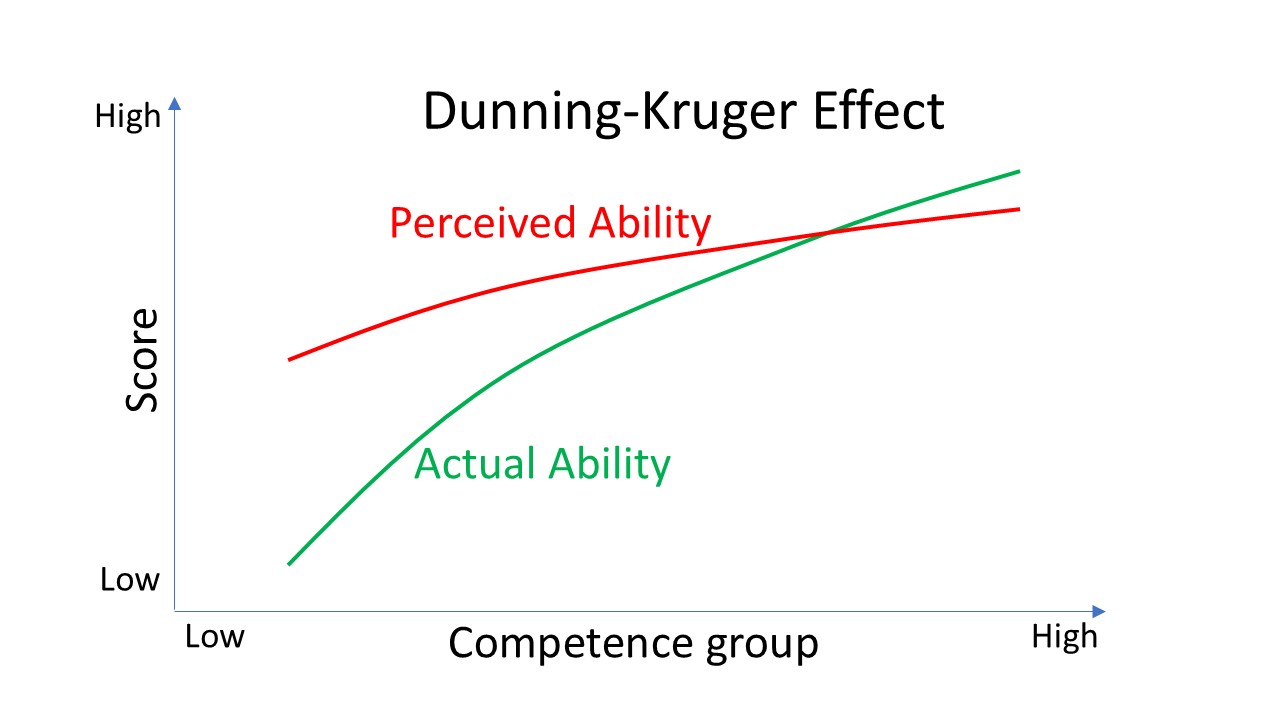
Dunning-Kruger Effect
First, David Dunning and Justin Kruger would like a word with you. Those psychologists observed how unskilled people overestimate their competence, while skilled people under-rate themselves to a minor extent.
In other words, you might not write a chart-busting novel on your first try.
Dunning and Kruger’s original study concentrated on social skills, grammar, and logical reasoning, but others have observed the effect in a wide variety of fields. I imagine the phenomenon varies from field to field. Most laymen don’t overestimate their abilities in brain surgery or rocket science.
However, writing fiction seems easy. We’ve all read novels and thought, “I could write better than this.”
It Could Happen
Of course, you might make a huge splash with your first novel. Just ask Emily St. John Mandel (Last Night in Montreal), E.L. James (Fifty Shades of Grey), Andy Weir (The Martian), and Garth Risk Hallberg (City on Fire). That partial list of best-selling debut novels covers only the last twenty years.
Think of those as rare exceptions. Winning-the-lottery exceptions. Olympic-gold-medal exceptions. Dealt-a-royal-flush exceptions. Possible, but not probable.
Not-So-Great Expectations
I don’t mean to dissuade you from your dream. One cruel corollary of the Dunning-Kruger Effect involves the “valley of despair.” As explained in these posts by Scott McCormick and Tiffany Yates Martin, the perception of ability and the reality of it can flip the other way.
As a beginning writer gets partway into creating a novel, the task starts to look way too hard. The writer experiences imposter syndrome, thinking of every chapter as useless tripe, unpublishable drivel. Why go on?
I’ll tell you why. What if all the great writers had slogged through the valley of despair—most of them did—and never climbed out? Just given up? They’d have denied themselves the publishing success they would have enjoyed.
Balanced Perspective
The problem in each case stems from a mismatch between expectations and actuality, between how good you think you are and how good you actually are. The mismatch causes unrealistic assessments of self-worth.
How do you find out the truth so you can form an accurate perception of your writing ability? Submit your writing for publication. If publishers don’t accept it, try self-publishing it. If readers don’t buy it, write something else.
Hone your craft. Take writing classes. Read how-to-write books. Attend writing conferences. Join a writing critique group. Read books in your genre and make notes about what those authors did.
Perhaps, with effort, you’ll see your name on the bestseller list before the name—
Poseidon’s Scribe