Time for the Dreaded Annual Performance Review

My boss gets on my nerves. In fact, he shares my nerves. He’s me.

The Scoreboard
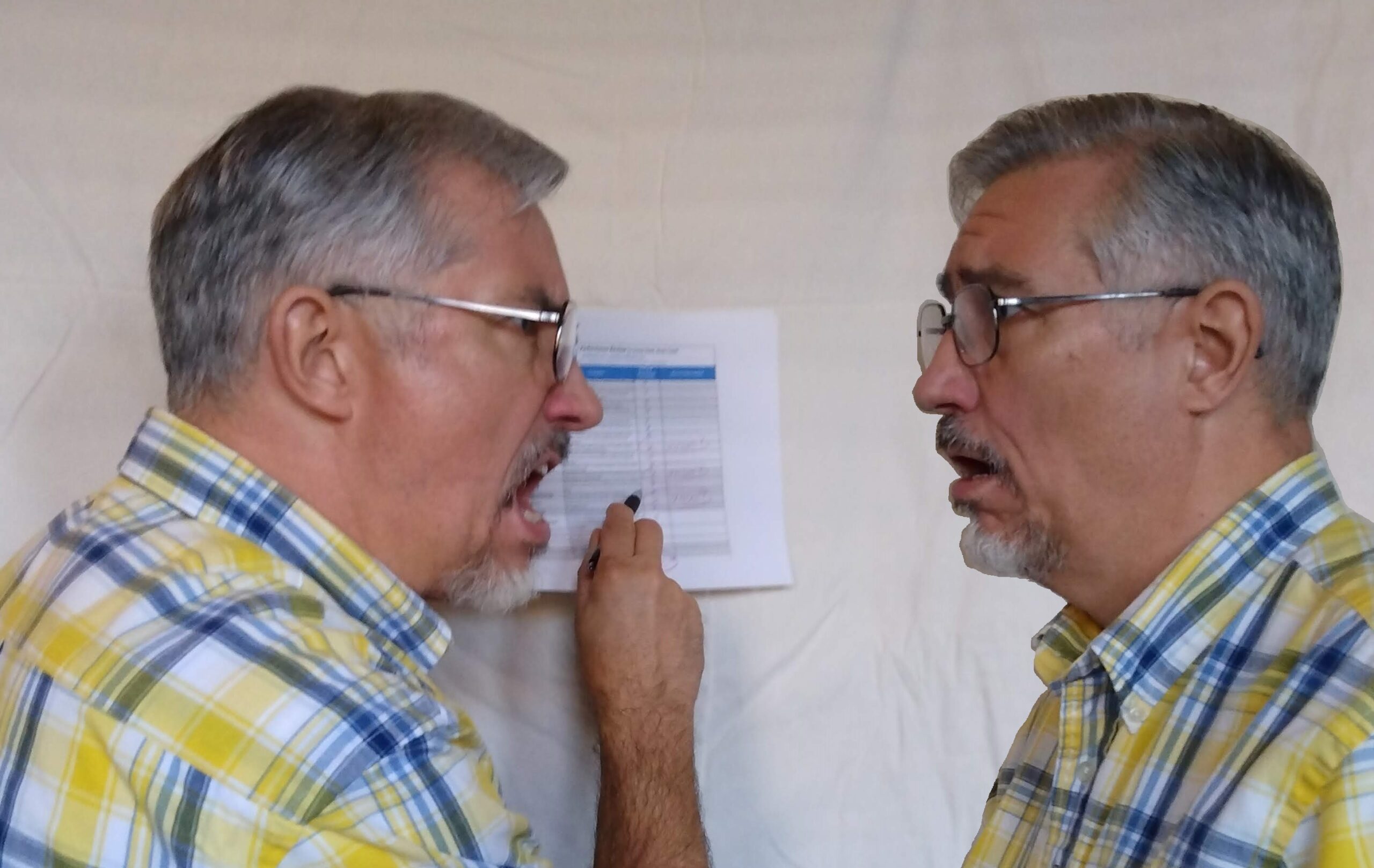
How did I perform as a writer in 2025? To find out, I used The Writer’s Performance Review scorecard by book coach Jennie Nash.

To use this scorecard, you rank each attribute from one to five. One = below expectations. Two = partially meets expectations. Three = meets expectations. Four = exceeds expectations. Five = far exceeds expectations.

You’re comparing actual performance during the year to expected performance. If you performed as expected, you’d give yourself a three. If you scored three in all twenty attributes, you’d get 60.

My 2025 Performance and Plan for Improving in 2026

I did a little better this year than last, earning 70 out of 100. However, I earned a 1 in one category and a 2 in two others.

That dismal 1 rating applied to “goal orientation” (just like last year)—a tough area for me. I don’t like counting words written or hours spent, so instead I’ll set goals for chapters written and chapters edited.

I earned ratings of 2 in “organization and planning” and “strategic thinking.” I’d gotten 2s in these areas last year as well. For organization and planning, I’ll measure my progress toward meeting the chapter goals I’ve set. For strategic thinking, I’ll see if I can connect with readers with a newsletter I plan to start in 2026.

Writing Accomplishments in 2025

This year, I:

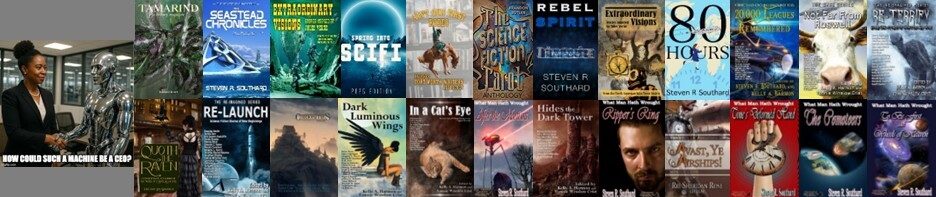
  • got my first short story collection, The Seastead Chronicles, published;
  • got my short story, “Its Tender Metal Hand” published in the anthology Spring into Scifi 2025;
  • got Extraordinary Visions: Stories Inspired by Jules Verne published in audiobook format;
  • wrote and published 53 blogposts (so far);
  • got interviewed on a podcast;
  • held four appearances and signings at bookstores;
  • did a signing at a scifi convention;
  • got my short story, “Infinity in Your Hand” accepted for publication in Tamarind Literary Magazine;
  • got my short story, “The Ballad of Joan Henry” accepted for publication in Fiction on the Web, where it’s slated to appear on February 2, 2026;
  • wrote seven poems for personal enjoyment;
  • made good progress on a final draft of novel number one (working title: The Hydronaut);
  • completed a second draft of novel number two (working title: Pressurized); and
  • completed a second draft of a humor travel book (working title: 48-State Odyssey).

Most employers and employees keep annual performance reviews private. My employer insists I display mine to the world as a service to other writers. May all of us who create written universes have a prolific and successful 2026. That’s the New Year’s wish of—

Poseidon’s Scribe

Afternoon with Authors

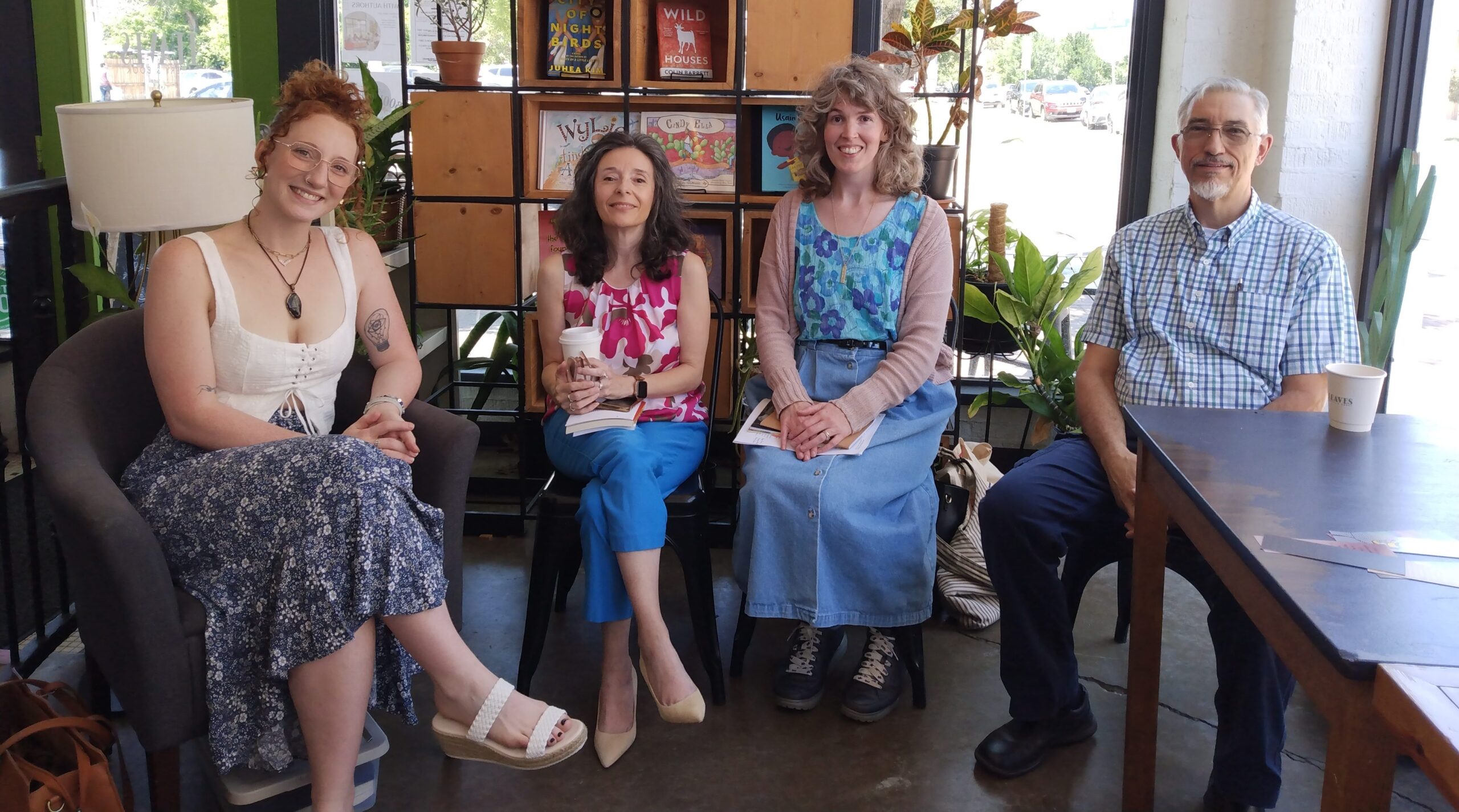
I participated in an Afternoon with Authors event today at the Leaves Bakery & Books store in Fort Worth, Texas.

From left to right in the photo are Megan Dawn, Fabiana Elisa Martínez, Amanda Russell, and me. I learned a lot from listening to them discuss the writing process. Each of us, of course, does things in a different way.

We discussed our individual writing rituals, the reason we started writing, our writing influences, our preference for outlining or free discovery, the reasons humans like stories, and the ways we hope our stories affect our readers.

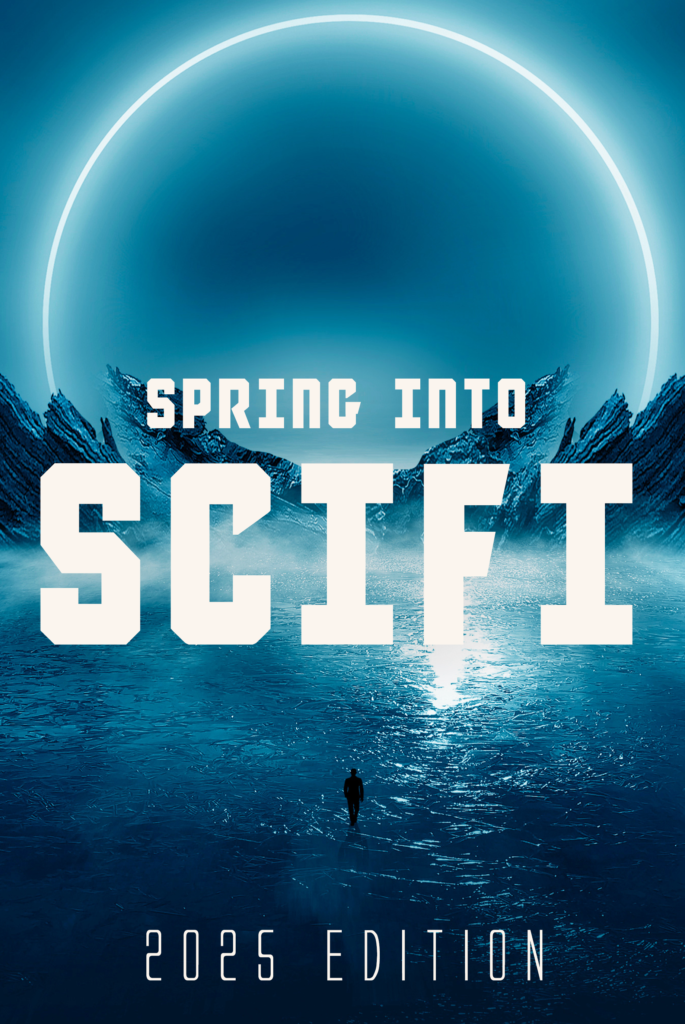
Each of us read some of our work. I read the beginning of my short story “Its Tender Metal Hand” from the new anthology Spring into Scifi (2025 Edition) by Cloaked Press.

I wish to thank, not only those fellow authors, but also the staff at Leaves Bakery & Books, and those who attended the event.

Announcement

My next book, The Seastead Chronicles, is scheduled to launch on May 17. Stay tuned to this blog for further details from—

Poseidon’s Scribe

Would You Trust a Robot to Care for Grandma?

Many of those who reach old age don’t enjoy the condition much. Those who tend to them, their caregivers, often wish they could do something else with their time.

A few years ago, I and (mostly) my wife, served as caregivers for my mother-in-law. As a scifi writer, I wondered if technology might help ease the burden for other caregivers someday.

I wrote a short story, “Its Tender Metal Hand,” about a caregiver robot of the near future. That story appears in the new anthology by Cloaked Press, Spring into Scifi, now available.

The Need

With human lifespans lengthening and the large Baby Boom generation reaching old age, the need for caregivers grows daily. Worsening the problem, the current labor shortage reduces the supply of potential workers in the field. The recent deaths of actor Gene Hackman and his caregiver wife, Betsy Arakawa, showcased the importance of the caregiver role.

The Tasks

A caregiver becomes a jack-of-all-trades, though few tasks rate high in difficulty—for humans. A good caregiver should:

  • Remind about, and provide, medication;
  • Navigate the patient around the home and yard;
  • Provide companionship via conversation;
  • Play games;
  • Perform necessary housework;
  • Clean and bathe the patient;
  • Monitor symptoms; and
  • Administer first aid if necessary.

The ideal, more advanced, caregiver might also:

  • Lift, reposition, and physically move the patient;
  • Perform medical tasks such as taking vital readings, and drawing blood;
  • Conduct physical therapy; and
  • Conduct psychological therapy.

The Current State

No single robot exists today that performs all those tasks. Some robots perform one or a few of the functions, but a true, general purpose caregiver robot awaits future development.

Today’s caregiver robots include: Aibo by Sony, ASIMO by Honda, Baxter by Rethink Robotics, Care-O-Bot 4 by Fraunhofer IPA and Mojin Robotics, Dinsow Mini 2 by CT Robotics, ElliQ by Intuition Robotics, Grace by Hanson Robotics, Human Support Robot (HSR) by Toyota, Mabu by Catalia Health, Mirokaï by Enchanted Tools, Moxi by Diligent Robotics, Nadine by NTU Singapore, NAO by Aldebaran Robotics, Paro by Japan’s National Institute of Advanced Industrial Science and Technology, Pepper by Aldebaran Robotics, Pria by Pillo Health and Stanley Black & Decker, Ruyi by NaviGait, and Stevie by Akara Robotics.

The Difficulties

Robots have advanced in capability, but still struggle with tasks humans find easy, and excel at some things people find problematic.

Two examples of the latter category occur to me. As mentioned in my previous blogpost, a robot will listen with patience to repeated re-tellings of the same story, and a sturdy robot could lift a heavy patient without spinal strain.

Also, certain tasks, even if robotically possible, present serious consequences if done wrong. For safety reasons, substantial testing must occur before permitting robots to perform medical tasks or to lift patients.

Perhaps the most elusive task for a caregiver robot, the last one to be achieved, will be to exhibit a truly human connection, a deep, sympathetic friendship bond.

Fictional Treatment

Movies have explored the concept of caregiver robots in various ways. Bicentennial Man and I, Robot touch on the idea. Big Hero 6 and Robot and Frank delve deeper, with caregiver robots integral to their plots.

I’m unfamiliar with two other caregiver robot movies: Android Kunjappan Version 5.25 or its remake, Koogle Kuttappa.

My story, “Its Tender Metal Hand,” features a general-purpose caregiver robot capable of most of the tasks mentioned above. However, it lacks an emotional bond, an understanding of the human condition.

But maybe it can learn.

Perhaps an advanced, capable caregiver robot lies in the future for—

Poseidon’s Scribe

Time to Spring into Scifi

Welcome to Spring! Starting today, you can Spring into Scifi by purchasing the new anthology by Cloaked Press, available here. The book contains one of my short stories.

My Story

My tale, “Its Tender Metal Hand,” concerns an aged man, Maleko Koamalu, whose remaining family can’t care for him.

They pay for a caregiver robot.

Maleko hates the robot, but the robot persists in taking care of his needs. Robots can do many things, but can they help an old man reconcile with his child before it’s too late?

If the story’s touching ending prompts a tear or two, well, sorry not sorry.

Inspiration

I wrote it after my wife and I served as caregivers for my mother-in-law. It occurred to me that a well-designed robot could perform all the required tasks. In a couple of ways, a robot might prove superior to a human caregiver. Robots often excel at the things humans struggle with, and vice versa.

Elderly people sometimes repeat themselves, forgetting that they’ve just said the same thing. This can annoy human caregivers, but a robot will listen patiently, over and over, responding each time as if hearing it afresh.

Also, human caregivers often find it difficult to lift and convey heavy patients between bed and wheelchair, or wheelchair and toilet. A well-built robot could do this with ease.

The Anthology

The book contains thirteen other short stories I look forward to reading. Edited by Andrew Ferrell and published by Cloaked Press, this new science fiction anthology, Spring into Scifi, is available here and here so far, with more distributors picking it up soon. As I may have mentioned, it includes a story written by—

Poseidon’s Scribe