Author Interview—Tricia Andersen

At the ICON 49.5 conference in Iowa City last month, I met and sat with author Tricia Andersen at a book signing. Luckily, I stayed on her good side—she knows kickboxing and Jiu Jitsu. If you’re wondering how a skill in martial arts helps with writing fiction, particularly romance fiction, read on to see how Tricia explains it.
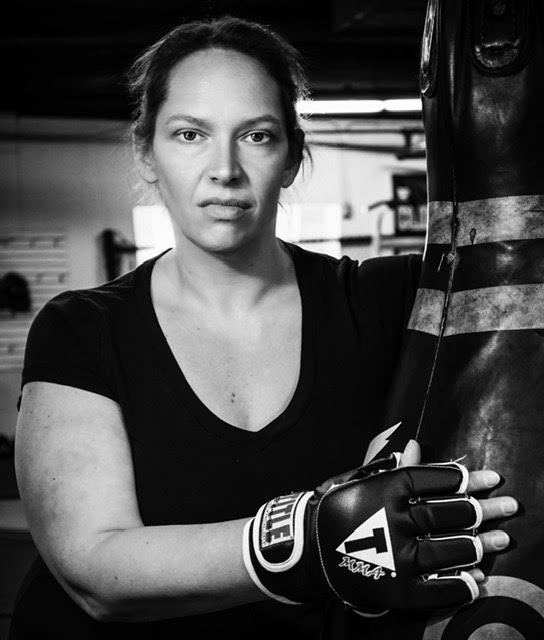
Bio

Tricia Andersen lives in Iowa with her husband and her three children. She graduated from the University of Iowa with a Bachelor of Arts in English and from Kirkwood Community College with an Associate of Arts degree in Communications Media/Public Relations. She writes romance for all genres, from paranormal to historical to contemporary. She also has a couple of non-fiction historical titles and a few children’s picture books under the pen name, Lynette Andersen.

Interview

Poseidon’s Scribe: How did you get started writing? What prompted you? 

Tricia Andersen: I have actually been writing since I was young. My mom has a “book” I wrote in preschool when I was five. It’s something I have loved to do since I can remember.

P.S.: Who are some of your influences? What are a few of your favorite books? 

T.A.: I love books written by Karen Marie Moning. She made me realize that my voice and the way I write are a legitimate method. Before that, I felt that no one would want to read what I wrote because it wasn’t similar to what most authors sounded like. I also enjoy reading what my friends write. I think it’s important to support other authors.
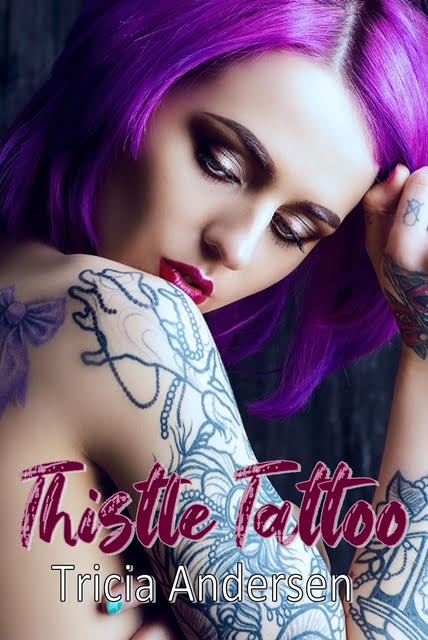
P.S.: Thistle Tattoo features a man struggling with PTSD, on the edge of suicide, who receives help from a woman working in a tattoo parlor. Do you find it difficult to address the touchy issues of PTSD and suicide?

T.A.: I do. I was honored to help with Operation First Response, an organization that assists wounded soldiers. That experience opened my eyes to the issues that veterans face. While the original premise (and first couple of chapters) of Thistle Tattoo was a short story for an anthology, it was a challenge to continue to flesh out Rhett while being aware of the real issue of PTSD and veteran suicide.

P.S.: Tell us about your experience with kickboxing and Brazilian Jiu Jitsu. Do you engage in these sports for research, enjoyment, or what?

T.A.: It has been both research and enjoyment. I didn’t originally plan to get involved in martial arts. When I got my first publishing contract (Black Irish is the first book I published with a small publisher), I wanted to write a book as a sort of thank you for my dreams coming true. I wanted to write a book with a character that had the same disorder my daughter has, Cyclic Vomiting Syndrome. I needed a male main character who had a sports-type job that others would look down on. I settled on Mixed Martial Arts (MMA). I reached out to the owner of a local MMA gym to see if he would answer questions for me. He agreed. While I was waiting for a reply, I noticed they had kickboxing classes. I always wanted to try so I talked my husband into one month. That was in 2013. I paused my training at the start of the pandemic in 2020 but I hope to get back to it soon. I love every bit of it. I love the people I worked out with. I love the path it has put me on. I do have a bronze medal in jiu jitsu from a competition in Chicago that I took part in. It has also given me a great deal of knowledge that I put into my books.
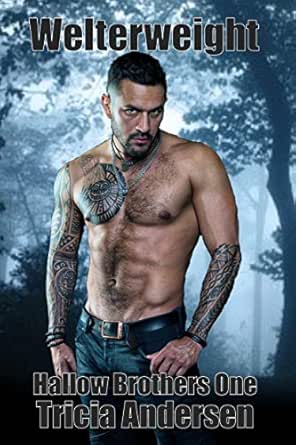
P.S.: Congratulations on earning your bronze medal. In Welterweight, the first in your Hallow Brothers series, you give readers an MMA fighter who’s also a werewolf, and the story involves mysteriously appearing tattoos. Tell us about Meg Riley, the female main character, and also what ties the Hallow Brothers series together?

T.A.: At the beginning of Welterweight, Meg is the new ex-girlfriend of Caleb’s opponent, the fighter who is currently holding the welterweight belt. She is tough, sassy and can hold her own against a werewolf with a bad attitude. Their tension melts throughout the book as they fall in love with each other and learn the few little secrets that they didn’t know about their mate.

Each of first seven books of the series profile a brother meeting his mate, forming the mating bond and confronting whatever trouble is brewing against them. There is an underlying plot that involves the reincarnation of an ancient evil Egyptian magician and the artifacts he conjured to help him take over the world. These items, along with the current version of him, can give anyone who possesses them whatever they want. Oh, one last thing. The current reincarnation is a mate of a Hallow Brother.

P.S.: What are the easiest, and the most difficult, aspects of writing for you?

T.A.: The easiest part of writing for me is coming up with an idea. I can listen to a song or watch a show and come up with a plot. The hardest is to find time to get the words down and to keep myself to one story.
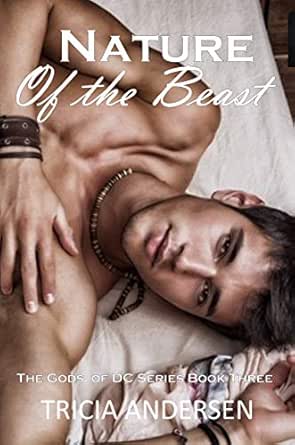
P.S.: Your novel Nature of the Beast, third in your Gods of DC series, explores love across an age difference—older woman and younger man. It also delves into Greek mythology, a common thread of this series. Without revealing any spoilers, tell us about Freddy and why he falls in love with Demeter.

T.A.: Freddy is one of my favorite characters. He is a leprechaun as well as the high priest for Ares, the Greek god of war. He works as the manager of Ares’ fight club, which is also the god’s temple in the modern world. He falls in love with Demeter at first sight despite her age. His feelings continue to grow as he gets to know her.

P.S.: How did you come to write four book series (The Hallow Brothers, Gods of DC, Black Irish, and Hard Drive)? Did you finish one series and move on to the next, or do you add a new book to a series when the mood strikes? Also, may each of your series be read in any order, or should readers start with the first book in each case? Are you expanding Fighting the Odds into a series as well?

T.A.: The Black Irish series was the first. I started the Hard Drive series while I was working on it as a huge thank you for my dreams coming true. I came up with the Hallow Brothers at the request of my second publisher. They wanted me to write a book about werewolves and required that there be a mating mark and they mate for life. I wrote what I thought was the most ludicrous thing I could come up with. They took it without hesitation. The Gods of DC came from a speed writing session on Facebook. The readers who were reading it as I wrote encouraged me to make it into a book. If I have a book about one Greek god, I have to keep on with the Parthenon.

Which book I write depends on my mood and what is going on in my head. The feedback from my readers also heavily influences what I write. If I write a cliffhanger, I don’t want them hanging on too long. Most of my books can be read in any order except the last three books of the Hallow Brothers series. Things might get confusing at that point without knowing what happened at the beginning.

I am hoping to get to the Fighting the Odds series soon.

P.S.: Apparently writing numerous novels, practicing Jiu Jitsu, and raising three children leaves you plenty of excess hours to make and sell embroidered tote bags. How do you squeeze that into your schedule?

T.A.: I squeeze them in by necessity. When someone wants one or I want to have bags on hand, I set aside other things I am working on to get them done. It helps that I have a very understanding family and that the machine that stitches them out works automatically without me. I only need to load the design, change the thread and make sure it doesn’t stitch on the wrong side of the bag. It’s a great time to work on writing while it hums along.

P.S.: What is your current work in progress? Would you mind telling us a little about it?

T.A.: As usual, I am working on two books at a time. My first is a sci-fi/horror with a little romance. It’s my first sci-fi and one of my first that is not heavily romantic. It is about a librarian who moves to Boston for her first job at the Boston Public Library. She meets a rather odd guy who spends all his time in the library reading archaeology books. She soon finds out that he is the vessel for an evil alien who sucks the blood out of humans to survive. She searches for answers – can she trust the real him? How can she help him? Does he want help?

The other one…I’m kind of keeping that one under wraps for a little bit longer. All I can say is there will be a lot of happy people when it comes out.

Poseidon’s Scribe: I guess we’ll have to wait for more news about that second one. What advice can you offer aspiring authors?

Tricia Andersen: Don’t give up. The publishing world, especially if you are an indie author, can be overwhelming. Approach each step one at a time. You can do it. Just don’t give up.

Poseidon’s Scribe: Thank you, Tricia. I love that advice.

Web Presence

Readers can find out more about Tricia from many online sources, including her website, on Facebook, Amazon, Bookbub, Bluesky, Twitter, Instagram, TikTok, and Goodreads.
Author Interview — Lauren Marrero

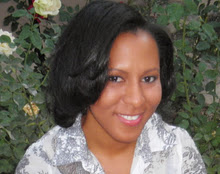
We’ve been meeting fascinating authors recently through my interviews, and that streak continues today with my interview of Lauren Marrero.

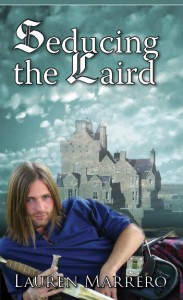
Lauren-Marrero1On her website, Lauren describes herself as a sapiosexual romance novelist, cat lady, and adventuress. She’s the author of the novel Seducing the Laird.

Here’s the interview:

Poseidon’s Scribe: When and why did you begin writing fiction?

Lauren Marrero: I was a writer long before I was consciously aware of it. Back in school, I became so excited about writing essays—my friends definitely thought I was weird. It wasn’t until college, while choosing a major, that I realized writing was my passion.

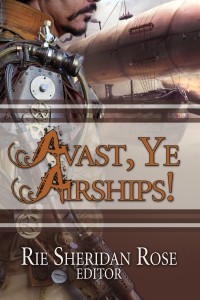
P.S.: You have a short story, “Her Majesty’s Service,” appearing in the anthology AvastYeAirshipsAvast, Ye Airships! What is your story about?

L.M.: After a passionate one night stand, a young woman discovers the man she slept with is caught up in a dangerous world of intrigue.

P.S.: You’ve written a historical novel, Seducing-the-Laird-CoverSeducing the Laird. Please introduce us to the main character, Verena.

L.M.: Set during the late middle ages, Verena is the perfect spy, working for the ruthlessly-ambitious Lord Gundy. Her mission is to recover a fabled cache of Roman silver, lost for hundreds of years beneath the stronghold of the Scottish laird Cairn McPherson. She must use all of her powers of seduction and intelligence to infiltrate Cairn’s household, but this mission may be her undoing.

Verena is an anti-hero, a woman forced to do whatever she must to survive. She is deeply disturbed by her assignment, knowing that her actions may cause the destruction of a clan she has grown to love. This is a story about redemption and realizing that it is never too late to be a better person.

P.S.: Reviewers keep saying they couldn’t put your novel down, that you had them from page one. Would you care to share your secret for how you achieve that?

L.M.: Honestly, I was a little surprised to see such positive reviews for a first novel. Sure, I loved it, but I wasn’t sure my audience would love the same characters and laugh at the same jokes.

I tried to bring my enthusiasm for the characters onto each page. I constantly asked the opinions of my friends and family while writing. Did they think a scene was realistic? How would they feel if a character behaved a certain way? That feedback helped to make the story much better.

P.S.: I see you enjoy traveling. Are all your stories set in places you’ve been?

L.M.: Unfortunately, no. Unlike Nandi from “Her Majesty’s Service,” I have never been to Cairo, but that is definitely on my list!

P.S.: The topic of food keeps coming up on your website. How do you use food in your fiction writing–just to show the characters being real, or to give credibility to the historical time and place setting, or to advance the plot?

L.M.: People say to write what you love. I am a foodie. I believe knowing people’s tastes gives insight into their character. Laird Cairn McPherson is a tough and capable leader, but has an incurable sweet tooth. Verena cleverly uses that knowledge during her seduction. When he is at his lowest moment, not knowing if he will live or die, Verena appears before him like an angel of mercy, offering all the comforts of home. It is no wonder he falls for her!

P.S.: If you could bring back a dead author to talk to over dinner, whom would it be, and what would you be anxious to ask?

L.M.: I consider Oscar Wilde to be one of the greatest writers. Few authors are so skillful at combining emotions. While reading his work, I want to laugh, cry, beat up some characters, and hug others. I wouldn’t presume to ask Oscar Wilde anything. I would just let him talk.

P.S.: In what way is your fiction different from that of other authors of historical romance?

L.M.: I wanted my novel to be a more evolved story. There is intrigue, espionage, ghosts, malicious fairies, and the threat of war. Yes, the characters fall in love, but there is much more to the book.

P.S.: What is your current work in progress? Would you mind telling us a little about it?

L.M.: I am currently working on the sequel to Seducing the Laird. In the first book, I introduced an entire family of spies, each with complex stories and diverse backgrounds. I believe each of them deserve to fall in love.

The next novel takes place in France during the Italian Wars. Italy, France, and Spain are pitted against each other. It is up to the spies to resolve it –and break a few hearts in the process.

Poseidon’s Scribe: What advice can you offer aspiring writers? In particular, what do you wish someone had told you about writing or getting published that you had to learn the hard way?

Lauren Marrero: Make friends. I found that the best way to stay motivated is to be around like-minded people. Join writing groups and attend readings by local authors. It may take years before you see your work on a bookshelf, but if you can keep your attention on writing, it will keep you focused on your goal.


Thanks, Lauren! Luckily for readers of my blog, I know where you can find out more about Lauren Marrero.  She’s on Twitter, Facebook, Goodreads, and Amazon. Her website is here.

Poseidon’s Scribe

February 9, 2015Permalink

Formula for Success

Have you ever written formula fiction? Is it good or bad to do so?  What is it, exactly?

formula 2If your story re-uses the plot, plot devices, and stock characters of other stories, then you’ve written formula fiction.  It’s different from the term genre, in that genre fiction makes use of the same setting and style as other works within the genre, but genre fiction may vary plot and characters considerably.  I termed such writers formulists in a brief discussion here.

Although literary critics tend to dismiss formula fiction, there are so many published stories, it’s difficult to come up with entirely new plots and characters.

Usually there’s a good reason why a writer chooses a formula.  It works!  It’s a curious thing that readers enjoy reading formula fiction.  They’re comfortable with the character types, and although they know how the story will come out, they follow along anyway.  Readers can forgive a great deal if the author tells the story in an interesting way.

I’ll discuss plot types in a future blog post, but with formula fiction there’s no real attempt to vary from a proven plot line too much.  Just re-use what’s been done before, perhaps with slight deviations in setting or style, or specific plot events.

The use of stock characters frees the writer from having to include a lot of explanation or description.  After only a few words, the reader understands all there is to know.  Again, it’s possible to vary a bit from the standard character type, but there’s little need.

I said it’s a curious thing that readers would enjoy formula fiction, but perhaps it’s not so mysterious.  Before there was a formula, there was an enterprising writer (or oral storyteller) who conveyed the story for the first time.  It struck a chord.  It was successful.  After that, why not just do variations on a popular and effective theme?

Examples of formula fiction include romance, horror fiction, and space opera.  Each of these has withstood the test of time because each has appealing characteristics that really reach an audience, and keep on reaching generations of new readers.

In the case of romance fiction, readers enjoy the odd or awkward meeting (the ‘meet-cute’) between man and woman characters who seem opposite or ill-fitting at first, then they warm to each other, only to have a parting of the ways, and finally reunite in love at the end.  An overdone plot line?  Apparently not yet, since this formula sells more books than any other by far.

In horror fiction, at least the cinematic type, the audience sees a mixed-gender group of characters who are isolated in some way and face a horrible entity bent on their destruction.  One by one the characters are killed until only a lone female—the so-called final girl— is left to either defeat the entity or escape.  Another plot line that has not run its course.

For space opera, readers are treated to a heroic character in the distant future, somewhere in outer space, confronting a menace threatening the survival of the hero’s people.  The hero strives against the evil force, and just when it appears all is lost, the hero is able to defeat the menace.  This formula continues to work.

Despite what critics might say, there’s nothing wrong with formula fiction, particularly if you’d like to sell your stories.  There’s plenty of room within the constraints of the formula to display your creativity as a writer.  So, like a mad scientist (Mwahahaha!), go ahead and use your (fiction) formula to take over the world!  Good luck, says—

                                                            Poseidon’s Scribe

Romancing the Short Story

Bet you didn’t expect me to write a blog entry on writing romance short stories, did you?  Well, for one thing, if you desire to become an author, you should learn to write about anything, even topics or genres you know little about or have little interest in.  You never know what you’ll end up being good at.

Second, it’s hard to ignore the fact that the romance genre has a vast and insatiable readership.  Perhaps not so much in the short story length as in the novel length, but again, what if you’ve got a potentially great romance writer inside you, but you never try the genre to find out?

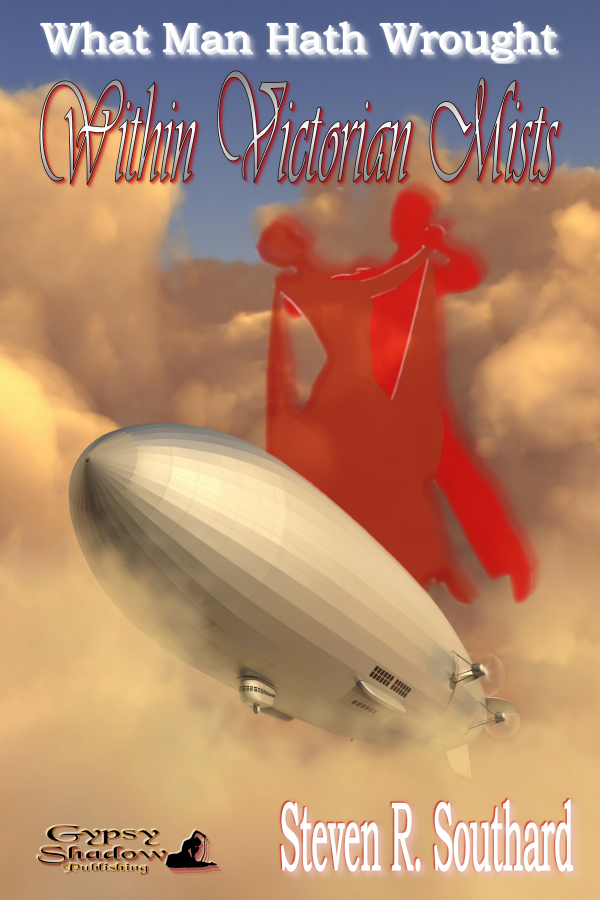
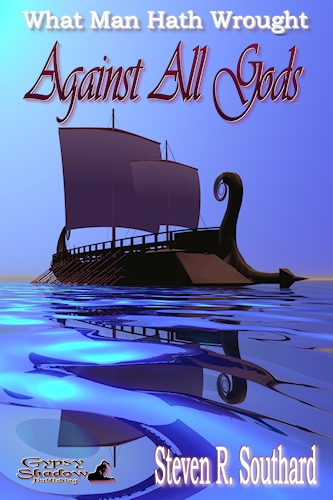
And, it turns out I have written a couple of short story romances.  “Within Victorian Mists” is a steampunk romance, and “Against All Gods” is a romance story set in Ancient Greece.  So I am nominally qualified to discuss the topic.

To figure out what’s special or different about romance short stories, let’s start with basics.  Any fictional story must have certain elements, including character, plot, conflict, setting, style, and perhaps theme.  We’ll dispense with the last three by saying that romance stories can take place in just about any setting, be written in any style, and can explore just about any theme.

Romance stories are character-driven.  The characters must be intriguing and complex.  The point-of-view character should have aspects with which readers can identify and empathize.

The plot is the emerging love between the characters.  Choose your events such that they enable the characters’ love to either develop, or be tested, or both.

The conflict is the protagonist’s struggle to attain love itself, not the sexual act or the fleeting emotions of love, but the deep and shared realization that the two major characters cannot live without each other.

In a short story, you’re going to have to be choosy.  It’s very difficult, in just 1000 to 10,000 words, to encompass the typical progression of a love story in its entirety, from the first meeting, through the burgeoning attraction, through the testing or challenge, to the final realization of love.  There’s a natural pace to the process of falling in love, and the short story length doesn’t fit that pace as well as the novel length does.

Consider selecting one vignette, one emotion-charged event of a larger love story, and leave the earlier parts as backstory, and just hint at the later events.  To explain what I mean, let’s consider what Christie Craig and Faye Hughes describe as the plot points of a romance story, the events that sum up to the plot arc:

  • Introduction/meeting
  • First acknowledgement of attraction
  • First acknowledgement of emotional commitment
  • Dark moment (what I’d call a test of love’s strength)
  • Resolution

Your short story could consist of just one of those events, and hint at the rest.  Charge your story with emotion, and ensure the protagonist experiences an internal change in the direction of love, and that could be sufficient.  It might be all you can manage within a short story format.

Have you written a romance short story?  Submitted it for publication?  Leave a comment and let me know what happened.  When you began writing did you ever think you’d write a romance? No?  Neither did—

                                                                Poseidon’s Scribe


November 11, 2012Permalink