Nostradamus Helped Me See the Future of Scifi

Want to know what science fiction will get published in 2026? You’ve come to the right place, at the right time.
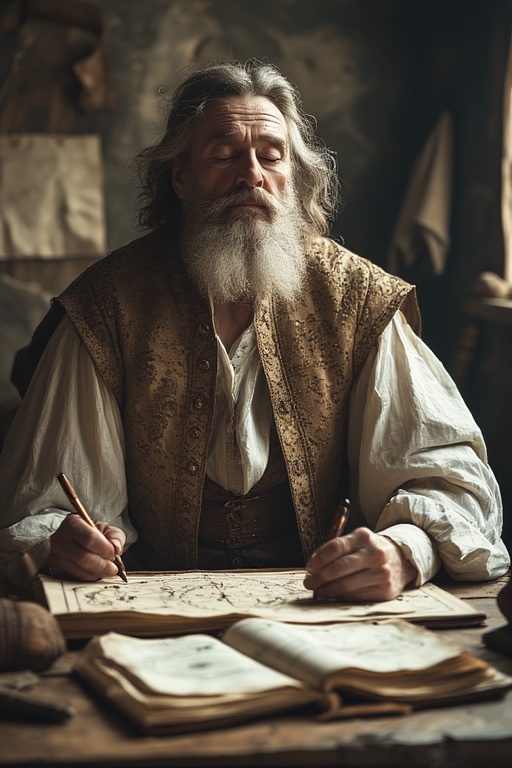
Nostradamus Image generated using Perchance.org

I’ve made scifi publication predictions before, with little success. However, the methods I used—crystal balls, tea leaves, tarot cards, astrology, palmistry, ChatGPT, and a Ouija Board—didn’t produce accurate prophesies.

This year, I sought the most reliable and proven prognostication technique of all—the method of Nostradamus himself.

Imitating that 16th Century French seer, I secreted myself in the attic, meditated, prayed, consulted astrological charts, and made sketches and notes of the visions that came to me. To my surprise, a set of four-line poems—quatrains—emerged from this process. Contrasting with those of Nostradamus, my quatrains came to me in English.

I’ll provide the quatrains, and my interpretation of their cryptic phrasing, below.

Translated SF

    In ’26 the science fiction bands
    Will stretch to languages of distant lungs
    The tales from writers writ in other lands
    Will translate fiction from their foreign tongues

I believe this means we’ll see a surge of translated science fiction in 2026.

Space Opera

    The coming year will see space opera bloom
    Vast empires ’cross the galaxies galore
    Equipped with FTL, the starships zoom
   Through epic dramas, aliens, and war

This suggests a revival of space opera in 2026. FTL = faster than light.

Characters Beyond Gender

    Some authors will play more with gender norms
    Not always stuck with females and with males
    Their characters will switch or take new forms
    Within new trans and gender-fluid tales

I interpret this to mean we should expect to leave female and male characters behind, in favor of new genders, changeable genders, non-genders, and who knows what else.

Serial Fiction

    We’ll see rebirth of serials again
    With shorter bites to match attention spans
    Subscriptions, author newsletters, and then
    Some dedicated apps with bundled plans

If I’m construing the meaning of this in the right way, we should find authors writing short chunks with cliffhanger endings to entice readers to subscribe to read the complete stories in serial form.

Hybrid Genres

    Next, hybrid genres will remain a trend
    Scifi can mix with others all the time
    To form a very complement’ry blend
    With horror, and romance, and even crime

This quatrain hints at the continuing trend of mixing scifi with other genres.

Year of the Horse

    In Chinese myth, this next year marks the horse
    And scifi books will emulate the steed
    With high adventure, optimistic force
    Heroic, active, with pulse-pounding speed

It’s hard to extract much meaning from this. Perhaps it’s suggesting scifi in 2026 will take on equine attributes of power, independence, perseverance, and confidence.

Conclusion

Look for the results of these predictions next December. Being curious, I couldn’t resist applying Nostradamus’ methods to discover what the new year will mean for me. Here’s what resulted:

    This lies beyond the sight of any seer
    Will he soon join “best-selling author” tribe?
    He’ll work hard but the outcome is unclear
    It’s unknown what awaits—

Poseidon’s Scribe
How Well Did I Predict Science Fiction this Year?

It’s the most embarrassing time of the year…when I judge how well I did at foretelling what types of science fiction books would be published this year.

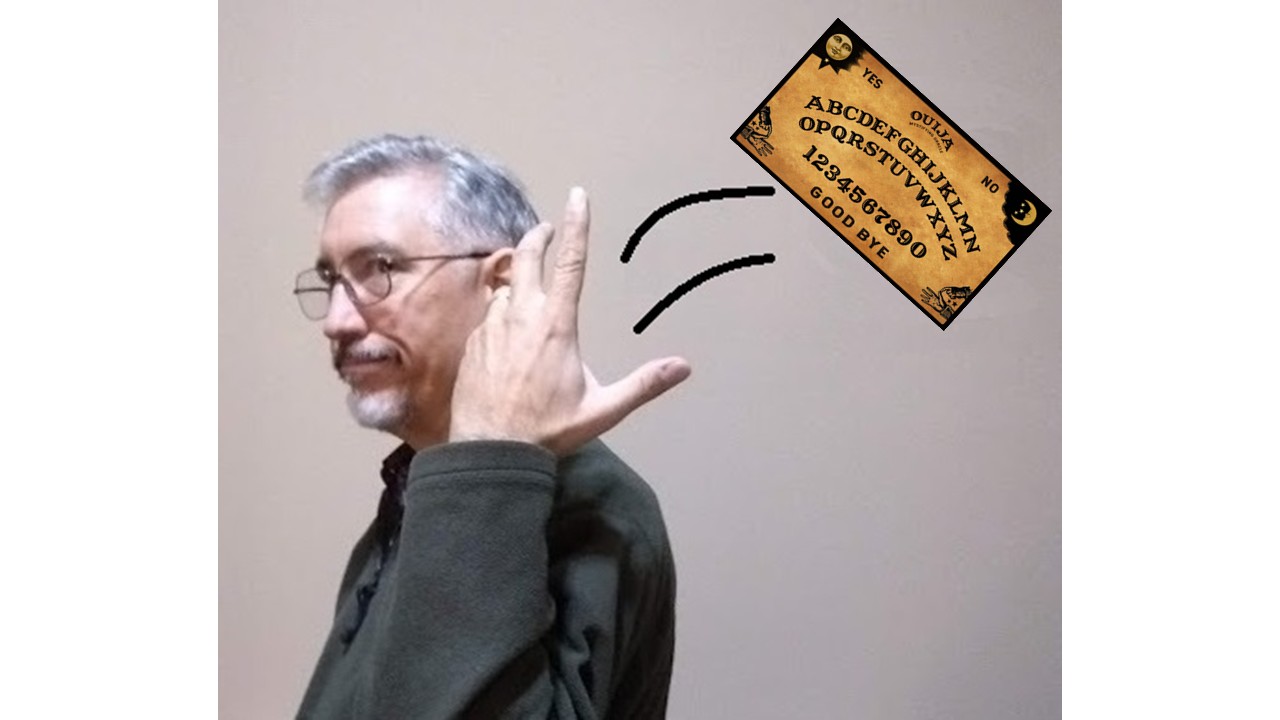
In past years, I’ve tried and failed with crystal balls, tea leaves, tarot cards, astrology, palmistry, and ChatGPT, but last year at this time I used a sure-fire method—the Ouija Board. Let’s see how well I did:

Prediction: Climate Change and Solarpunk

Authors will give us post-apocalyptic, post-climate-disaster recovery stories with emerging solarpunk civilizations.

Assessment:

The Ouija Board did well here, and I found several examples, including:

  • All the Water in the World by Eiren Caffall. Future glaciers have melted, flooding the earth and forcing people to live in the topmost floors of skyscrapers.  
  • Private Rites by Julia Armfield. An environmental crisis brings continuous, worldwide rain.  
  • Monk and Robot by Becky Chambers. This book combines two previous stories, A Psalm for the Wild-Built and A Prayer for the Crown-Shy, which take place in a far-future solarpunk utopia.

Prediction: Driverless Cars

Writers will show us the pros and cons of more advanced driverless cars than we have now.

Assessment:

The Ouija board called this category as well. These books drive on the dark/horror side of the road:

  • The Driverless: Phantom Wheels by Leonard Boblea Adrian. This horror story features an evil, driverless car.
  • An ICE-Y Ride: A Dystopian Tech Horror Short Story by TH Sterling. An autonomous car accuses its passenger of sedition and becomes her prison.

Prediction: Futurism Beyond Africa

While Afrofuturism will continue, we’ll see books exploring the future of other cultures and regions.

Assessment:

This didn’t seem as widespread as the Ouija board made it sound. I only found one example:

  • You Must Take Part in Revolution: A Graphic Novel by Badiucao and Melissa Chan. This is set in Hong Kong and Taiwan during a future war between the U.S. and China.

Prediction: Fact-ion

Scifi authors will combine their fiction with fact. That is, they’ll base a fictional tale on a true event.

Assessment:

Proving that Ouija boards aren’t all-knowing, I found no examples of this in 2025.

Prediction: Future Romance

Setting a romance novel in the future is fine, but in the coming year, authors will further explore how human relationships might change in the future. What bizarre, new kinds of relationships might emerge?

Assessment:

The board played it safe with this one. Anyone could’ve made this prediction for almost any year. I stopped looking for examples after finding these:

  • Useless: Male Superhero in a Reverse World by Strawman Context. A man finds himself in an alternate world where women far outnumber men and hold all the power.
  • A Future Undone: A Gay Sci-Fi Romance Thriller About Time Travel and Artificial Intelligence by Kurt Harding. The subtitle says it all.
  • The House That Learned Her Name by Wanda Miller. A grieving widow develops a relationship with her smart home.
  • Mated to the Possessive Cyborg: An Impreg Cyborg Sci-Fi Romance by Laura Cauldwell. Like Beauty and the Beast, only this beast is a troubled, military cyborg.

Prediction: Interacting With Readers

Remember choose-your-own-adventure books? In 2025, authors will find new ways to allow the reader to influence the story-reading experience.

Assessment:

Ouija boards are interactive by nature, and I got the impression my board enjoyed making this prediction. Here are some examples I found:

  • Unseen Archives Magazine: An Interactive Graphic Novel Experience by Anthony L Abraham. The more I read about this magazine, the less I understood, but it seems interactive.
  • Access The Bridge: A SciFi Choose-Your-Own-Path Adventure GameBook by Henry Butler. This goes beyond standard choose-your-own adventure books, since the wrong paths provide knowledge needed for other paths.
  • Lumen Calls: A Pathfinder Adventure by Gene Anders. A strange anomaly beckons near a small town. You, the reader, make choices, but each choice changes how the anomaly sees you.

Prediction: Linked Minds

Extrapolating the possibilities of Elon Musk’s Neuralink, writers will craft stories featuring human characters interfacing with computers via brain implants.

Assessment:

The Ouija board didn’t exactly go out on a limb in predicting more books with this long-time staple of science fiction, and authors obliged in 2025:

  • Virtuality by Derek Cressman. In the near future, everyone has brain implants providing infotainment, but there are side effects.
  • Veritas Dawn by Tal Azar. A pill upgrades people’s minds, and connects them. An algorithm emerges, but has its own agenda.

Prediction: Merged Worlds

Pairs of authors will collaborate on novels that combine characters and worlds developed separately and previously by each writer.

Assessment:

These are a type of what are called Crossovers, and the Ouija board failed with this one. I found no examples.

Prediction: Quality AI Fiction

In the coming year, an AI will write a good science fiction book.

Assessment:

I thought for sure the board nailed this, and I did find examples of books written with AI assistance, but no verified AI solo performances this year.

Conclusion

I find the Ouija board a little creepy, and of dubious value in predicting the near future of scifi. I’ve picked a much better prognostication tool, and next week I’ll reveal my spot-on predictions for science fiction in 2026. First, I foresee you’ll check back for next week’s post by—

Poseidon’s Scribe

Time for the Dreaded Annual Performance Review

My boss gets on my nerves. In fact, he shares my nerves. He’s me.

The Scoreboard

How did I perform as a writer in 2025? To find out, I used The Writer’s Performance Review scorecard by book coach Jennie Nash.

To use this scorecard, you rank each attribute from one to five. One = below expectations. Two = partially meets expectations. Three = meets expectations. Four = exceeds expectations. Five = far exceeds expectations.

You’re comparing actual performance during the year to expected performance. If you performed as expected, you’d give yourself a three. If you scored three in all twenty attributes, you’d get 60.

My 2025 Performance and Plan for Improving in 2026

I did a little better this year than last, earning 70 out of 100. However, I earned a 1 in one category and a 2 in two others.

That dismal 1 rating applied to “goal orientation” (just like last year)—a tough area for me. I don’t like counting words written or hours spent, so instead I’ll set goals for chapters written and chapters edited.

I earned ratings of 2 in “organization and planning” and “strategic thinking.” I’d gotten 2s in these areas last year as well. For organization and planning, I’ll measure my progress toward meeting the chapter goals I’ve set. For strategic thinking, I’ll see if I can connect with readers with a newsletter I plan to start in 2026.

Writing Accomplishments in 2025

This year, I:

  • got my first short story collection, The Seastead Chronicles, published;
  • got my short story, “Its Tender Metal Hand” published in the anthology Spring into Scifi 2025;
  • got Extraordinary Visions: Stories Inspired by Jules Verne published in audiobook format;
  • wrote and published 53 blogposts (so far);
  • got interviewed on a podcast;
  • held four appearances and signings at bookstores;
  • did a signing at a scifi convention;
  • got my short story, “Infinity in Your Hand” accepted for publication in Tamarind Literary Magazine;
  • got my short story, “The Ballad of Joan Henry” accepted for publication in Fiction on the Web, where it’s slated to appear on February 2, 2026;
  • wrote seven poems for personal enjoyment;
  • made good progress on a final draft of novel number one (working title: The Hydronaut);
  • completed a second draft of novel number two (working title: Pressurized); and
  • completed a second draft of a humor travel book (working title: 48-State Odyssey).

Most employers and employees keep annual performance reviews private. My employer insists I display mine to the world as a service to other writers. May all of us who create written universes have a prolific and successful 2026. That’s the New Year’s wish of—

Poseidon’s Scribe

Read What Happened When I Interviewed the Hero’s Sidekick

During my years of blogging, I’ve interviewed plenty of writers and a few editors. However, I’ve never interviewed a sidekick. Today, I did just that.

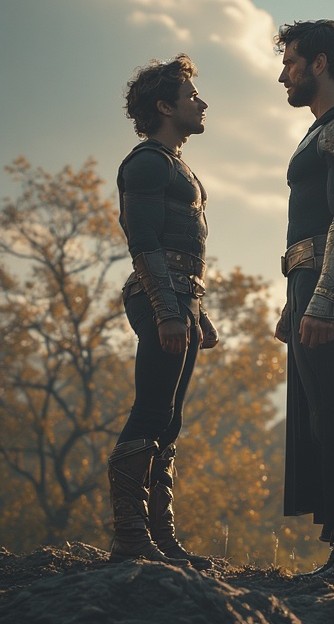
Image created at Perchance.org

Interview

Poseidon’s Scribe: Welcome to my blog.

Sidekick: Thanks, but you’ve got the wrong person. I’m not a sidekick.

P.S.: Really? I thought you were. What are you?

S: I’m the main character, the protagonist, the hero.

P.S.: Ah, so you’re the one driving the plot forward.

S: I guess, sort of.

P.S.: You’re standing in someone’s shadow. Who’s that?

S: That’s my sidekick.

P.S.: I see. But you’re the one who seems to be assisting that person a lot.

S: Yeah. My sidekick really needs help.

P.S.: I’ve heard, of the two of you, you’ve got the better sense of humor. Is that true?

S: Yes. Authors always give the hero the best lines.

P.S.: Ah. From what I’ve seen, that person confides in you, trusts you. You act like the person’s conscience.

S: Yup. My sidekick bounces ideas off of me, usually bad ones, and I have to be the one coming up with the right plan. My sidekick probably couldn’t survive without me.

P.S.: You two seem to complement each other, with many opposite personality traits.

S: Well, they say opposites attract.

P.S.: True. Tell me, at the end of the story, which of you will get the most credit for resolving the major conflict—you, or the person in whose shadow you’re standing?

S: Um…well…I guess…Is it possible that I’m not the hero? That I’m really just a sidekick?

P.S.: Never say just a sidekick. You’re vital to the story. As you said, the hero would be lost without you. I’d say that hero is lucky to have a pal, a sounding board, a loyal ally like you.

S: Yeah. Lucky to have me. That’s right.

Poseidon’s Scribe: Thank you for stopping by today. I know you have to get back to supporting and looking after the hero.

Sidekick: Believe me, it’s a full-time job. That is one flawed character.

Further Reading

For more on sidekick characters and how to create them, see this post by Author’s Pathway, this one by Victoria Grossack, this one by WriTribe, and this one by Lorenz Carst at Springhole.net.

Nobody Thinks They’re the Sidekick

In the 2005 movie Sahara, Al Giordino is Dirk Pitt’s sidekick. When another character asks Al how long he and Dirk have been together, he says, “Kindergarten, college, Navy, NUMA. Poor guy’s always been in my shadow…Always the Al’s maid, never the Al.”

All along I thought I was the hero of my life’s story, but now I wonder if someone else’s sidekick is—

Poseidon’s Scribe