The Ballad of Joan Henry

You can read my short story, “The Ballad of Joan Henry” for free. It’s featured at Fiction on the Web, along with a great accompanying image. First, though, I’ll give you some background.

John Henry

Before Joan, there was John. The legend of John Henry depicts him as a former slave, now a free man, working at steel driving. That job involved hammering a steel chisel into rock to create holes for dynamite. They used explosives to build railway tunnels through mountains. No man could outdo John Henry in this task. He accepted a challenge to see if he could work faster than a steam-powered drilling machine. In the end, he won the race, only to die from exhaustion.

Joan Henry

My story, set in the near future, involves Joan Henry, a female CEO of an auto parts manufacturing company in West Virginia. To keep her firm profitable, she’s fired most of the human workers and replaced them with robots. Now, the board of directors is considering a robotic CEO. They set up a challenge where she must compete with this robot for her own job. After that, the story deviates from its John Henry roots.

Setting

“The Ballad of Joan Henry” takes place in a future a few years from now, when robots perform most of the work and all humans receive Universal Basic Income. People respond to this in various ways, and many resent the takeover of jobs.

Comments

The story has already garnered two favorable comments and I thank those two readers for their kind words.

Fantasy or Prophesy?

Today, corporations are replacing human workers with robots and AI. Will things get as bad as I portray in my story? Or will things settle to a new equilibrium state, one acceptable to humans? If my story proves prophetic, well, you heard it first from—

Poseidon’s Scribe
The Story Behind the Story—Broken Flute Cave

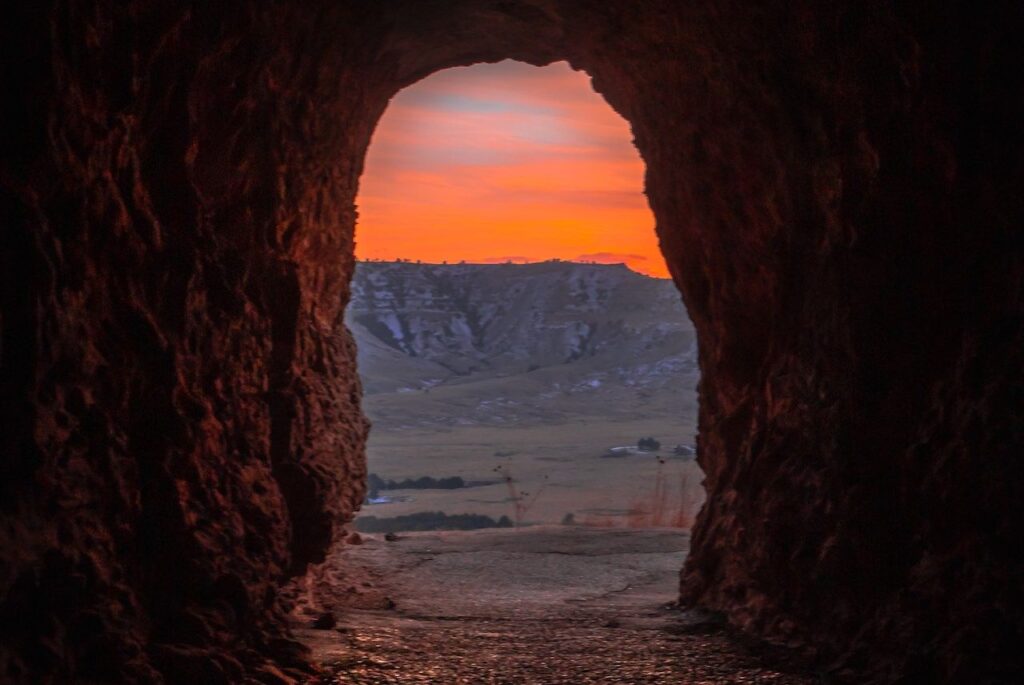
The CHILLFILTR Review just published my short story, “Broken Flute Cave,” and it’s available to read online here. This historical fantasy tale is well outside my normal line, and here is the story behind that story—

Some years ago, a friend of my father shared her interest in Native American flutes with him. Being curious about everything, he became interested himself, particularly with the Anasazi Flute, more aptly named the Ancestral Pueblo Flute. These differ from most other Native American flutes in that they have no ‘fipple’ mouthpiece. An archaeologist named Earl Morris discovered these flutes in 1931, lying in a cave within Prayer Rock Valley in Arizona.

Here is where stories get warped from retelling, often becoming more dramatic and less mundane than the truth. The way I understood the story was that Morris, familiar with standard Native American flutes, saw no fipple on these and concluded they must be missing their mouthpiece, so named the cavern “Broken Flute Cave.”

Later, (again, this may be apocryphal) someone realized the flutes must be intact, but they seemed impossible to play. Decades after their discovery, someone hit on the right way to play the flutes—the proper angle to hold them, the proper way to shape your lips—and the resulting sound seemed haunting and magical.

As a storyteller and a person intrigued by rediscovering lost technologies, I liked this account. I thought about the idea of a musician from a now-forgotten tribe, unable to pass on the techniques of making and playing these flutes, dying in that cave. Only after hundreds of years would they be found, and more decades would pass before their sound would be heard again.

Those thoughts percolated in my mind for years before I wrote “Broken Flute Cave.” My protagonist, Hototo, bears a name meaning ‘warrior spirit who sings.’ For a while, archaeologists called his tribe the Anasazi, but he wouldn’t have called himself that. Anasazi means ‘enemy,’ so that’s the name by which other tribes called them. The flute-making tribe vanished, leaving only their pueblos, flutes, and other artifacts behind.

In writing the story, I sought to link Hototo’s time to ours, and to portray the loss of names, techniques, skills, and civilizations through the failure to properly pass them on. Some may get rediscovered, many will not. Although these losses to time are sad, perhaps we can all learn from Hototo to look on the bright side.

In fact, it’s likely that the archaeologist Morris knew the flutes were intact, but named the cavern Broken Flute Cave because some of the instruments were truly broken. Further, it appears he figured out how to play them right away. However, it did take several decades for Anasazi Flutes to catch on in popularity.

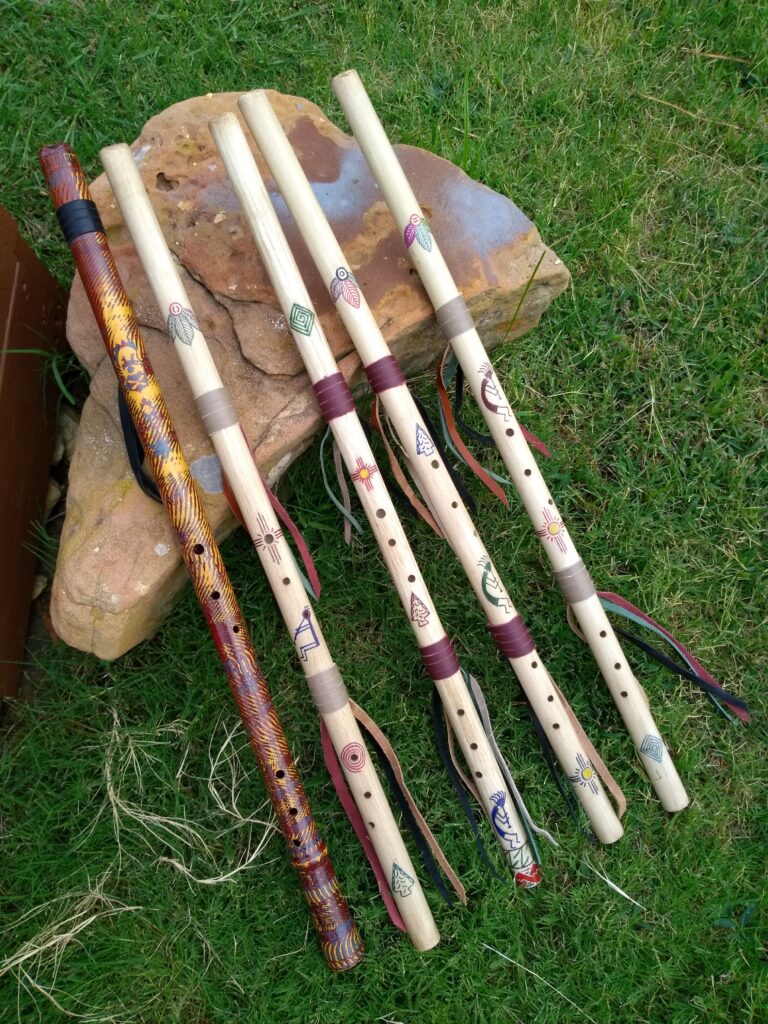
As an interesting sidelight, my dad noticed a similarity between the flutes and common PVC pipe, so he bought some pipe and made his own. That intrigued me, so I made some, too. Pictured is a replica flute, and my four PVC flutes.

On the rare occasions when spirits smile on me, I can get decent sounds from my homemade flutes, but I’d need a lot of practice to produce enjoyable music. There are several good audio clips on YouTube featuring musicians playing ‘Anasazi flutes’ well, and I think you’d like the pure, rich tone they make.

If you’re wondering what such a flute would sound like in a cave, you can read “Broken Flute Cave,” but don’t listen to any PVC pipes played by—

Poseidon’s Scribe

September 6, 2020Permalink