The Publishing Times, They Are A’Changin’

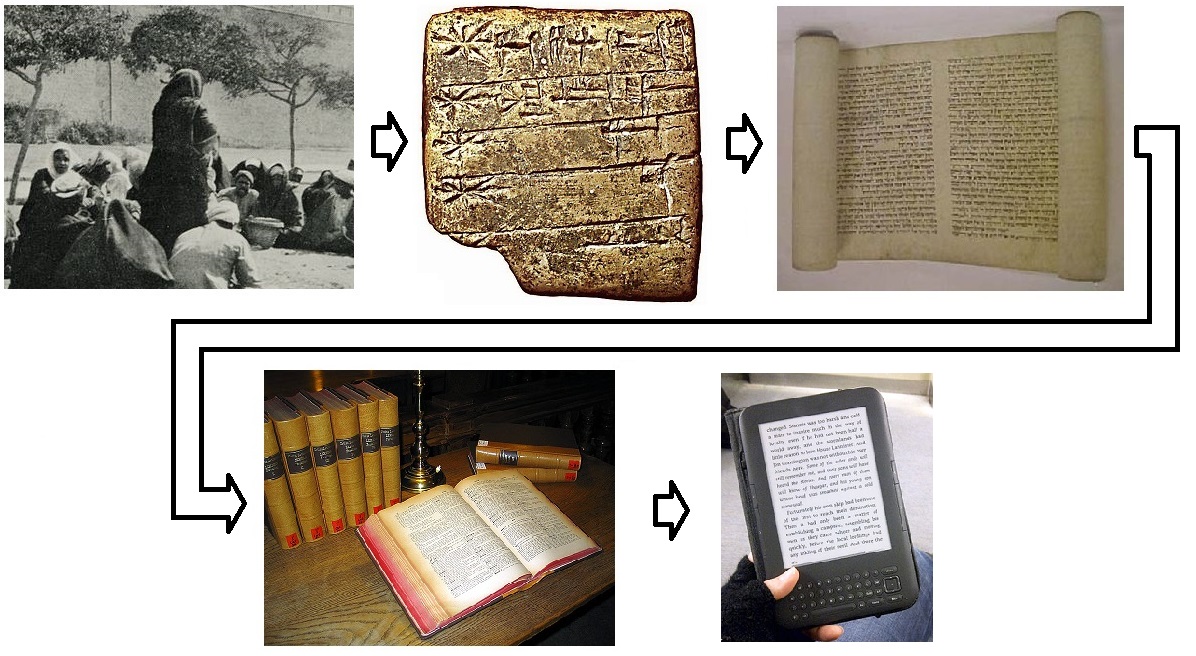
To distort a line from a Bob Dylan song, times are indeed a’changin’ in the publishing industry.  In the long march from storytellers to clay tablets to papyrus scrolls to bound books to electronic books, each technology has brought a revolution and we’re now in the middle of one.
Publishing

After Gutenberg’s printing press and right up until the Internet, the book publishing industry had optimized into a fairly lean and stable operation, full of specialized tasks.  Each task was fairly well understood.

The writer wrote, and sought an agent.  The agent sought a publishing house and handled all the contractual details for the writer.  At the publishing house, of which there were only a few big ones, the editor polished the prose.  Upon agreement about the text, the publisher took care of cover design, printing, distribution, and marketing to booksellers.  The bookseller catered to the reading public, offering books for sale from their stores.

Despite all the middlemen, that process had been pretty well honed such that readers could still obtain books inexpensively.

With the advent of the Internet, much has changed, and it’s got all of the middlemen wondering what their future role will be, if any.

For the writer, there are software word processors and Internet research options, but not much else has changed.  A writer still must create the prose.

At the other end, the reader has more options, including e-readers and audiobooks, but for the most part reading is unchanged.

But agents, editors, cover designers, marketers, distributors, and booksellers are all left wondering what’s going to happen to them.  These days, writers can connect directly with readers, bypassing all the former steps.  An author can work with a single website such as Amazon, Smashwords, Kobo, and others, to get e-books directly to the reading public.

These websites offer many services, but the writer must do most of the tasks formerly accomplished by middlemen.  This includes reviewing the contract, editing, cover design, and marketing.

So where is all this going?  At what sort of equilibrium state will all this turmoil settle out?

It may be too early to tell, but I think there will be places for all the publishing middlemen in the future, assuming they adapt to an Internet-based world.  Some writers still need agents, editors, cover designers, and distributors.  Some readers still want bound books.  Much like the continued (but low) demand for horseshoes and oil lamps, there will be niche markets for all these functions.

As for me, I have yet to take the full plunge into self-publishing.  So far, with my short stories, I’ve been dealing with an independent ebook publisher, and with publishers of anthologies.

If Bob Dylan’s right, and the times they are a’changin’, where do you think the book publishing industry is headed?  What change would you like to see?  Leave me a comment and perhaps we can change things together, just you and—

                                                  Poseidon’s Scribe
December 29, 2013Permalink

The Life Story of a Short Story

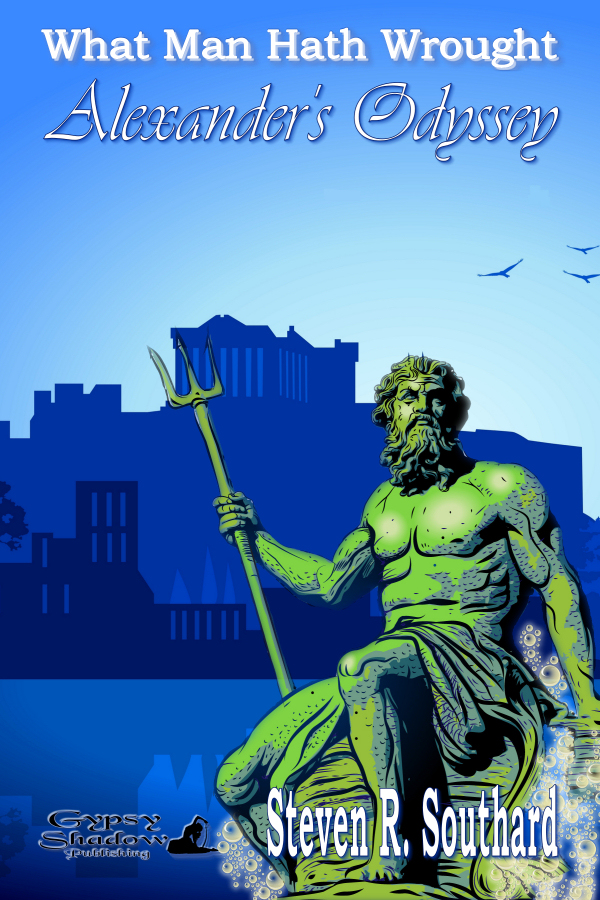
AlexandersOdyssey9Hello.  I’m a short story.  Since Poseidon’s Scribe never got around to blogging about the whole short story process, he invited me to guest blog today.  My title is “Alexander’s Odyssey,” and I was written by Steven R. Southard.  My life story is typical of other tales, and might be obvious to many of you, but the steps weren’t clear to Steve when he started.

Idea1.  Idea.  I started as an idea.  You did too, I suppose, but with stories you only need one human with an idea, if you know what I mean.  Getting a story idea isn’t as difficult as most believe.  Ideas are all around you.

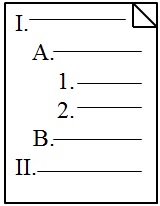
Outline2.  Outline.  This can take many forms, not just the standard I-A-1-a-(1) type.  It can be a mind-map, for example.  An outline can keep you focused as you write, but don’t be afraid to deviate from it if the story takes off in a different direction.  Steve used an outline for me, but if you don’t want to, just skip this step.

Research3.  Research.  You might have to conduct research for your story like Steve did for me.  Use the most authoritative sources you can.  Steve didn’t include all the researched data when writing me, just a tiny fraction.  You might enjoy research, but don’t get stuck at this stage.  At some point, enough is enough.

First draft4.  First Draft.  Steve wrote my first draft fast, without caring about quality.  He didn’t even stop to correct typos.  He got it all down, the emotions, the drama, and the character interactions.

Edits5.  Edit.  Steve did several drafts of me where he corrected typos; deleted extraneous stuff; added in foreshadowing, metaphors, similes, and symbolism, etc.  Don’t get stuck at this stage either; some stories never even get submitted.

Submit6.  Submit.  Steve located a suitable market, and had to modify me a bit to conform to the submission guidelines.  After much hesitation, he submitted me.   These days, you writers have the option of self-publishing us stories, so you could skip this step.

Reject7.  Rejection.  Actually, I didn’t get rejected the first time, but I know the feeling.  I don’t understand why writers take rejection so personally; the editor is rejecting me, not you.  Just shake it off and submit your story to some other market.  Keep us moving!

Accept8.  Accept.  I was pretty happy when an anthology editor accepted me, but Steve was positively giddy.  I’d never seen him so thrilled and, frankly, the details are embarrassing, so I’ll just move on.

Rewrite9.  Rewrite.  The editor suggested Steve change me a bit.  He agreed the changes would do me good, and made them.  I’ve seen Steve agonize over suggested changes to other stories, though.  I’ve even seen him push back against the editor.  In the end, they always reach agreement and Steve signs the contracts.  I guess he could always refuse and walk away if he wanted.

Launch10.  Launch.  These days, publishers don’t just publish us, they launch us.  It does make me feel like a rocket going off, sort of.  Again, Steve seems really happy when a story launches, and again it’s awkward to watch.

Market11.  Market.  If I’d been picked up by one of the top publishing houses, they’d spread the word about me.  Steve didn’t send me there, so he had to do it.  Boy, does he hate that part, though I’ve heard some authors like marketing.  Use social media, newsletters, writing conferences—anything to advertise.

Read12.  Read.  My favorite step.  When a reader buys me and reads me cover to cover, that’s what I live for.

Reprint13.  Reprint.  When the rights to me reverted back to Steve, he submitted me for publication as a reprint.  After three rejects, another market accepted me, but asked for significant changes.  My reprint version states where and when I was published the first time.

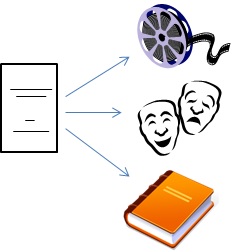
Spin-off14.  Spin-off.  Oh, I hope, I hope I can get spun-off into a novel, a play, or even a movie.  Hey, a story can dream, can’t it?

That’s my story.  Forget about Steve, or Poseidon’s Scribe.  Address your comments to—

                                            Alexander’s Odyssey

December 8, 2013Permalink

Your Author Platform

Several years ago, the writing world buzzed about the concept of “author platform.”  Here I’ll briefly define the term, state the purposes of these platforms, describe mine, and offer thoughts on yours.

There are many sites where you can get a good definition of author platforms, notably here, here, and here.  Basically your platform consists of the ways you use to stand out in the crowd, the methods you use to attract a fan base of readers.

An author platform starts with your stories, your books.  From a platform point of view, it’s best if they have something in common—genre, theme, style, etc.  But the other aspect of the term platform is how you connect with readers.  Not just how you connect books with readers, but how you connect you with readers.

There are many ways to do that, including appearances at conferences and other venues, interviews, and your web presence.  Web presence includes blogs, social media, e-mailed newsletters, etc.

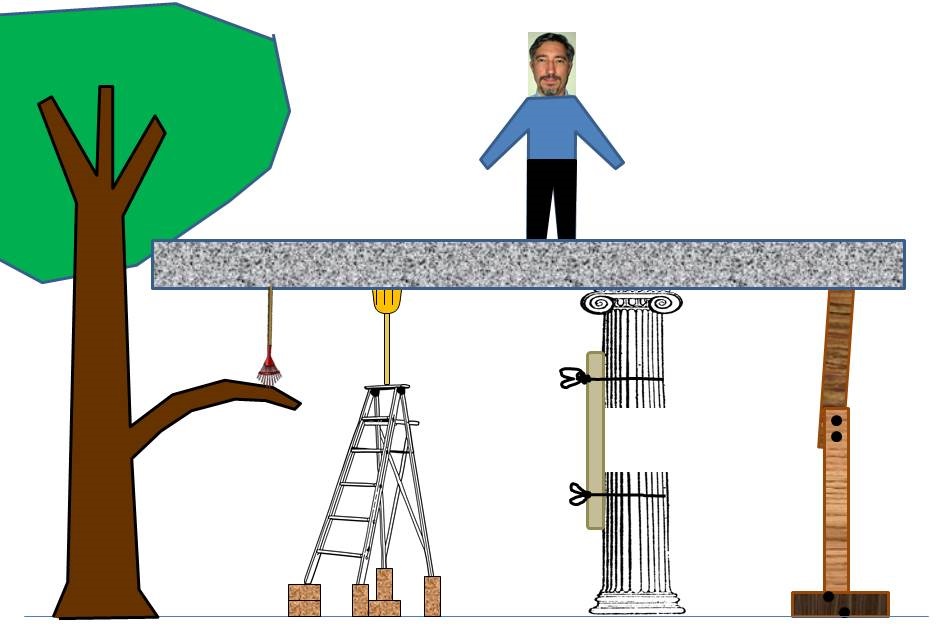
What’s the purpose of this platform?  In the ‘old days’ publishers would build a platform for the author.  No more.  Now it’s expected the author will take out saw and hammer and construct it herself.  If a publisher or agent sees that a writer has an existing platform, that represents a low business risk, an established product that’s ready to sell to already-waiting customers.

Readers don’t need to know about platforms, but they do enjoy connecting with authors they like.  When they take delight in a book and do a web search for the author and find a rich and varied web presence, they feel they can join the author’s circle.  When they find the author has other books just as good and similar in some way, they feel comfortable shelling out money for them because there’s a familiar consistency there, a set of established expectations.

For authors, the platform serves the purposes of connecting to both readers and publishers in the modern, web-based world.

Author PlatformAs for me, my platform is still under construction.  I’ve mainly been working on writing stories, as many as I can.  Although I’ve dabbled in different genres, I’ve found I enjoy writing about the problems of people dealing with new technology, especially in historical and foreign settings.  The stories in the series What Man Hath Wrought, put out by Gypsy Shadow Publishing, are the best examples.

My web presence is slowly increasing, by means of this blog, Twitter, and my author page on Amazon.  I’m still working on Facebook and other venues.

What about your platform?  My advice is to do what works for you.  Start with writing stories; hone your writing skills.  If you can get some of them published, even at non-paying markets, that at least gets your name out there.   Then work on the various marketing methods.  As you try things, pay attention to sales and spend more time on things that increase sales and less time on things that don’t.

As with any trend or movement, a backlash is forming with respect to platforms.  See section 3 of this entry.  I think Jane Friedman’s advice to new fiction writers (for whom I write my blog) is sound.  Just write.  Think about writing, focus on writing, enjoy writing, and let the marketing develop later.

What are your thoughts on author platforms?  Feel free to leave a comment and let me know.  In the meantime, see that guy trying to erect some sort of raised dais there in the middle of the internet, using two-by-fours and bailing wire?  Don’t laugh, that’s—

                                                              Poseidon’s Scribe