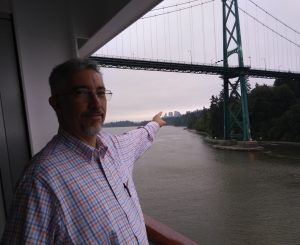

Thanks, Steadfast Reader, for hanging with me until the final day. I’ve been providing daily commentary about my recent cruise to Alaska, from the perspective of a fiction writer, a perspective that sometimes strays beyond complete accuracy. For the past ten days, you’ve been following the madcap escapades of me; my wife, Jean; and friends Mike and Brenda Knyght.
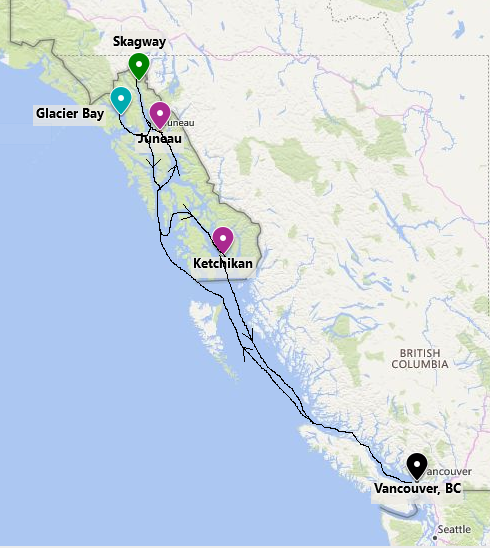
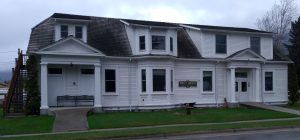
I awoke early on Day 11 while Jean still slept in our room at the Crimson Canopy Inn near Seattle-Tacoma Airport. With an hour to kill before the agreed-on time to meet for breakfast, I went out for a walk.
Then a strange thing happened.
A construction site consumed both the back of the hotel and a section of its parking lot. Evidently, the hotel would be adding more rooms. Workers had not shown up yet and their equipment sat idle. At the edge of the site, I saw an odd object almost entirely buried in recently excavated dirt. Without reaching past any marked borders, I pulled it out of the ground and dealt with it the best I could. I discussed it with my companions over breakfast, and realized I could have handled things differently.
“What did you find?” Brenda asked me.
“A briefcase. It had the initials D.B.C. engraved on it.”
“D.B.C?” Mike asked. “Was this briefcase old or new?”
“Pretty old-fashioned and beat-up,” I said.
“Did you open it?” he asked.
“No. It wasn’t mine.”
“What did you do with it?” Jean asked.
“I turned it in to the hotel receptionist. It might belong to a guest.”
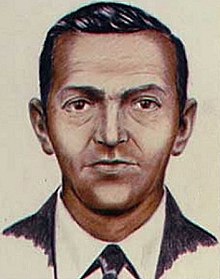
“Does the name D.B. Cooper mean anything to you?” Mike asked.
“Hmm. Wasn’t he the guy who hijacked a plane in the 1970s?”
“Yeah. He parachuted out somewhere in this area, with a briefcase full of hundreds of thousands of dollars. They never found him or his briefcase.”
“Oh.”
“You had it in your hands, man,” Mike said. “You could have been the one to crack the biggest unsolved hijacking case in history. But you left that to the hotel receptionist.”
“Oops.”
I guess we’ll hear the announcement in the news soon. Or maybe the receptionist decided to pocket the cash. Or maybe the briefcase was empty, or didn’t belong to Cooper after all. Who knows?
We made our flight, which took off a few minutes late. At the other end, we retrieved our luggage at the carousel. Jean and I said goodbye to our friends and used a shuttle service to get home.
So ended my astounding voyage to Alaska. We saw only a fraction of that vast state with its fantastic vistas, majestic mountains, and prodigious glaciers. We rode a superb and luxurious cruise ship manned by an excellent and professional crew. Thank you, Steadfast Reader, for coming aboard. Check back at this website as this blog returns to its normal weekly format, featuring interesting posts by—
Poseidon’s Scribe